Rented Gardens: Aliaskar Abarkas’ London garden
STORIES
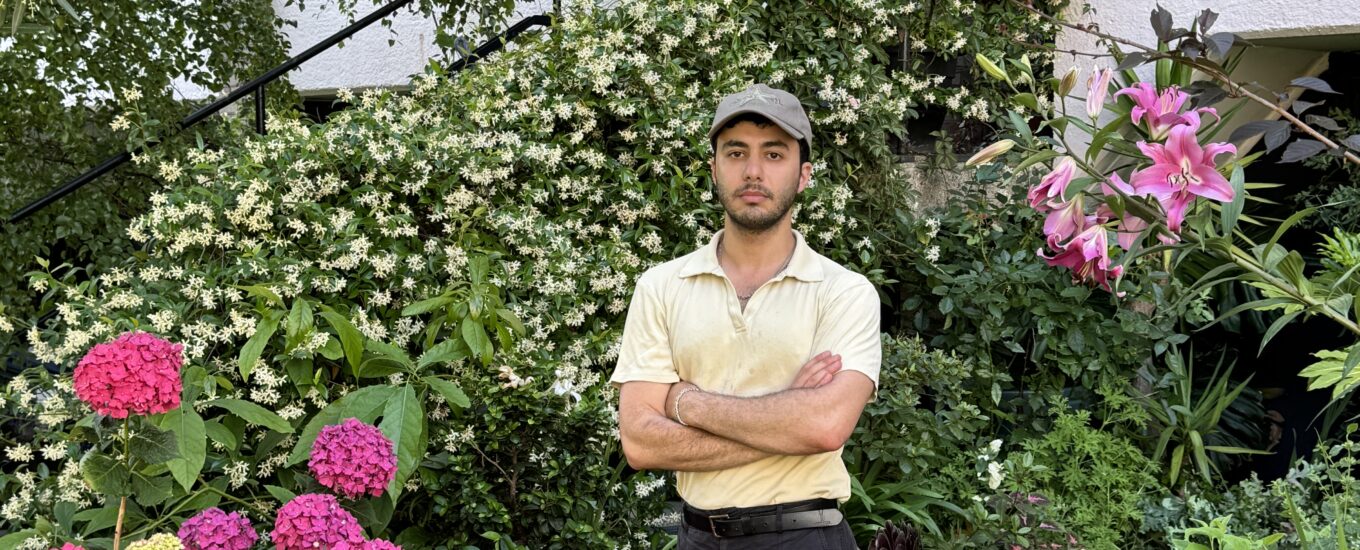
Aliaskar in his garden on the Golden Lane Estate, east London
It’s the third day of the heatwave when I visit Aliaskar’s garden. A city-stopping, unrelenting heatwave. We consider postponing until after the weekend’s forecast rain, but “all my flowers are going to be dry by tomorrow,” he says. “I can see everything burning by the hour!”
We decide to press ahead; I can’t miss seeing the lilies.
I’m visiting Aliaskar’s garden on a mission to find inspiration in the gardens of fellow renters, exploring how Londoners navigate the challenges of gardening in temporary spaces. Aliaskar is an artist from Iran who moved to London nine years ago and has been quietly growing a lush oasis on the Golden Lane Estate with Matthieu.
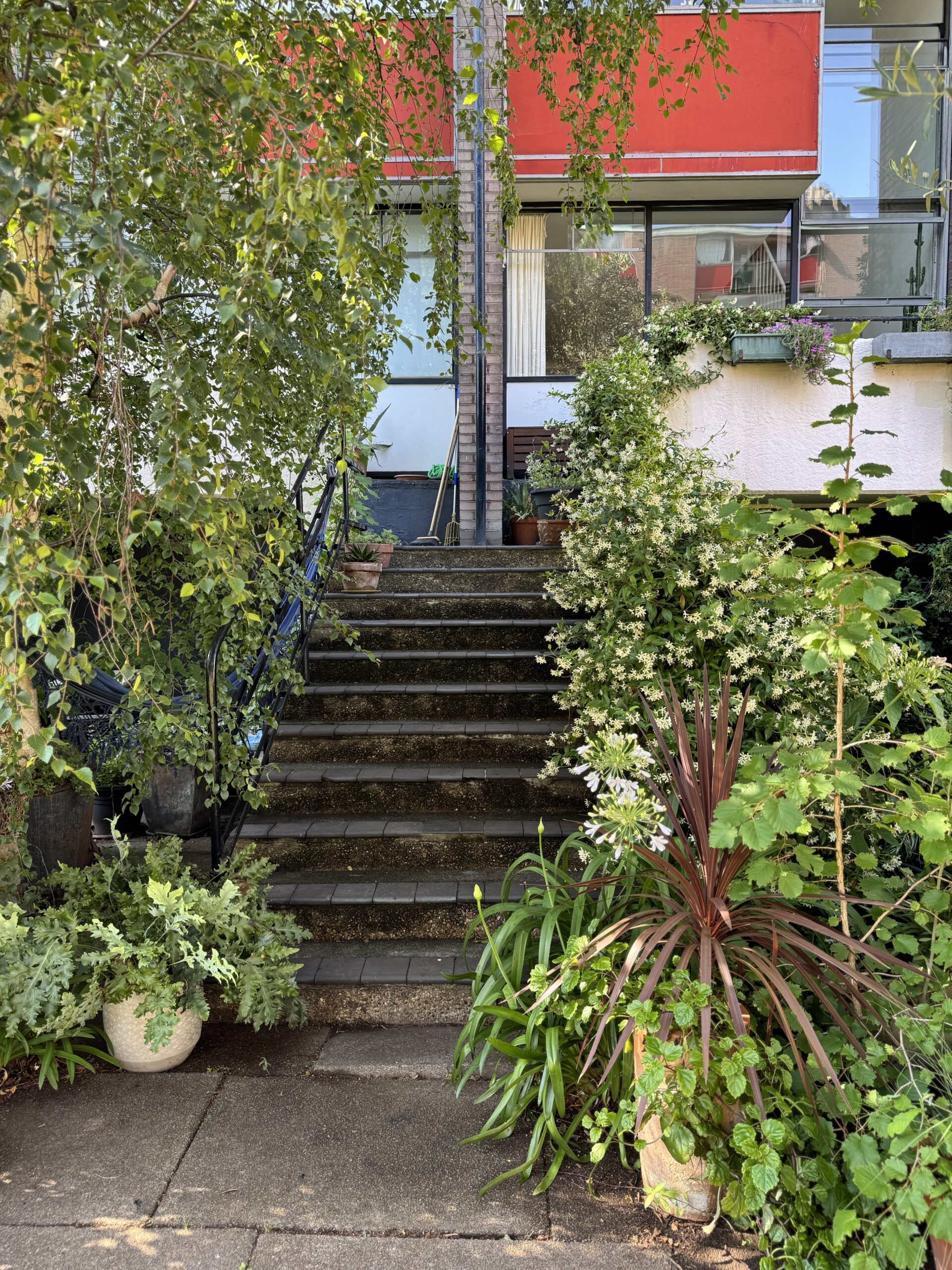
When I arrive, dazed and sticky from my journey across east London, he welcomes me with homemade magenta-pink iced tea and a platter of sweet melon. A cool breeze beckons us into the sheltered garden, reached through the balcony, down a jasmine-lined staircase and tucked into an alcove below the rented flat.
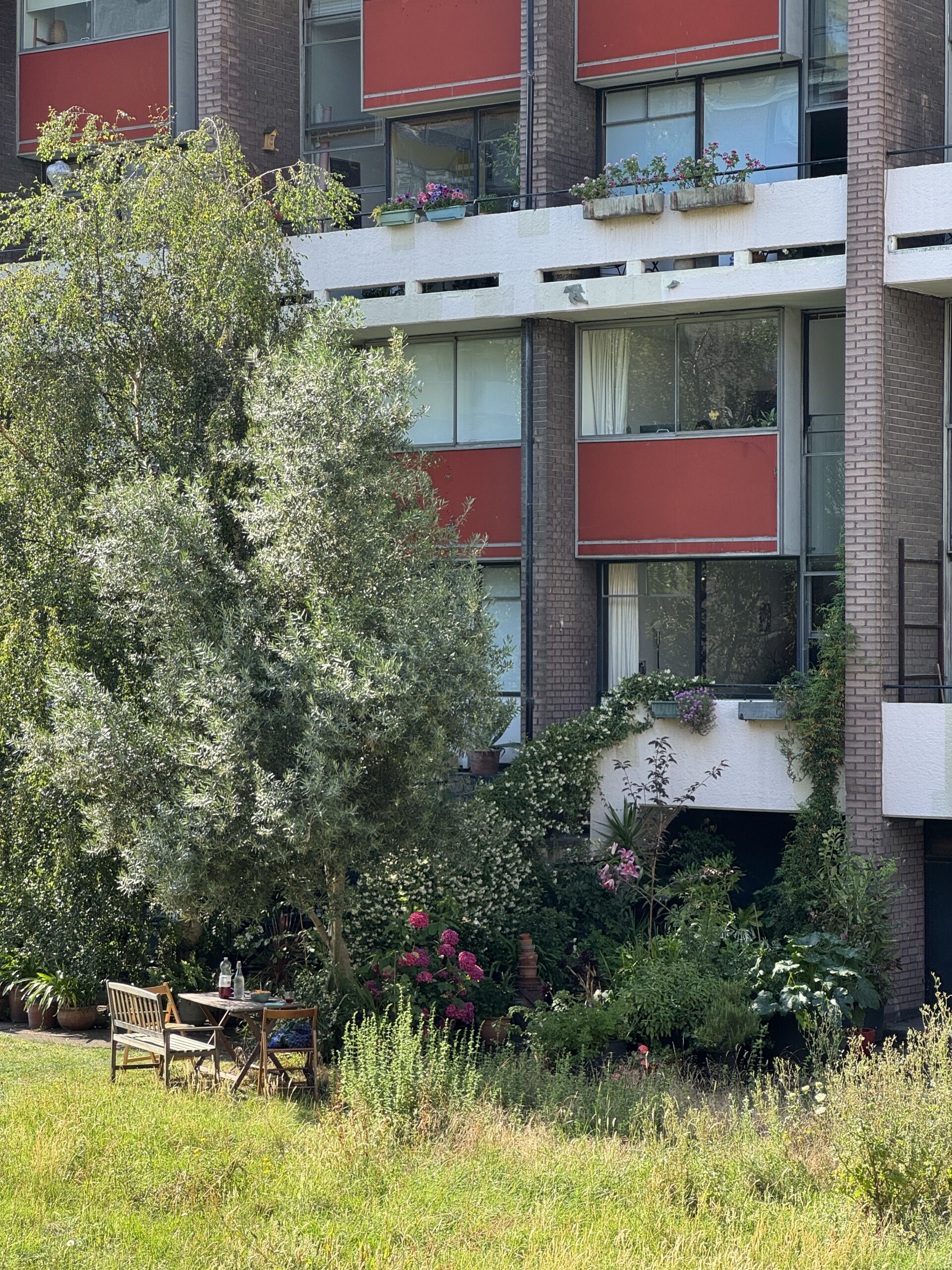
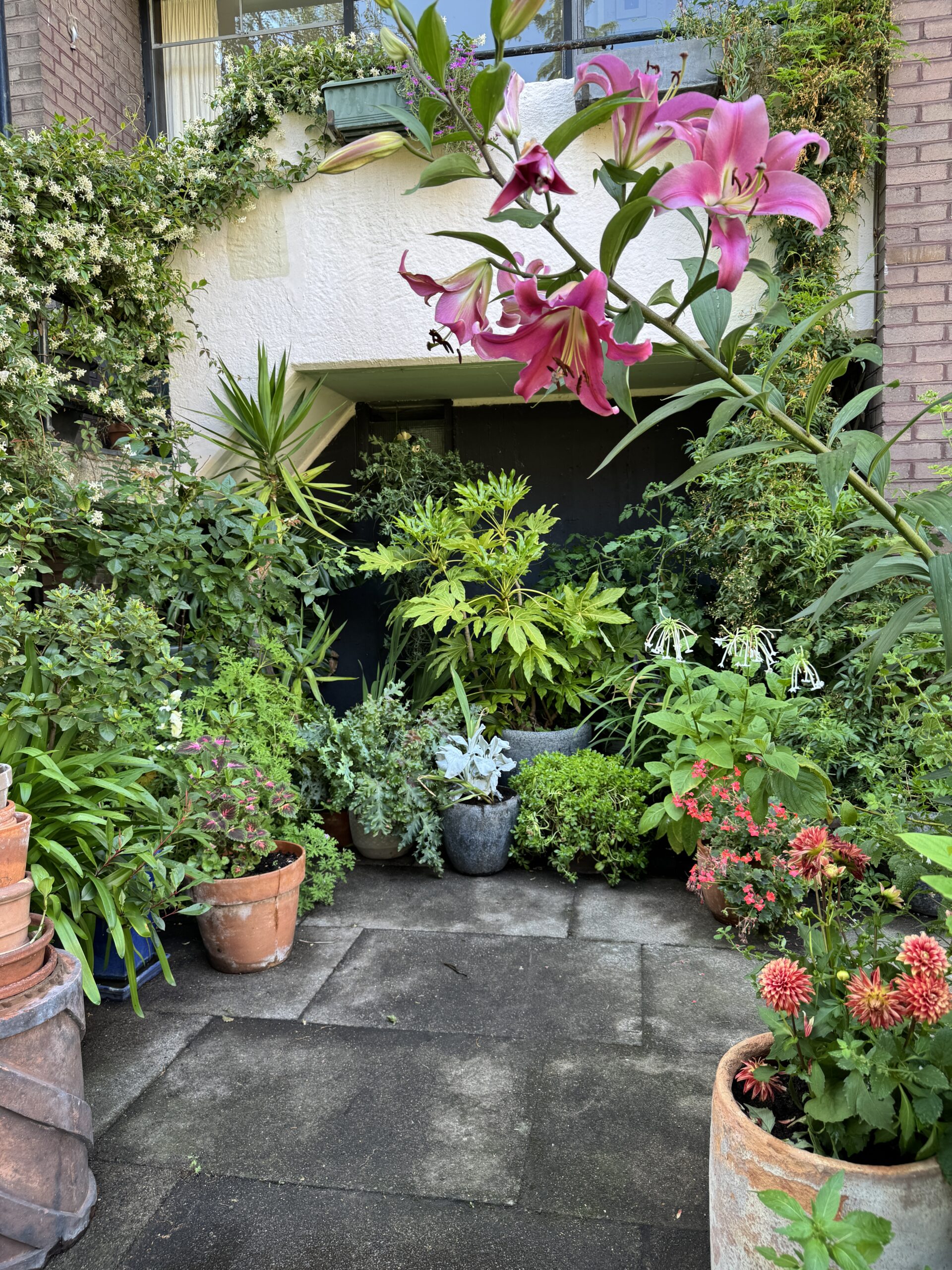
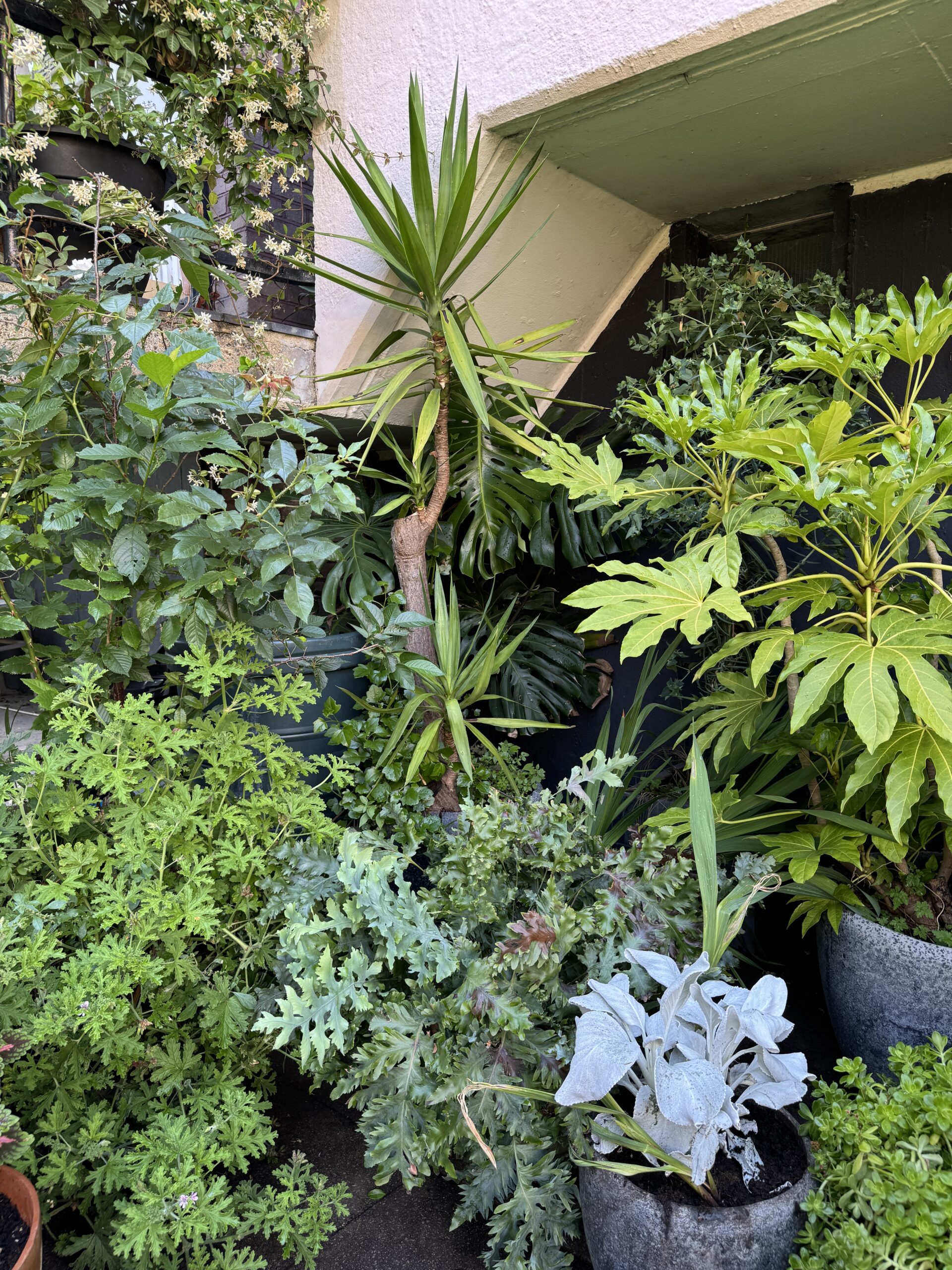
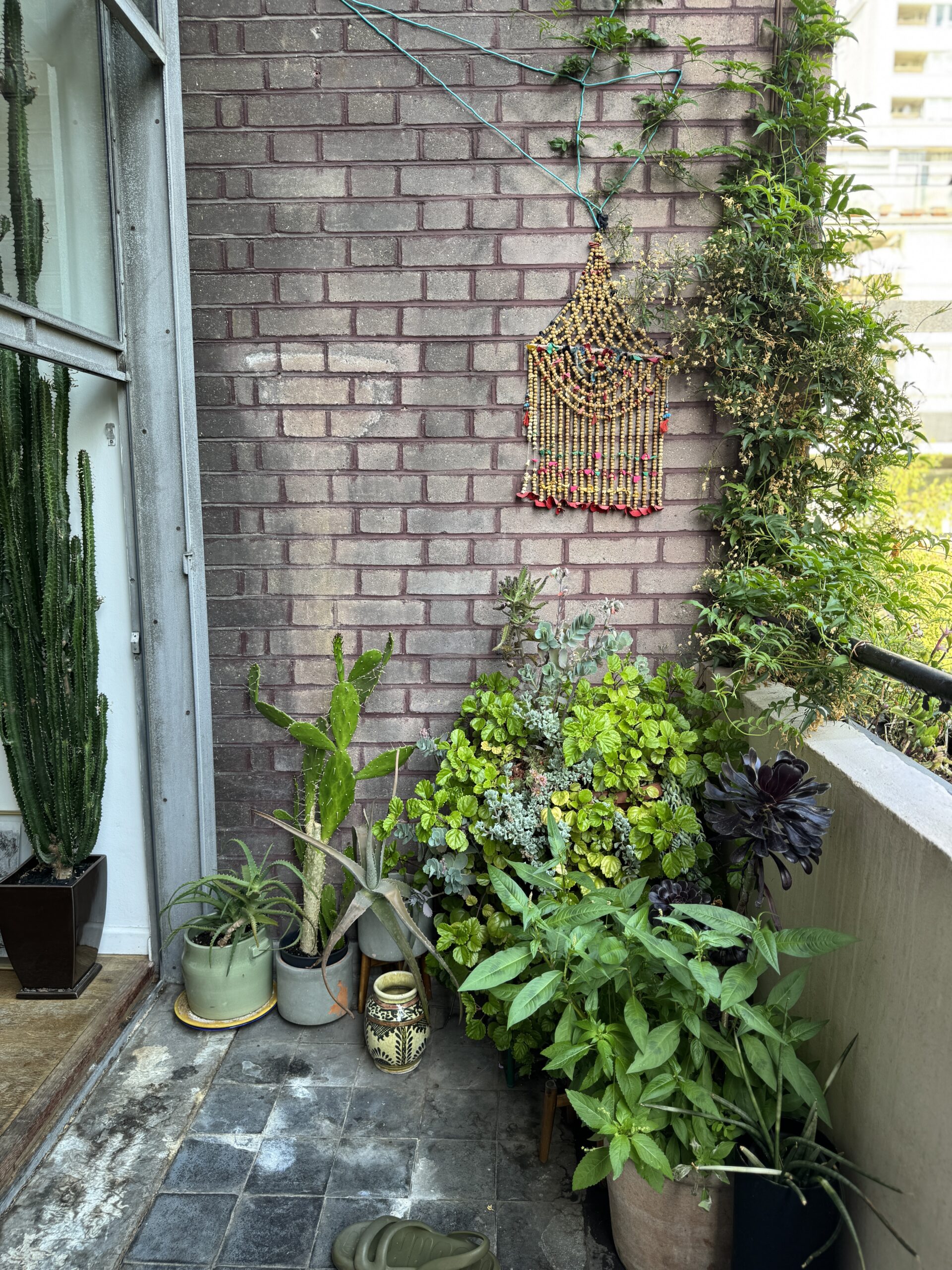
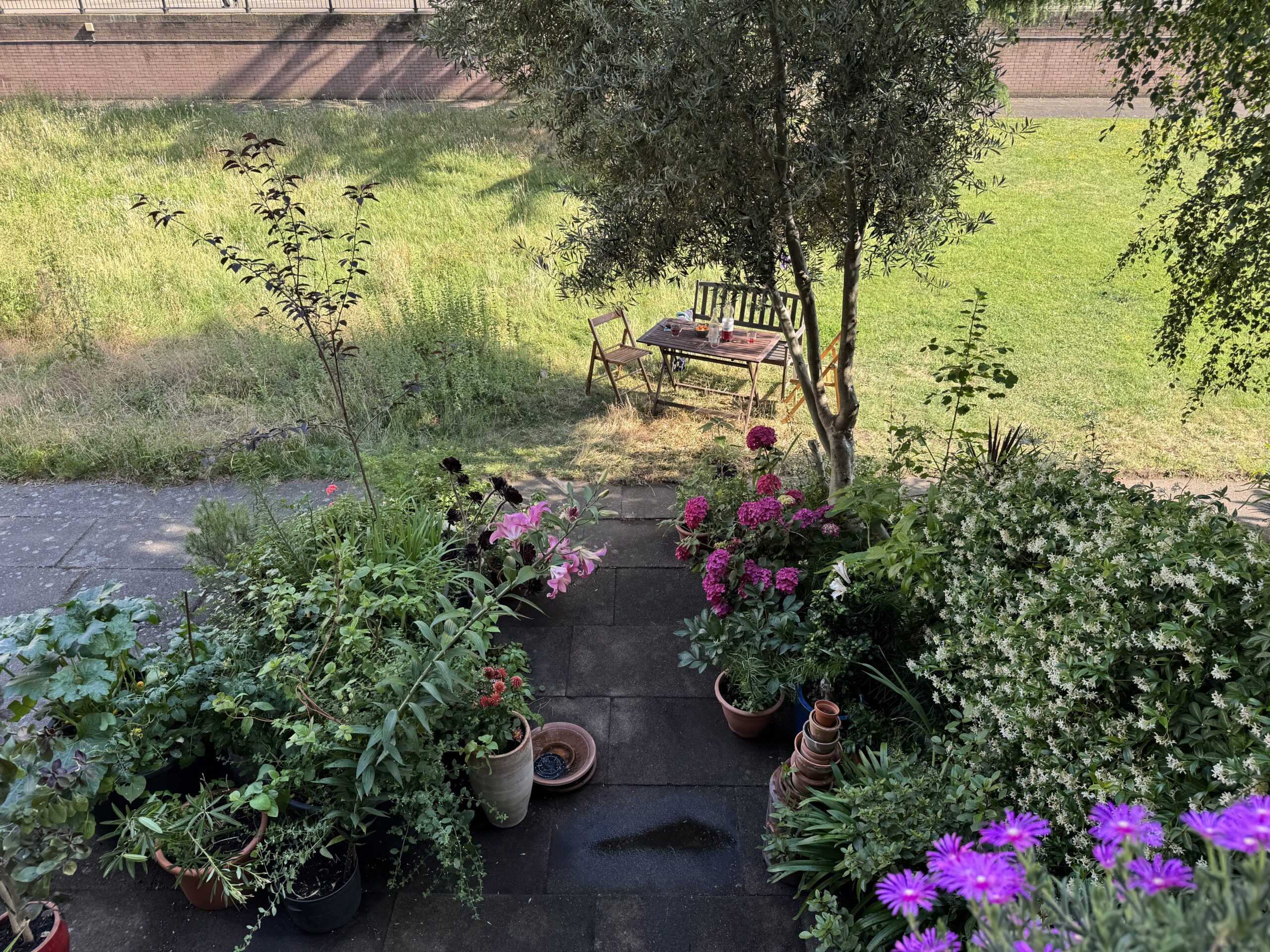
Then it’s a sea of pots. Hot-pink lilies and hydrangeas, deep-burgundy aeoniums, rusty-orange dahlias, coral pelargoniums, layers of foliage in every shape and shade of green imaginable. Ferns, fatsias, monstera. The huddling of plants creates a welcome coolness in the air. It’s a joyous gathering of plant life, luring you into its leafy fold. The boundaries blur as neighbours’ gardens nestle into one another, with no fences to interrupt nature’s flow.
On the balcony, Henry the tortoise chomps on fresh lettuce while Gulliver the cat stalks through the wild grasses of the communal gardens below.
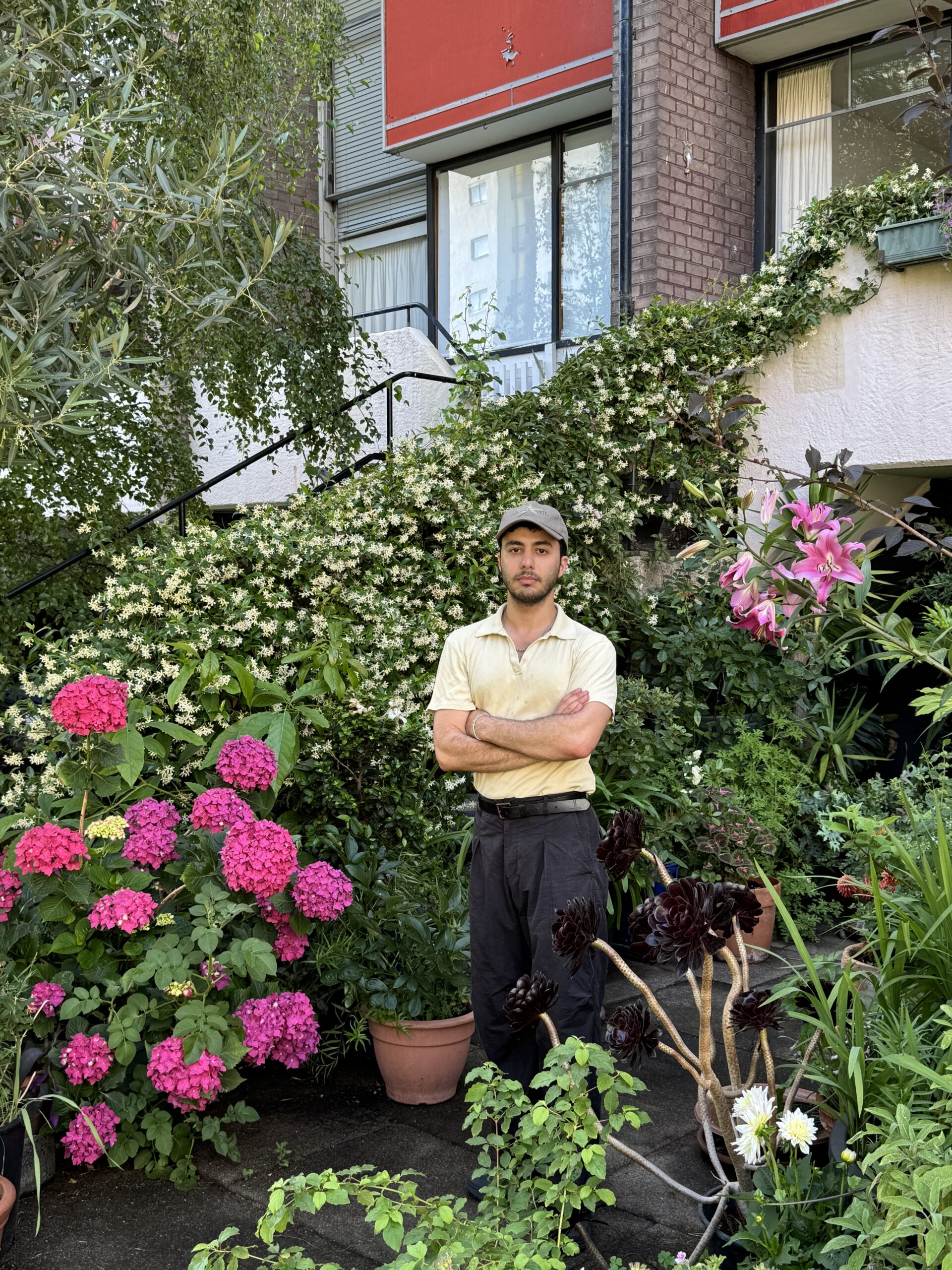
Aliaskar in his garden on the Golden Lane Estate, east London
Aliaskar: When I came to the UK one of the first things I noticed was how deeply gardening is woven into the culture here. My partner at the time loved gardening, and we travelled around the country visiting gardens together. He was very knowledgeable, and I think that was my introduction to gardening.
During the pandemic I did a horticulture diploma at Walworth Garden. It was a one-year course every Saturday. I had just graduated from art school, was feeling quite depressed, and there was very little else you could do. I wanted to make something with my hands — it was fun to get my hands dirty. It helped me also reconnect with my artistic practice in a different way.
Beth: When did you move to this garden?
Aliaskar: I moved to this estate six years ago. Around that time I met my current partner Matthieu, who was another source of inspiration. He started a rooftop pot garden, so I started collecting pots and creating my own. Gardening was closely connected to my romantic life at first. It really grew through those relationships.
Beth: Do you think you would have found your way to gardening regardless?
Aliaskar: I think so. I always loved plants. Even as a child I remember growing flowers and vegetables in tiny pots on our balcony, and I always kept houseplants. But I moved from my hometown to study at the University of Tehran, then later to London. Gardening needs a sense of settlement, and I never really had that until I came to this flat.
Beth: I think that’s why a lot of people naturally come to gardening a bit later, perhaps in their thirties.
Aliaskar: I used to live five flats away in the same estate. When I moved into this flat a year and a half ago, almost everything was already growing in pots, so we simply brought the whole garden with us. That’s what I love about pot gardening. If you leave a place, the garden can come with you.
I also like being able to rearrange the landscape. It feels playful.
Beth: What was the garden like when you arrived?
Aliaskar: You can see my old flat down there. There’s nothing left because I brought all the plants here. My neighbours used to tell me it was impossible to grow anything because it was so windy and sunny. I proved otherwise. I think the more plants you have, the more they begin to shelter one another.
Beth: That’s true. It feels like you’ve created a really sheltered corner here.
Aliaskar: It’s been fascinating to watch the garden change over the years. Some plants thrive, others disappear. What I love most, though, is the communal spirit. Looking after these gardens feels like a collective effort. We water each other’s plants when someone is away. It connects people.
We’re friends with each other’s gardens.
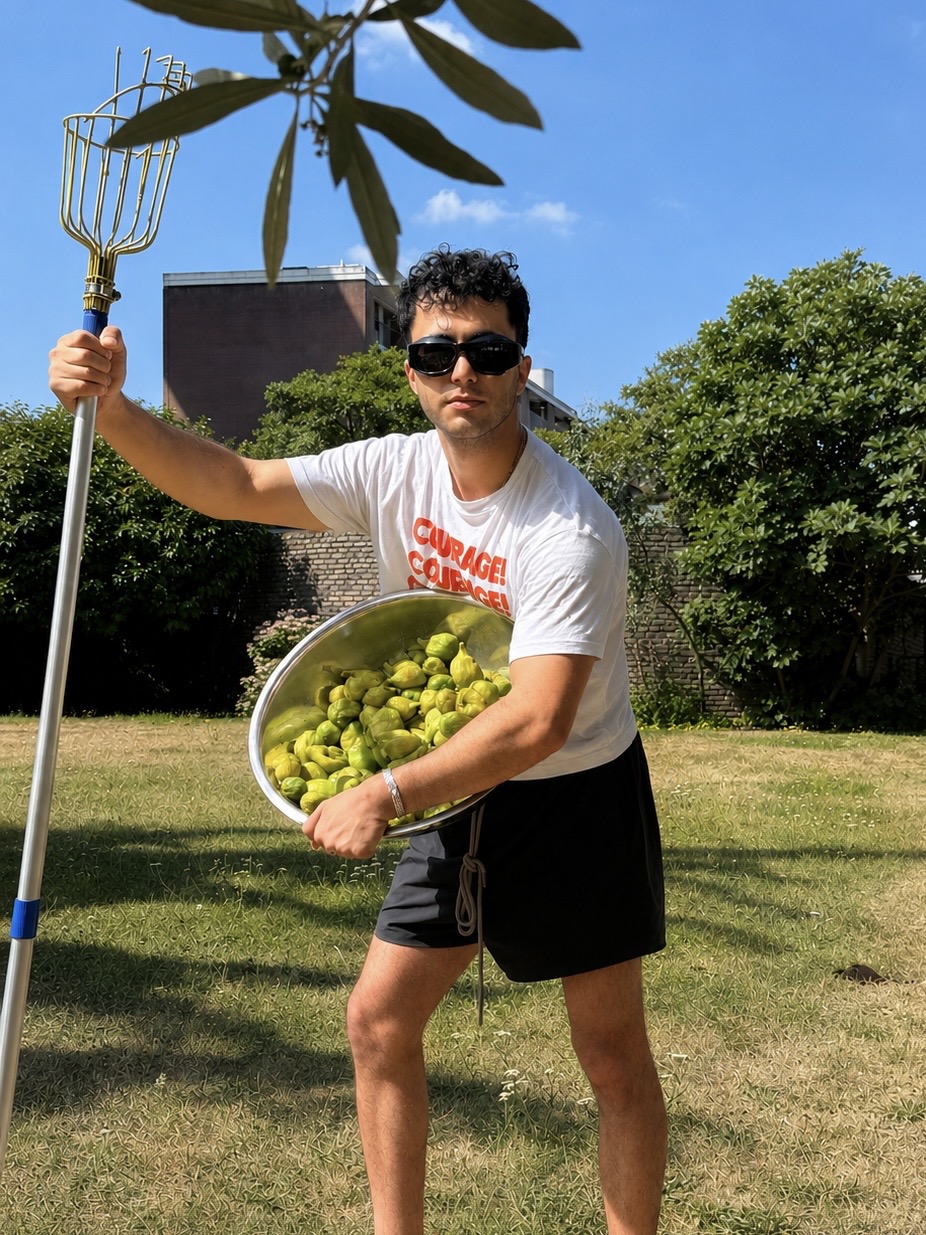
Harvesting figs
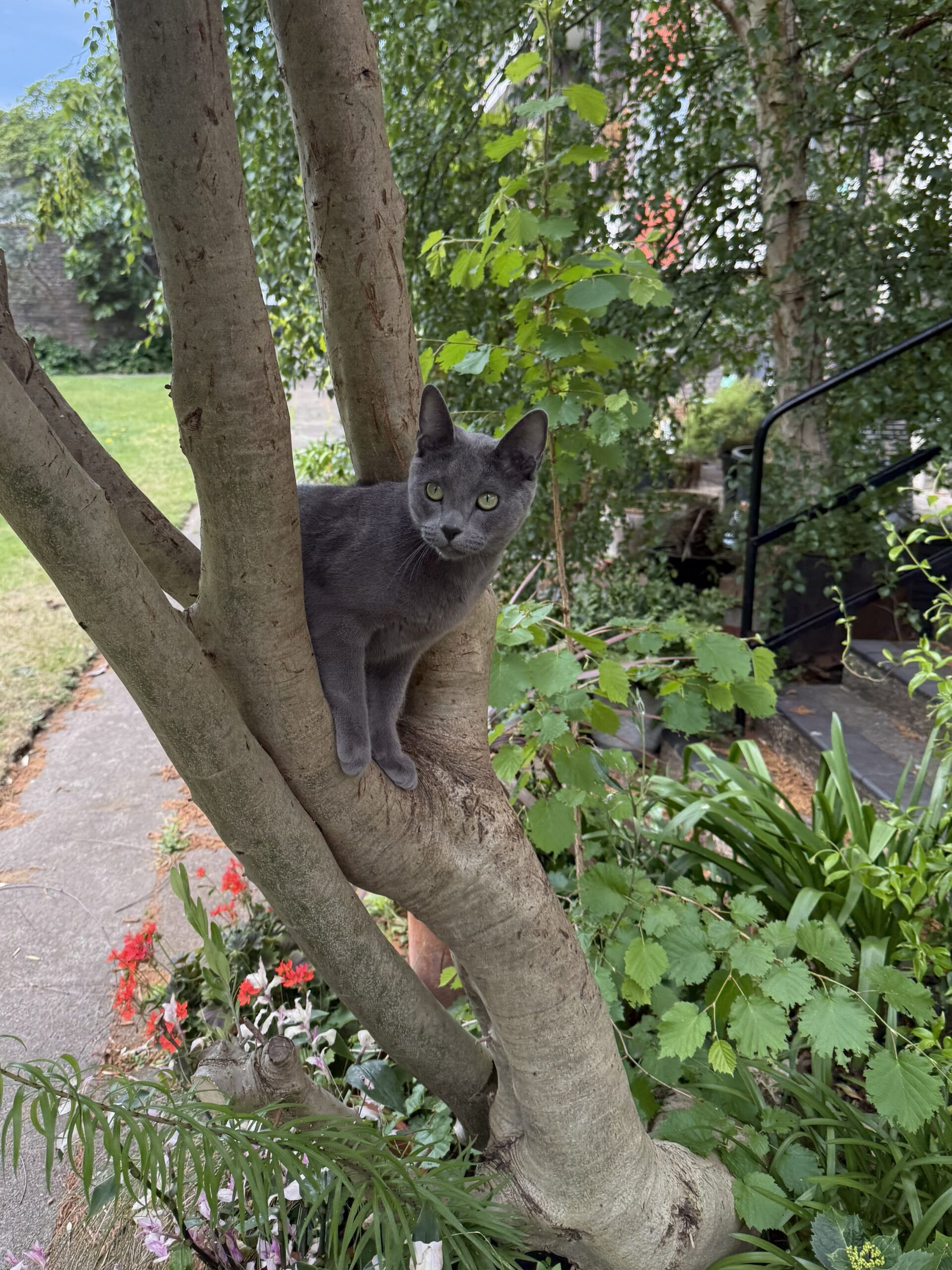
Gulliver the cat
Beth: So this is the first place you’ve gardened as a renter? How do you feel the temporary nature of the space affects how you approach gardening here?
Aliaskar: Maybe I would have planted more trees if it were my own space. I really love trees. Otherwise, I treat this completely as my home. Apparently my landlord also had a beautiful garden here, and I sometimes think places carry the memory of the people who have cared for them.
Beth: That’s so lucky, having a landlord who’s a gardener as well.
Aliaskar: Exactly. They understand why these things matter.
Beth: Have they seen what you’ve done with the space?
Aliaskar: Yes, we always send her photos. We’re incredibly lucky to have her.
Beth: Was it difficult moving the garden? You have some big pots here.
Aliaskar: We borrowed a trolley and moved everything one pot at a time. Most of the plants survived, although it’s surprising how different the conditions are just a few metres away. The light is different here, and it feels much more sheltered.
What surprised me most was how much the neighbouring gardens matter. Our neighbours on either side love gardening too.
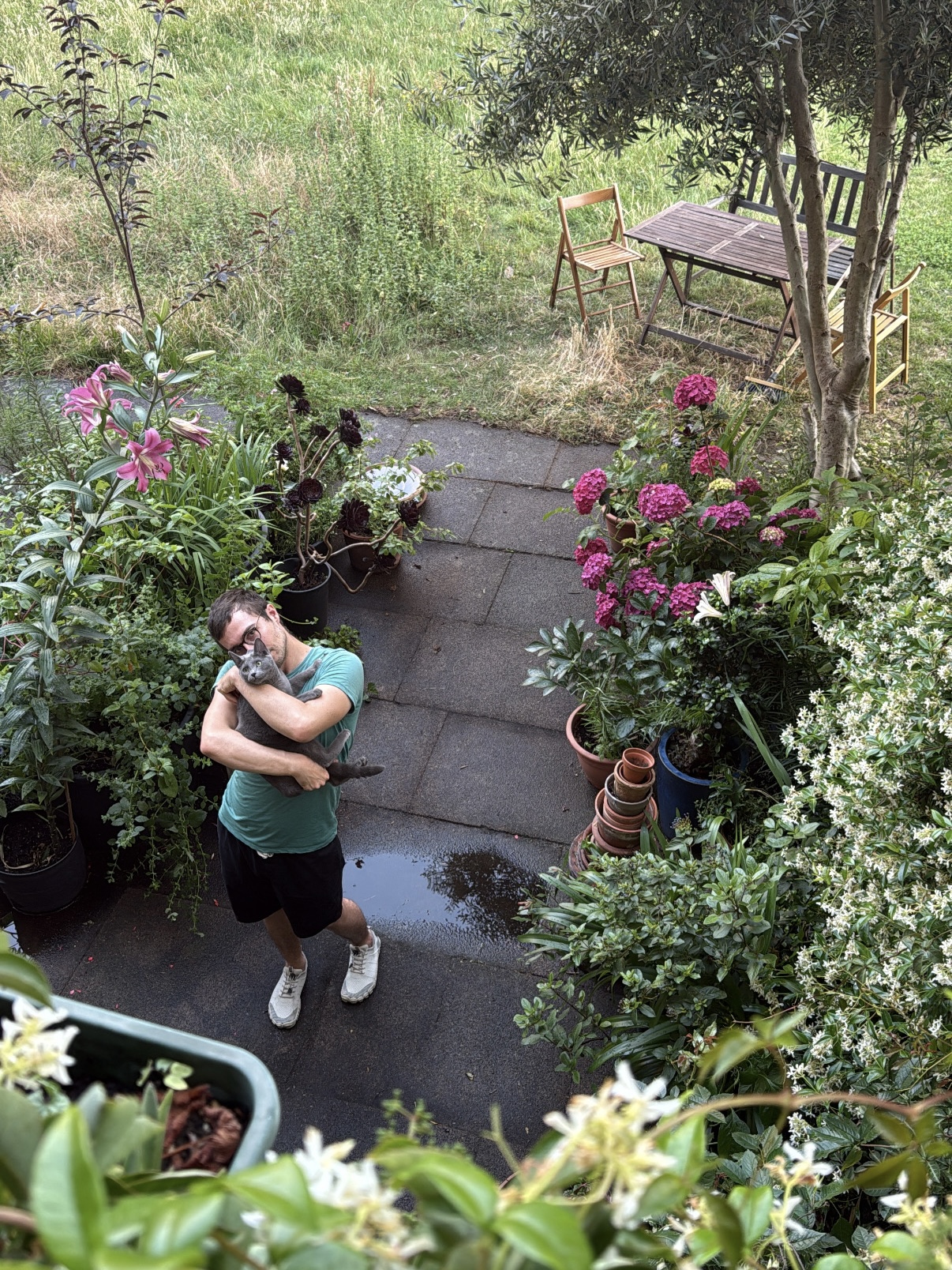
Beth: What do you love about your garden? What are some of your favourite things here?
Aliaskar: I really admire resilient plants. They just seem happy where they are, and I respect that.
I also love that every plant has its own rhythm. A few weeks ago the garden was full of roses; now they’re gone and the lilies are coming out. Watching those cycles is something I really enjoy. I love the freedom to experiment also.
Beth: Has that taken you a while to develop, to always have something of interest happening?
Aliaskar: Very organically. There are so many different kinds of plants here, each with its own season. Later the sunflowers will come out, and the garden stays surprisingly green through winter.
Beth: You have a lot of really beautiful foliage.
Aliaskar: I like mixing edible plants with herbs and ornamentals. I’m also quite weed-friendly. And I love succulents — they have these beautiful, dark colours and sculptural forms.
Beth: Such a beautiful rich colour. Do they survive out here over winter?
Aliaskar: They do, they’re well established now.
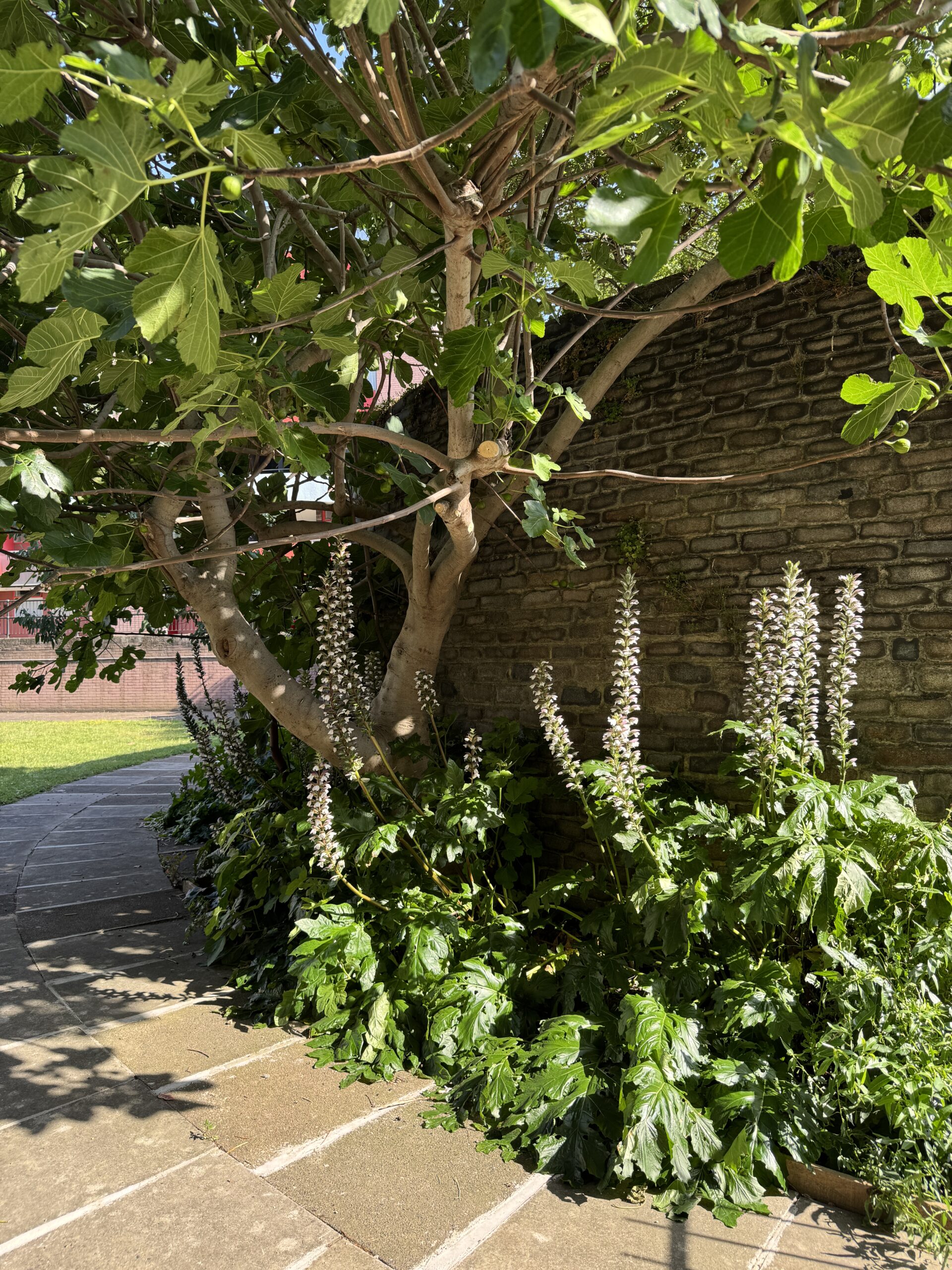
It’s funny — the enormous monstera started as a single leaf that I brought from Iran. I’m not even sure I was supposed to do that. Many of the plants here began as cuttings collected while travelling or from family and friends. Even that tree over there came from a tiny cutting my aunt gave me.
Beth: That’s so lovely, having that personal story behind a plant.
Aliaskar: Exactly. Many of the plants are connected to places and people. I remember where they came from. It’s also a wonderful garden for Henry and Gulliver.
Beth: They seem very happy.
Aliaskar: So is the wildlife. We have bees, butterflies, foxes and all kinds of birds.
Beth: Do you grow anything especially for Henry?
Aliaskar: Cucumbers. I don’t particularly like them, but she does.
Beth: Good enough for her!
Aliaskar: In summer we grow enough tomatoes that we hardly need to buy any.
Beth: Last year I tried growing tomatoes in my new garden and only got two — it’s much shadier than expected, so some of my favourite plants just haven’t thrived there.
Aliaskar: There’s always something else that will, though.
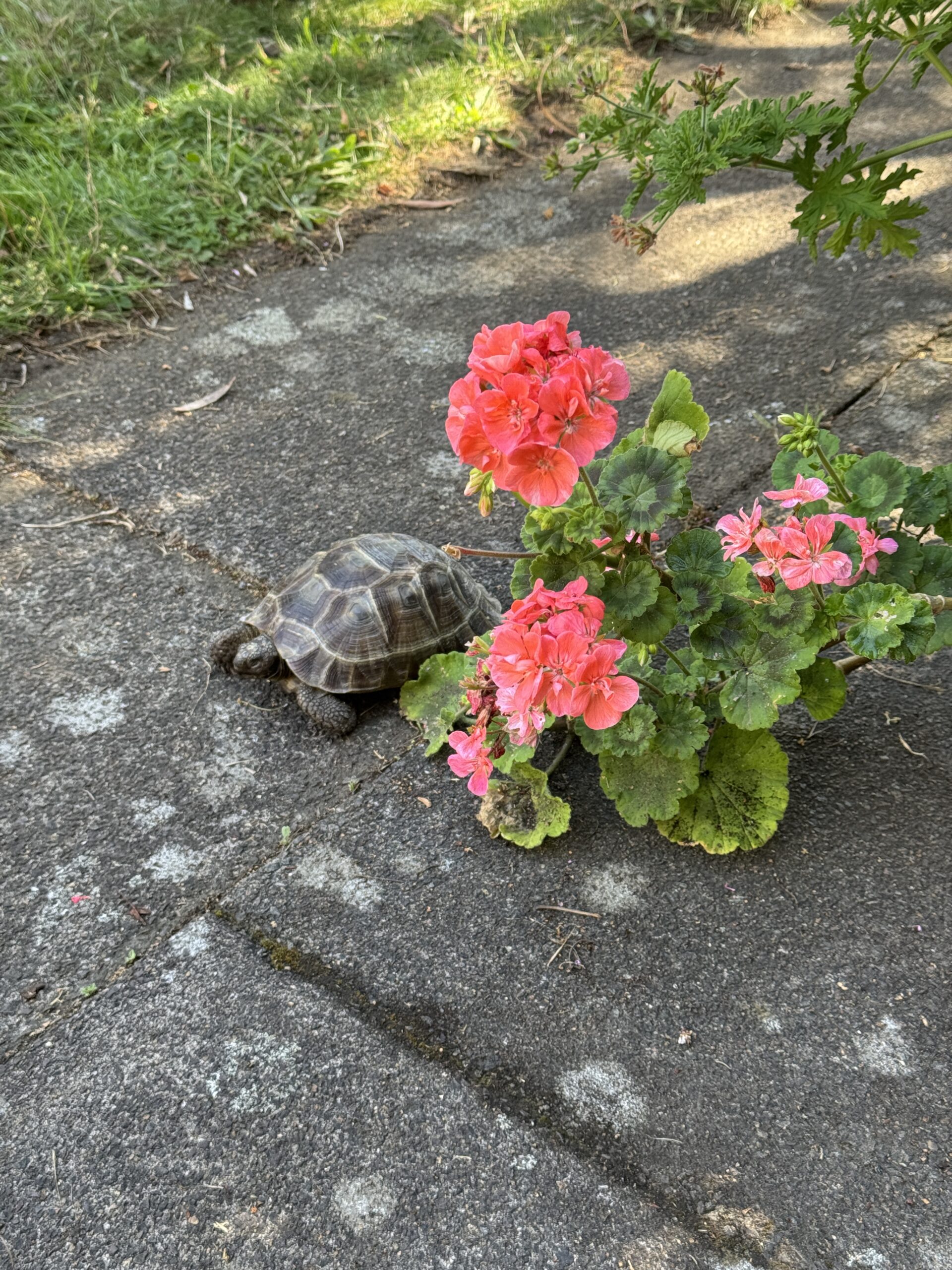
Henry shortly before her attempted escape
[A brief interruption — Henry the tortoise makes a break for it, and is found again a few minutes later.]
Beth: Other than disappearing tortoises, what have been the biggest challenges of gardening here? What have you learned?
Aliaskar: Watering, definitely. We have a large tank hidden under the stairs that we fill from the kitchen tap with a hose, then water the garden from there throughout the week.
Beth: Clever! Otherwise you’d be running up and down the stairs.
Aliaskar: Apart from that, it’s actually quite easy. The biggest challenge is that everything is in pots, so it dries out very quickly. In summer you have to water every day. The biggest lesson I’ve learned is simple: use large pots. They’re not the most beautiful, so I hide them behind smaller terracotta pots. It creates layers, and I pay close attention to the colour and shape of the leaves when I arrange the planting.
Beth: Layers! I love that. It looks so natural — you can’t even see the pots. Do you grow anything from seed?
Aliaskar: We do. Sunflowers, for example. In the beginning we grew lots of flowers from seed, but over time the garden established itself. Every year more plants come back on their own. It becomes surprisingly self-sustaining, so there’s much less work than there used to be.
Beth: That’s the benefit of being in one place for a few years. It’s quite a unique situation. What does this garden mean to you?
Aliaskar: It’s one of the real joys of my life. I spend most of my free time here. This is where I want to be. It has had a real impact on my wellbeing.
Gardening also has shaped the way I think in my work as an artist. I don’t work with plants directly, but I’ve learned so much from them: the care and maintenance they require, the natural cycles, the different scales of time, and the patience that comes with all of that. Simply observing those rhythms makes me feel more grounded and connected to life.
More than anything, it’s home. Caring for living things, watching them grow and taking responsibility for them makes a place feel like family. I think it’s a good lesson in caring for something beyond yourself.
Beth: Yes, it’s good to get out of your own head.
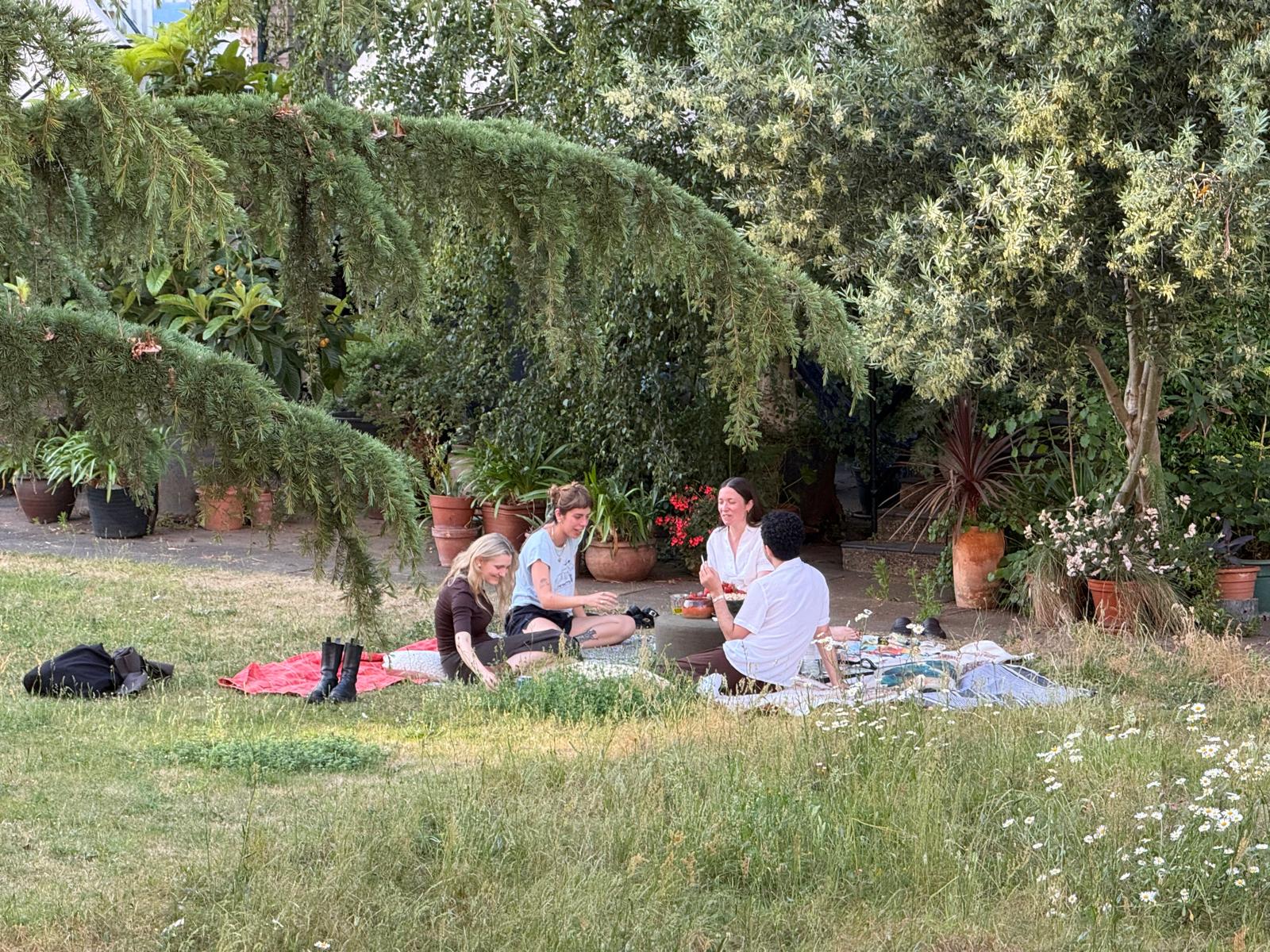
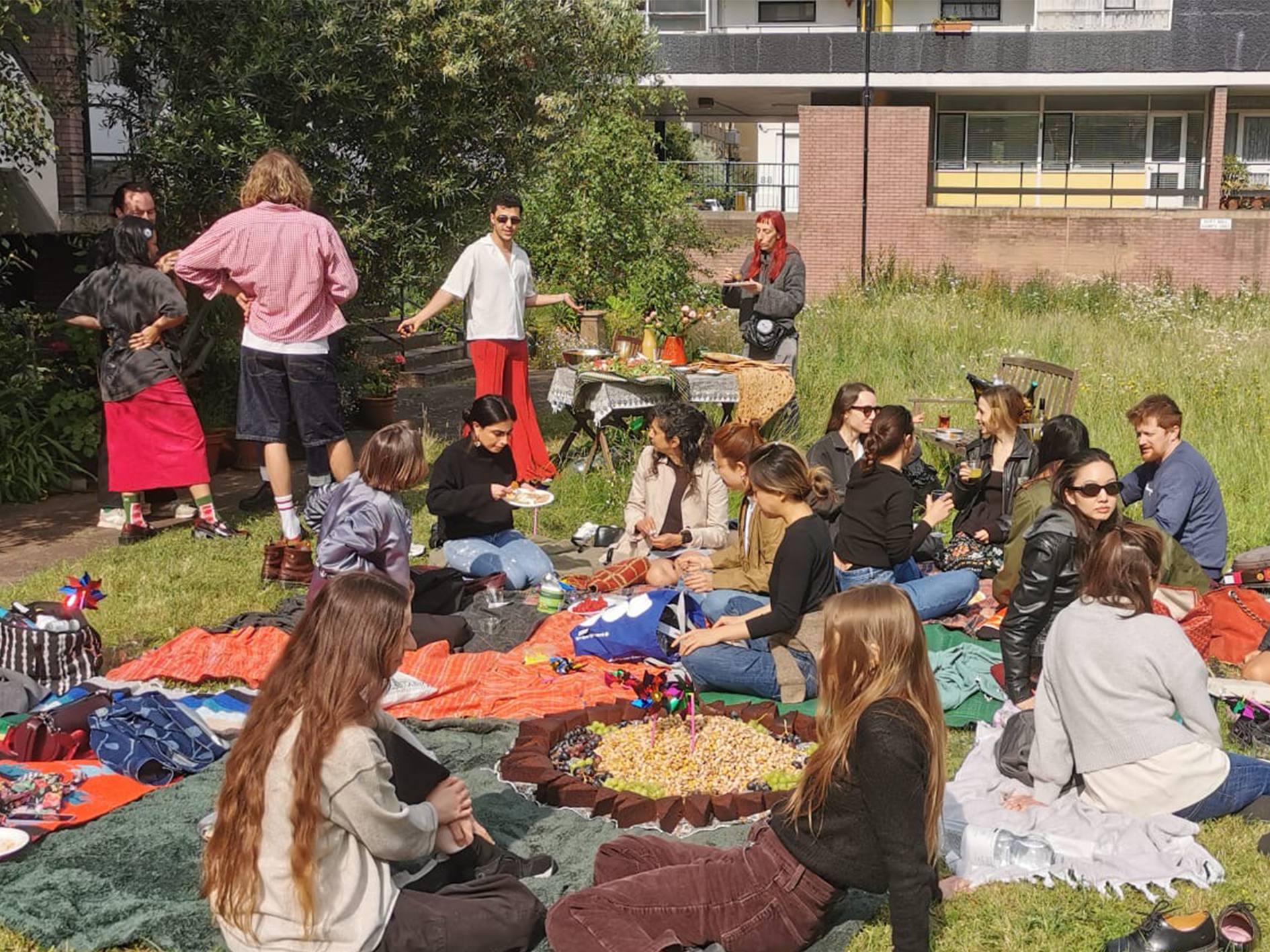
Aliaskar: I also love hosting. There’s something special about cooking with vegetables you’ve grown yourself and sharing them with other people. Every August we have a fig party because the tree produces so much fruit. We make fig tarts, fig salads — fig everything — and share them with friends. Because it’s still a small garden, sharing what it grows feels even more special.
Beth: That’s so nice! Are you out here much in winter?
Aliaskar: Not really. I like gardening because it’s enjoyable — I don’t want to force it. Whatever survives the winter is waiting for us in spring.
Beth: Same, I just stop for a few months over winter.
Aliaskar: Same. In winter we all go inside and, like Henry the tortoise, hibernate together.
Beth: If you owned a garden one day, where would you like it to be and what would you do with it?
Aliaskar: Honestly, this place is already where I feel comfortable. I love this part of London, this estate and this garden. If anything, I’d want a slightly bigger interior, but outside is the perfect scale because I can look after it myself. Once a garden becomes too large, you need help, and I enjoy the work of caring for it.
If I owned the land, I’d plant more trees. I’ve already planted one, secretly, and I’d happily sneak in a few more.
Beth: What kind of trees?
Aliaskar: I like evergreen trees, although I think a mix is important. I also love trees with tall trunks because they create a sense of height and scale. There’s a tiny cherry tree over there, and a loquat and an olive tree.
Beth: It’s amazing that you can harvest figs and olives in London. Do you grow herbs to cook with?
Aliaskar: We grow rosemary, sage and mint. I forgot to plant basil this year, though. I need to fix that.
Beth: How long do you think you’ll stay here?
Aliaskar: As long as our landlord will have us. We’re incredibly lucky. When I had to move from my previous flat, a curator friend mentioned someone who was renting a place. It turned out to be this flat, just a few doors away. It felt meant to be.
Every time I’m in this garden, I silently send our landlord blessings. She used to live here herself, so she also knows our neighbours. There’s a real sense of trust and community here. Sometimes you simply know you’re in the right place.
I’ve realised there are many kinds of relationships in life — family, partners and friends — but neighbours are something different. Being a neighbour is its own kind of friendship.
…
Reluctantly, it’s time to leave Aliaskar’s haven. On my way out I pass one of his neighbours, whom I’d met earlier while photographing the garden.
“Did you get some good photos?” she asks. “They absolutely love that garden, they do.”
Aliaskar Abarkas (Iran, 1994) is an artist based in London. Rooted in alternative and communal art education, his practice stages choreographic encounters that move from individual elements into collective expression. Often in dialogue with historical sources, Abarkas builds collaborative frameworks that invite participants to interpret and activate inherited scores through sound, exhibition-making, and performance.
He is currently an Associate Artist at Rose Choreographic School, Sadler’s Wells, and Lead Artist at Autograph Gallery in partnership with All Change. Current projects include commissions with Whitechapel Gallery and Counterpoints Arts, the Busan Biennale (South Korea), and 421 Arts Campus (Abu Dhabi).
Website: aliaskarabarkas.com
Follow Aliaskar on Instagram: @aliaskar______abarkas