Posted on 30 Jul 2026

Food

Ceri Jones, Food Educator

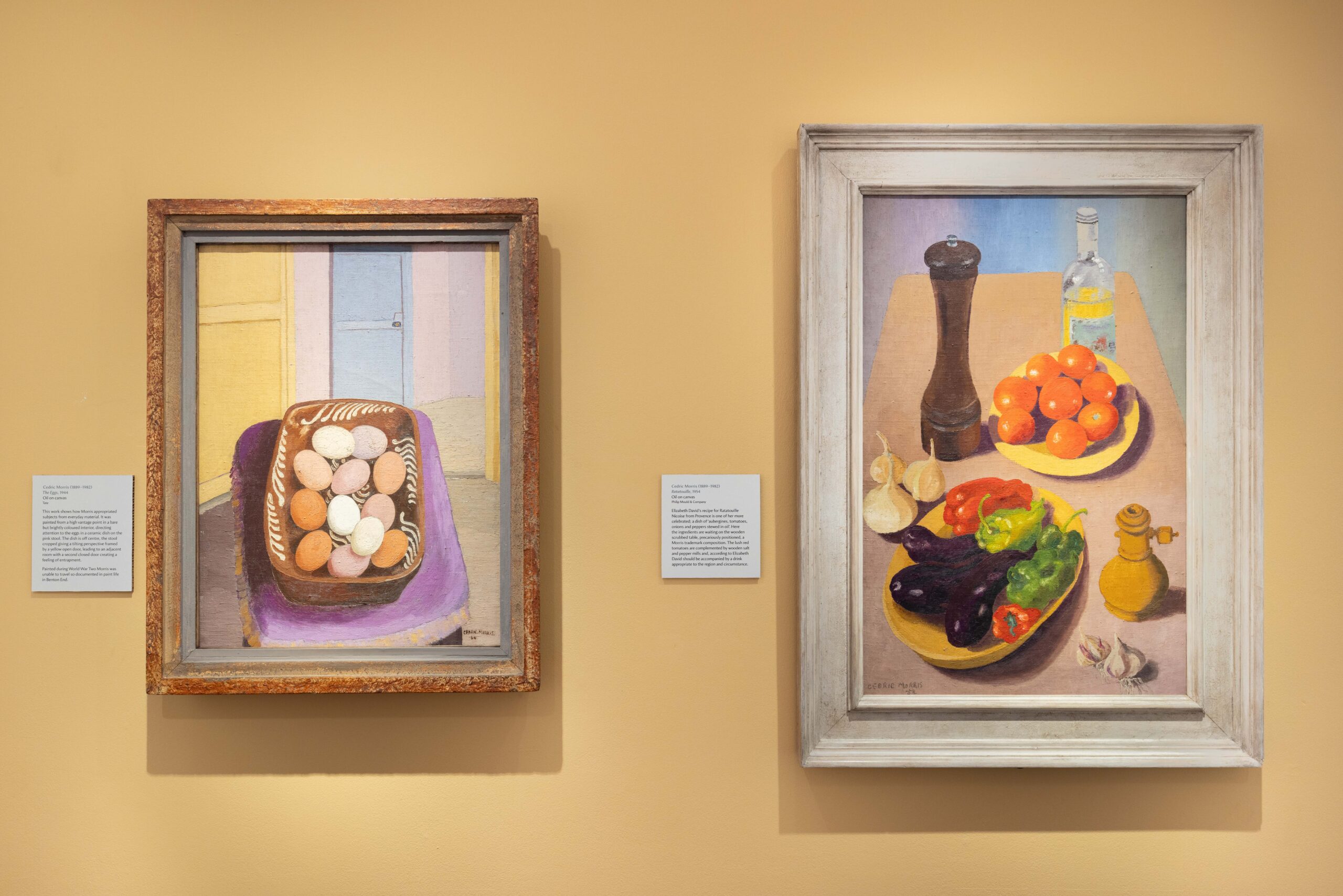
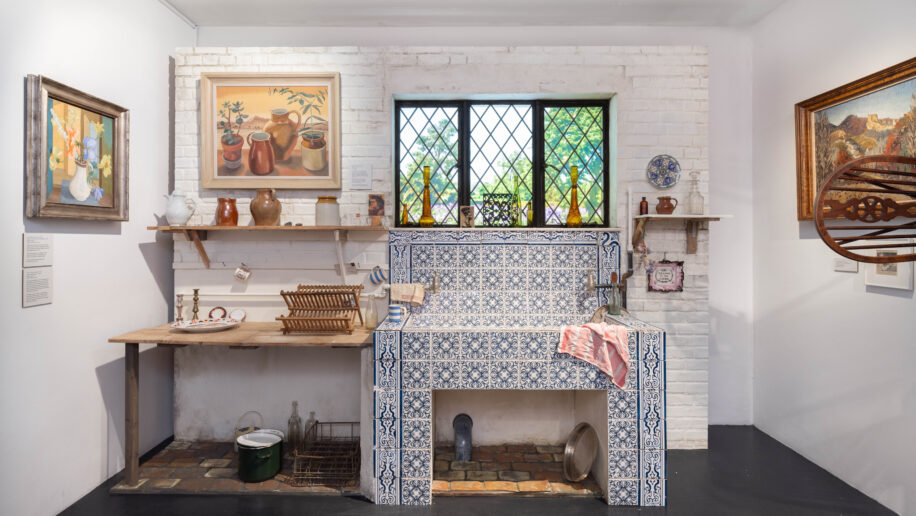
It’s not often that a celebrated cookery writer features in an exhibition at the Garden Museum. So when I learned that Elizabeth David was a close friend of Cedric Morris and Arthur Lett-Haines, and had cooked with them in the kitchen at Benton End, it presented the perfect opportunity to cook one of her recipes. Since we have Cedric Morris’ still life Ratatouille (1954) in the exhibition, there was really only one option: make Elizabeth’s ratatouille recipe.

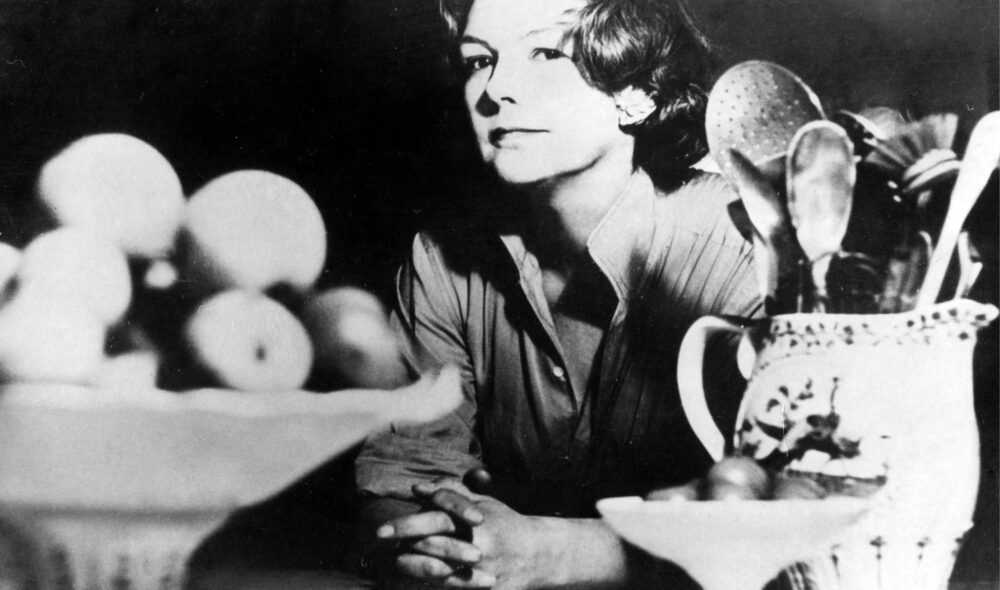
Elizabeth David - Cookery writer

Ratatouille, 1954 (right) and The Eggs, 1944, by Cedric Morris, on display in Benton End: A Paradise of Pollen and Paint. Photo by Ben Deakin

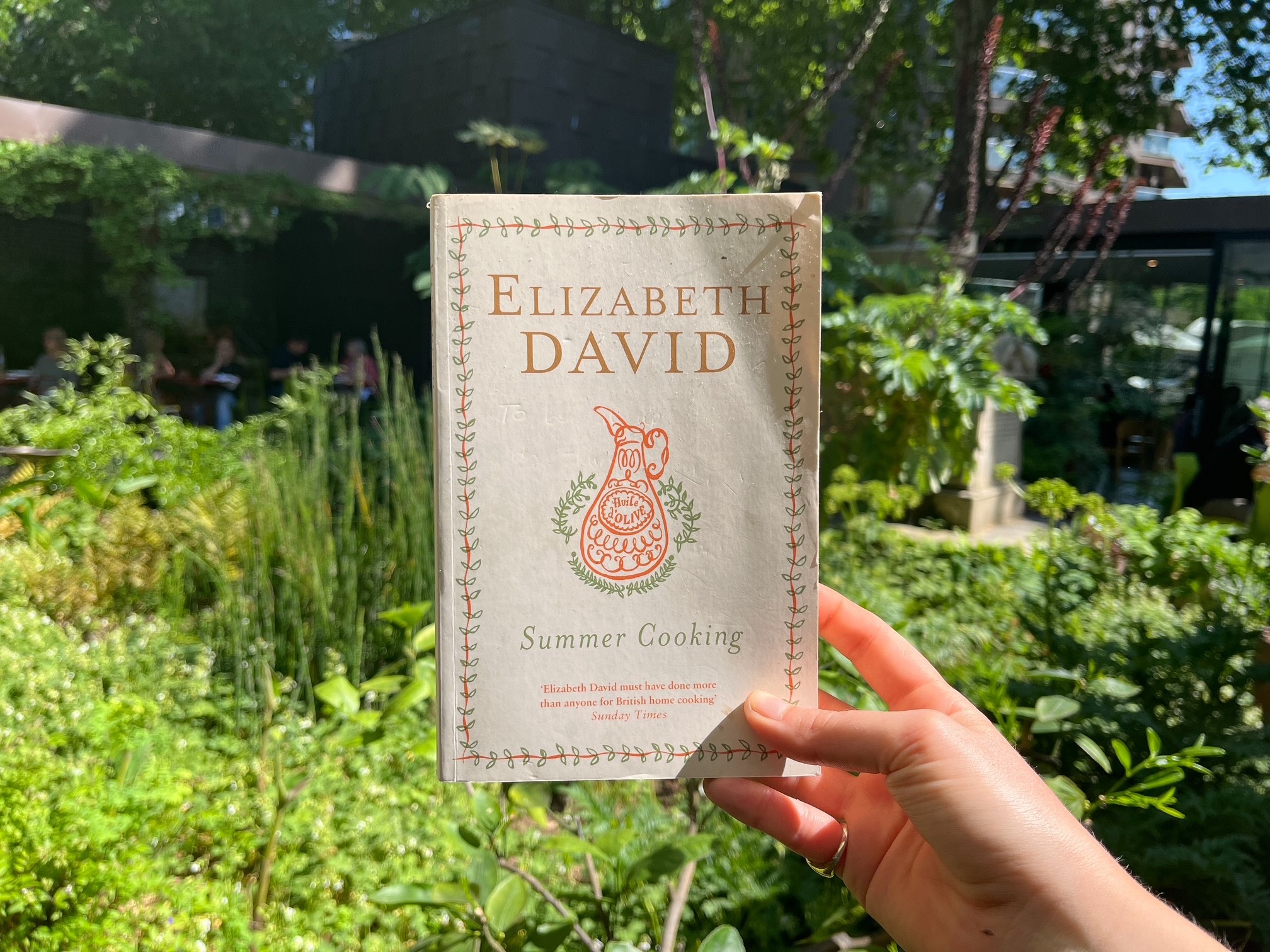
A recipe for ratatouille appears in a few of Elizabeth’s books, but since I own Summer Cooking, that felt like the version I should make. I was given a copy of this book at the start of my food writing journey around 10 years ago by a food writing friend who insisted I should get to know her work. This was, I’m now embarrassed to admit, my first encounter with both her and her work. I was 10 when she died, and because I grew up in a household with a strong allegiance solely to the cookbooks of Delia Smith her work just hadn’t found its way onto my radar.

Initially I dismissed Elizabeth as an upper-class cook from the 1950s, who I couldn’t possibly identify with or find any interest in. What I hadn’t realised was just how much her work had already shaped the way I cook. Through popularising Mediterranean ingredients and recipes she helped make olive oil, aubergines and courgettes far more familiar for British home cooks. Plus, Mediterranean cooking has always been my favourite. Perhaps we had more in common than I thought.


Elizabeth's Summer Cooking, 1955

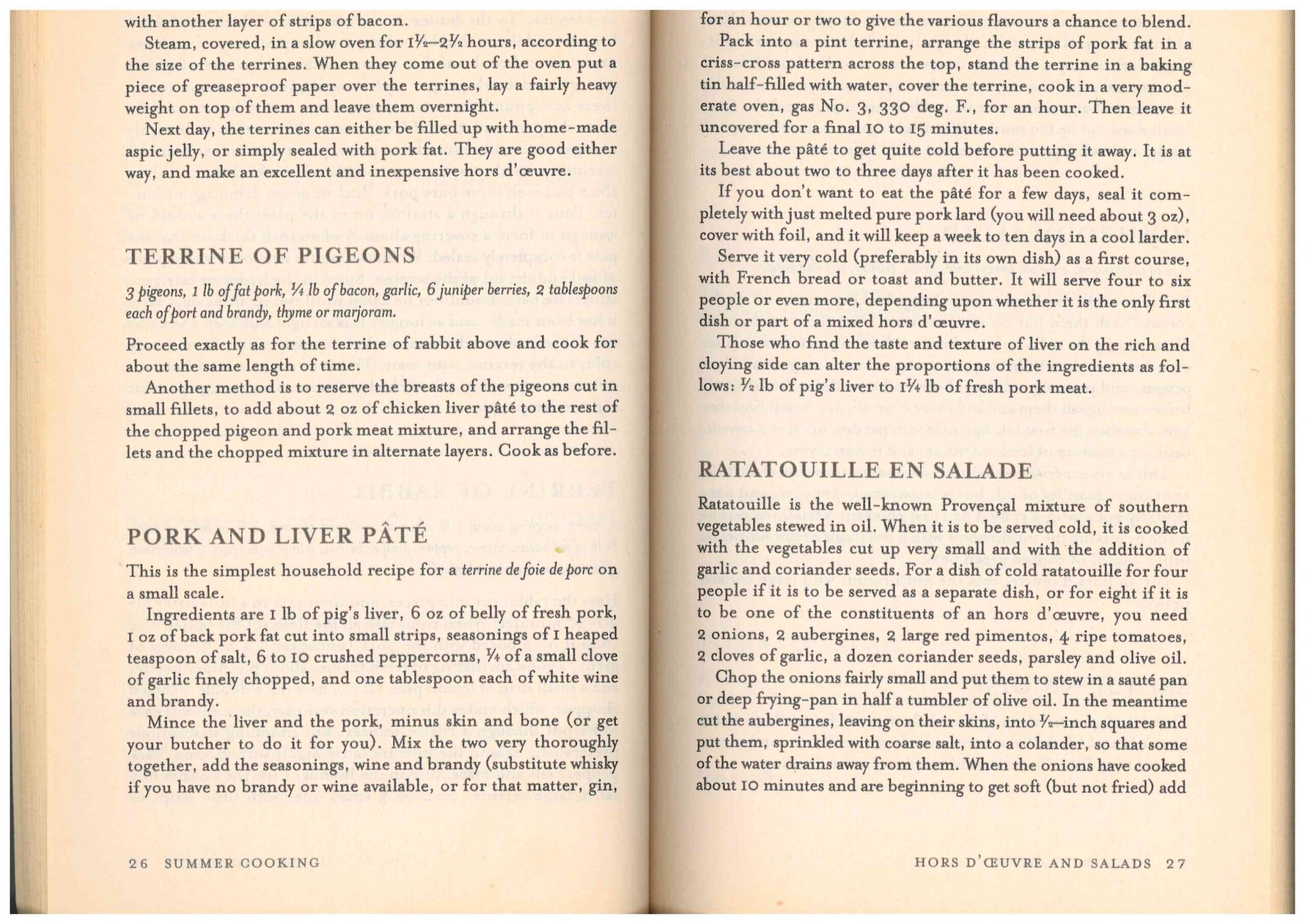
To really understand Elizabeth and just what a pioneering voice in food writing she was back then, you do really need to cook her recipes. After making the ratatouille, it made me reflect on what a privilege it must have been to have the opportunity to be one of the first people to publish this – and other – recipes in the UK that have really stood the test of time. Having cooked Elizabeth’s ratatouille recipe, I’m now not sure I need any other.

Cooking from a 1955 recipe was a bit intimidating at first. No photos – fine we all know what ratatouille looks like – but, the ingredients and instructions of the recipe were written in tricky to follow prose rather than bullet points, with plenty of prior knowledge assumed.

Once I’d confirmed that I needed to blanch and peel the tomatoes (Elizabeth simply says to chop them, but who wants tomato skins floating in a stew?), and figured out how much “half a tumbler” of olive oil was, I was off. I even salted the aubergines because Elizabeth insisted, even though 2026 me would never.

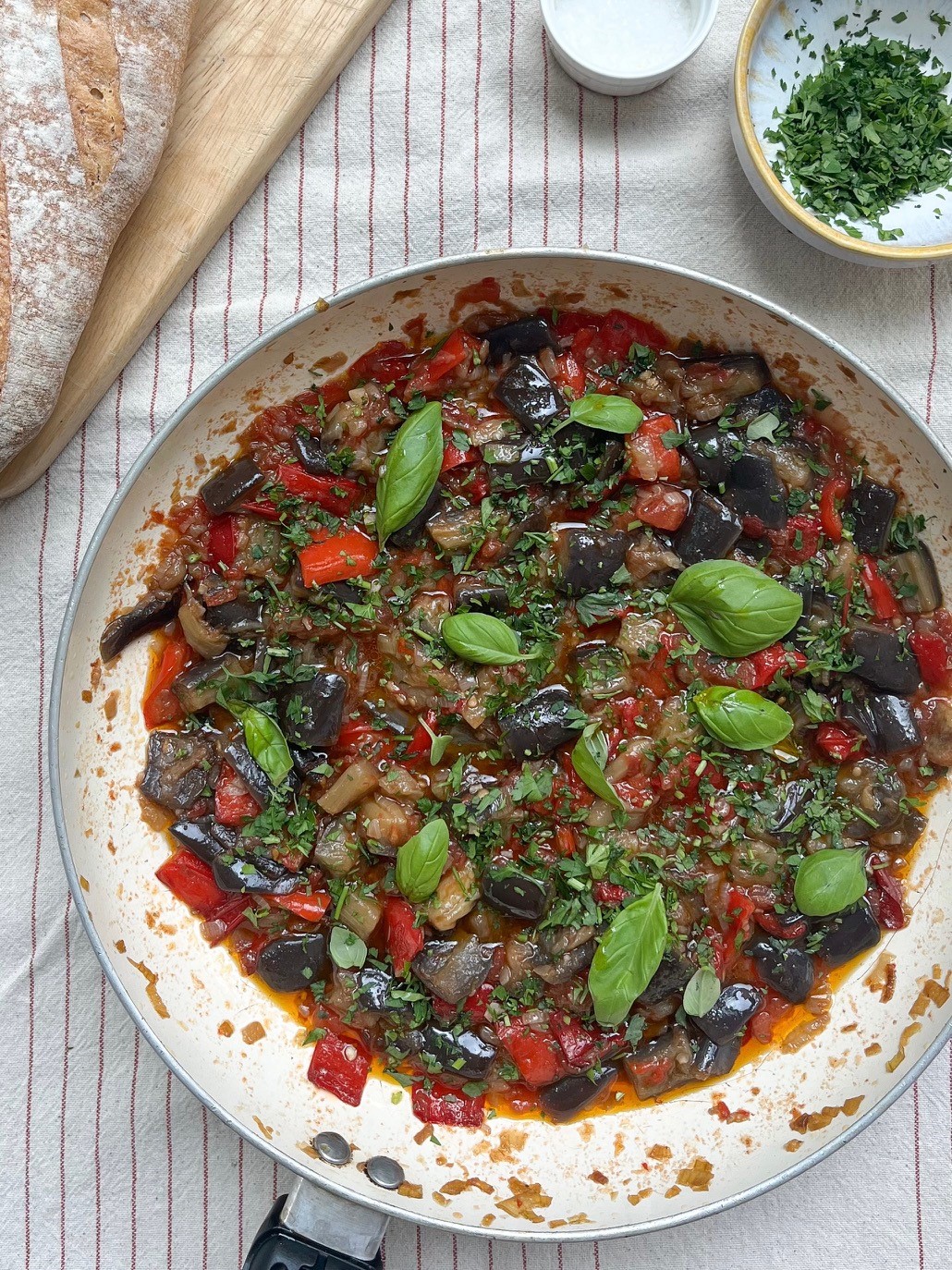
I think Elizabeth trusted me with the recipe more than I trusted myself. Once I stopped worrying and let my instincts take over, seasoning to taste as I went, and deciding exactly when it was ready, it worked beautifully. I’m still not quite sure what the 12 whole coriander seeds add to the dish, but nevertheless the end result was utterly delicious.

Before I started cooking (and filming the recipe for an Instagram reel), I rewrote Elizabeth’s recipe with the level of detail we’ve come to expect in 2026, making notes and adjusting as I cooked. If you’d like to cook along, you can follow my version, or take on the challenge of the ambiguity of Elizabeth’s original. The choice is yours.
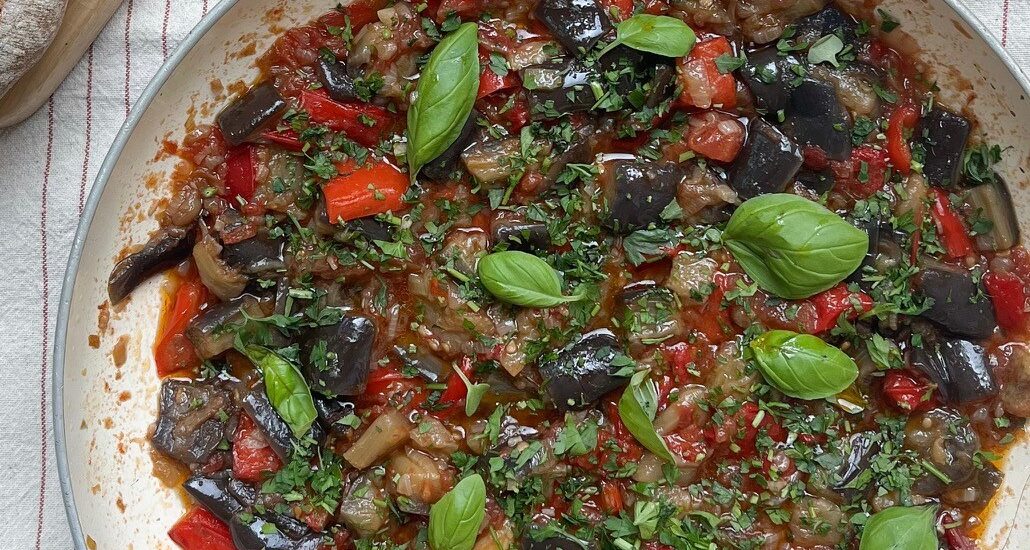
Elizabeth David’s Ratatouille (a 2026 interpretation)

Elizabeth David’s original recipe assumes a confident cook, so this version adds a few details that would have been left to instinct in 1955.

Serves 4 as a side dish, 8 as an appetiser. Best served at room temperature, with plenty of baguette for dunking.

Ingredients

2 aubergines, diced into 1.5cm cubes
2 onions, finely chopped
2 large red peppers, diced into 1cm cubes
4 medium sized ripe tomatoes, approximately 400g
2 cloves of garlic, finely chopped
12 coriander seeds
A handful of parsley roughly chopped
A handful of basil leaves, left whole
125 ml extra-virgin olive oil
Sea salt

Method

  1. Put the aubergines into a colander over a bowl and sprinkle with a little sea salt. Leave for 20-30 minutes so that some of their water drains away, then pat dry.
  2. Meanwhile, heat the oil on a low to medium heat in a deep frying pan and sauté the onions with a pinch of salt for about 10 minutes, until softened, but not coloured.
  3. Next add in the aubergines and peppers. Cover the pan with a lid and let them simmer in their own juices for 30-40 minutes, till they get really soft.
  4. While the vegetables simmer, use the time to prep the tomatoes. Bring a medium sized saucepan of water on to boil, and prepare a bowl full of iced water. Score a small cross in the bottom of each tomato and use a slotted spoon to gently ease each one into the boiling water. Cook for around 1-2 minutes, or until the skin starts to peel back at the cross. Use the slotted spoon to pull the tomato out of the water and transfer to the bowl of iced water. Once cool to the touch, use a paring knife to peel off the skin of the tomatoes. Chop the tomatoes in half, remove the stalk and roughly chop, reserving the juice and seeds if you like.
  5. Add the chopped tomatoes into the stew along with the garlic and coriander seeds. Cook uncovered for around 10-15 minutes or until the tomatoes have completely melted into the sauce.
  6. Turn off the pan, season to taste and leave the stew to cool to room temperature. Just before serving garnish with the chopped parsley and basil leaves. Serve with some crusty French baguette.

Benton End: A Paradise of Pollen and Paint is open until 20 September 2026