Geraldine Stutz Gibbs Garden at Roxbury Falls
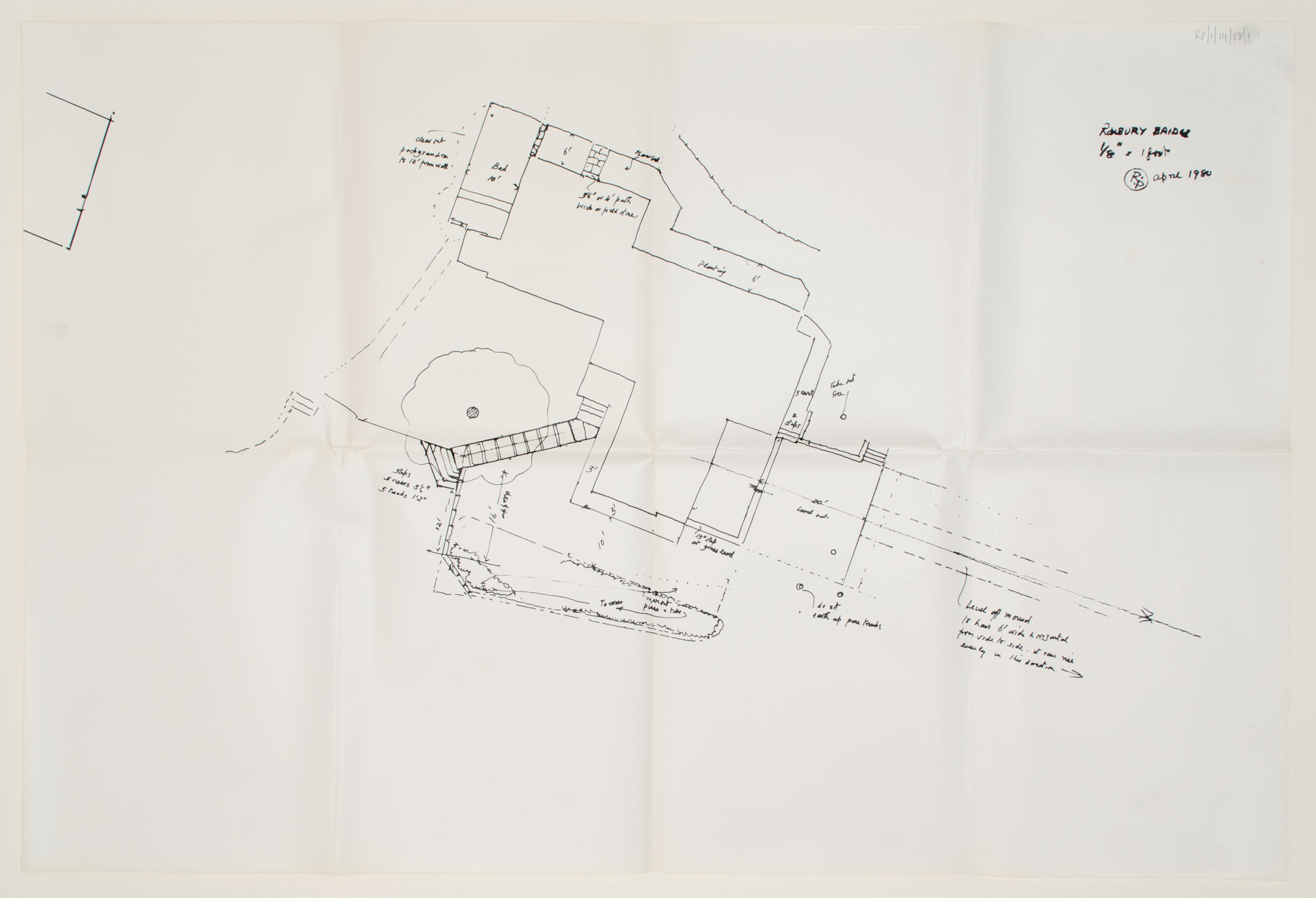
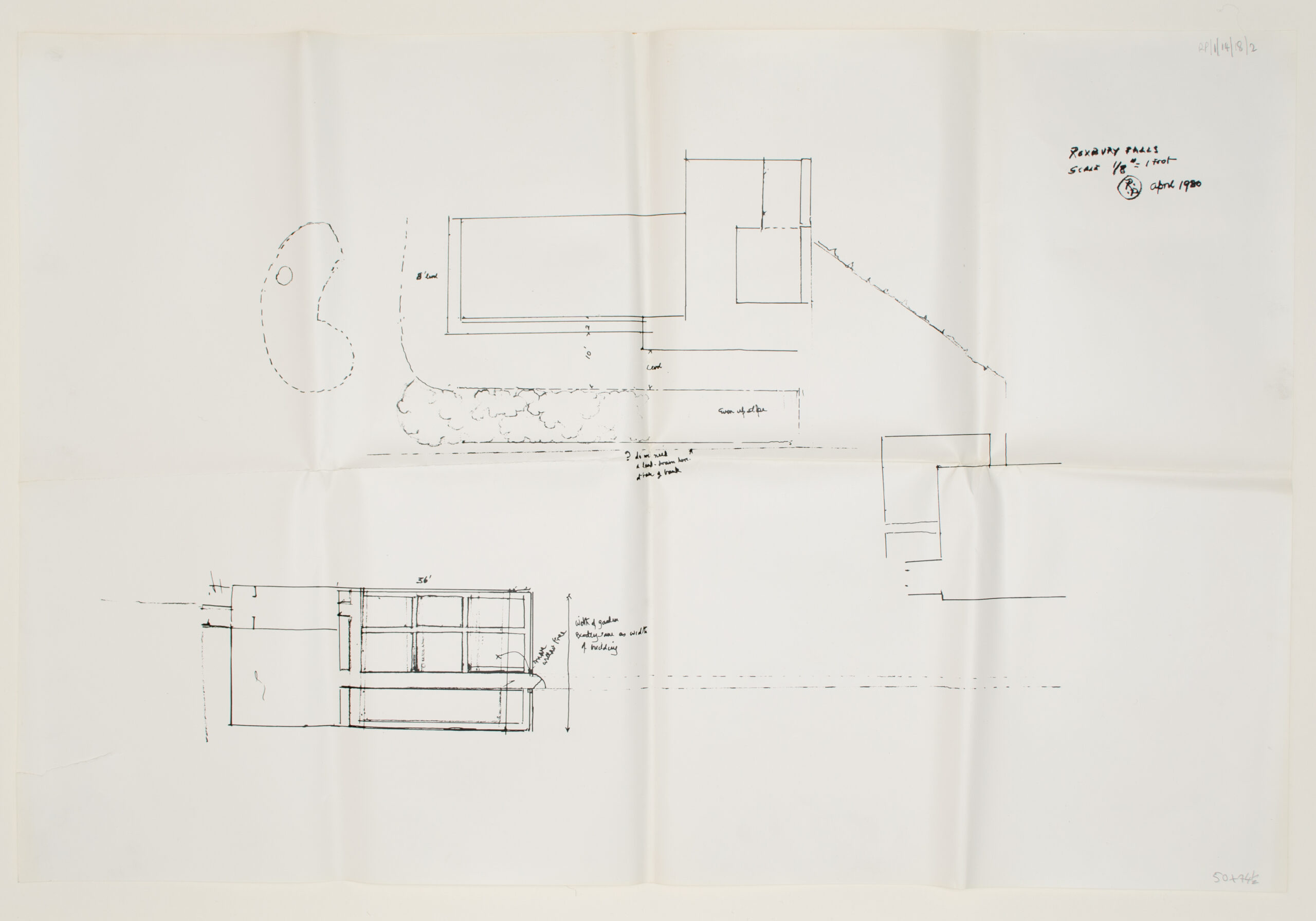
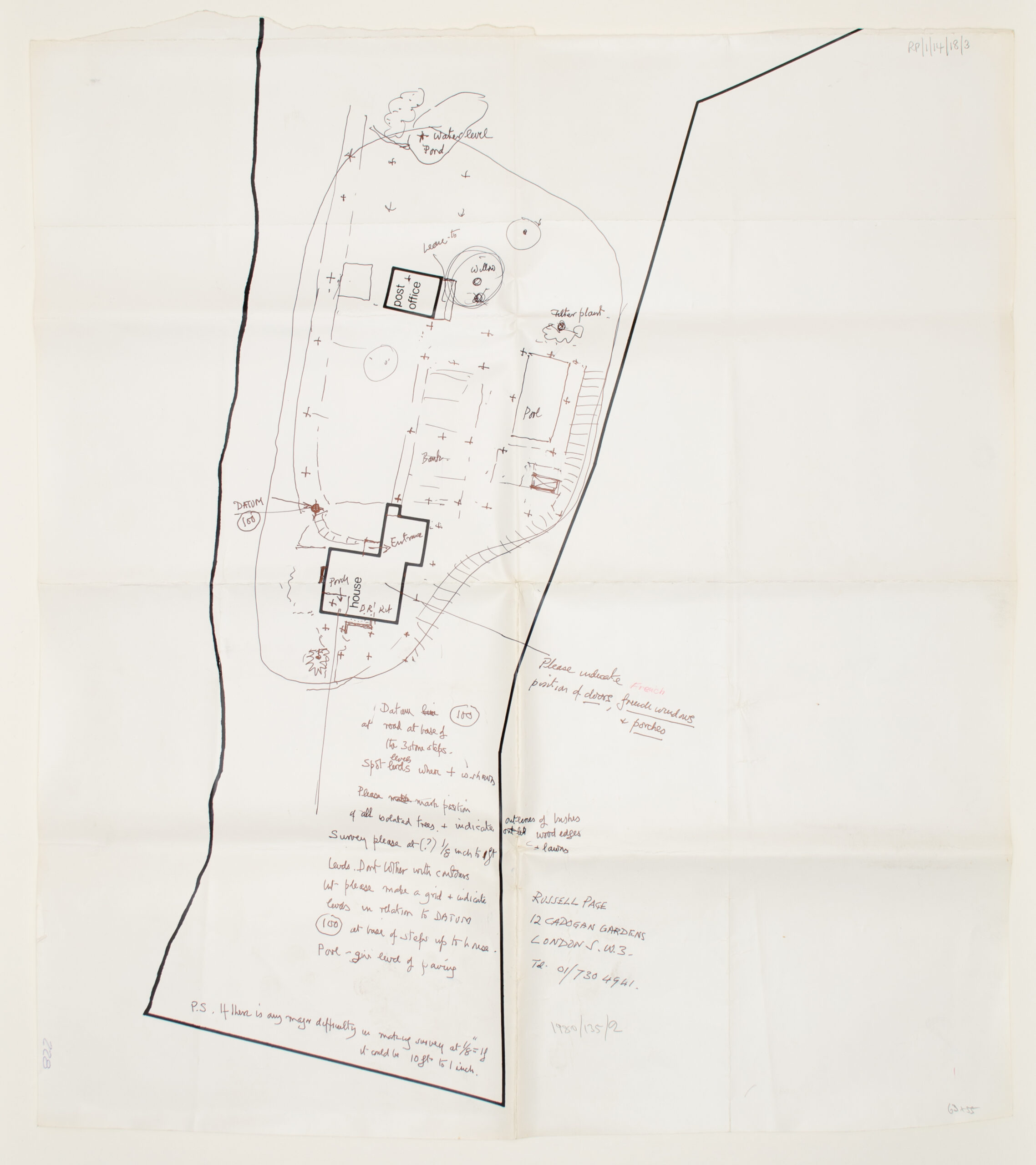
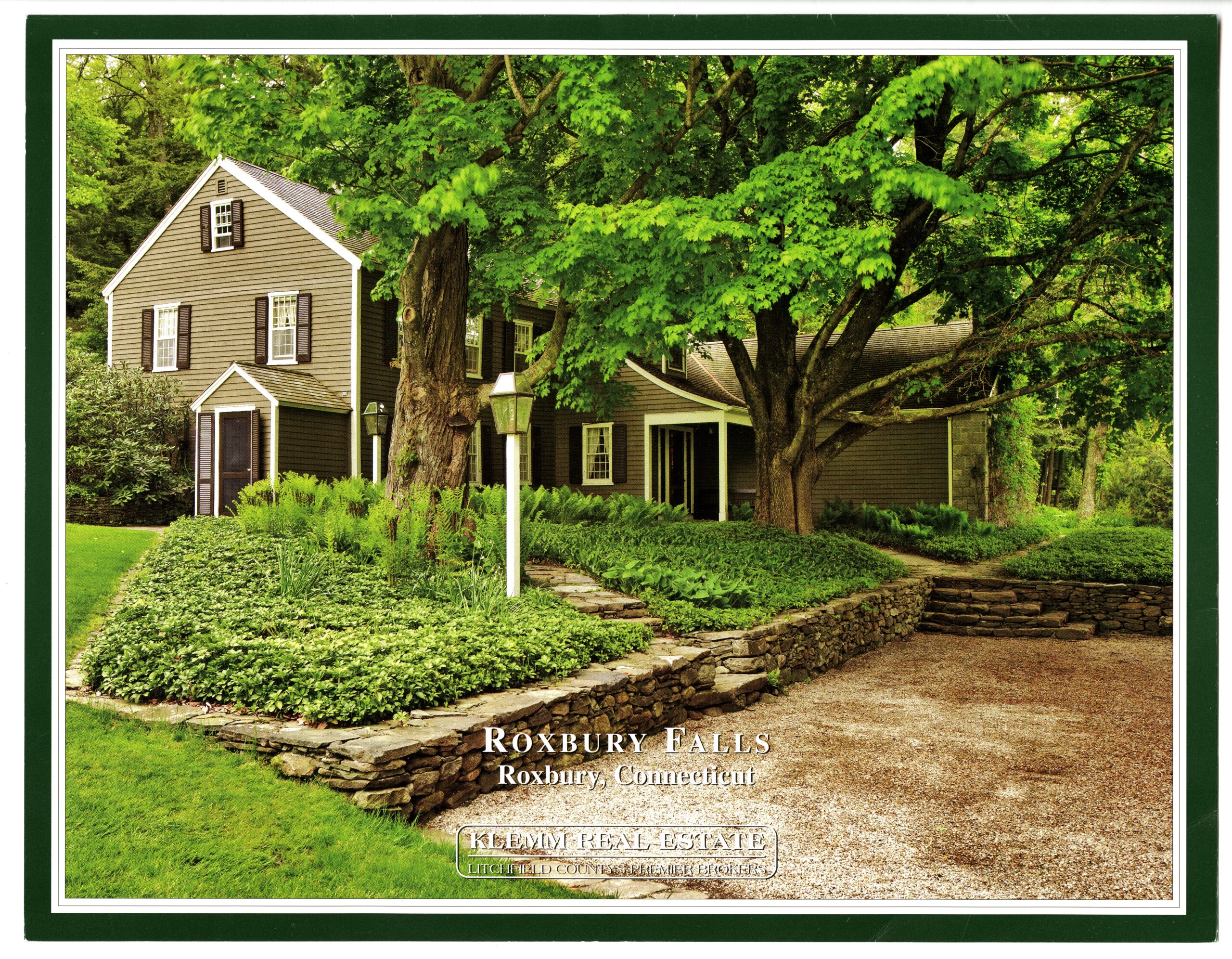
When Russell Page first visited the home of Geraldine Stutz in Connecticut, they spent two hours walking around the garden together in silence. It was raining, and Stutz spent the whole time holding an umbrella above Page’s head (no easy task given he was 6’7”). He picked up soil and broke off leaves. When every corner had been explored, Page turned to his host and said, “Geraldine, you have the perfect combination of deep country and white water, and we will make it wonderful” (Mortimer, 208).
The property, an eighteenth-century colonial-style house, was indeed perfectly situated, facing directly onto where the Shepaug River meets the Roxbury Falls cascades. It came not only with a log cabin but also the former Roxbury post office; Geraldine Stutz restored both, turning them into guest houses.
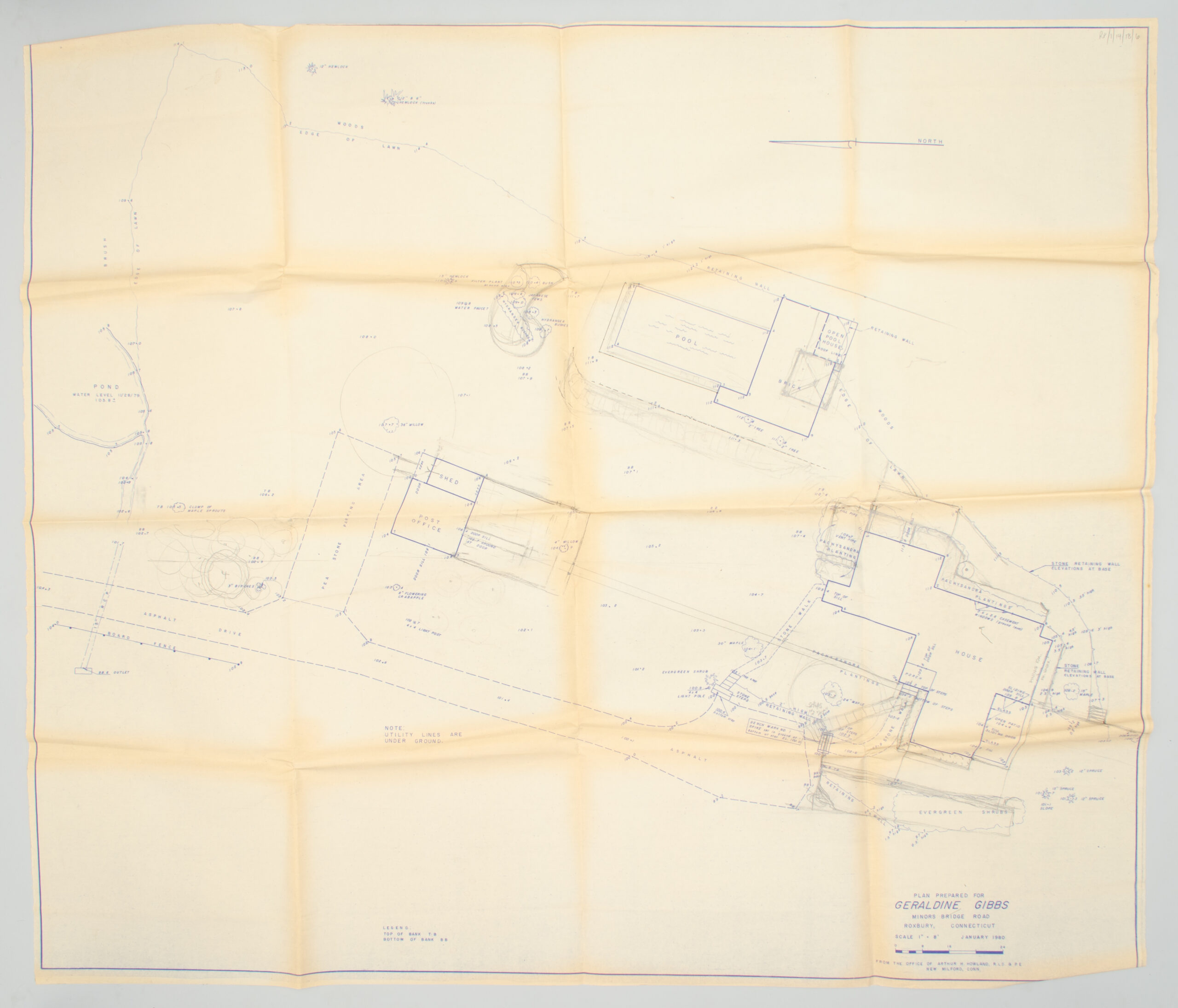
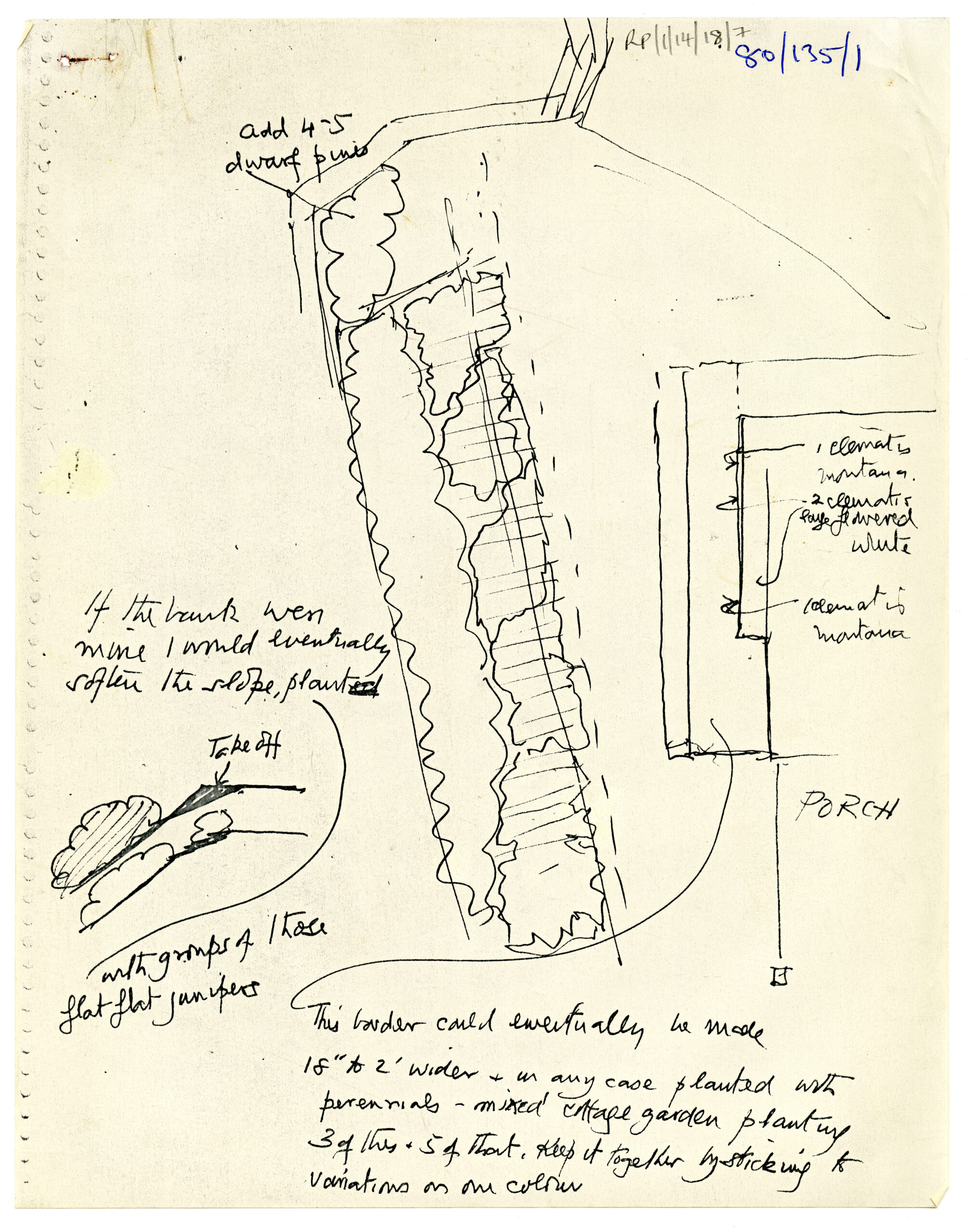
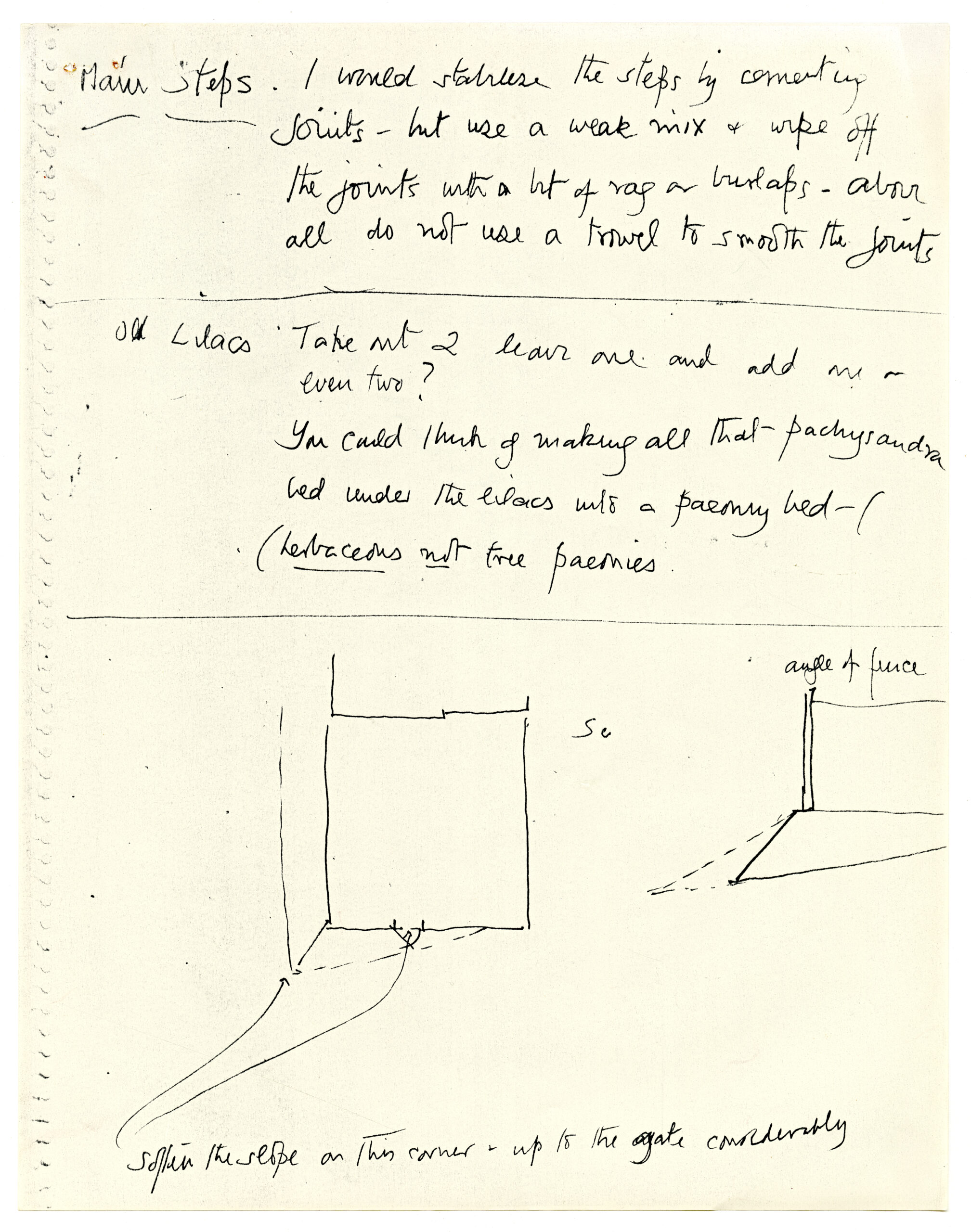
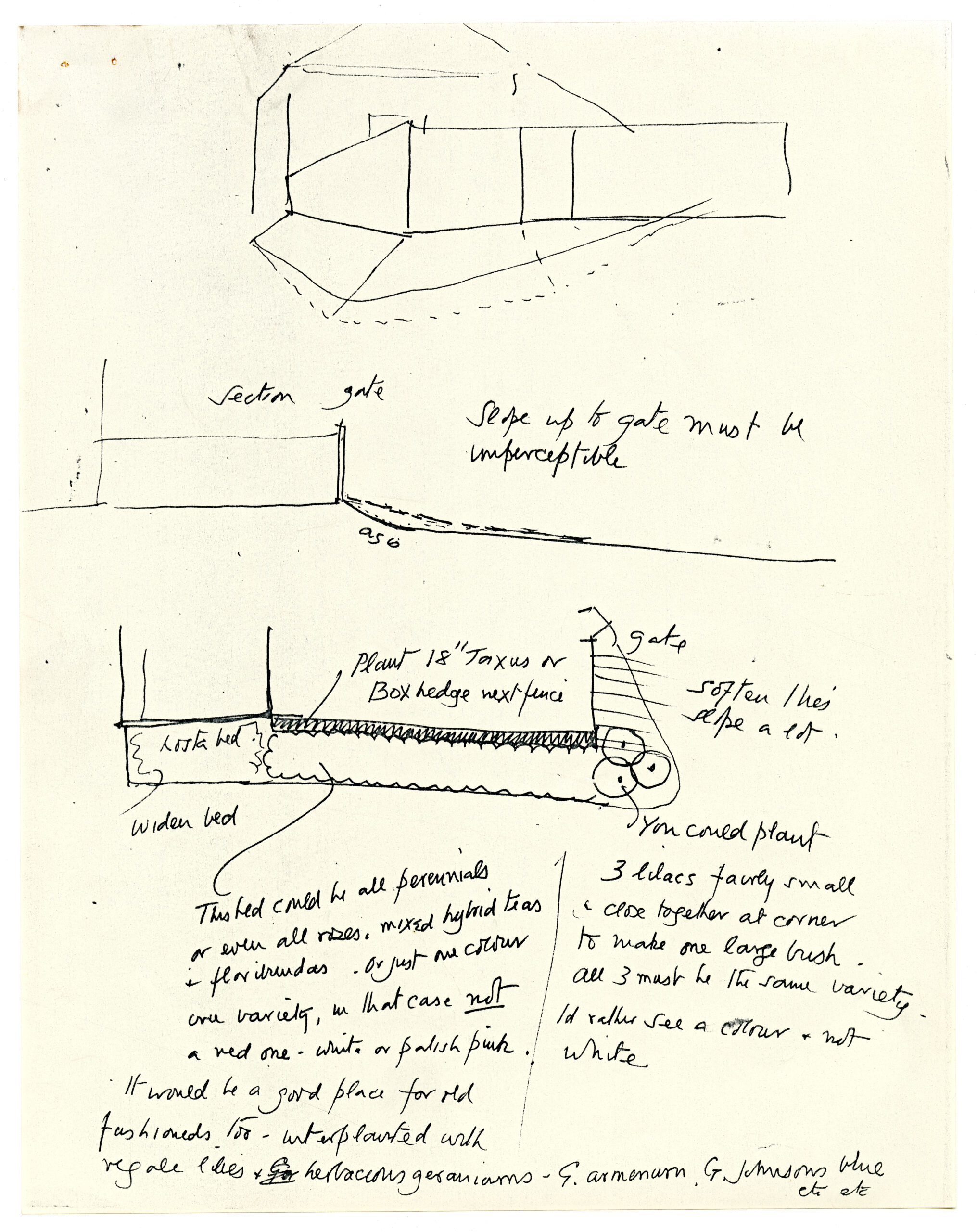
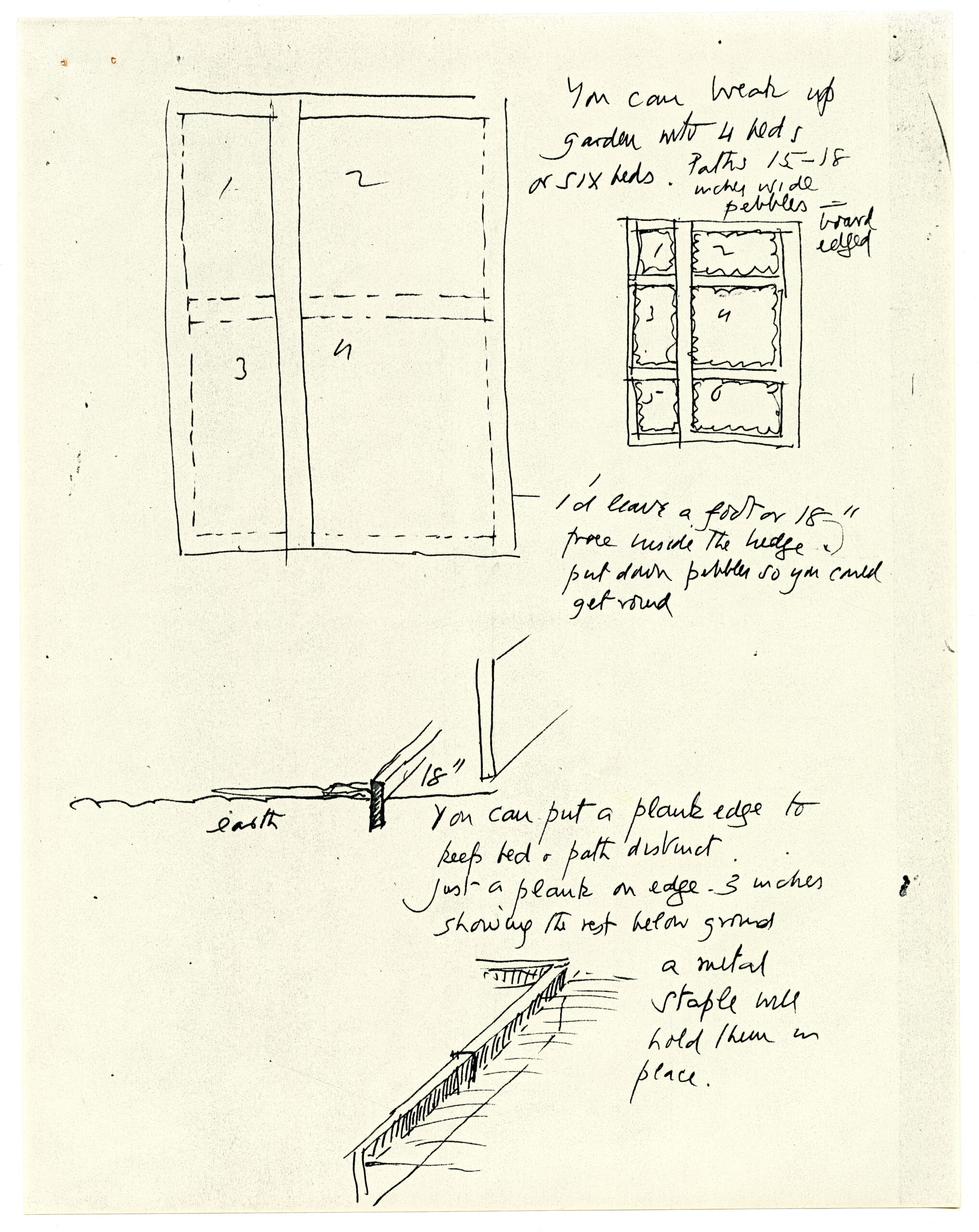
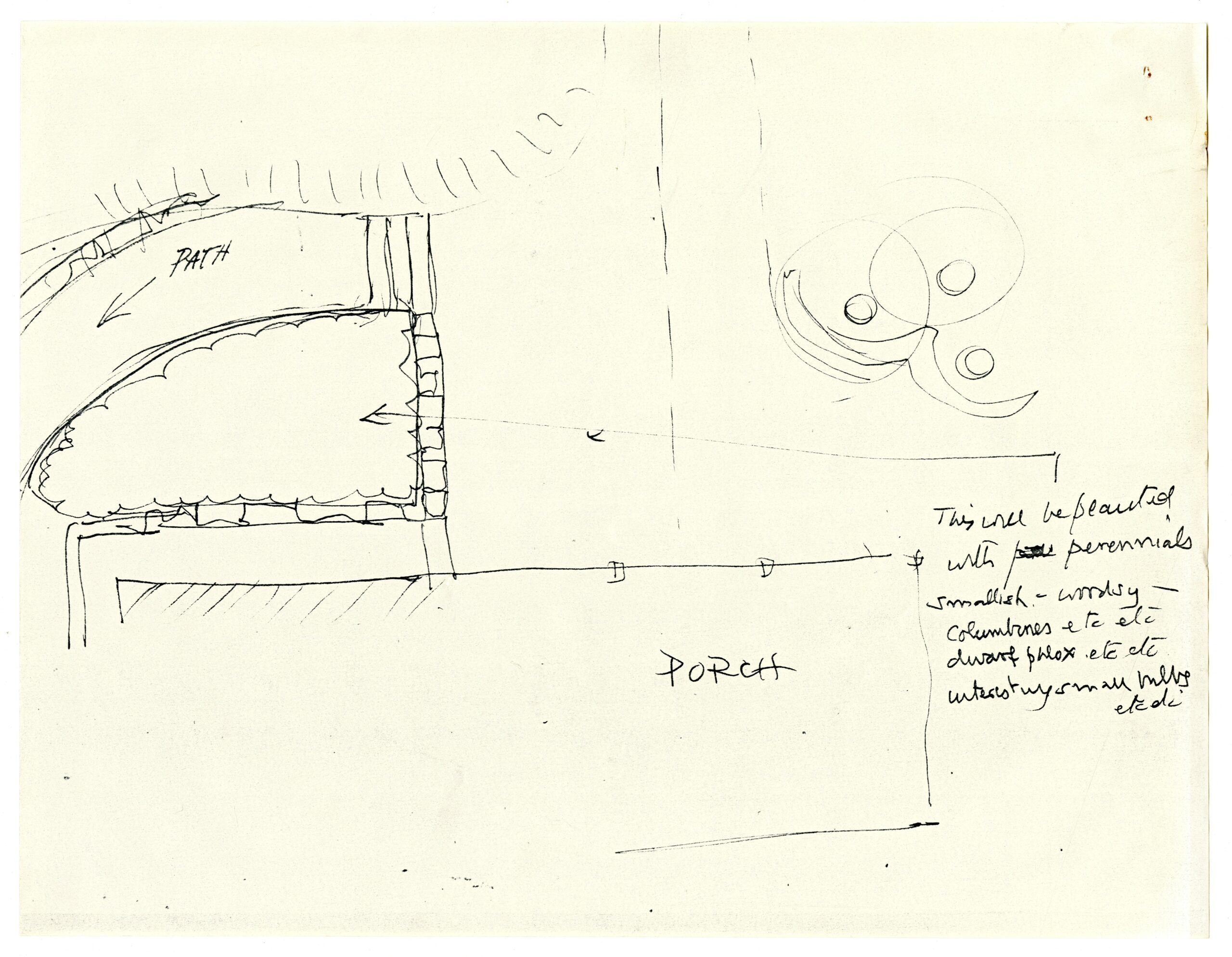
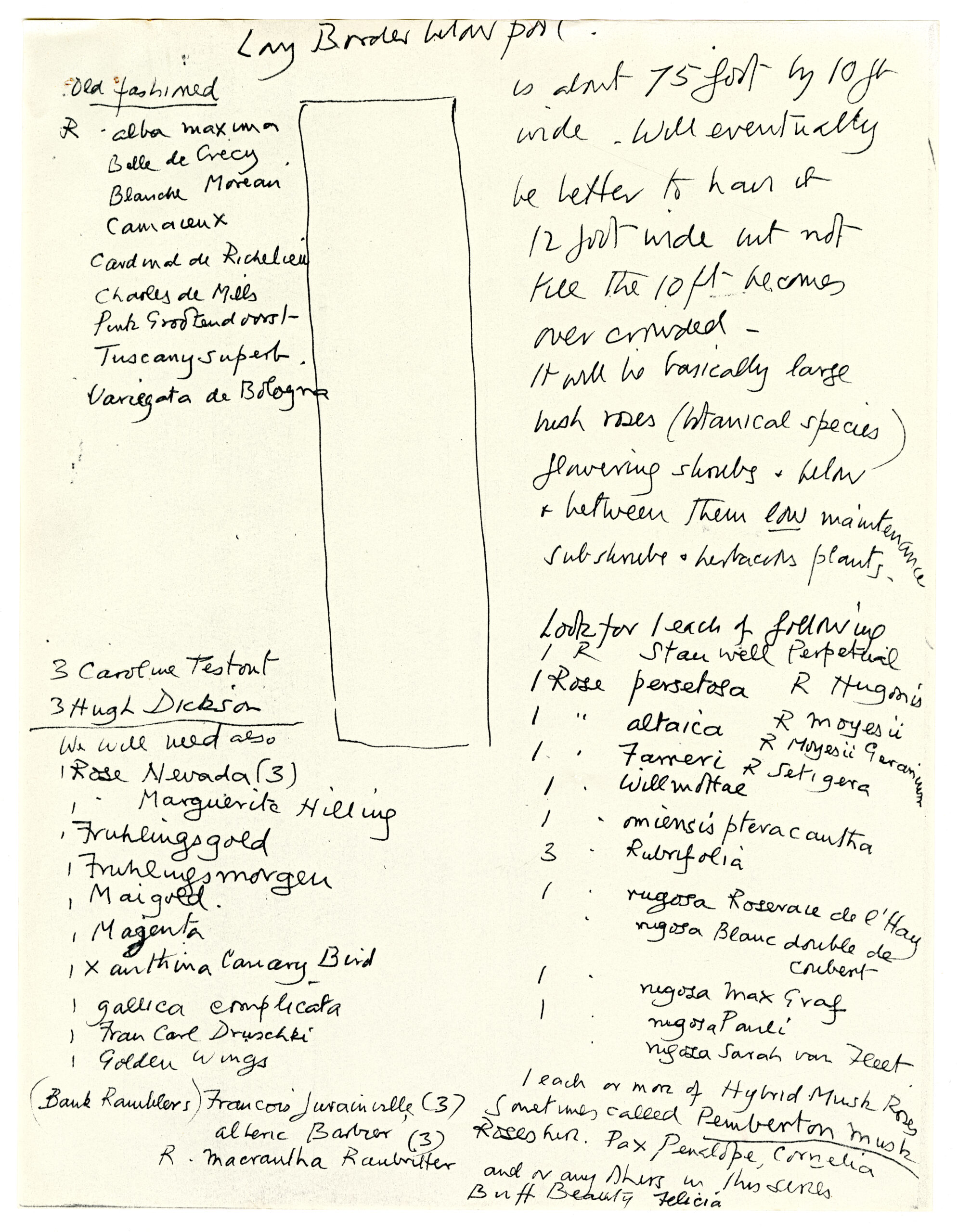
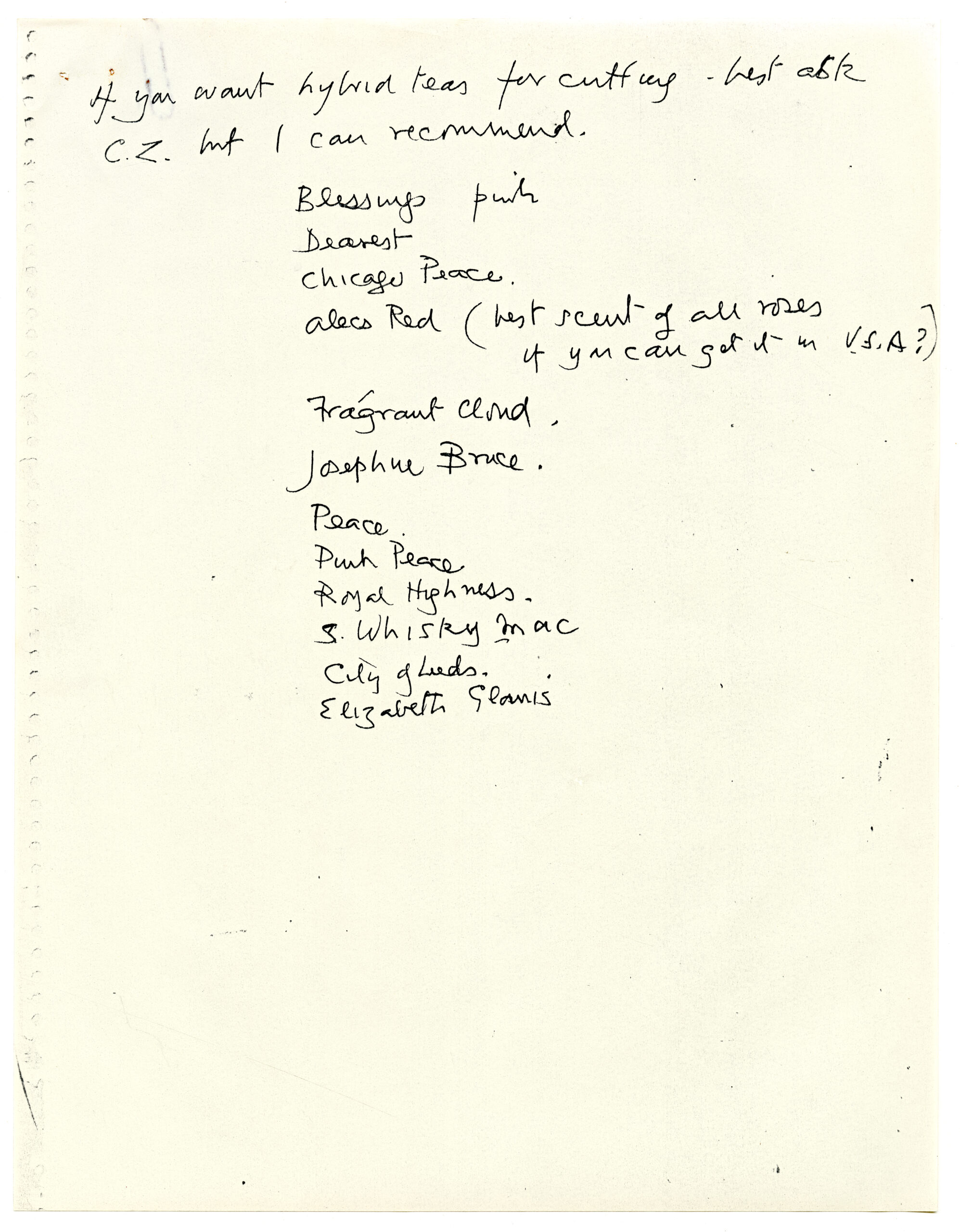
The surveyor’s plan (RP/1/14/18/6) shows that the pool, and open-sided pool house, were already in place when Page started on the project. His main task was to improve the contours of the land and devise fresh planting. He recommended softening slopes, and designed new steps. Weeping willows were planted around a curved pond. A sketch for a border close to the house includes notes suggesting a selection of cottage garden perennials (RP/1/14/18/7, 1 of 7). Another border, below the swimming pool, was to be filled mainly with roses: ‘Alba Maxima’, ‘Cardinal de Richelieu’ and ‘Tuscany Superb’ among them (see RP/1/14/18/7, 6 of 7). When it came to the choice of Hybrid Tea Roses for cutting, however, Page suggested that Geraldine Stutz ask her friend and neighbour CZ Guest for advice.
It was Mrs Guest, socialite, writer and gardening enthusiast, who had persuaded Page to take on the project. Before visiting Roxbury Falls, Page had been reluctant to design the garden. He was, by 1980, in his early seventies and was busy working at the PepsiCo headquarters in Westchester, New York. He was in no need of smaller, private commissions. By this date, a decision to work on a garden was largely informed by what Page thought of the client. “I can’t really do anything that’s better than the clients are,” he told the critic John Russell in 1983. “The garden is going to be their portrait as much as mine. And when it’s done it has to look as if it couldn’t ever have been any other way” (Russell, 1).
Geraldine Stutz was a highly intelligent woman. She was married to the British art dealer David Gibbs from the mid-1960s until they divorced in 1977. Impeccably stylish, with a keen eye, Stutz became famous as the president of the emporium Henri Bendel; she turned it into one of New York’s most thriving and avant-garde fashion stores (Andy Warhol was an in-house illustrator during the 1960s).
Page eventually agreed to meet, on one condition: “If she will pick me up at the Carlyle Hotel promptly at nine on Saturday morning and see that arrangements are made for me to be back in town by seven, I will come and take a look.” (Mortimer, 130). He made quite a first impression:
“Standing under that canopy is this tall man in exactly the right kind of worn corduroy and gum boots with an easy jacket and a scarf twirled twice around his shoulders, wearing a beret because it was raining. He was very tall, maybe six feet seven. And wonderful. He was like a tree who had been out against the elements, as he had been for seventy years. Everything was oversize but elegantly attenuated. Long pants, long fingers, and body very graceful… When we arrived, he takes his umbrella out of the backseat, raises it, hands it to me, and without a word takes off. He intends I should go with him and shelter him under the umbrella… We traipsed over every accessible part of the property. With my arm stretched up I keep my umbrella over the giant. He is sniffing, muttering to himself. He picks up a hunk of soil, smells it, wanders through the woods, snaps off the edge of a bush or a branch. He has this wonderful kind of X-ray eye, as if he were breathing it in, as though it were coming in through his pores. I’ve never seen such concentration. It’s as if he were looking at a face or looking at something and memorizing it, knowing it through seeing it. (Mortimer, 130)”
Literature
Mortimer, Senga. “The Garden Page.” Unidentified publication (Archive of Garden Design: RP/5/1/11).
Russell, John. “Russell Page, the Master of the Superlative Garden.” New York Times, 23 June 1983, Section C, p.1.
Related material in the Archive of Garden Design
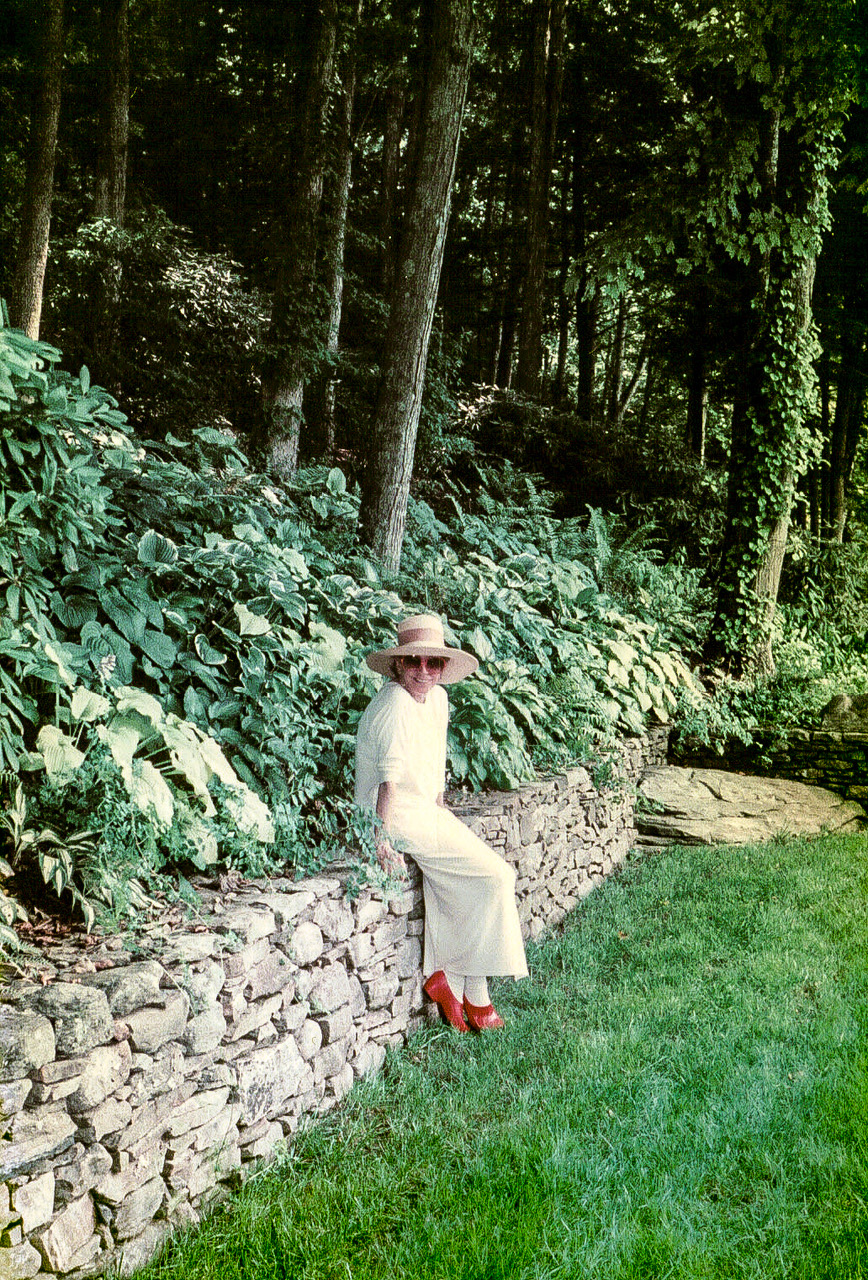
RP/4/3/55: Scanned Photograph of Geraldine Stutz, 2003
RP/5/2/5: Property Brochure for Roxbury Falls, 2006-2007