The Mall, Central Park
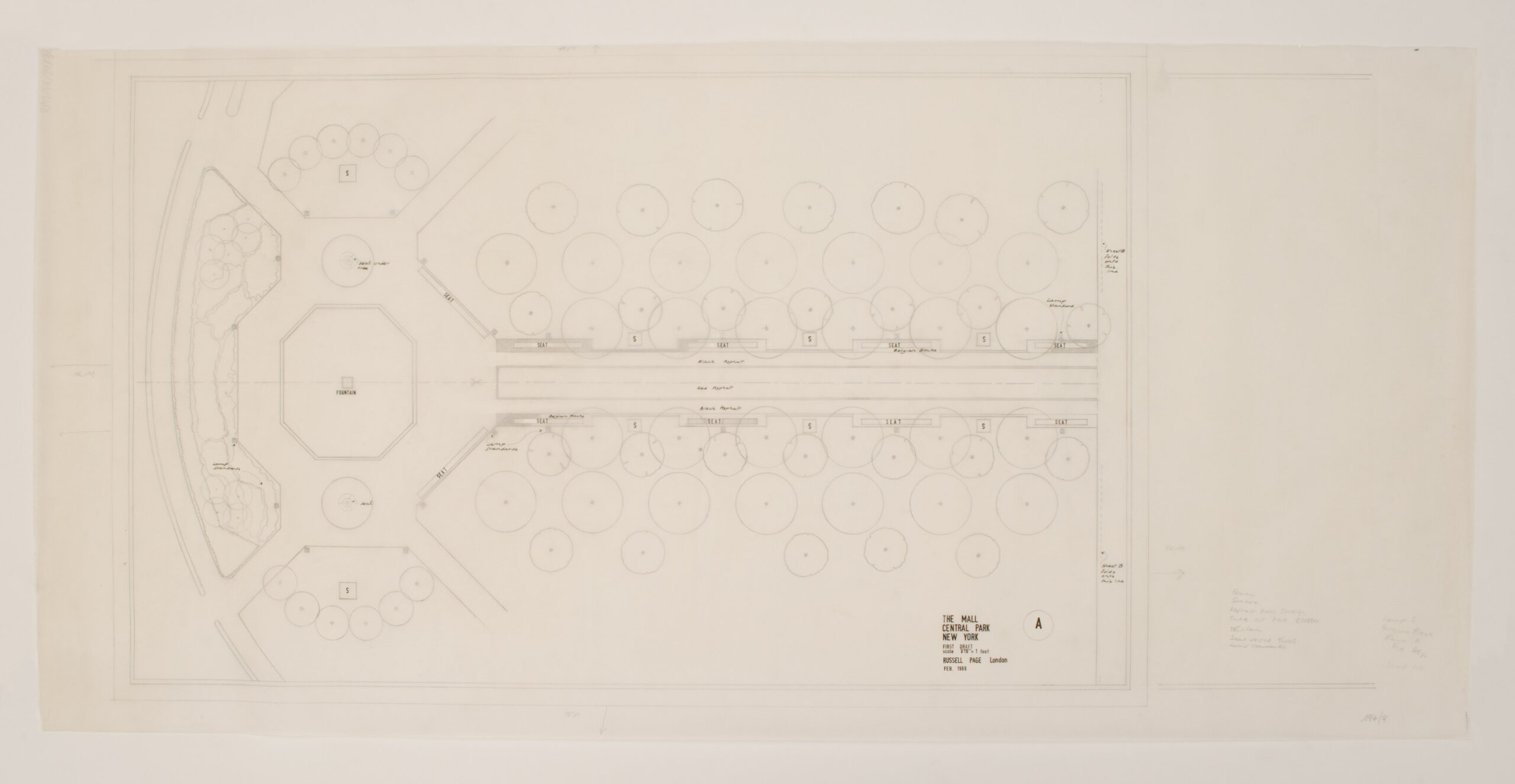
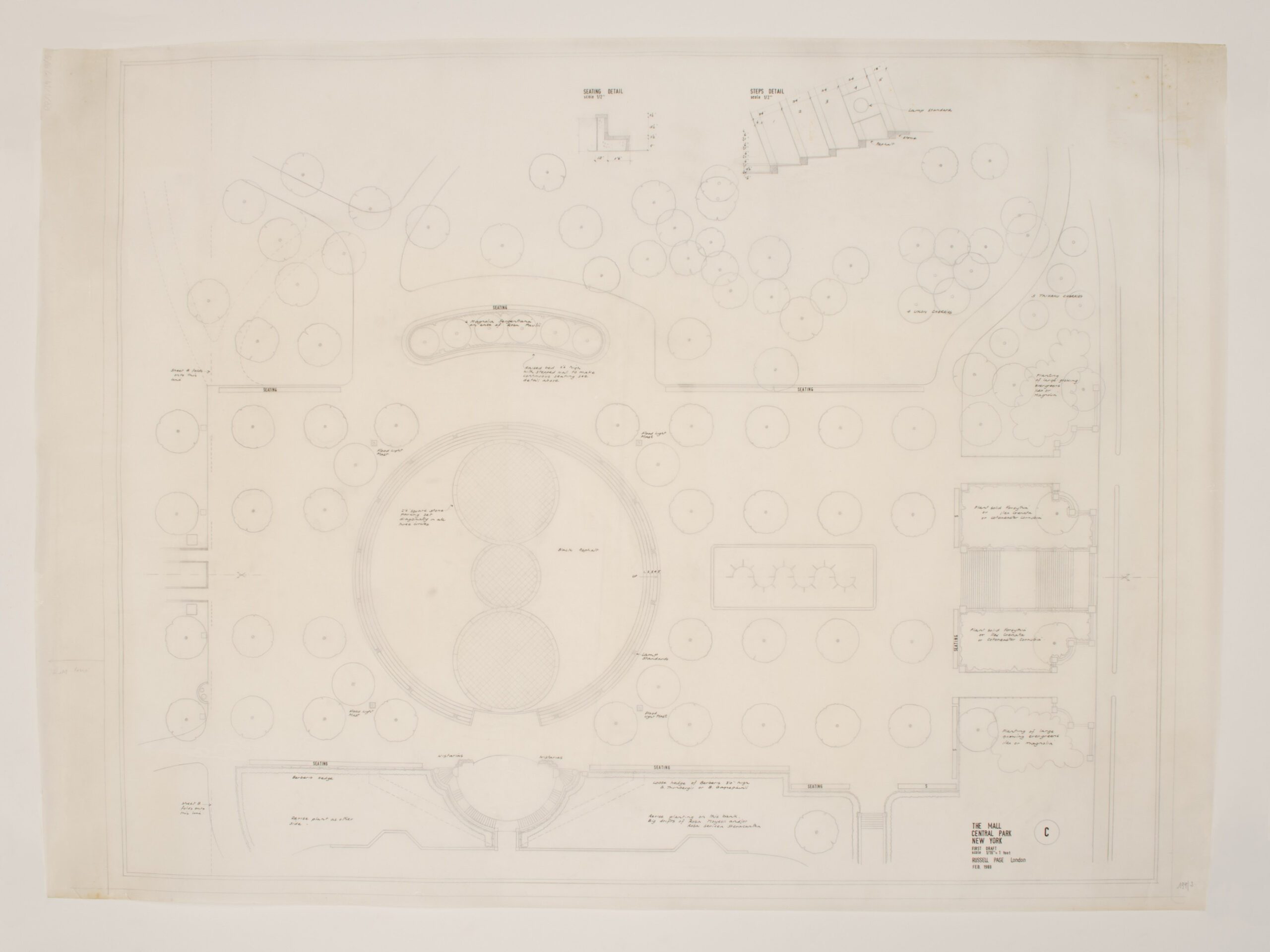
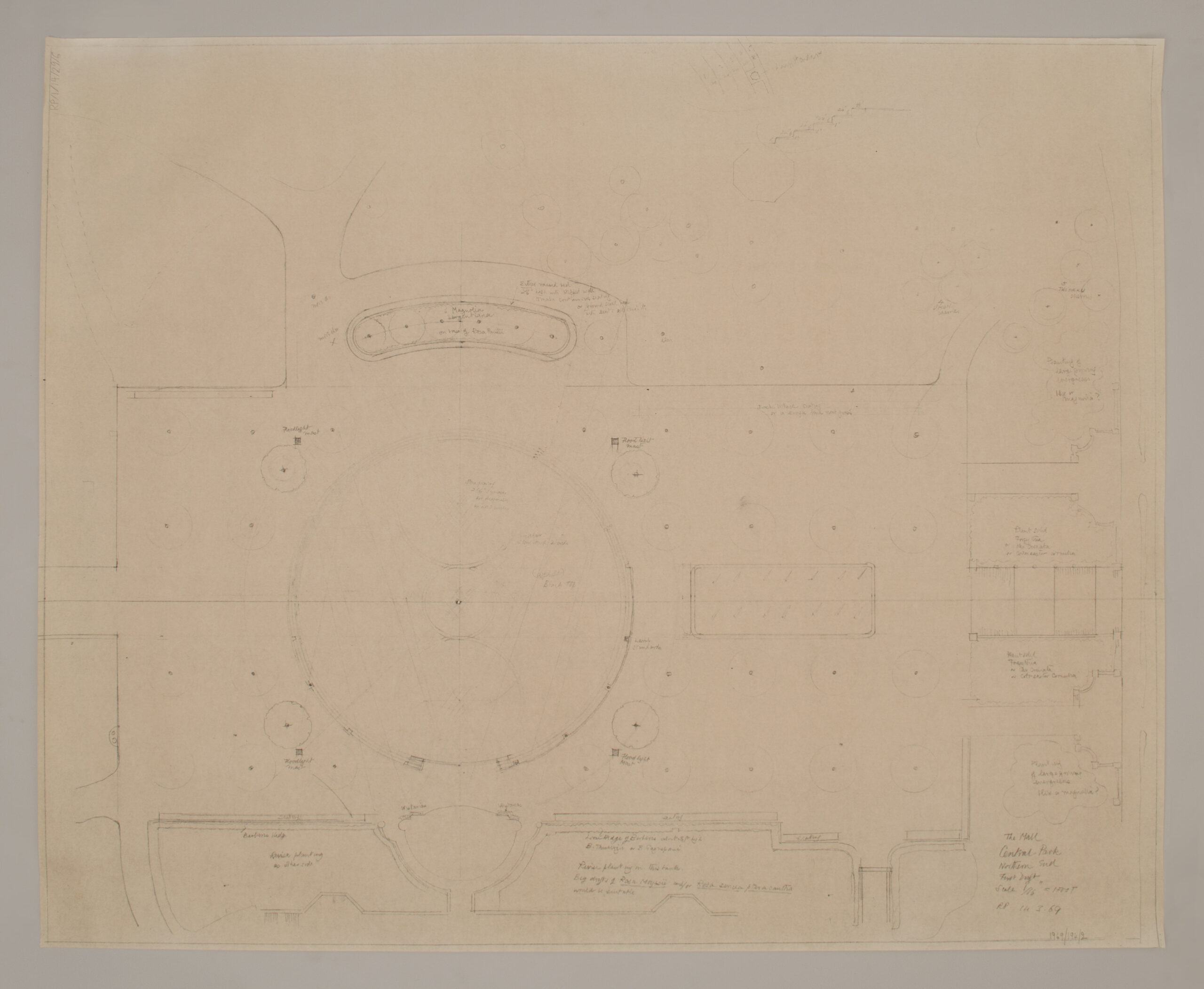
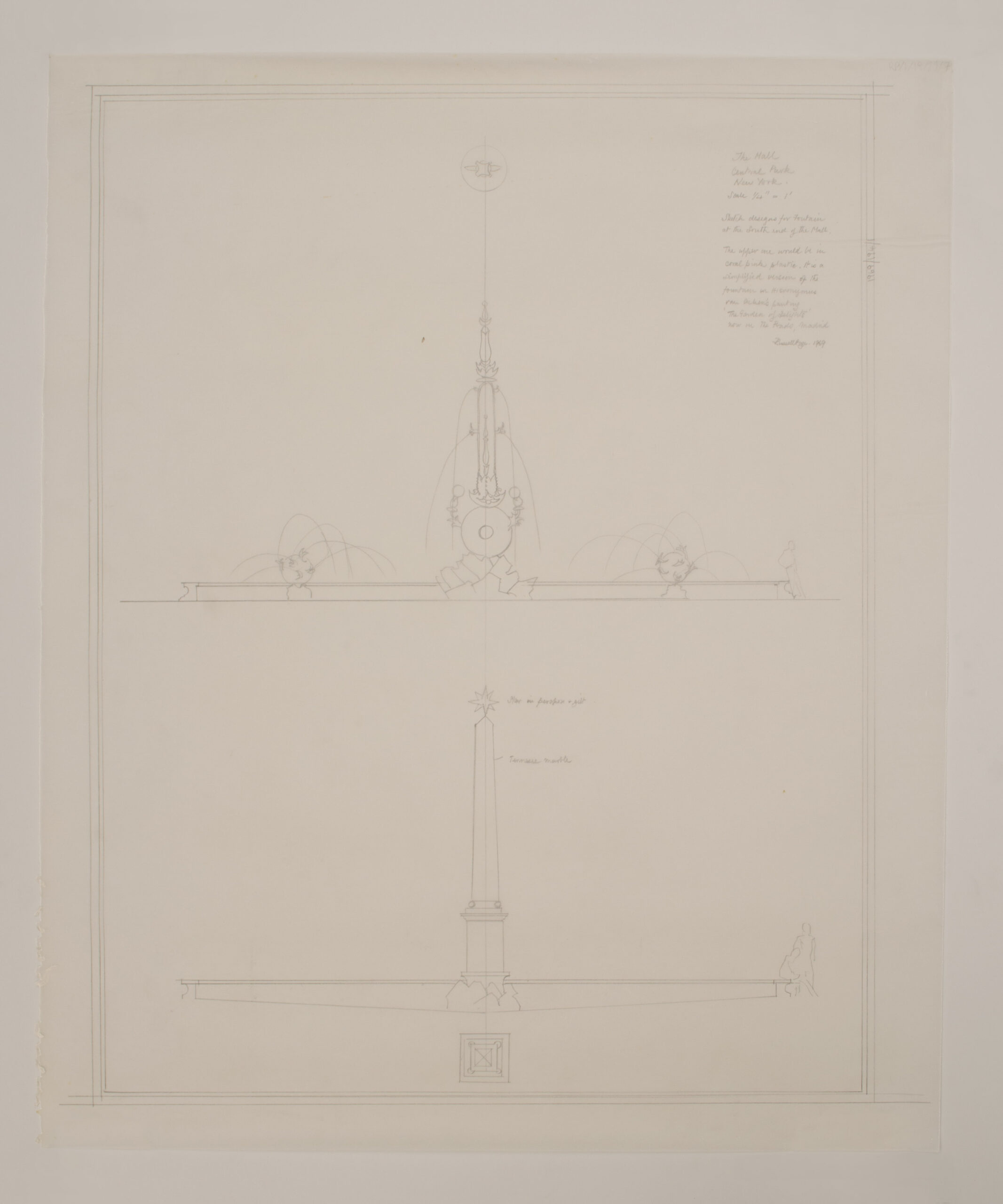
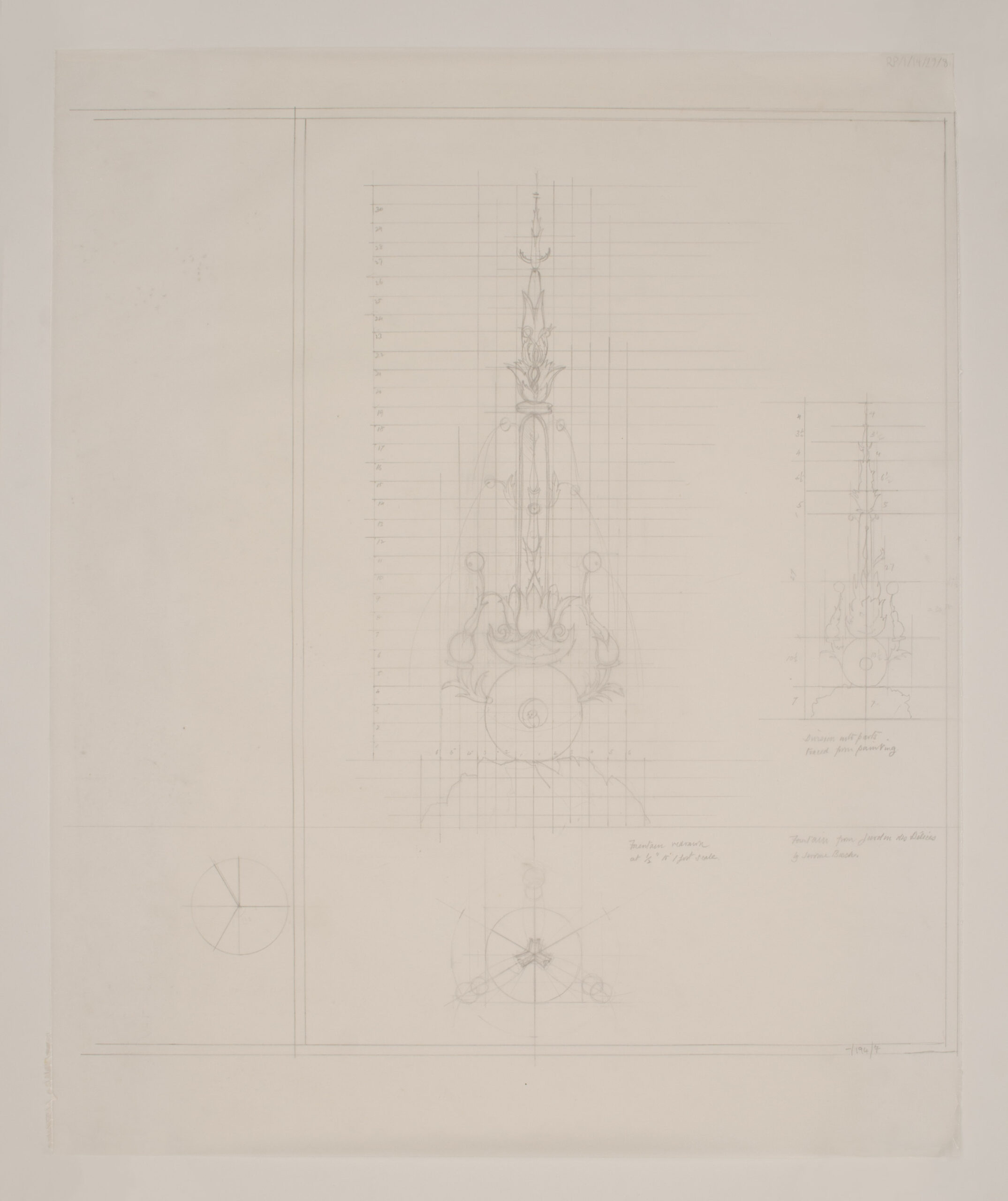
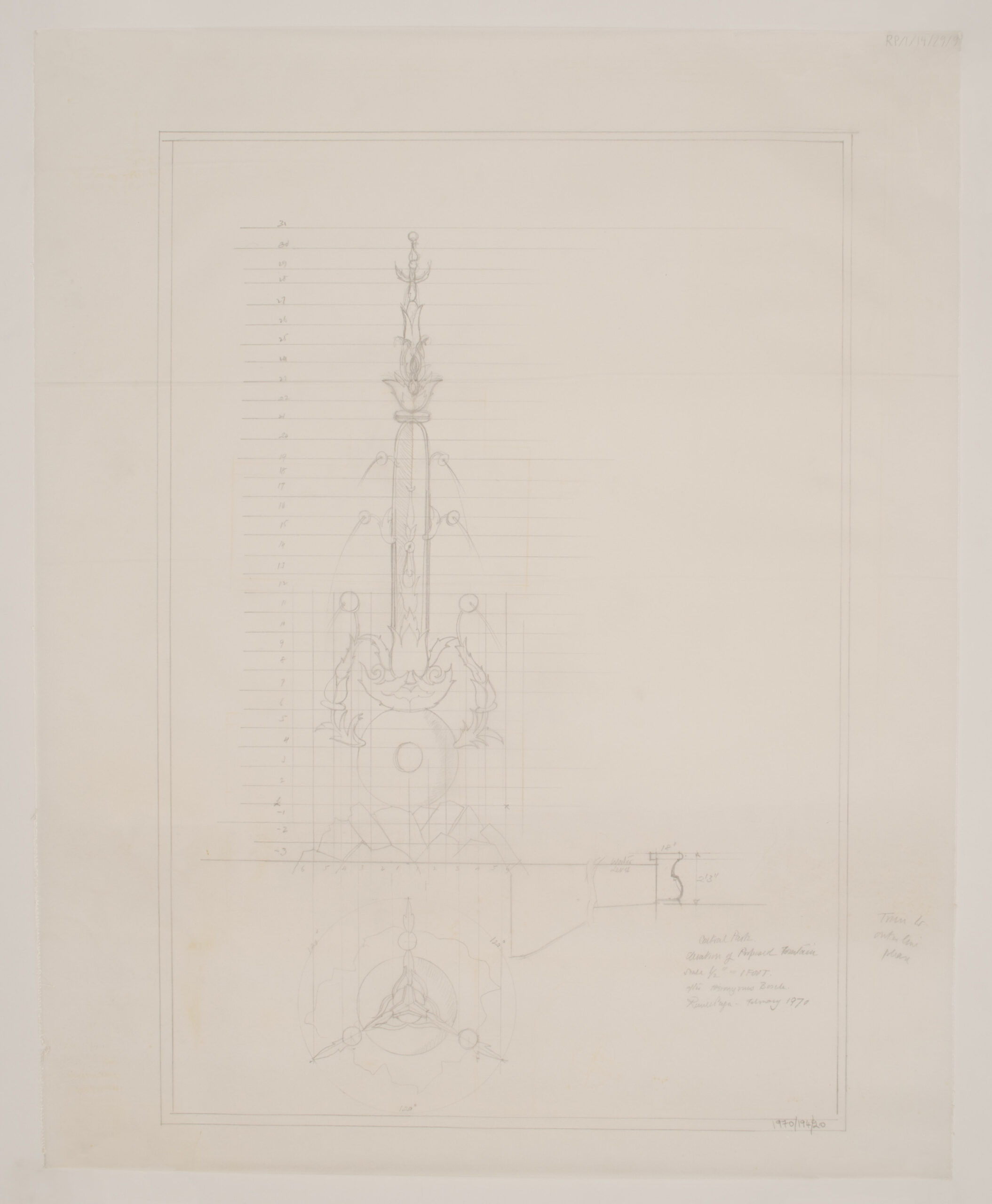
Page’s drawings for revitalising the Central Park Mall show the full stretch of the lengthy pedestrian promenade. The designs built on the 19th century structure, which was lined with American elm trees. At the northern end of the thoroughfare, next to the existing Naumberg Bandshell, Page suggested a slightly lowered, circular flooring design with new seating, as well as a curved raised bed (see RP/1/14/29/5). These stone features would be softened by evergreen hedges and drifts of roses. The most interesting aspect of the designs, however, was for a new fountain at the southern end of the Mall (see RP/1/14/29/3). An initial drawing presents two variations: a simpler one, similar to an obelisk, to be made of marble topped with a star of either gilt or Perspex, and a more elaborate option made of coral pink plastic, envisioned as a simplified version of the fountain in Hieronymus Bosch’s painting The Garden of Delights (RP/1/14/29/7). Two further drawings of the ‘Bosch’ fountain (RP/1/14/29/8 and RP/1/14/29/9) suggest this was the preferred option.
The project remains something of a mystery. Little is known about the circumstances which led Page to submit his designs. Gabriella van Zuylen states that it was at the request of Mrs Albert Lasker that he draw up the plans but gives no further details of the commission (222-223). The park, designed in the mid 19th century as a civic space by agriculturalist Frederick Law Olmsted and architect Calvert Vaux, was, by the early 20th century in much need of restoration. Serious decline was stalled slightly while Robert Moses was Park Commissioner (from 1934 to 1960). Moses secured funding to revamp the landscaping and deal with the decaying structures. Following his departure, however, the lack of an ongoing strategy for maintaining the vast space left the park in a sorry state. It is highly probable that Mary Lasker would have recognised the need for action. She and her husband Albert had established their foundation in 1942; it primarily supported medical research but also promoted urban beautification. Among other initiatives, in the late 1960s, the Foundation gave 300,000 daffodils to Central Park. Page certainly knew Mary Lasker. It was she who, in the mid 1960s, introduced Page to Mrs Lyndon Johnson, then First Lady of the United States, who asked him to advise on landscaping schemes in Washington D.C., including for a national botanic garden (Archive of Garden Design: RP/1/14/27). Later, in 1980, Page designed a garden for Mary Lasker at her home Field Point in Greenwich Connecticut (Archive of Garden Design: RP/1/14/16).
In the event, it was not until later in the 1970s that plans to improve the park came to fruition, with the creation of a Central Park Board of Guardians, so Page’s designs were never implemented.
Literature
Nemy, Enid. “Mary Lasker: Still Determined to Beautify the City and Nation.” New York Times, 28 April 1974, p. 62.
van Zuylen, Gabrielle and Marina Schinz. The Gardens of Russell Page. Frances Lincoln Ltd, 2008.