Posted on 11 Feb 2026

Garden Museum Collection

An update from Curator Emma House on the conservation progress of our 17th century Mortlake tapestry.

The Garden Museum’s Mortlake tapestry dates from the 1630s and is the earliest depiction of a woman gardening in the collection. In 2024, more than 100 people donated to support the tapestry’s conservation through our campaign with the Art Fund’s Art Happens crowdfunding scheme. In January, myself and Kitty Cooke from our Deveopment team went to see the next phase of conservation with a small group of the Art Happens crowdfunding supporters.  

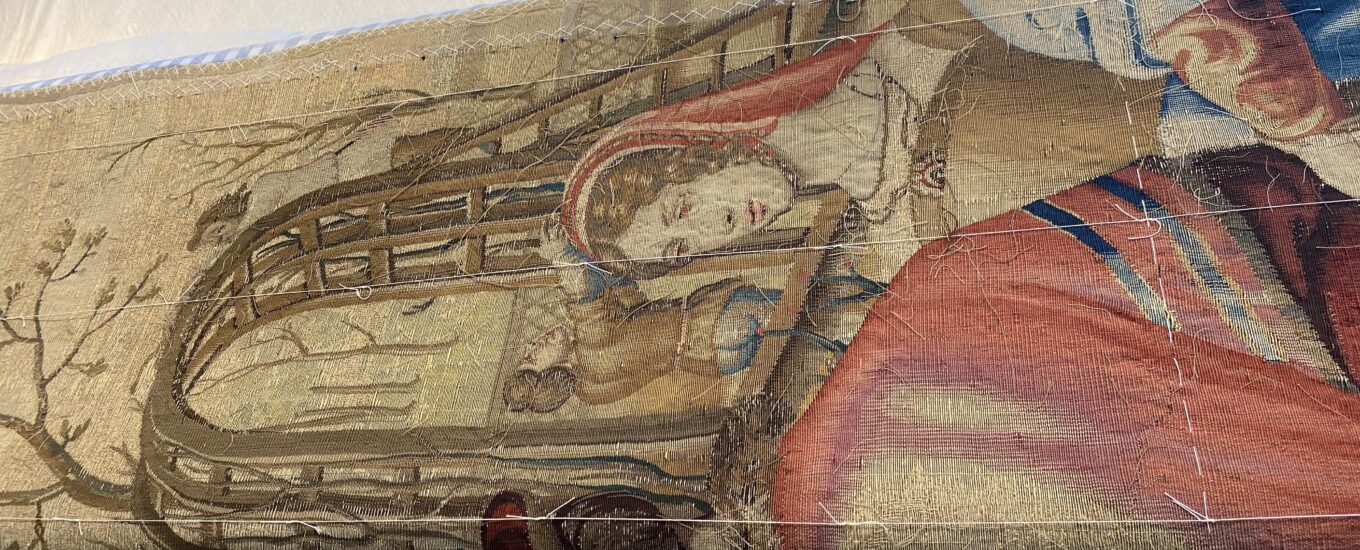
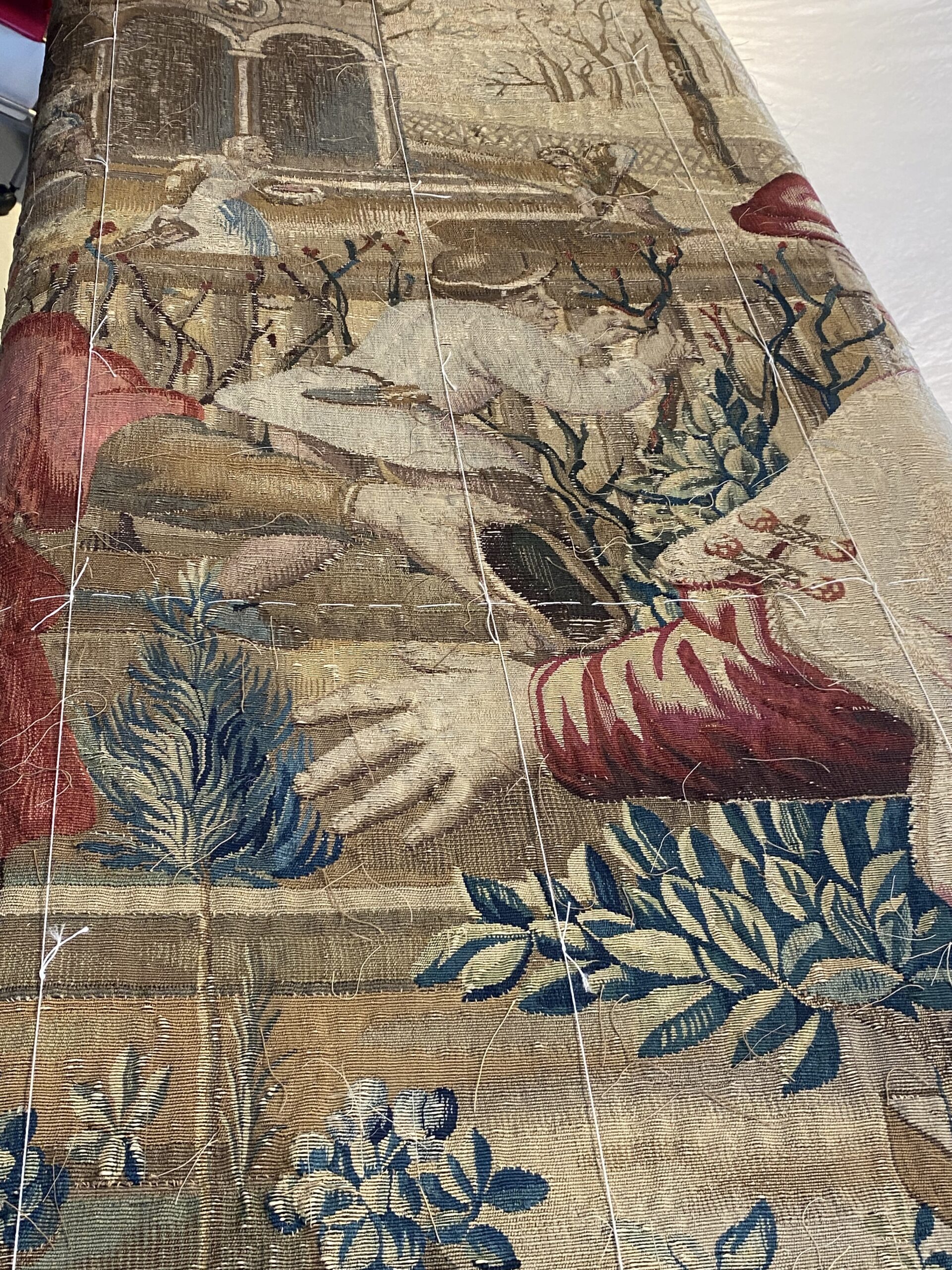
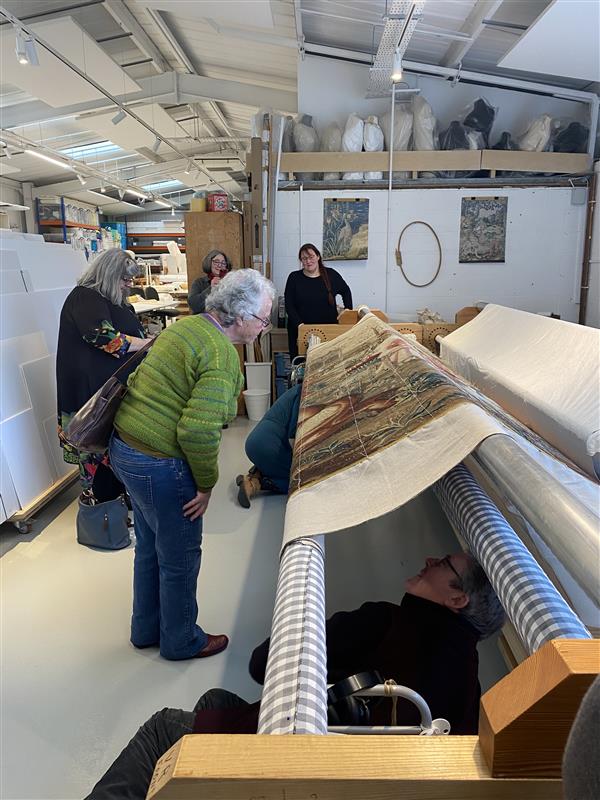
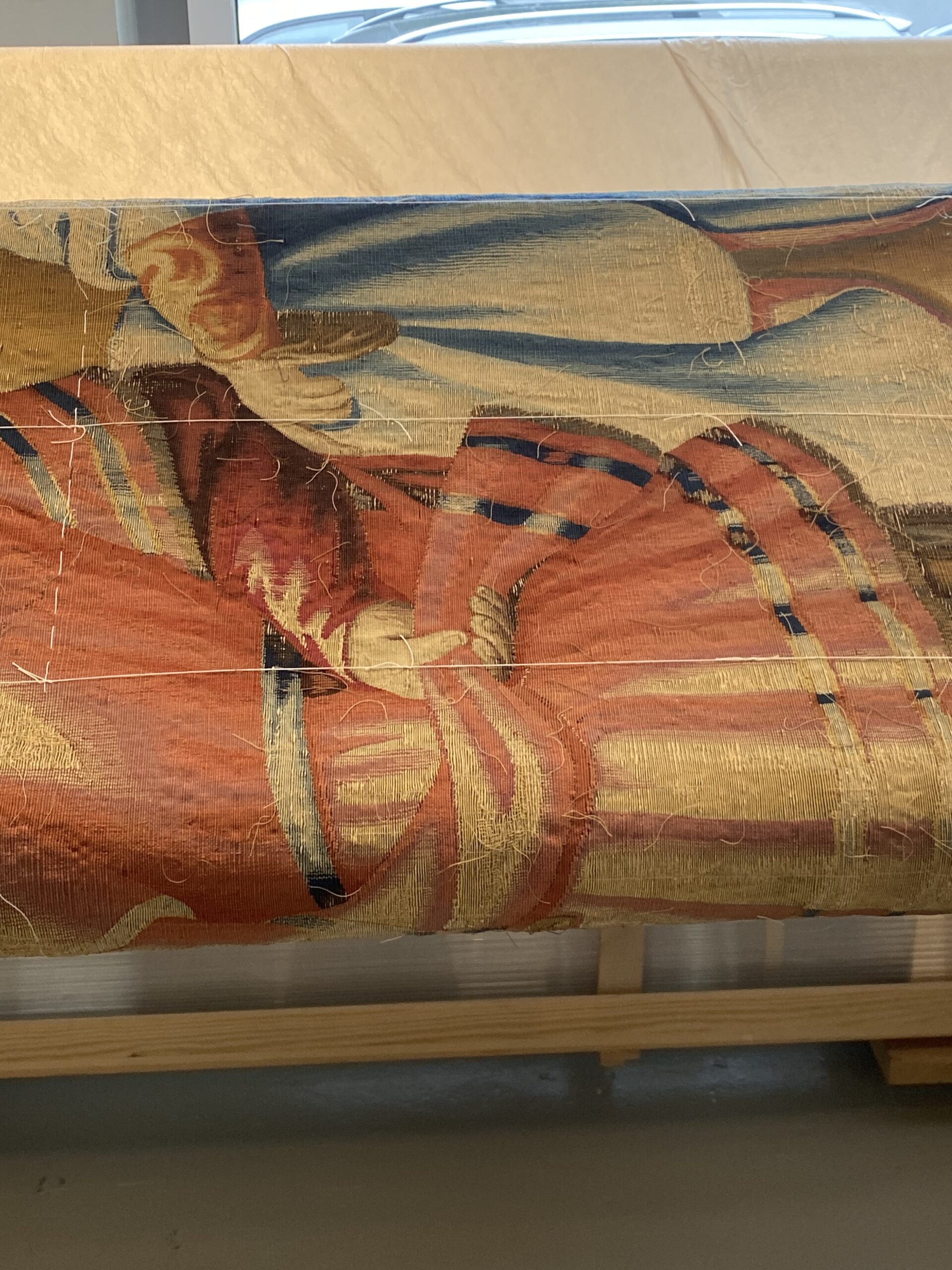
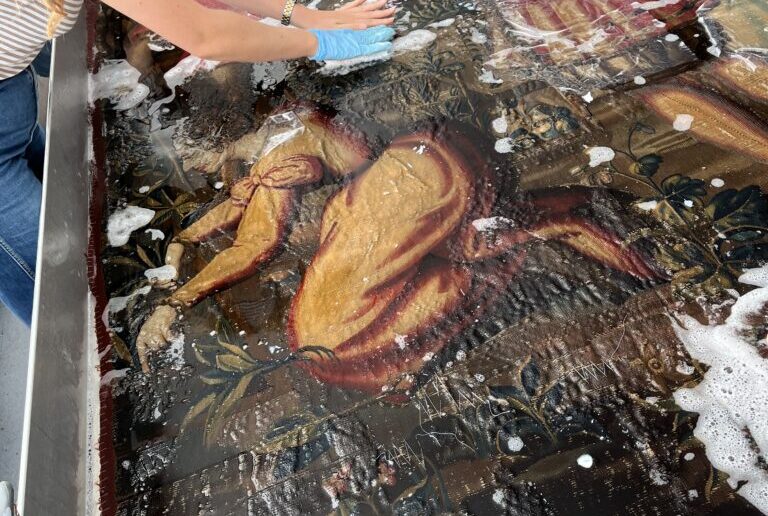
In the autumn of 2025, after the tapestry was washed, the team at Zenzie Tinker Conservation mounted the tapestry onto a linen scrim lining. They use a roller system to support the tapestry and keep it straight as they stitch through the tapestry and adhered it to the linen scrimThe linen fabric is larger in size than the tapestry and stitched in place with a small surplus so that it doesn’t become taught and stretch the tapestry out of shape.

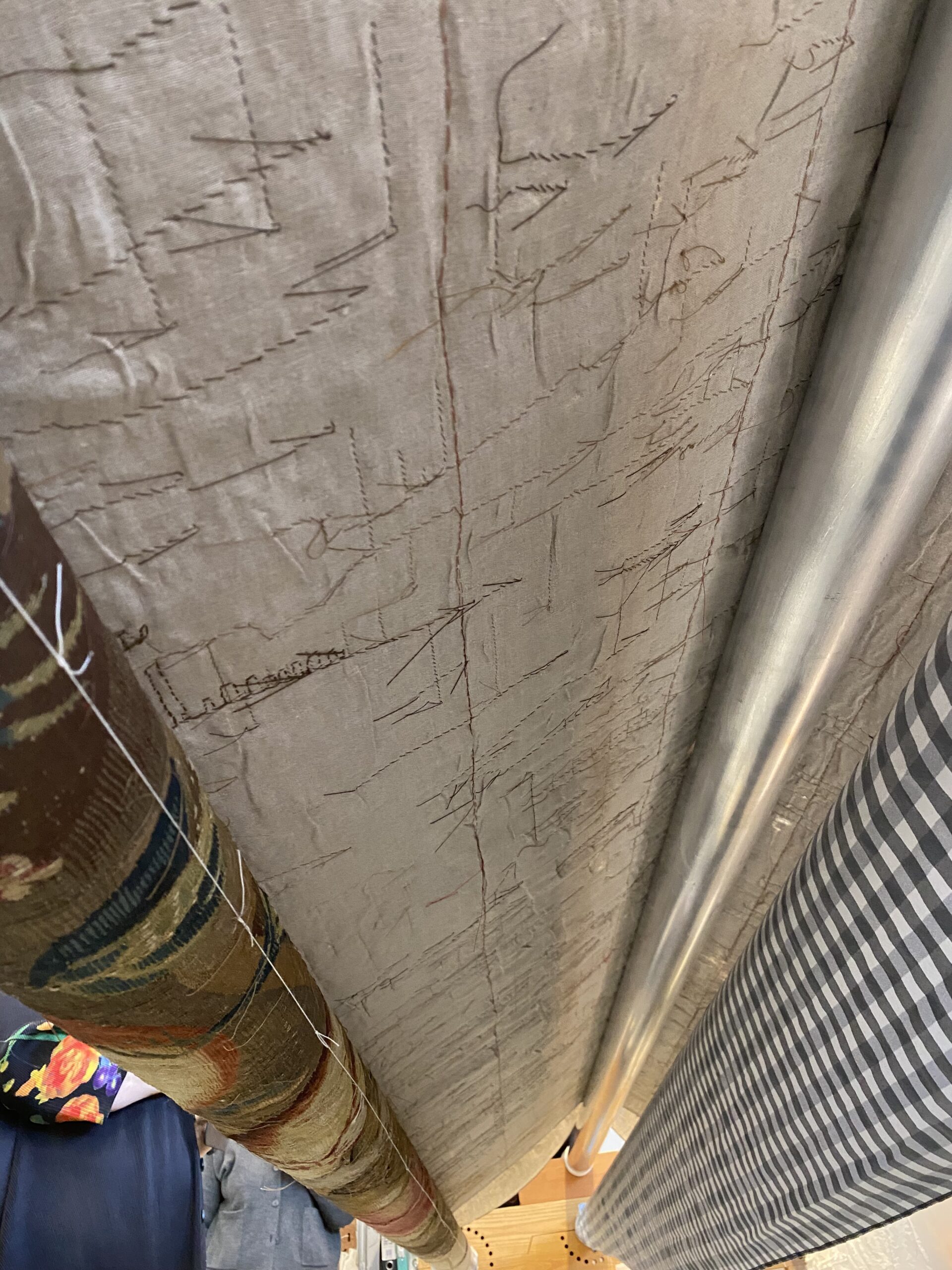
The team stitch along the length of the tapestry in 20cm segments so that they can work in detail on each section at a time. They use a variety of stitches to secure the lining so that any tension isn’t concentrated in one area. The team allowed us to crawl under the tapestry frame so that we could see the maze of stitches from the back.  

The tapestry is made from silk and wool and due to its age is quite fragile. Tapestries also generally hang vertically so the weight of the object is placed on fragile warp threads. The lining provides a secondary support to the delicate materials and helps reduce the stress placed on the tapestry when it hangs. 

The team at Zenzie Tinker Conservation hand dye all of the threads they use to stitch the lining in places so that they match the colours of the tapestry exactly. They leave the tails of the thread at the front of the tapestry whilst they are working on it. At the end they will push them all through to the back. The team work on the tapestry rolled, partly to reduce the size so that they can work on a small, manageable 20cm segment at a time but also so that the rollers on the frame support the tapestry. 

As well as stitching the lining in place they have replaced some warp threads that have brokenIn some areas slits have opened up between areas of weaving, this happens over time and the team will gently stitch these closed again, just as the weavers did when they tapestry was first produced. In some areas where there is damage that disrupts the original design they have also added small amounts of stitching to provide aesthetic improvements to the visual appearance of the tapestry.   

The conservation is very slow intensive work, with the team having already worked on it stitching for more than 300 hours.  They still have quite a few hours left to go!

For more stories like this, sign up to our weekly newsletter: subscribe