Posted on 17 Apr 2026

Black Gardening in Britain

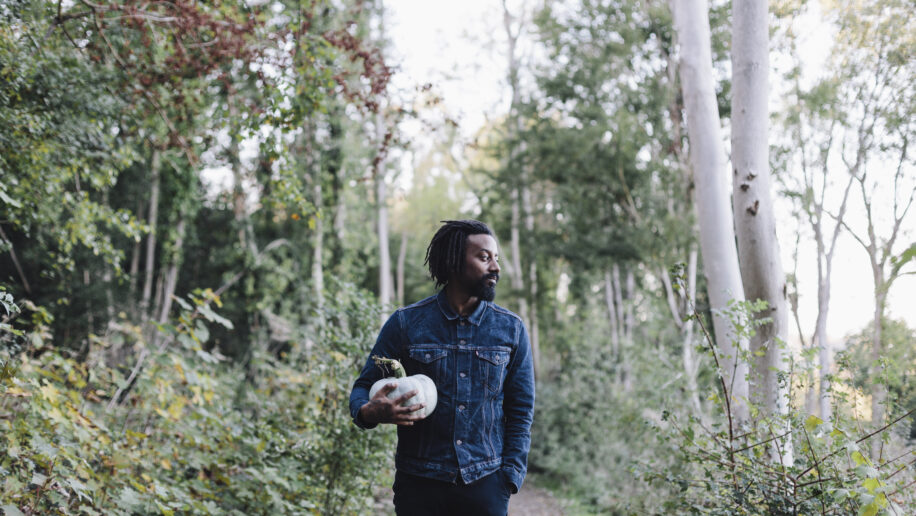
In the first of a series of three articles on building a collection of Black garden history, Special Projects Officer Edward Adonteng shares an update on his research into one of the earliest recorded Black gardeners in Britain, John Ystumllyn, and the development of an accompanying display in our collection gallery.

Edward Adonteng

My story with the Garden Museum and as a grower started with the Sowing Roots exhibition in 2021. I had just finished my Bachelor’s in Politics, and I was looking for a way to recharge. Gardening had been an area of interest; however, I could not find the time to start, and I did not know where to begin. The exhibition explored and celebrated the history of gardening cultures and traditions that Caribbean people had brought with them when they moved to Britain. I had the honour of interviewing Carole Wright (community gardener, beekeeper and founding member of Blak Outside), Morgan Joseph (gardener and organiser of a charity combating land erosion in St Lucia) and Syreeta Levy (barber and director of Levy and Co). I also interviewed Eloise Reed and Sylvia Halstead alongside my younger brother.

The moment that it clicked for me would be when I was introduced to the story of Esiah Levy, the Croydon Gardener and Syreeta’s brother. It was his story and his vision that everybody should grow that pushed me into gardening. Esiah believed that growing food is every person’s right. It’s the same ethos that informs my growing practice now. Over the last five years, I have become a friend and contributor to the Garden Museum. Last year,  I joined the team as a Special Projects Officer, tasked with putting on an event, carrying out research, writing an article, curating a display and finding an acquisition. I was given the space to come up with ideas that diversify what the Museum does, tells and shares.

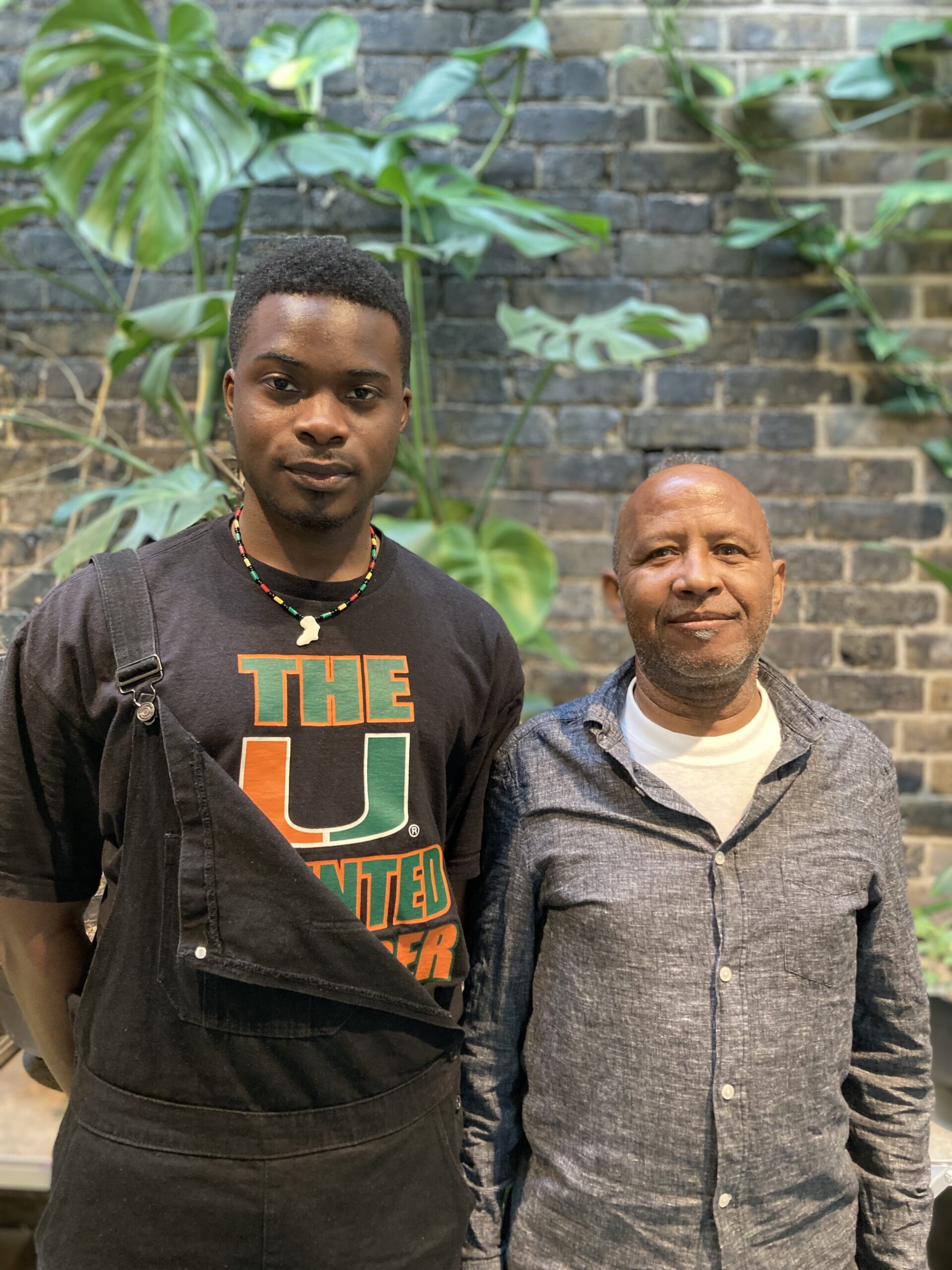
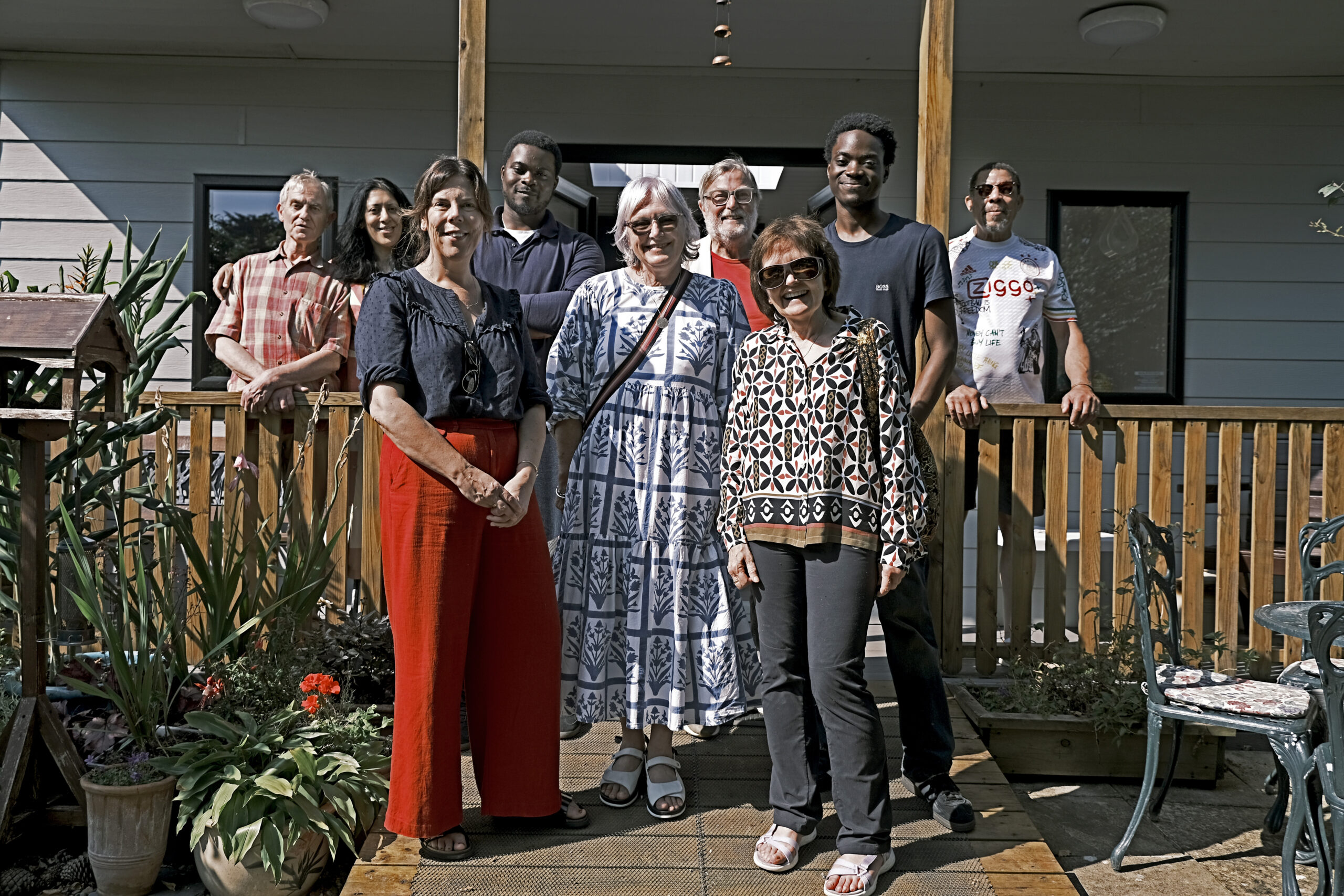
Edward and Sowing Roots participant Morgan Joseph in 2021 at the Garden Museum

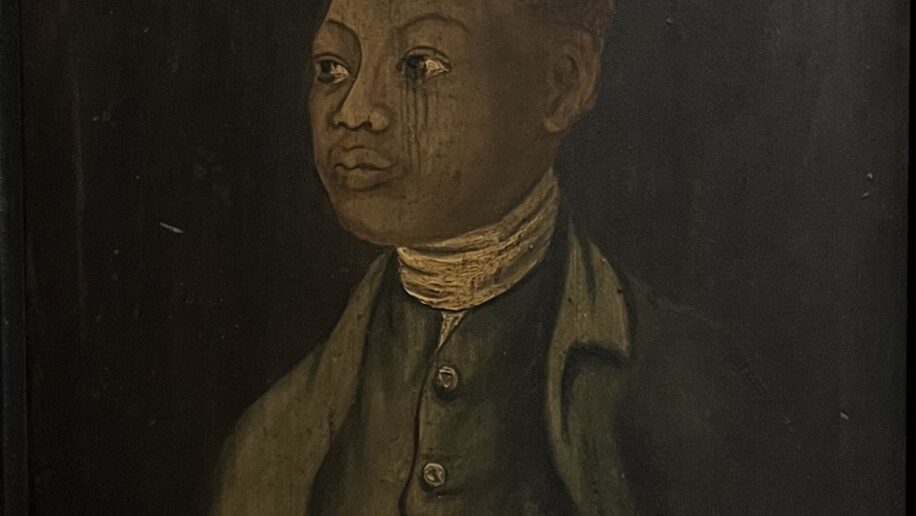
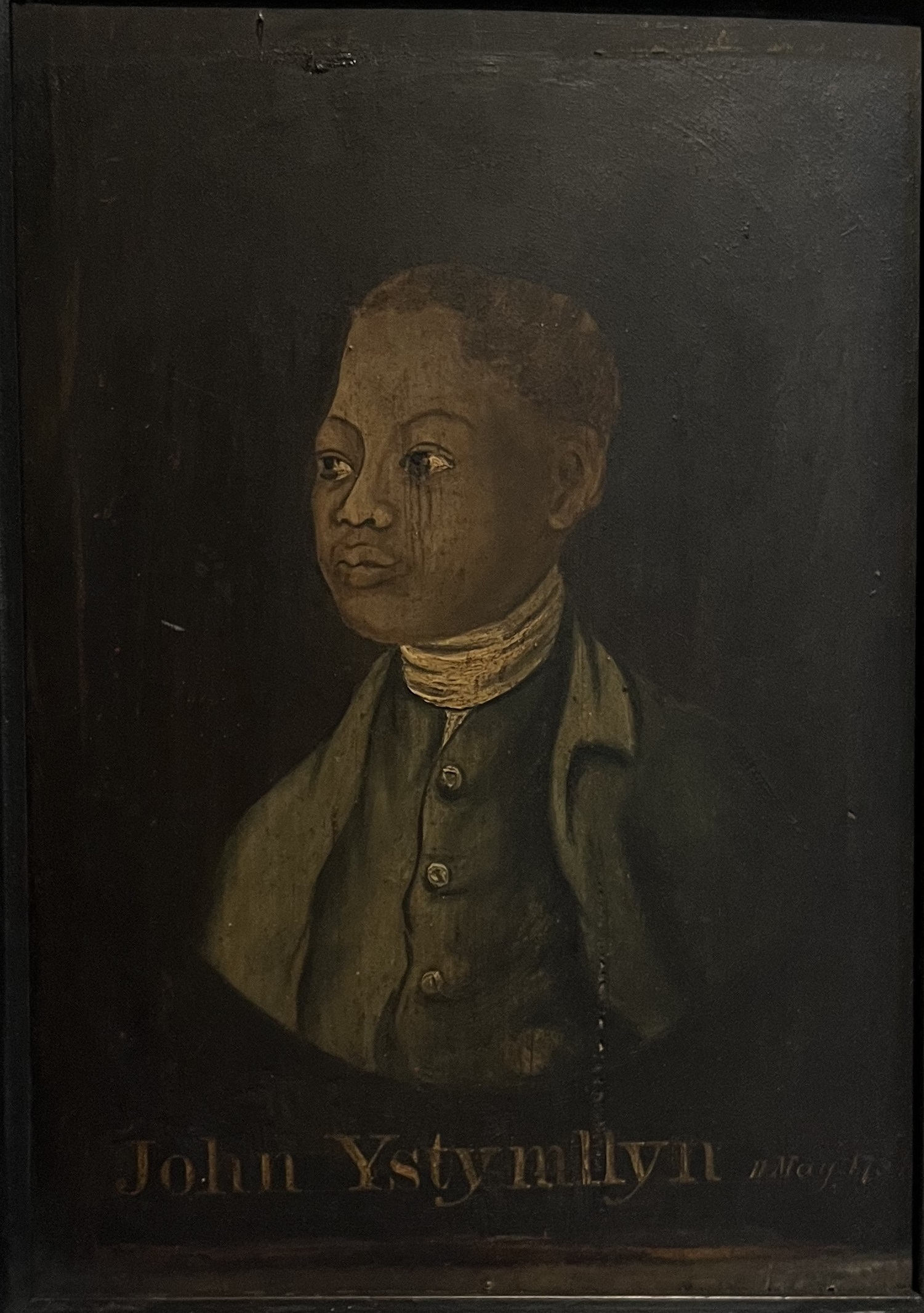
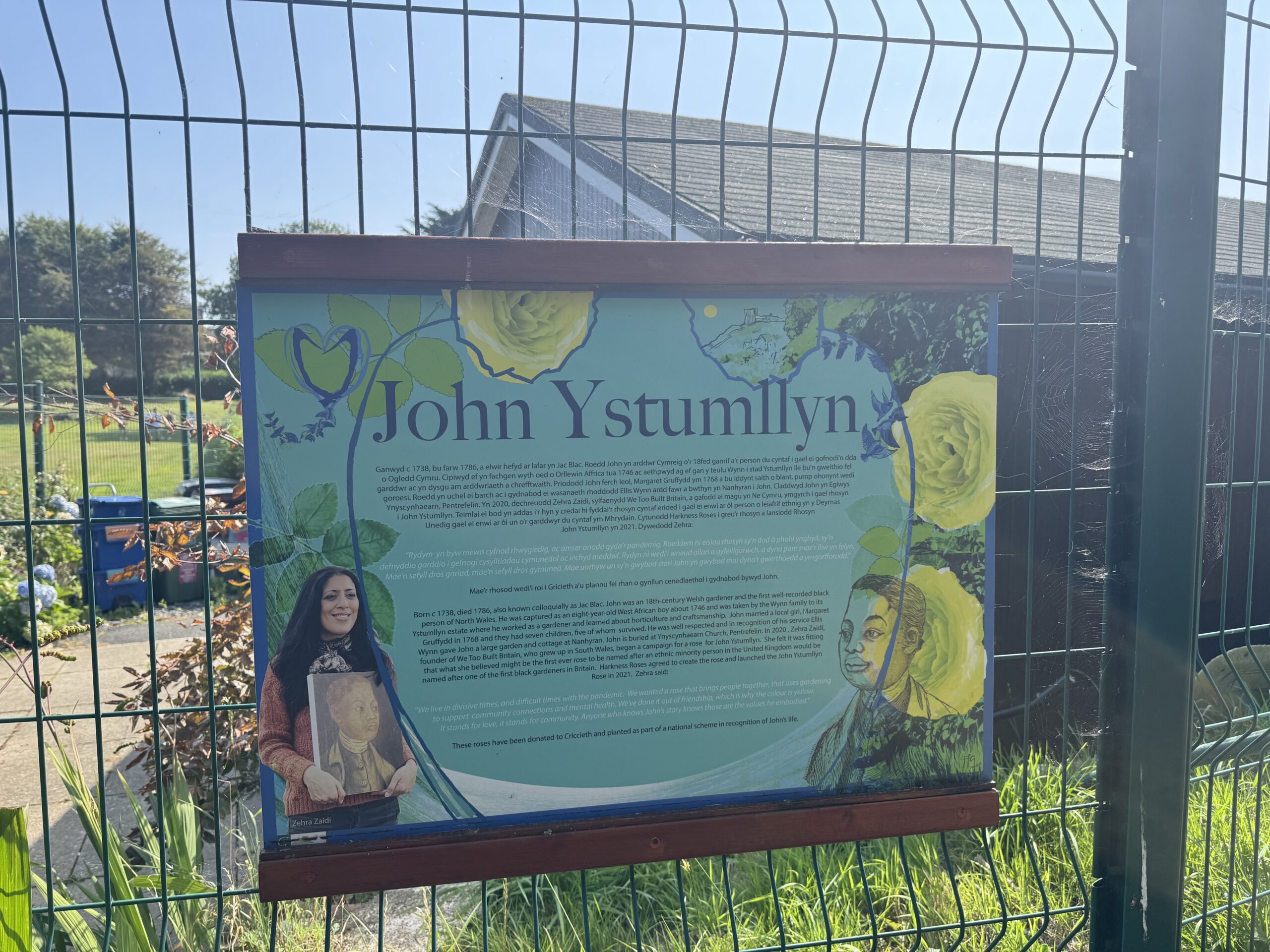
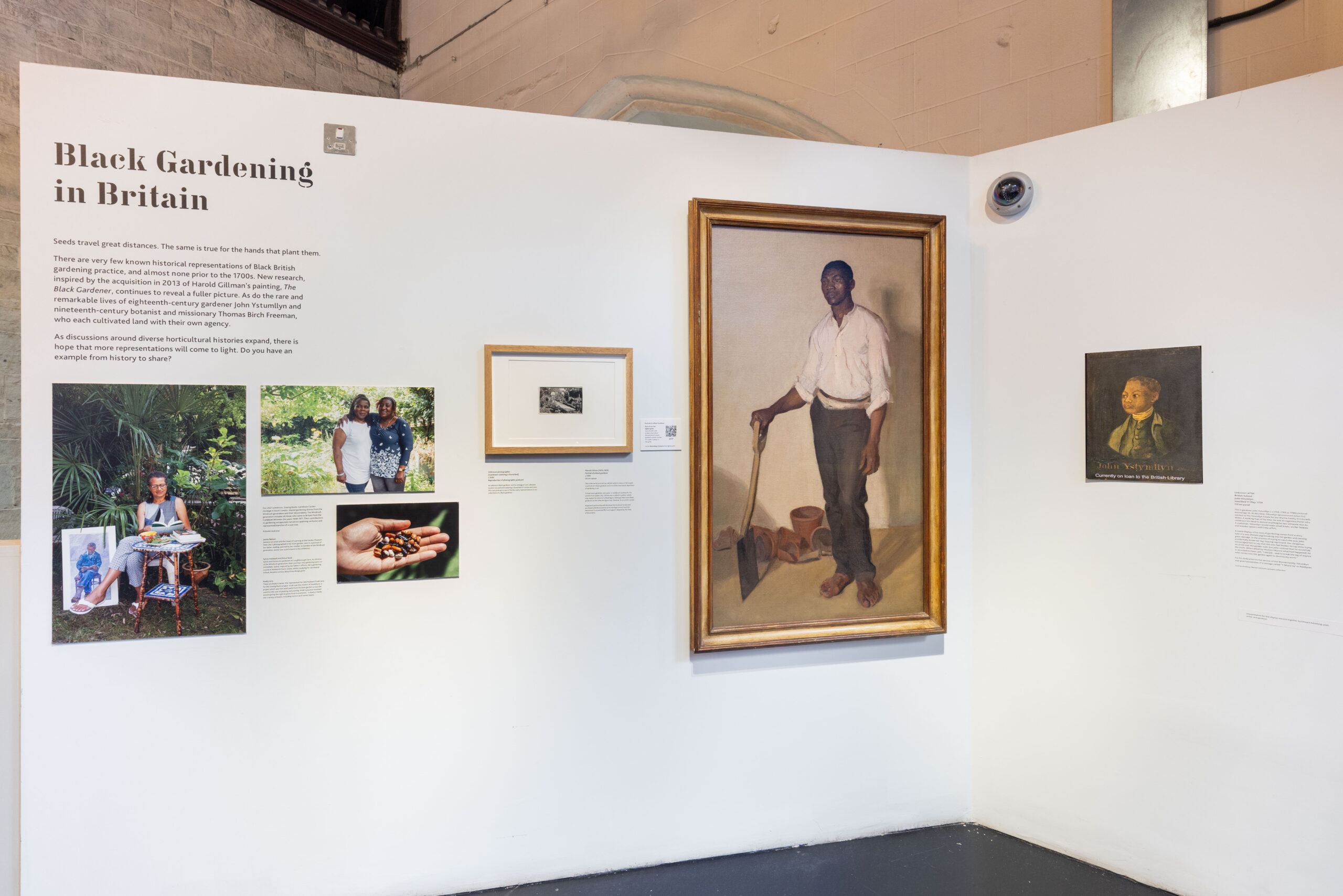
A lot of my research has been around John Ystumllyn. John was a Black Welsh Gardener who worked on the Ystumllyn estate in Criccieth, North West Wales. John was abducted and brought to Wales in the 1700s. I was first introduced to Ystumllyn through Janine Nelson, former Head of Learning at the Museum, who connected me with Zehra Zaidi during programming for the Frank Walter exhibition. Zehra had led the campaign “We Too Built Britain”. This campaign focused on improving the representation of British people from ethnic minority backgrounds on civic symbols such as statues and legal tender. Part of Zehra’s work and research centred around the gardener John Ystumllyn.

John Ystymllyn

Through my research, I made several connections that helped to expand and illuminate John’s story. Dr Marian Gwyn, who works at Bangor University; Andrew Green, who translated the englyn that was on John’s epitaph and produced a comprehensive article about John Ystumllyn; and Natalie Jones, who works for S4C and delivers workshops about Ystumllyn in Welsh primary schools. I wrote about my research process and my reflections about John for the Museum, which is available online.

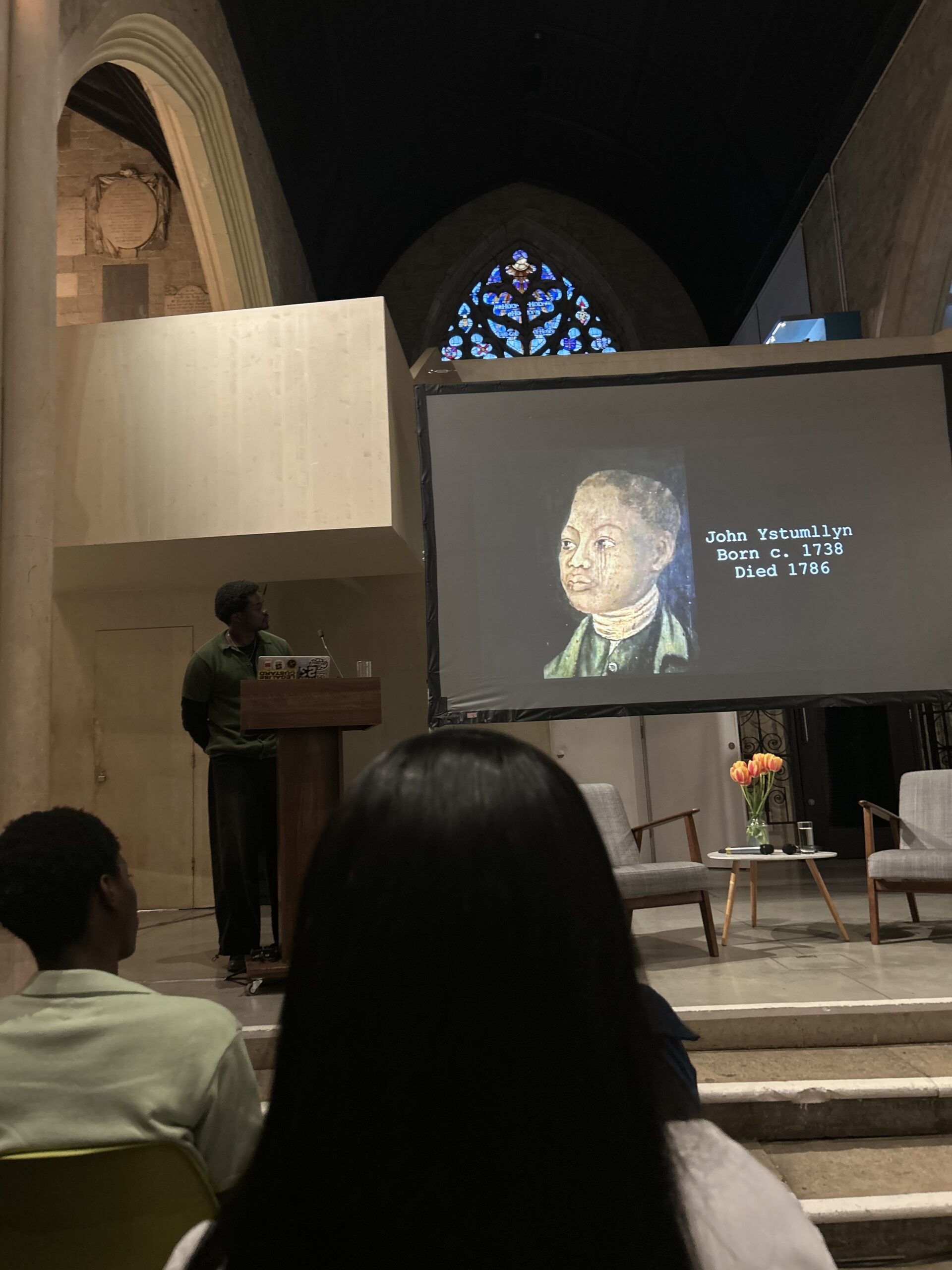
Working with the Programmes team, we held an evening at the Museum celebrating John, titled Farewell, John Ystumllyn. It was a very popular talk, and for many people in the audience, it was their first time engaging with John. It was great that they had the opportunity to also see his portrait. Following this talk, Dr Gwyn invited me to North Wales in the summer to share my research at an event celebrating John Ystumllyn.

Edward speaking at the Farewell, John Ystumllyn event

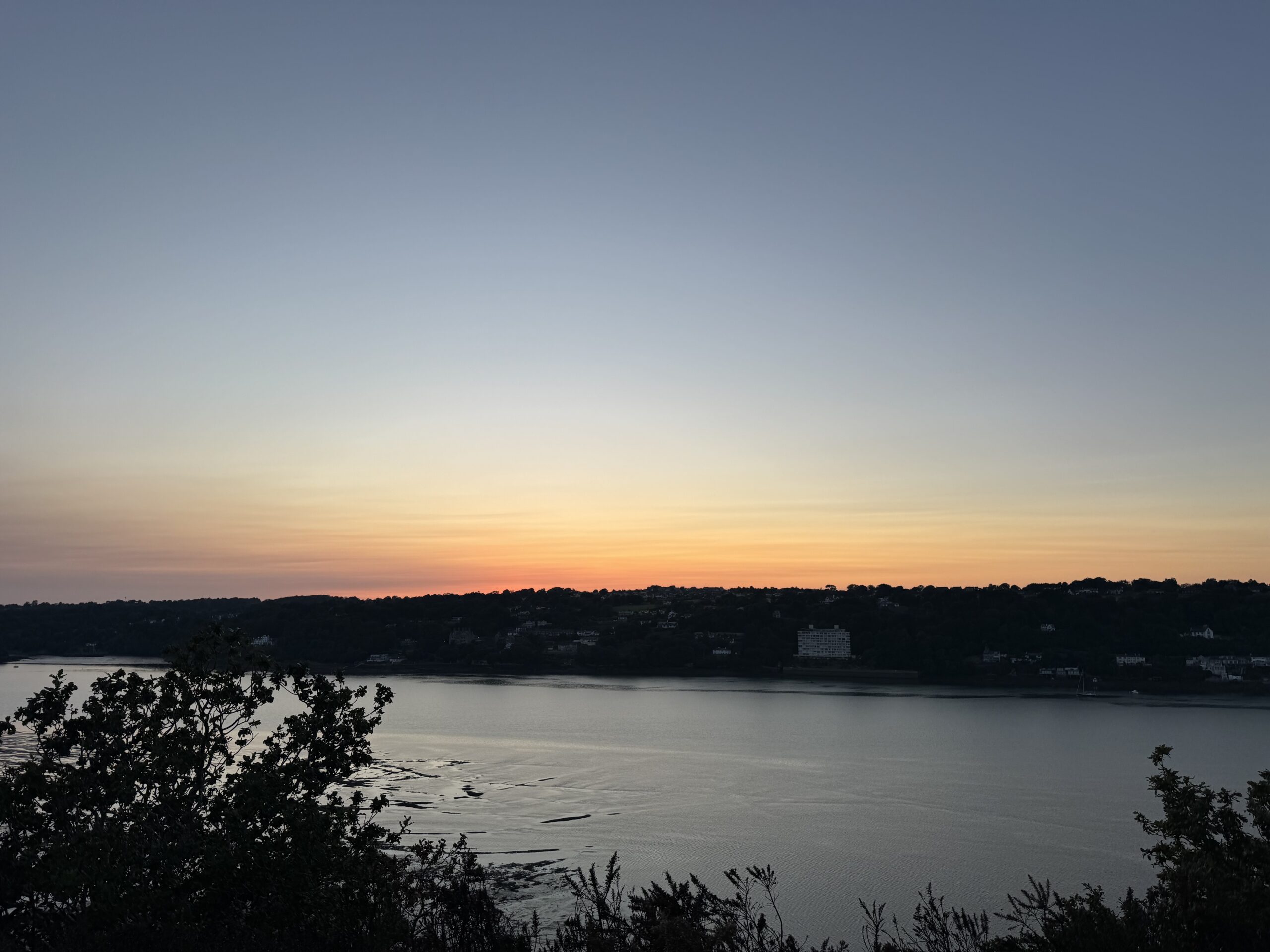
On our first night in Bangor, we were taken across the town by John Dwyer. He took us to one of the highest points in the town, known as Roman Camp. This beautiful woodland was once home to a fort in the 1st century. He also took us into the University Grounds, where we came across a student named Thomas, whose mother was from Criccieth. Thomas had heard about Ystumllyn. He shared a few facts about the region, some history around slate mining and where Sir Roger Moore once lived in Anglesey.

It was touching for me to see this young Welshman, so knowledgeable about his history and fluent in Welsh. As I mentioned in my reflections on Ystumllyn, Welsh as a language has suffered historically due to the Treason of the Blue Books. The Treason was the publication of a report attacking Welsh people, their language and their religion. In my reflection, I wrote about how another young man in Cardiff could not speak Welsh and said that there isn’t much of an onus to speak Welsh in the major cities. However, to see Thomas carry on the history of his region in his native tongue was very inspiring, and it touched John, who was much older.

As someone who speaks Twi (a language spoken in Ghana and Ivory Coast)  to a conversational standard, I lament a lot about how colonialism has blighted the way people communicate and the loss of languages. Speaking to Thomas, however, reminded me that whilst so much has been lost, there is still so much to be passed on and shared.

Before my talk in the town centre, I was fortunate enough to visit Ynyscynhaearn, where Ystumllyn’s englyn is. It was there that I could also see the Ystumllyn estate in the distance. Up until that point, I was only familiar with John through my research and screens. But to walk on the ground that he once walked on, to see the sights that he would have been familiar with… To look upon his englyn–I was overwhelmed by it all. The townsfolk in Bangor and Criccieth were so welcoming. In Criccieth, you see posters of John Ystumllyn around the town,  and to see a community so protective and caring about his legacy was awe-inspiring. My visit was so celebrated that even the Leader of Gwynedd Council came to say hello.

Photo by Terry Mills

Being able to share John’s story with new faces and discuss his legacy meant a lot to me. For me, John Ystumllyn was more than just a black boy who had a  “pretty” portrait. I wanted to find out about his life before and after the portrait. Whilst all we know about him comes from the pamphlet written by Alltud Effion (Robert Isaac Jones), written 100 years after his death, I am determined that more facts about his life will continue to come to light through more research and attention to his story. It is an immense privilege for me to speak about John and to keep his story alive.

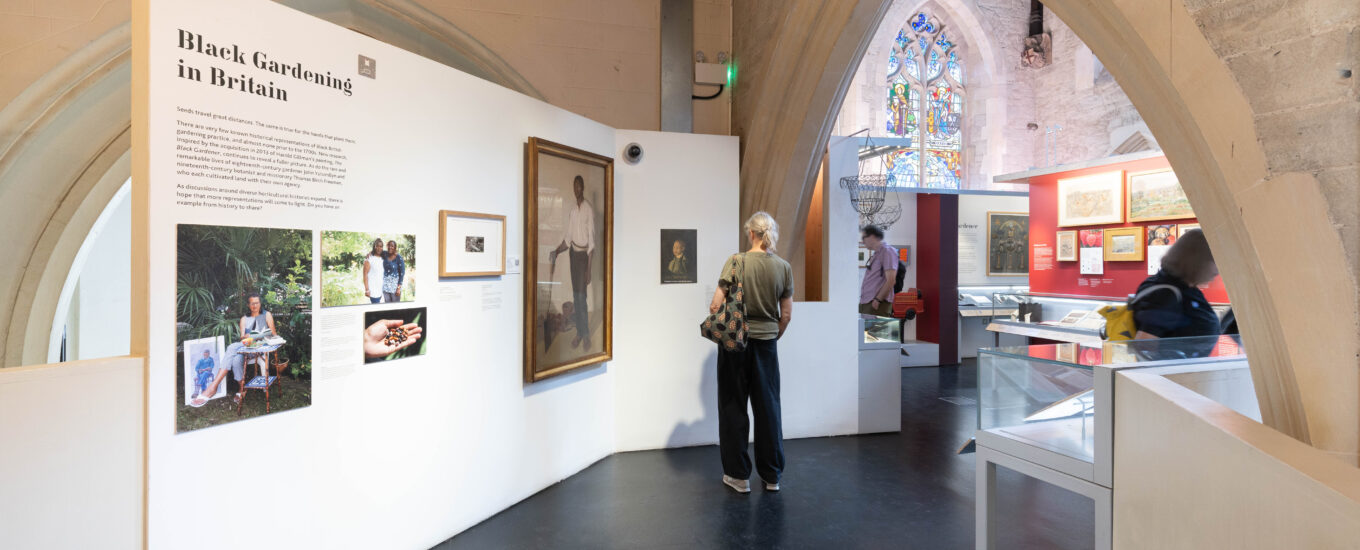
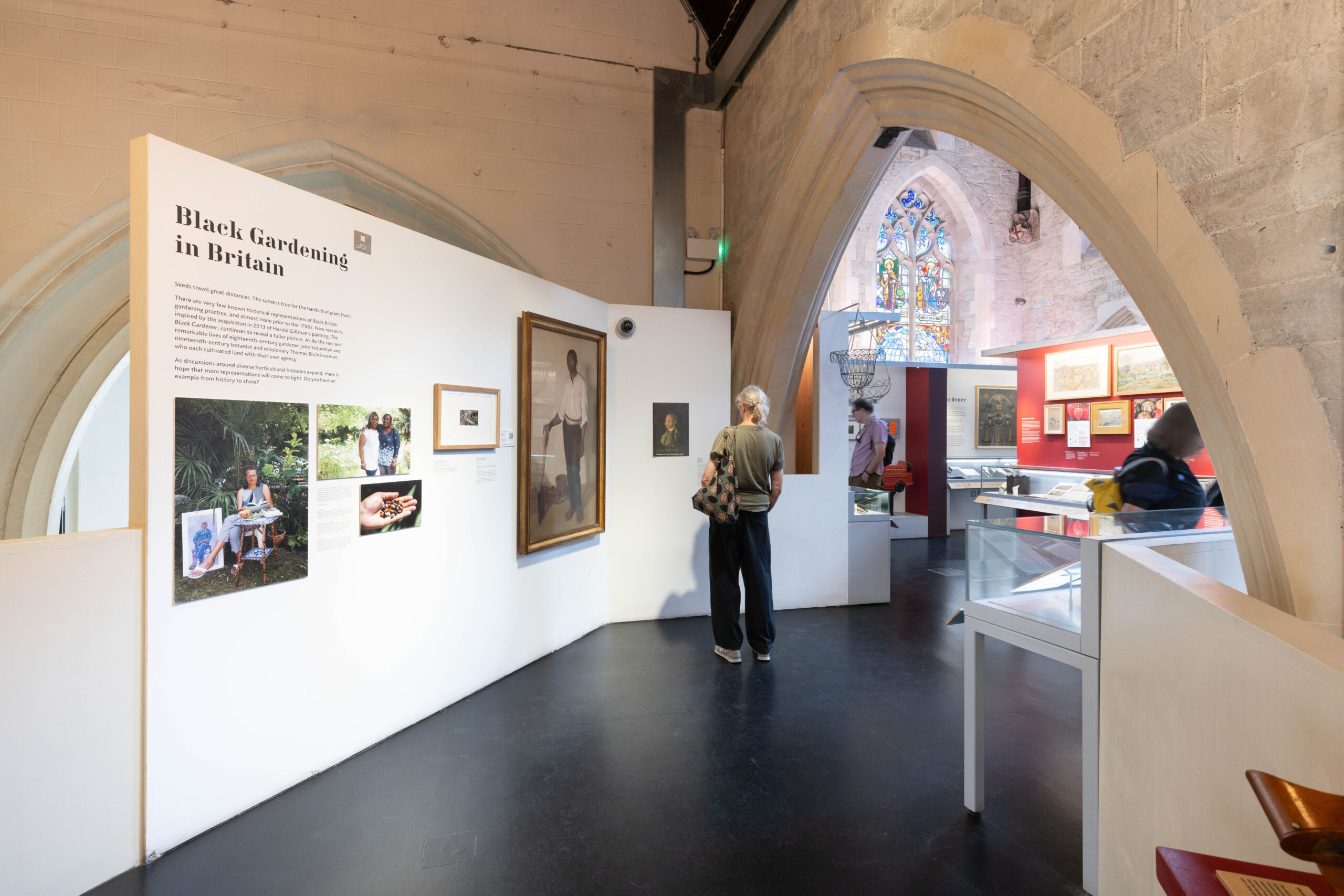
Black Garden in Britain display at the Garden Museum, photo Ben Deakin

Reflections on the Black Gardening in Britain display

Another part of my work at the Museum that I am currently reflecting on is the Black Gardening in Britain display. My immediate aim was to depict people of African heritage and their engagement with green spaces/plants outside of subservience, bondage and objecthood.

For example, on our quest to find works of Black gardeners, we came across a painting by James Eddie, a Scottish-South African artist. The painting depicts a young man, smiling whilst holding a basket of flowers. The title of the bid page now shows the painting’s title as The Young Gardener. But it felt bizarre. For one, the painting was painted in 1948, the year that marked the start of the development of Apartheid. Furthermore, we did not know the name of the gardener in question. Whilst this was a picture of a black gardener, it would not fit the criteria of what I was trying to portray. It brought about the question: What does this picture represent? Especially in the canon of the celebration of black gardening history in Britain? We had a discussion, and we did not buy the painting.

The display has received amazing feedback from visitors – returning and first-time alike.  A comrade of mine, from Devon, who is part of the Solidarity Across Land Trades (SALT), spoke about how it felt “so right to see the history that has been obscured from the culture of gardening” and how the display reframed the whole museum. The display continues to yield more diverse gardening stories, and I am very fortunate to have the opportunity to witness new branches form with every interaction I have concerning the display.

Next week, Edward continues his story of collecting Black gardening history for the Garden Museum.