After Asphalt: Nigel Dunnett’s legacy and Lambeth Green
STORIES
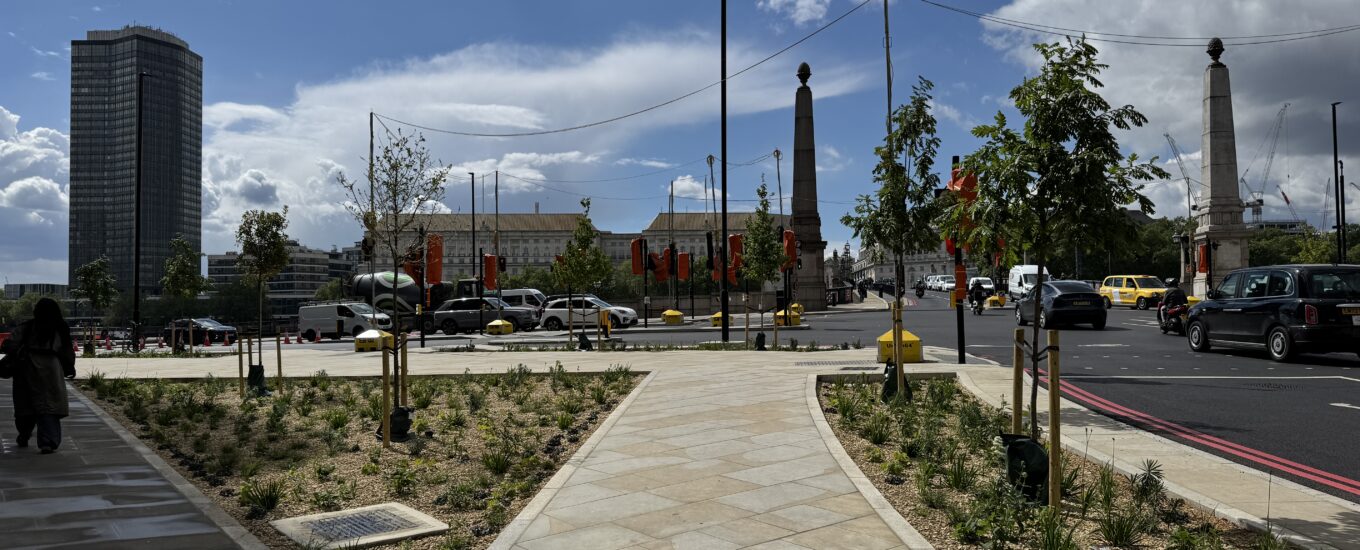
At first glance, the southern end of Lambeth Bridge is not an obvious place to begin a story about gardens. The former roundabout, now a junction, is a place of buses, cyclists, pedestrians, kerbs, crossings, tarmac, railings, exhaust, and impatience.
Approximately 80% of London’s public space is streets and roads, pavements and car parks. For many Londoners, such spaces are passed through rather than looked at; endured rather than enjoyed. They are the anonymous grey infrastructure of the city, designed to move people and vehicles onwards as efficiently as possible. It is precisely in these places that Professor Nigel Dunnett’s work is most urgent.
Nigel, who passed away in April 2026, was one of the most influential figures in contemporary planting design, urban horticulture and ecological landscape practice. Based for many years at the University of Sheffield, he helped change how cities think about planting – beyond decoration, and as infrastructure in its own right. His landscapes are beautiful, generous, and full of colour, but they are also practical, resilient and deeply intelligent. They absorb water, support wildlife, cool the streets, soften hard edges, and bring difficult urban spaces to life.
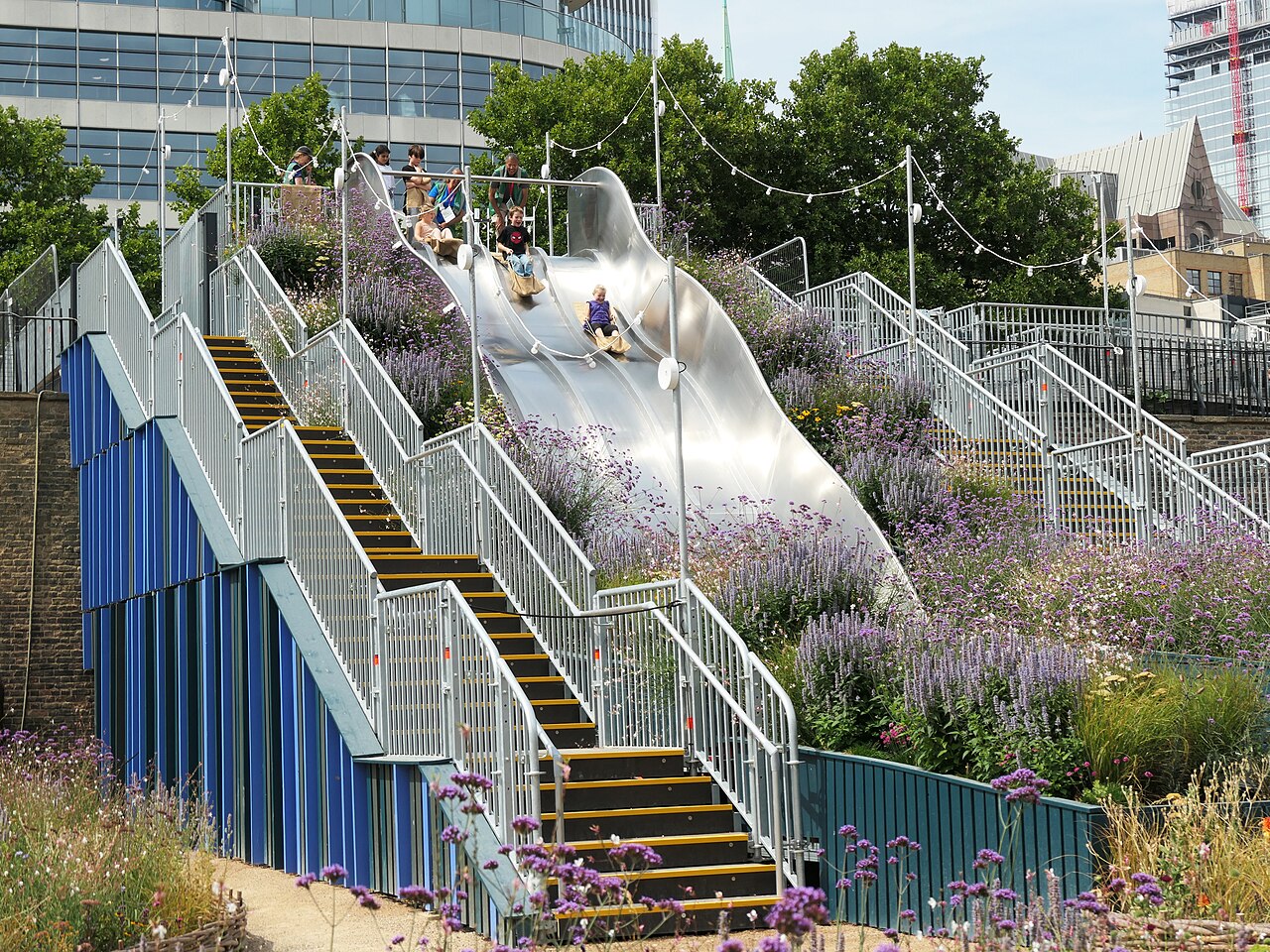
Naturalistic planting design by Nigel Dunnett at the Tower of London Superbloom (2022, Creative Commons)
At the Garden Museum, this legacy is especially present as we mark the completion of planting at Lambeth Bridge, designed by Dan Pearson Studio and delivered in collaboration with Transport for London. This new planting forms part of our Lambeth Green project, and represents a wider reimagining of the public realm around the Museum – a shift from a space once dominated by hard highway infrastructure towards one that can offer greening, seasonal interest, biodiversity and a more welcoming arrival into Lambeth. It is a local transformation, but it speaks to a much larger movement – the movement Nigel did so much to define – from grey to green.

Grey to Green planting scheme in Sheffield, designed by Nigel Dunnett and Zac Tudor
The phrase is most closely associated with Sheffield’s pioneering Grey to Green scheme, for which Nigel and Zac Tudor developed the planting design. Begun in 2014, with phases installed in 2016 and 2020, the project transformed a redundant carriageway on the edge of Sheffield city centre into a 1.6 kilometre sequence of rain gardens, perennial planting and sustainable drainage. It is described on Nigel’s own website as the UK’s largest retrofit sustainable drainage systems (SuDS) project and the UK’s largest inner-city “Green Street”. Grey to Green showed, with extraordinary clarity, that urban drainage projects could also be gardens, that a flood intervention could be a place of delight, that infrastructure could be colourful, sensuous and ecologically rich.

Grey to Green planting scheme in Sheffield, designed by Nigel Dunnett and Zac Tudor
In his work, Nigel refused the false choice between function and beauty. In much public infrastructure, ecological planting is treated as something worthy but dull – the dutiful green edge to an otherwise technical scheme. Nigel’s work demonstrated the opposite. He understood that for green infrastructure to work, people need to notice it, enjoy it and care about it. Planting could be low-input and high-impact; it could be robust enough for the city and still full of wonder.
Rain gardens are a perfect example of this way of thinking. Technically, a rain garden is a planted area designed to receive, slow, hold and filter rainwater runoff from hard surfaces. Instead of sending water straight into overloaded drains, they put that water to work through feeding plants, supporting soil life, and reducing pressure on drainage systems. In an era of heavier rainfall, hotter summers and increasing pressure on drainage infrastructure, planted public spaces are part of how cities adapt. Rain gardens and related forms of sustainable planting contribute, however modestly at each site, to the creation of more livable urban microclimates.
There is something quietly radical in applying this thinking to underloved urban spaces. To plant a road junction suggests that no part of the city is beyond care. It refuses the idea that gardens belong only behind walls, in parks, or in places already marked out as beautiful. Nigel’s work helped expand the very idea of where gardens can happen. A garden might be a roof, a moat, a former carriageway, a verge, a drainage channel, a traffic island.
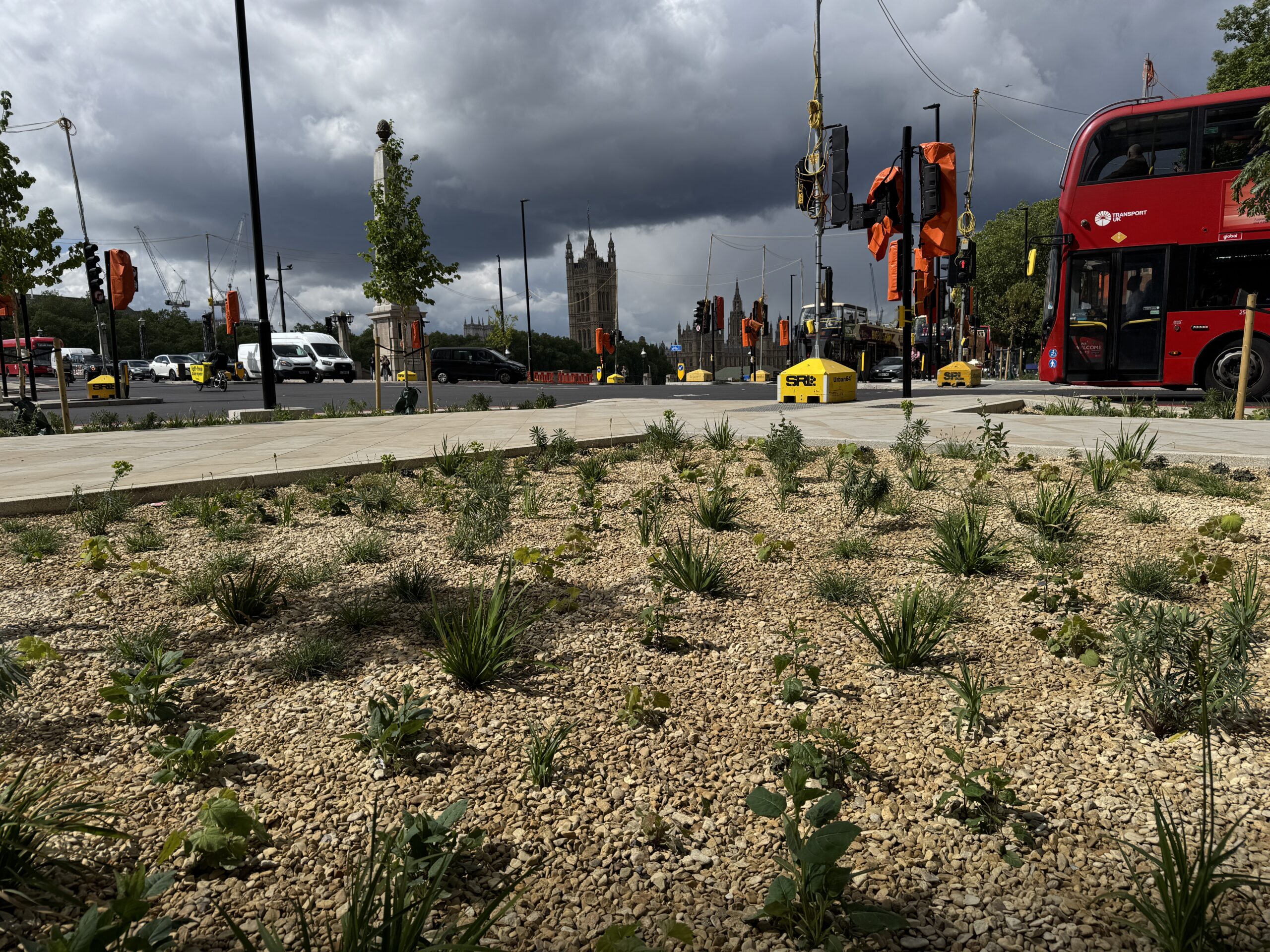
Early planting at Lambeth Green designed by Dan Pearson Studio
The junction at Lambeth Green sits between some of London’s most layered public landscapes – Lambeth Palace and its historic gardens, the Thames, the Garden Museum, the route towards Vauxhall, and the memory of Vauxhall Pleasure Gardens beyond. The word “pleasure” may feel almost comic when applied to a busy road junction – this is hardly the London of lanterns, music and promenading – but that contrast is revealing. What would it mean to bring pleasure back into a piece of city infrastructure?
The planting at Lambeth Bridge is part of a wider argument about the place of gardens in public life. Gardens are not separate from infrastructure, climate, movement, health or civic imagination. They are woven through all of these. Nigel showed us that these spaces – and ecological urban planting – could be rigorous without being joyless, functional without being dull, and beautiful without being superficial.
To hear more from Nigel in his own words, visitors can watch the Garden Museum’s films on his work, including his conversation with Matt Collins on the Tower of London Superbloom and the role of wild nature, colour and dynamic planting in the public realm, and in conversation with his collaborator James Hitchmough on ‘The Dynamic Landscape’.
Find out more about Lambeth Green.