Posted on 18 Jun 2026

Floristry

Have a look at this year's British Flowers Week installations and discover the florists' design inspirations, in their own words.

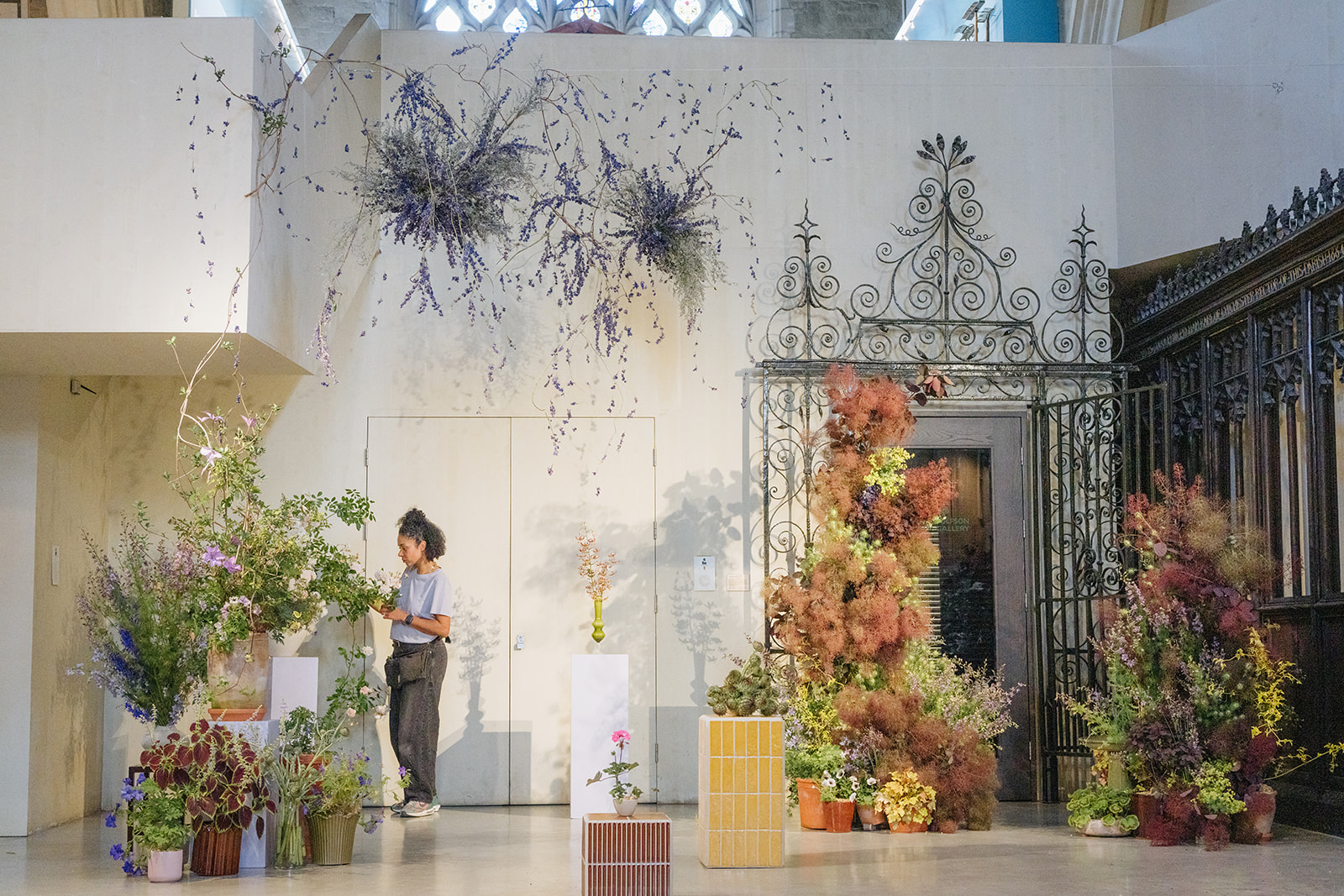
Elder & Iris: Together

The garden, and indeed green spaces are places that people of all ages, and backgrounds can gather, and come together. In these troubled, and uncertain times, flowers, the garden, and more broadly nature, provide people with beauty and pleasure. A reminder that time does not stand still, and that beauty can be found in the smallest of things and darkest of times.

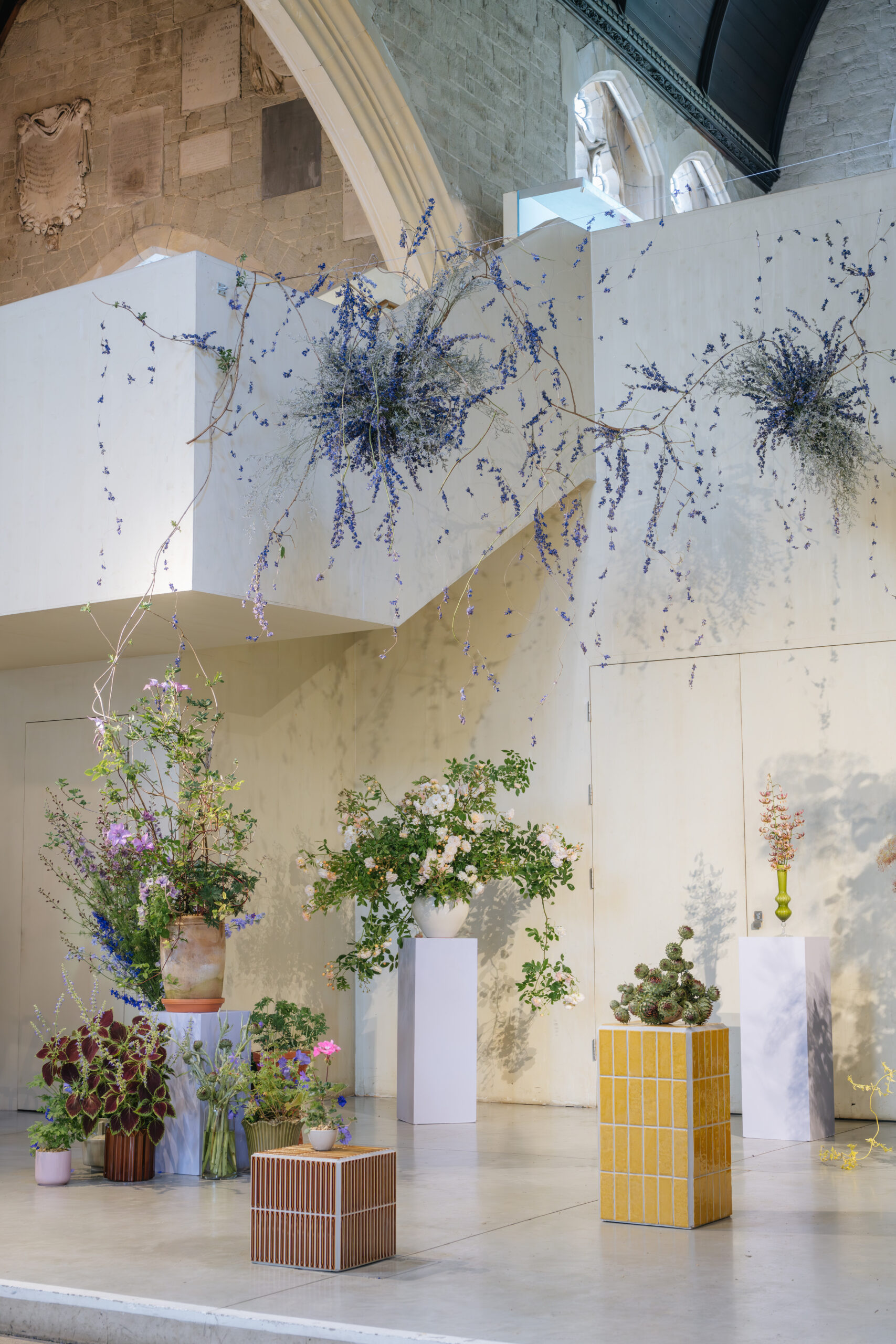
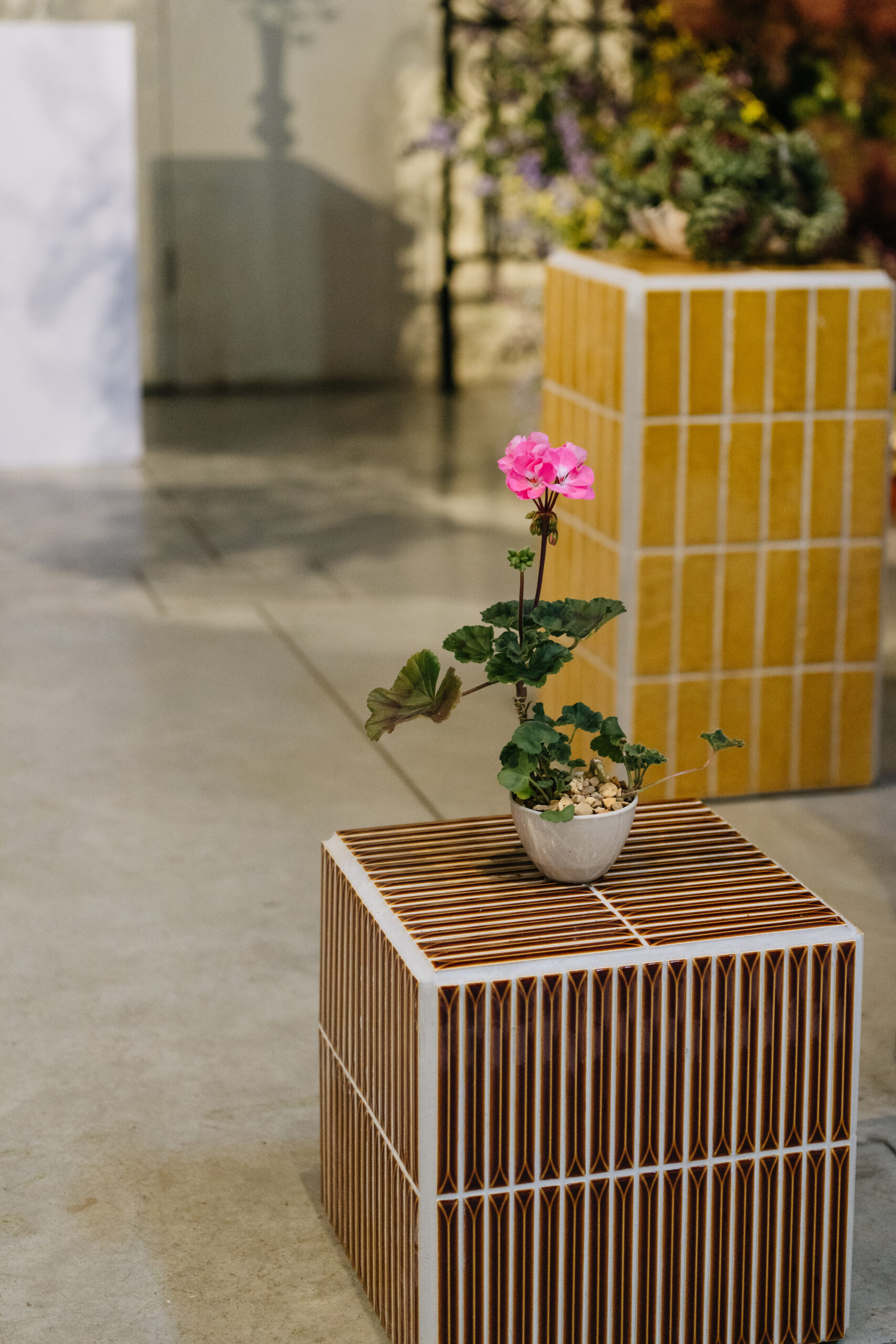
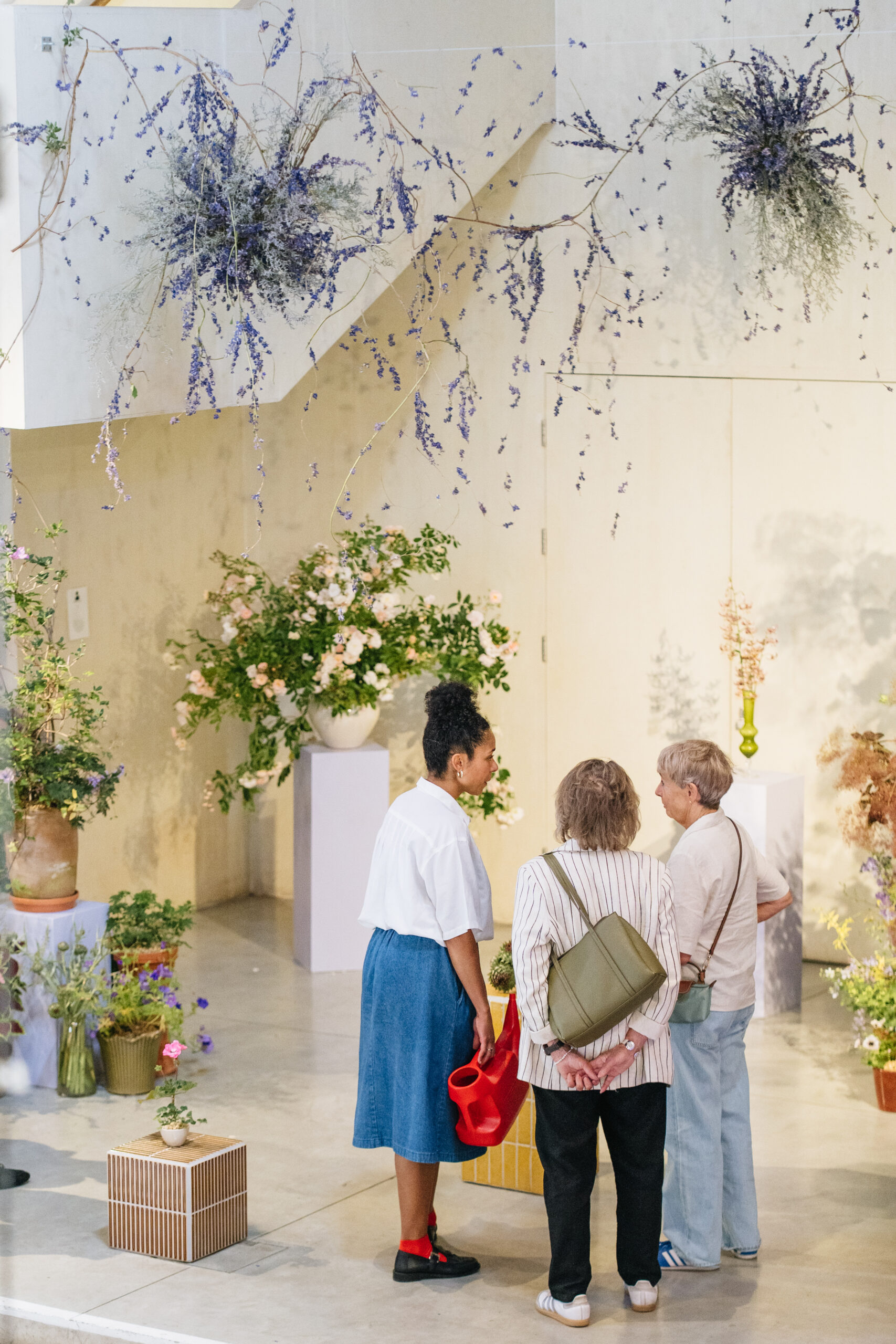
‘Together’ is inspired by the people that frequented Benton End, and how everyone was welcome. My notable inspiration is one of Sir Cedric’s painting’s “Iris Seedlings’ for its colours which I am really drawn to, and his friend and flower rebel Constance Spry, and Gardner Beth Chatto. The flowers used in this piece are ones that people will be familiar with, and are inspired by ones used by Beth Chatto, and Constance Spry in their work, highlighting the link between the garden, floral design, and, art. Flowers such as cornflower which are are loved by bees, Cranesbill, garden roses and scented sweet peas are arranged en masse to create floral art with everyday British garden florals.

The designs are constructed using multiple plinths to create a gallery aesthetic, whilst an abundance of cornflowers are individually wired onto clematis and honeysuckle vines, originating from a potted plant. I love to work with minimal ingredients, creating sculptural designs with seasonal flowers and food. The flowers for this piece were either grown by me, or sourced from a variety of growers in Yorkshire (Flowers by Raspberry Wild, Field 216, and Fox Farm Flowers), as well as Flowers by Clowance, and The London Flower Farmer.

‘Together’ blurs the lines between the garden and art, I hope viewers will enjoy my ‘Together’ piece and stop to muse, reflect, and draw or your own interpretation of my work and these beautiful garden florals.

Cynthia Fan: Experiments in Plant Hybridisation

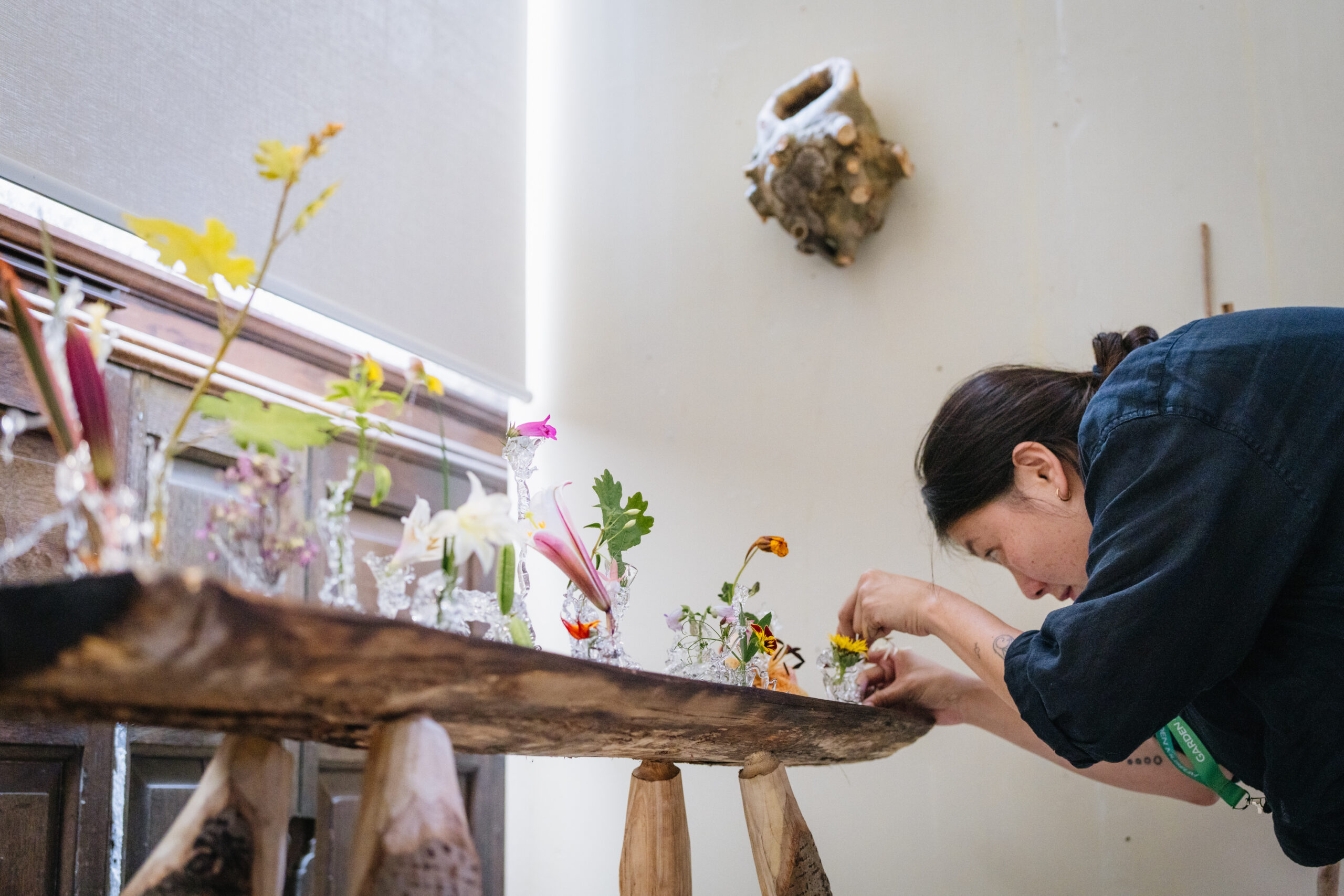
Taken directly from a paper first presented by Gregor Mendel in 1865, the exhibition title draws on Cedric Morris’ practice of hybridising plants within his garden. Mendel’s research into seven pairs of traits in the pea plant (flower colour, flower position, plant height, seed texture, seed colour, pea pod texture and pea pod colour) established some of the foundational principles of genetic inheritance. At the time, Mendel’s work received little attention as it was prior to the discovery of DNA.

What Mendel described as the pea hybrid might be more accurately understood as a cultivar rather than a hybrid. In botanical nomenclature, a cultivar (“cultivated variety”) has been selectively bred by humans for particular traits, such as colour patterning or flavour. As Mallet (2005) explains, hybridisation is often regarded as “unnatural or extremely rare” and linked to environmental degradation, indicative of a failure in the “balance of nature”. Yet despite the frequency of natural hybridisation in the wild and its role in generating plant biodiversity, species are still often understood as discrete, fundamental units rather than points along a continuous hierarchy of biodiversity.

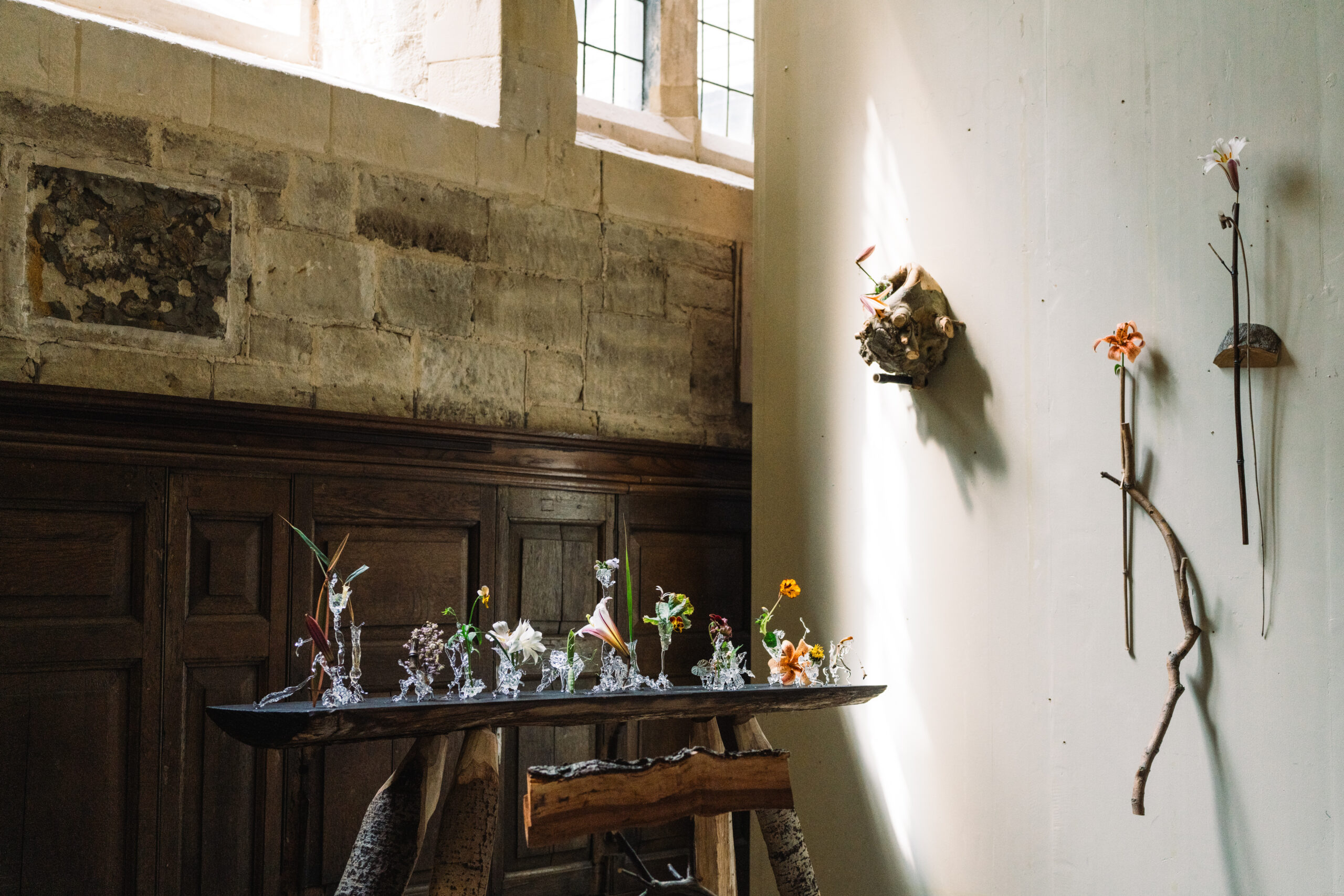
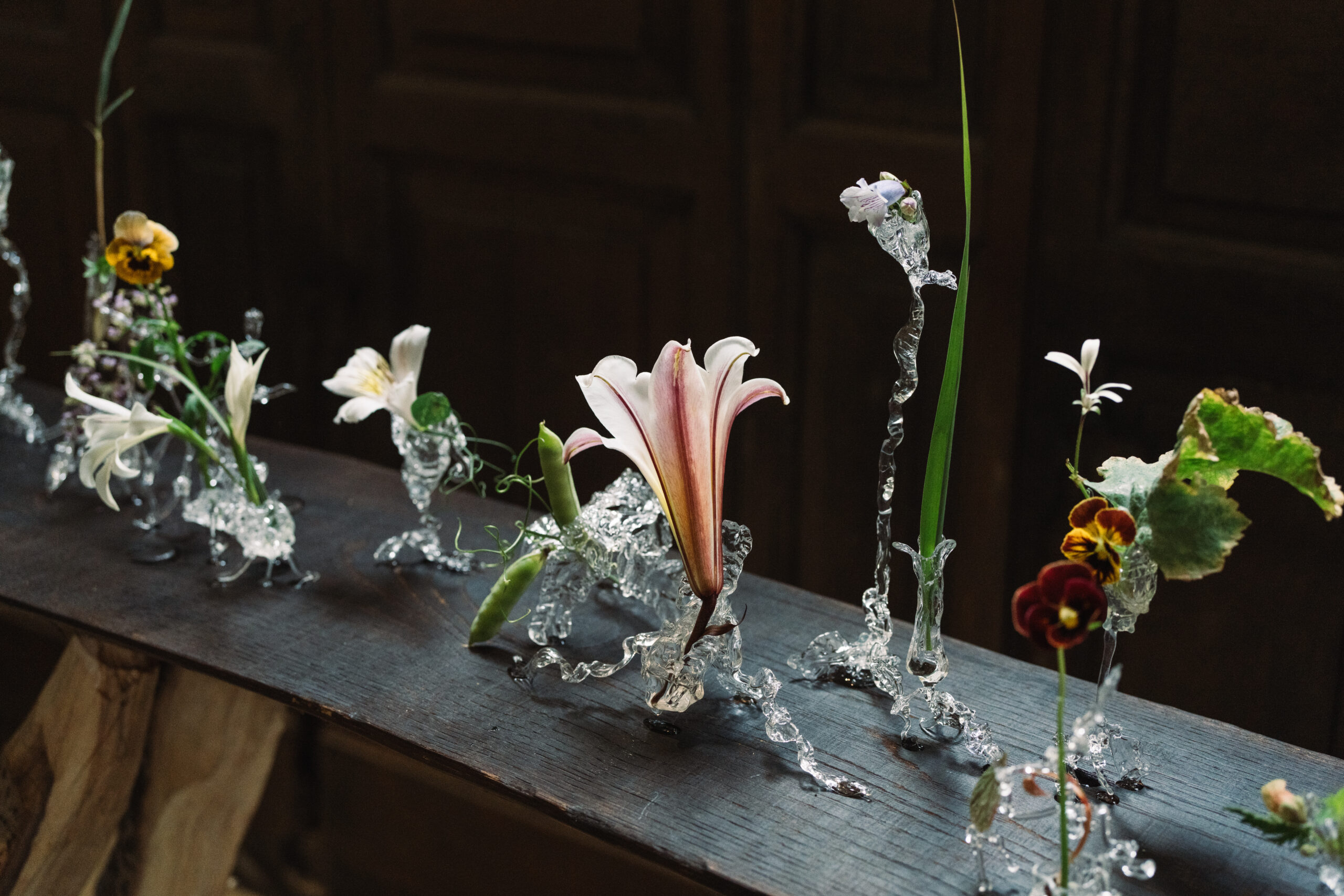
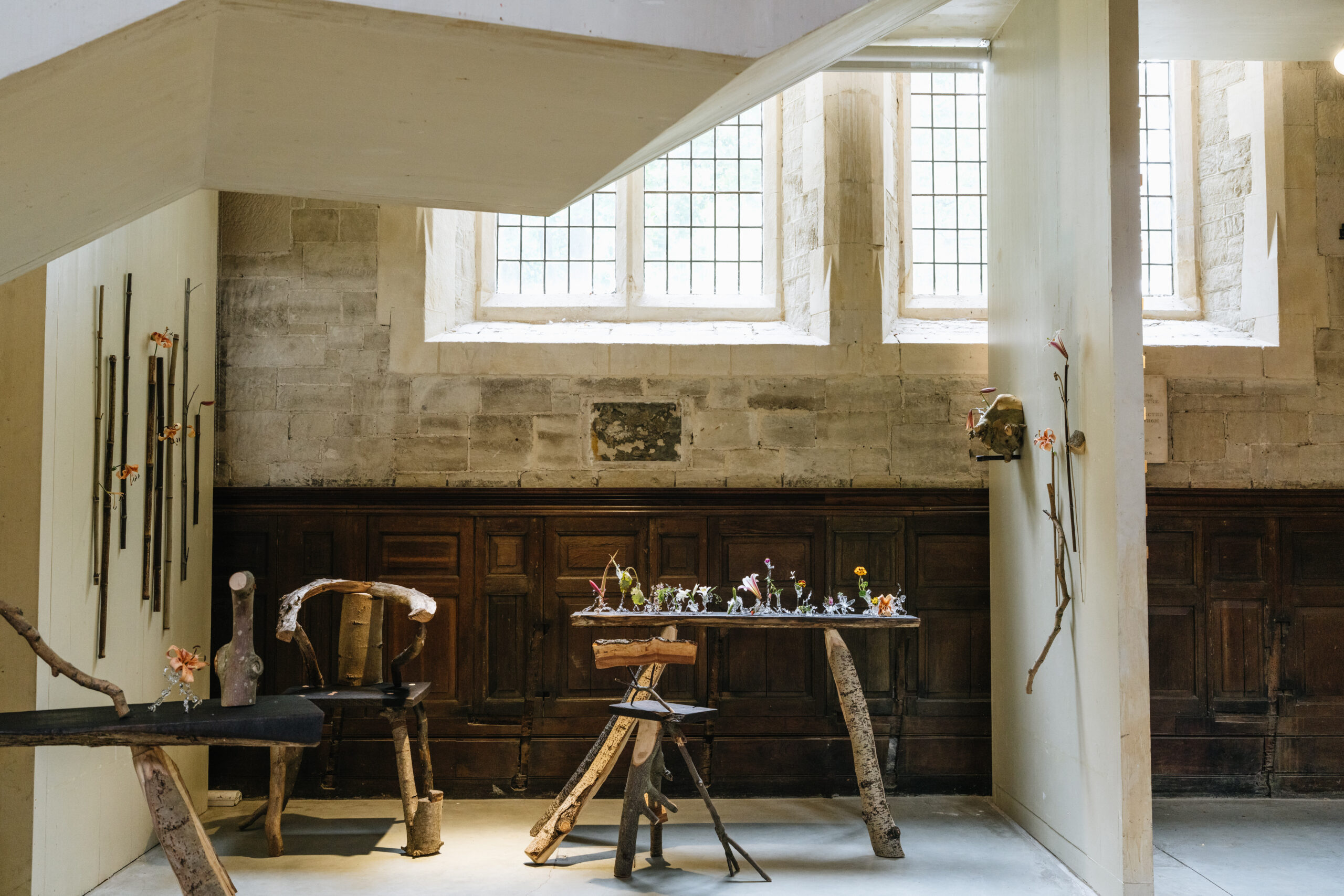
This installation reflects on the concept of the plant hybrid and magnifies the plant structures responsible for hybridisation, taking inspiration from the Miniature Ikebana assignment developed by Kasumi Teshigahara, second Iemoto of the Sogetsu School (1932-1980):

“Decide the containers, then the plant materials. Observe carefully the different parts of them including petals, pistils and stamens, fruits, leaves, branches and stems, to make new discoveries of their distinctive appearance which were not noticed before. […] In this subject, you can have an experience of searching out or making containers, and reaffirming the importance of close observation of plants. Make the best use of this opportunity of creating a tiny original world or microcosm.”

By recognising the potential held within every part of a plant, this installation imagines a laboratory for plant hybridisation. Felled logs collected from parks and farms around London were assembled into functional forms under the valuable guidance of the Greenwood Guild, glass vessels were hand-sculpted over recent months, and plant materials were grown locally by friends and flower farmers.

Reference: Mallet, J. (2005) Hybridization as an invasion of the genome. Trends in Ecology and Evolution, 20(5), pp.229–237.
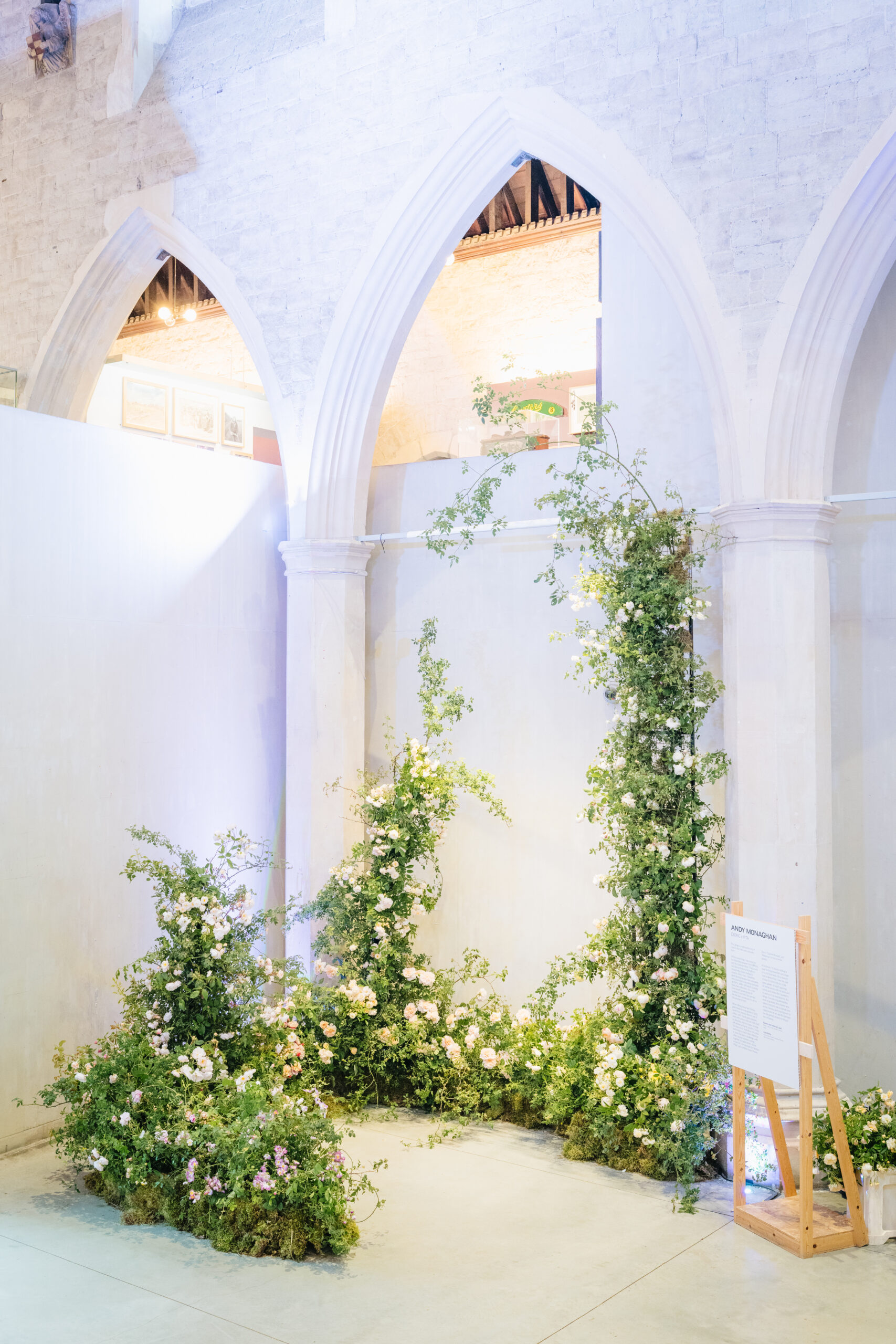
Andy Monaghan: Cedric x Vita

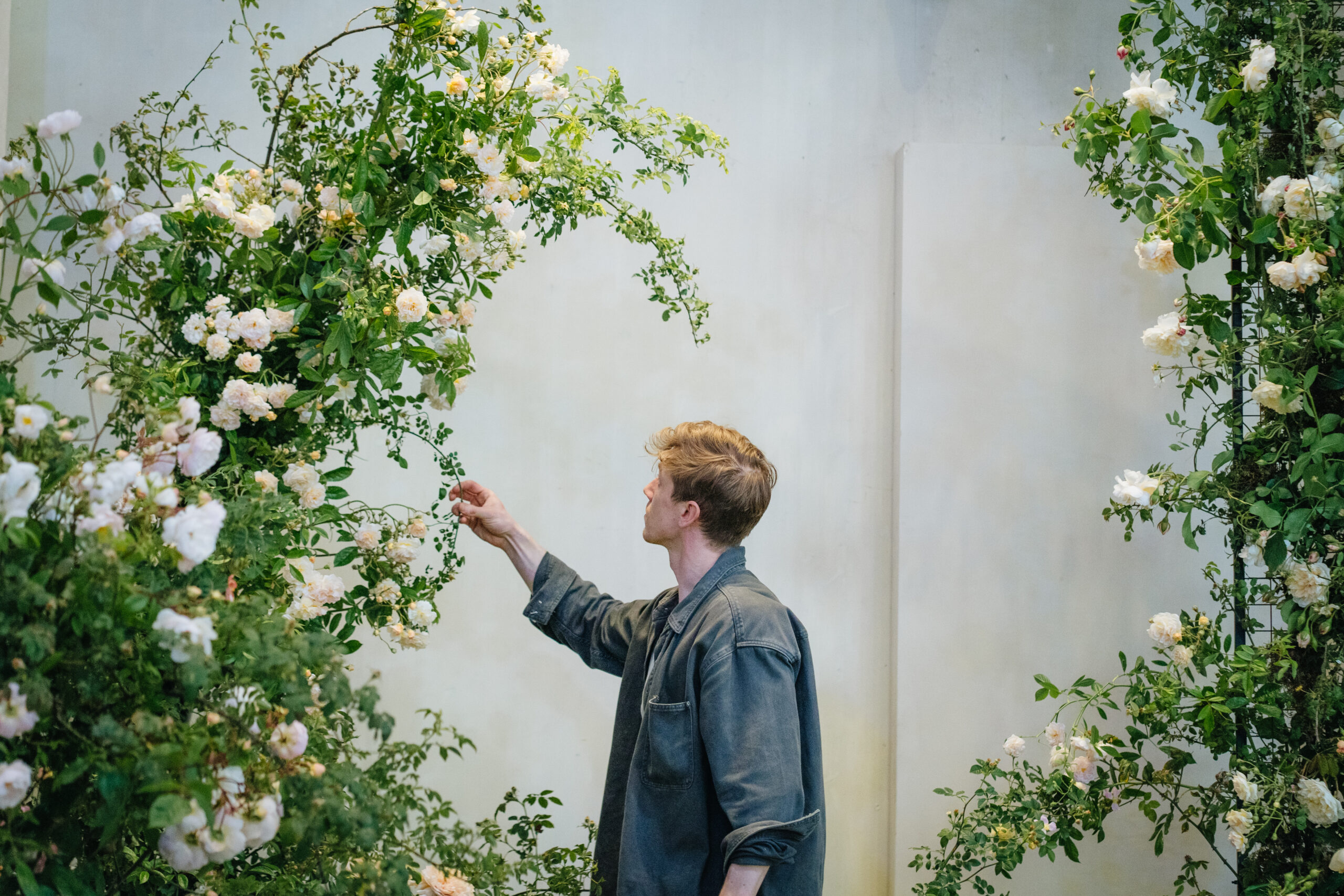
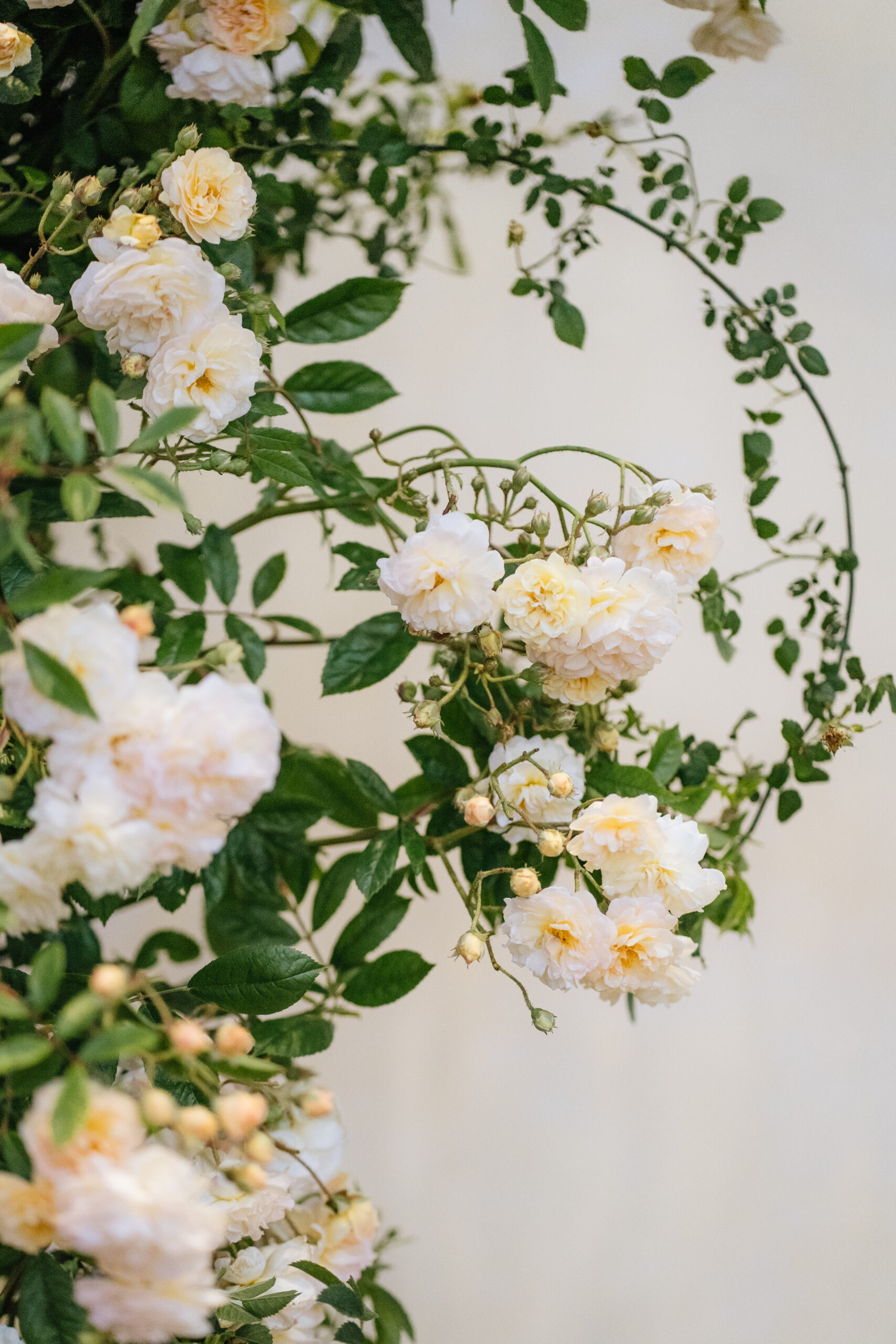
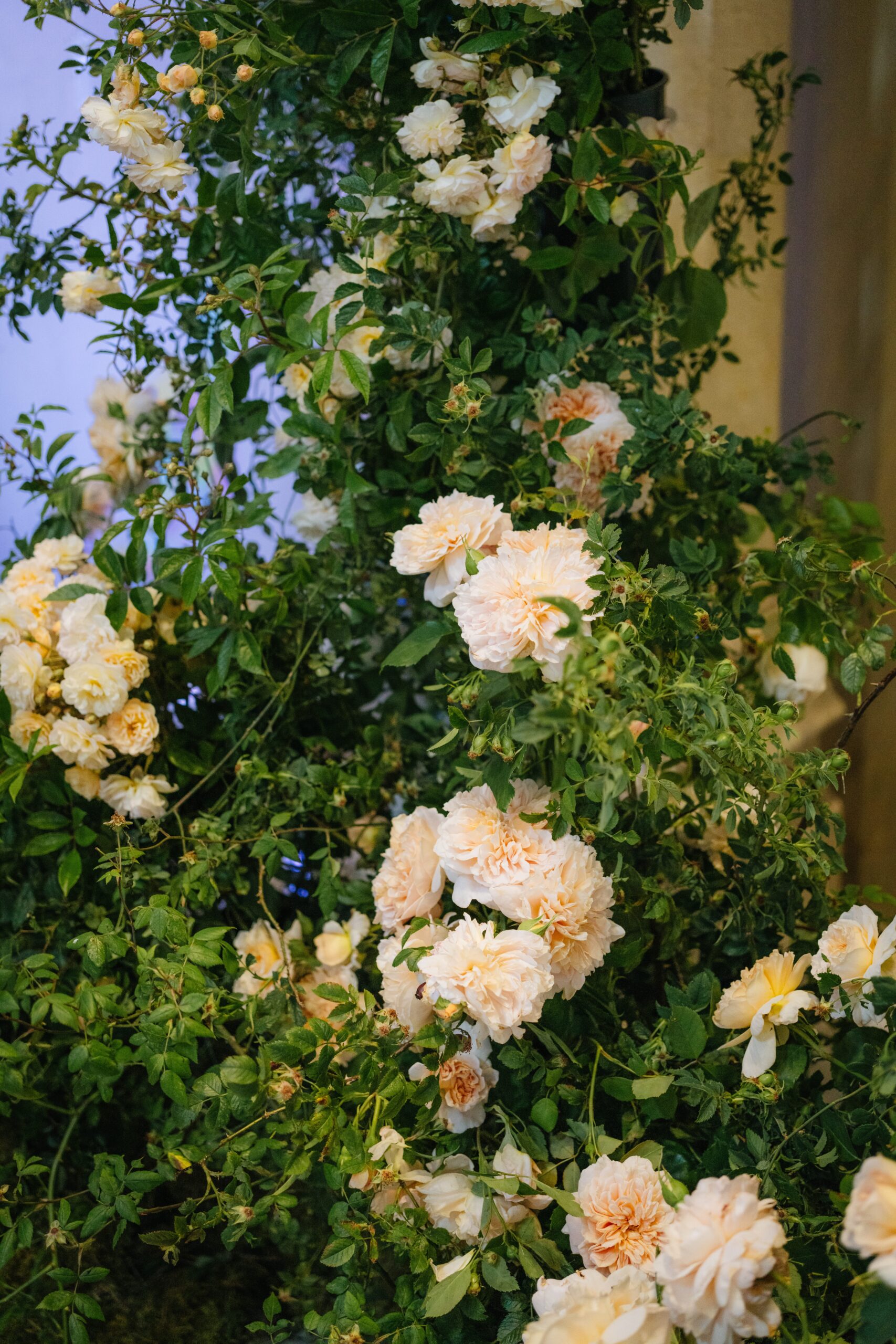
This design is made exclusively of roses in their wild and cultivated form.

Whilst researching, I was drawn to the friendship between Cedric Morris and Vita Sackville-West. They would visit Benton End and Sissinghurst respectively, Cedric trading his irises for Vita’s roses. I loved this plant sharing between two visionaries who prioritised a naturalistic and wild aesthetic, whilst still heavily curating their plant collections. As a rose lover myself, growing over 65 varieties in my field, this seemed like the clear connection for me to this wonderful brief.

When talking about her Chelsea gold-medal winning garden in 2023, Sarah Price unpacks Morris’ use of colour, with ‘moody grey poppies, irises with colours that are really hard to describe, such as copper, strange off-yellows and grey-purples.’ Using his irises as my inspiration for colour and trying to match their reflection in roses has been a challenge, with often several varieties coming together to create what’s found in one iris – for example for ‘Benton Olive’, you combine roses ‘Honey Dijon’, ‘Colonel Mustard’, and ‘Mokarosa’ to find a similar palette.

As a dancer, I’m always looking at ways to bring movement and shape in to my floral work. On a research visit to Benton End, I saw the scale of rosa ‘Sir Cedric Morris’ in the upper garden, its reach spanning 20 metres across with its twists and curves, and I knew that I wanted to try and use it as inspiration for this design. I’ve also long admired the work of gardener Jenny Barnes who creates intricate rose sculptures ever winter, bending and training them to create works of art, and this seemed like the perfect project to bring in this influence.

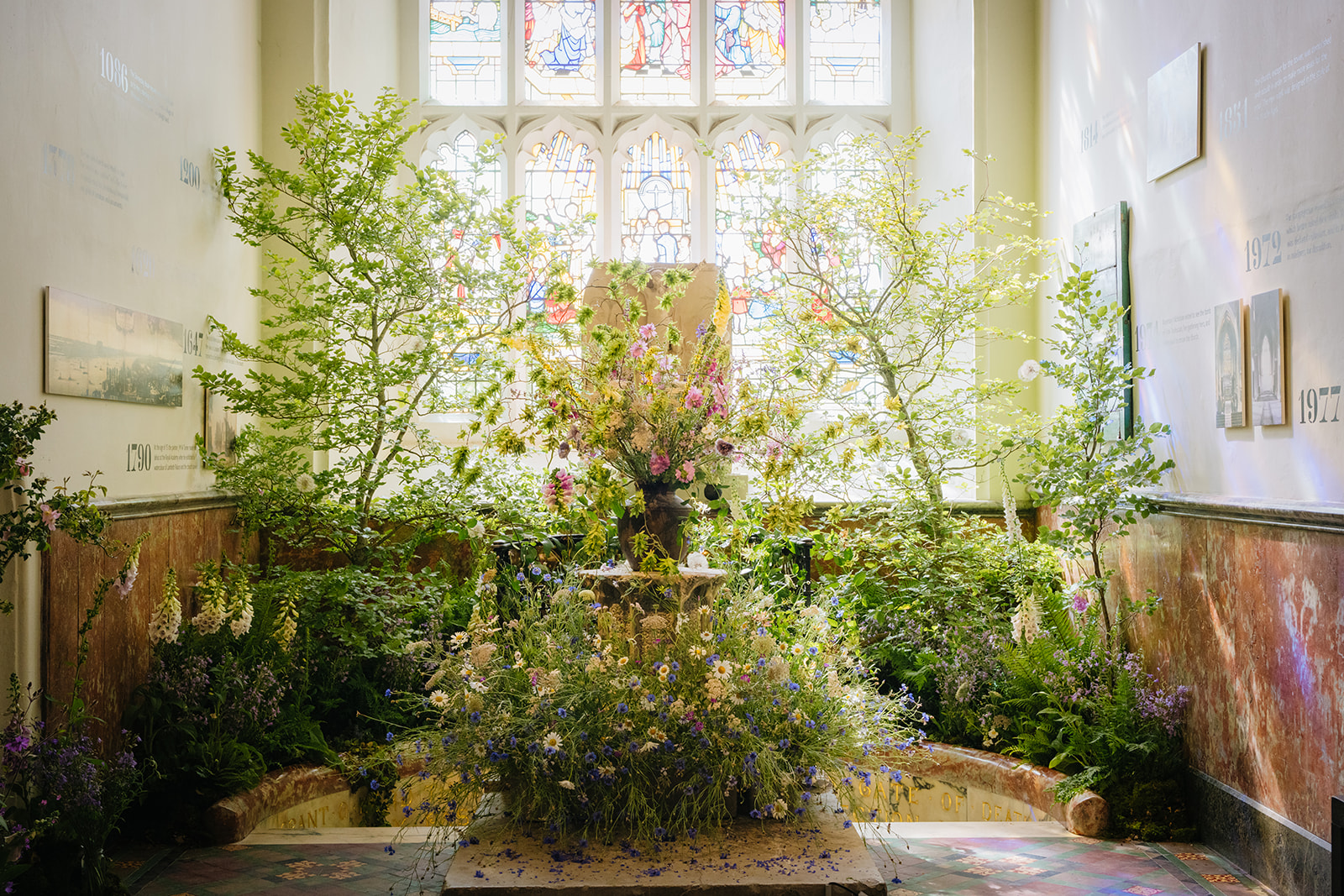
Nate Moss: A Midsummer Night’s Dream

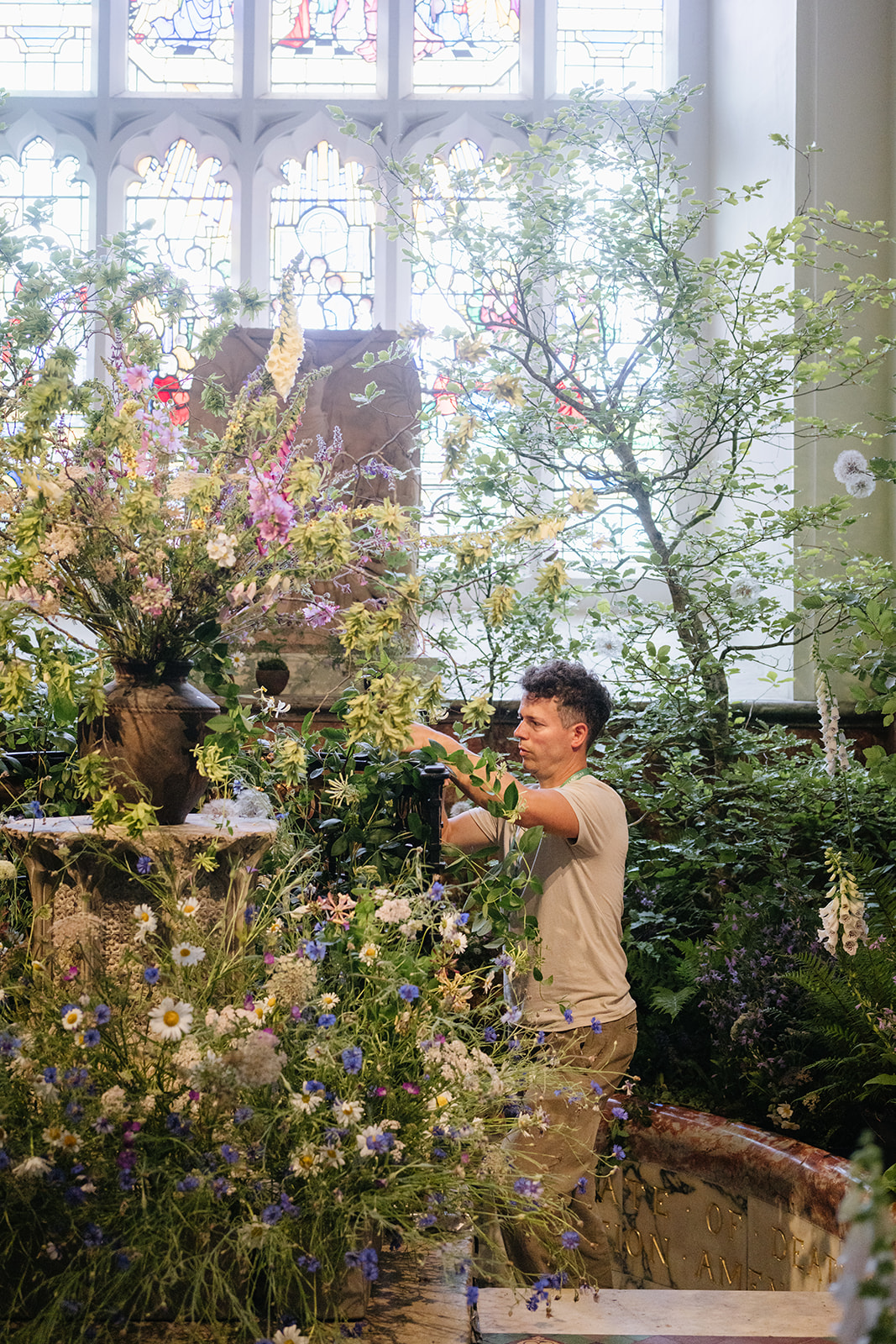
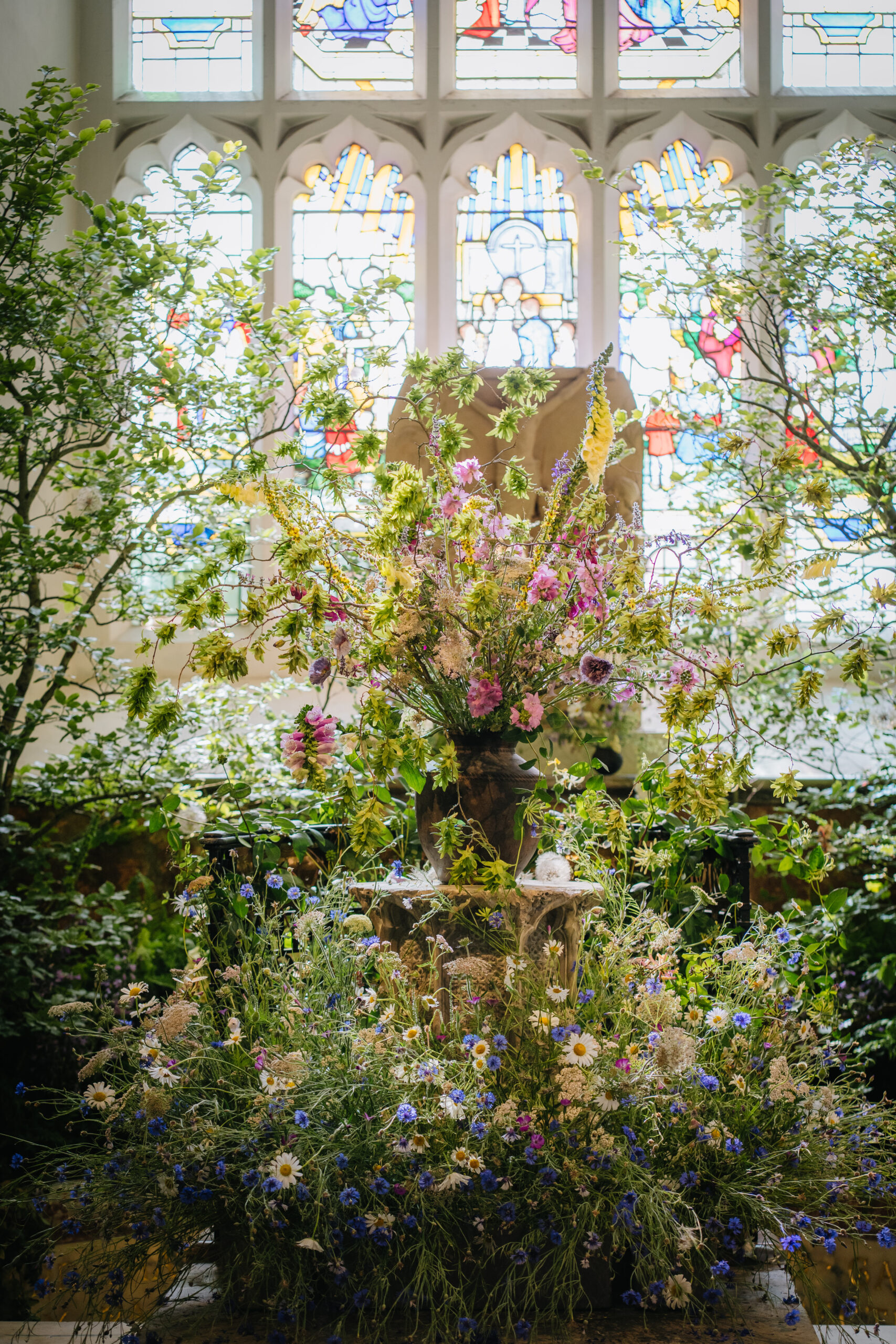
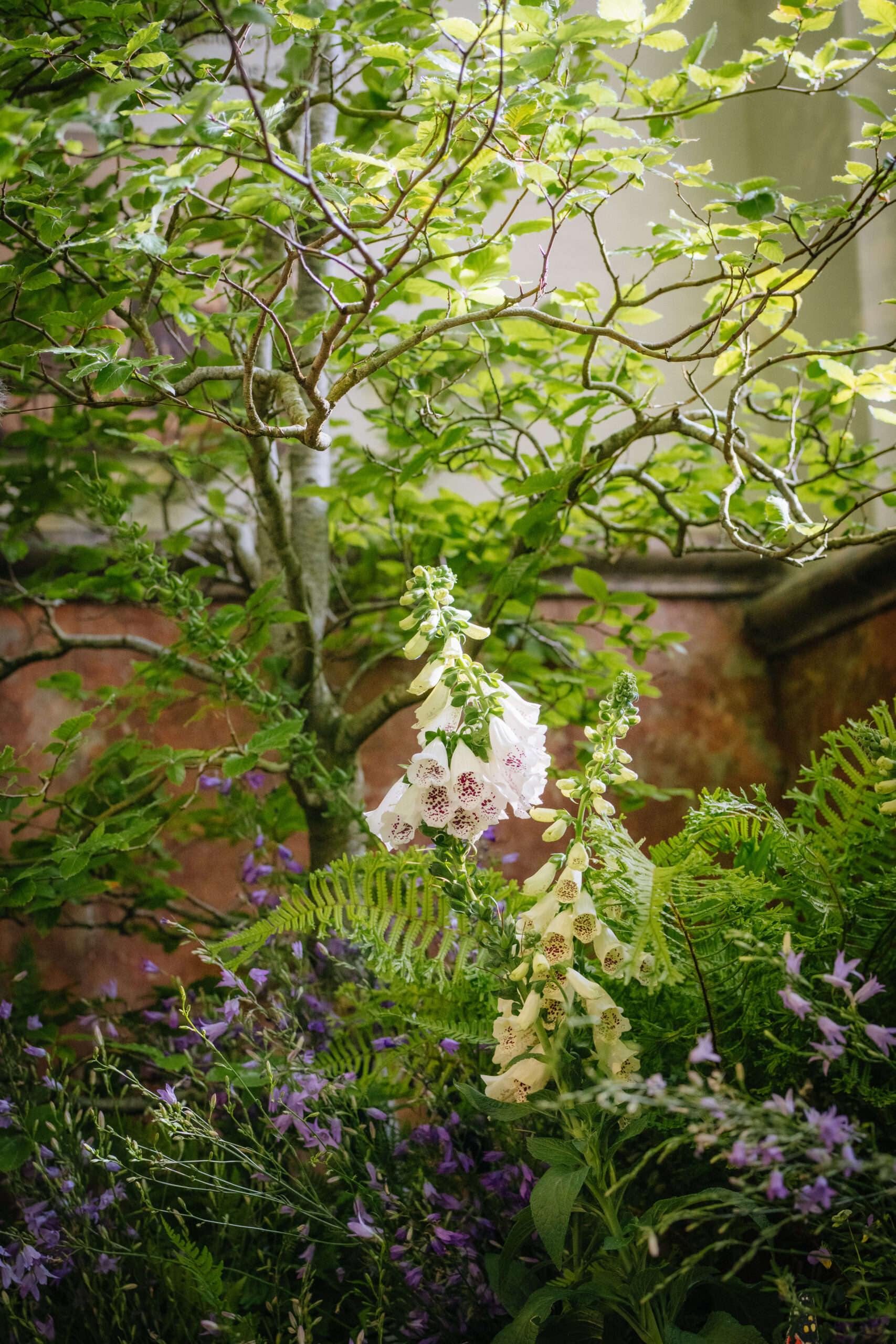
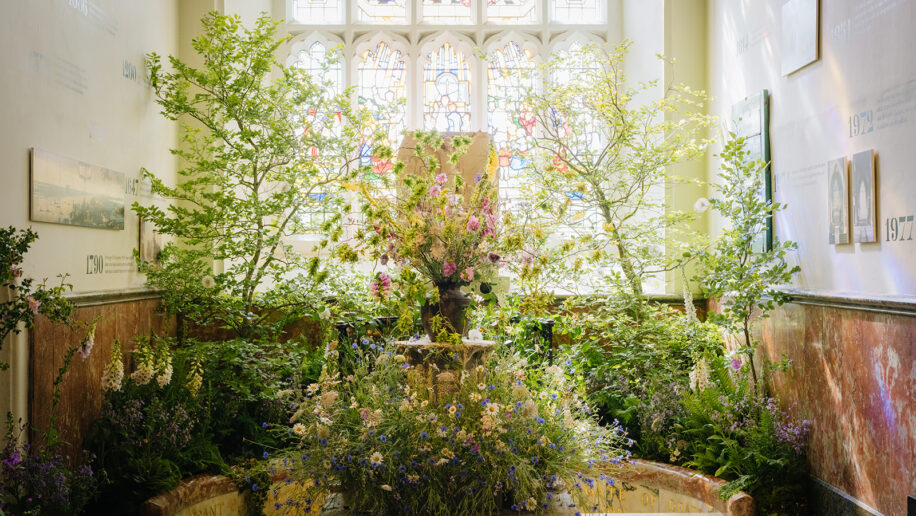
At the zenith of the year, the midsummer sun hangs high in the sky as nature stretches heavenwards in all her fecund glory. We meet in a woodland glade to gather divine floral offerings to the solstice and honour nature as our goddess. Our installation is a celebration of Britain’s flora and uses only native species, as we reflect on the ecology of the landscape and its myriad relationships.

These connections are represented here by the woodland moths and nightingales, the midnight pollinators and music-makers of this fairy realm. With sustainability in mind, we consider the value of restraint, of taking less, appreciating more. Native species, authentically of the landscape, can be less demanding to grow and may also be foraged. Crucially, they have intrinsic nature-value, supporting our indigenous fauna in a symbiosis arrived at via millennia of coevolution.


Nate Moss' installation at British Flowers Week 2026, photo by Andrea Gilpin

Our shared history with native plants, which for centuries we relied on in so many ways for our very survival, gave rise to the rich language and symbolism associated with wildflowers and their prominence in our folklore and rituals. They are woven through our culture and have inspired bards and artists throughout the ages. Cedric Morris’s paintings include various native species, many of which still grow at Benton End today.

The flowers we have used were grown on our little farm in Kent. We have aimed to elevate humble familiars as well as showcasing some perhaps less well-known species, all of which form threads in the intricate tapestry of biodiversity. Our hope is that this exploration of Britain’s flora will awaken a sense of intrigue in the beholder and extend an invitation to forge a deepening connection with nature.

Vervain

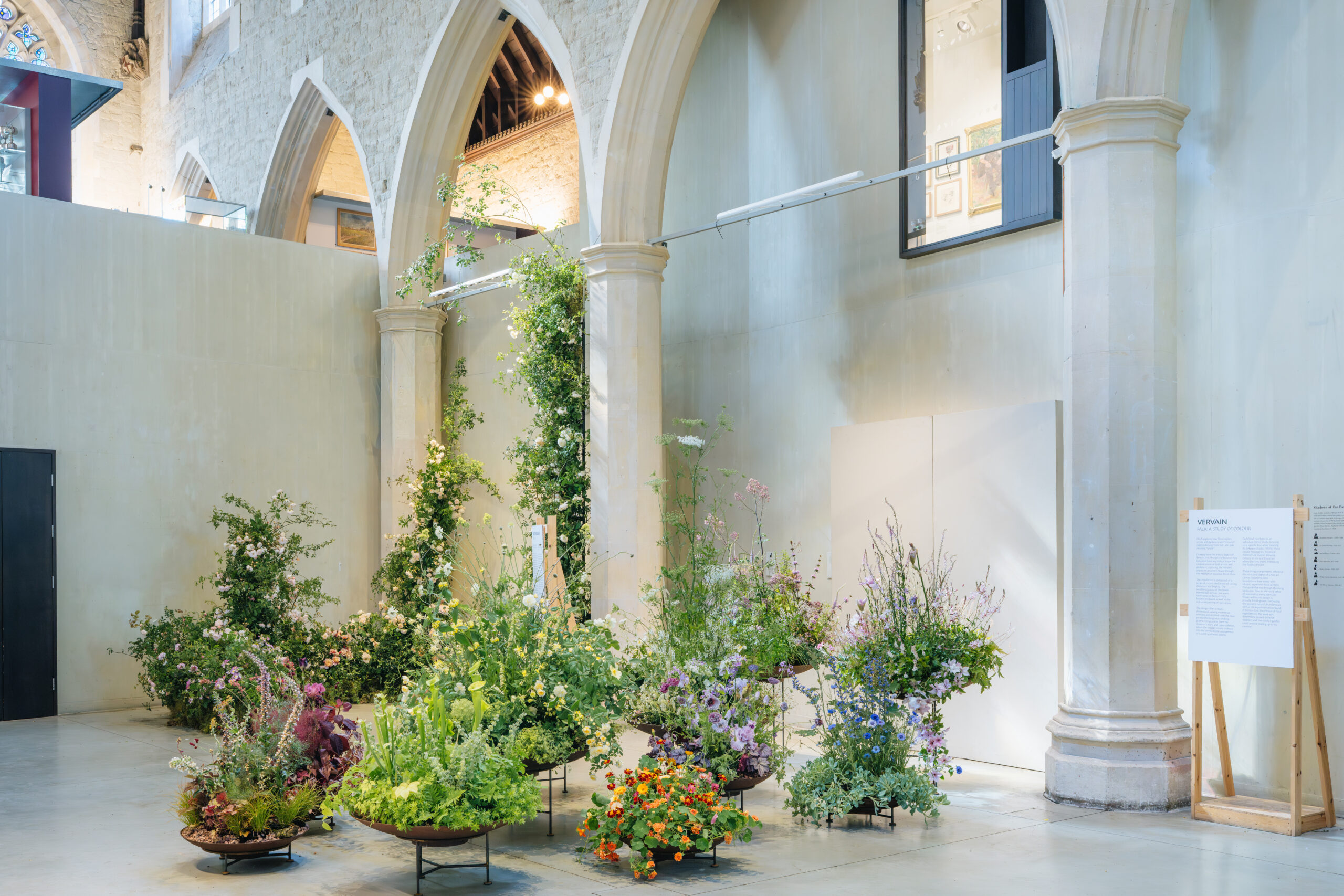
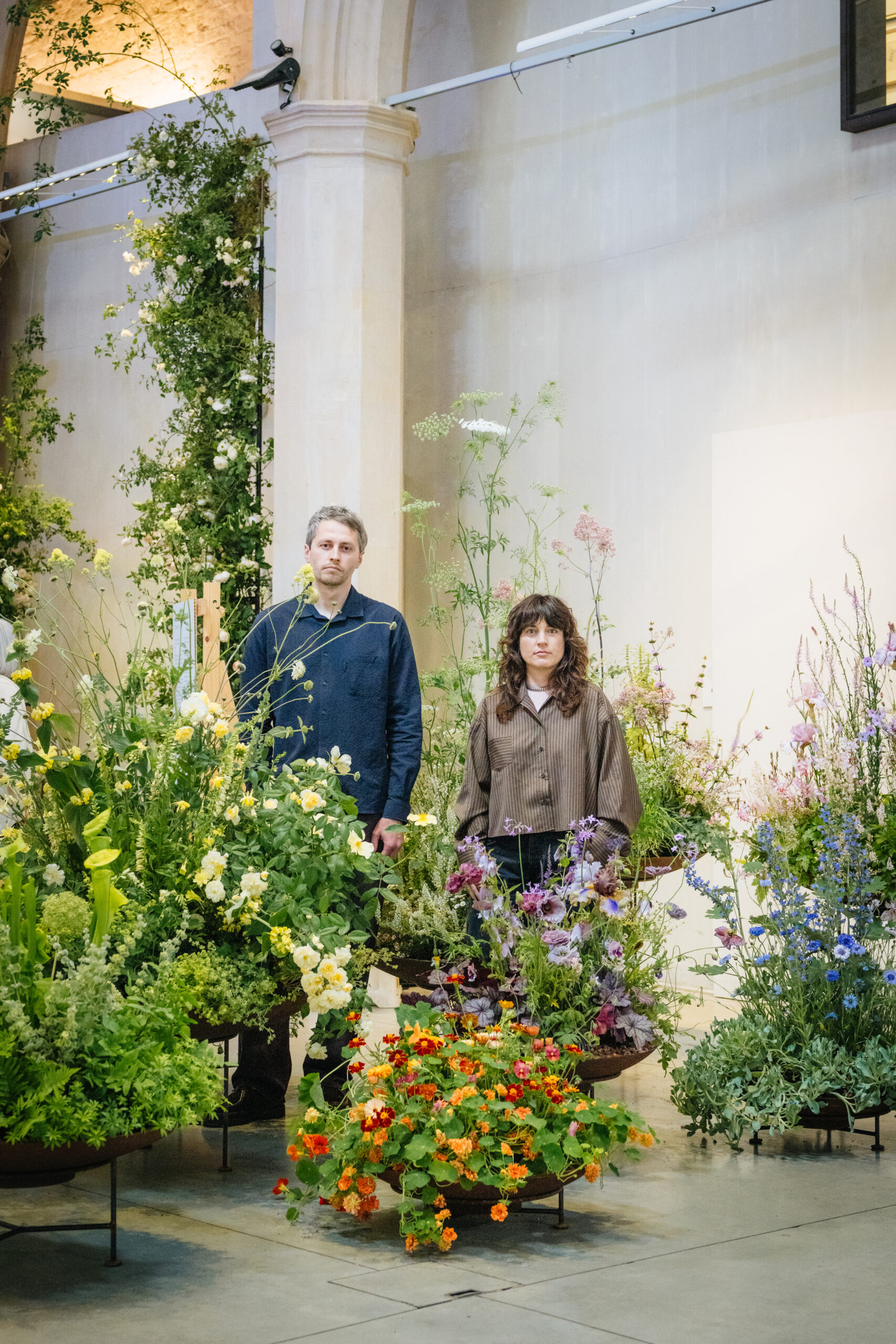
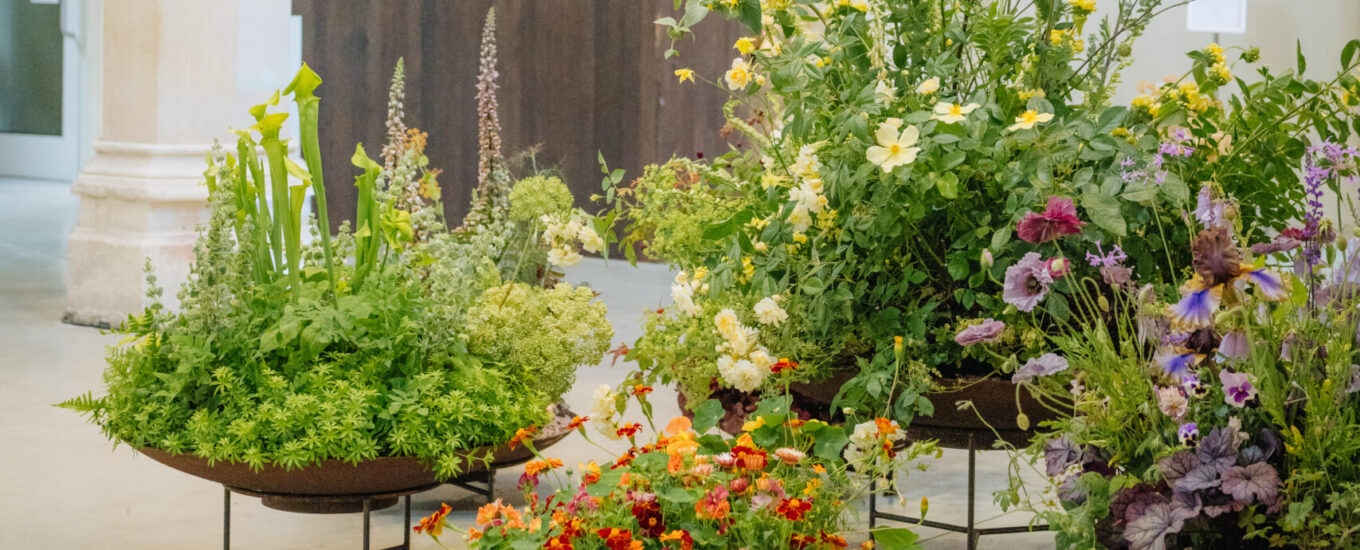
PALA explores how flora inspires artists and gardeners with the word palette deriving from the Latin pala, meaning “spade”. Drawing from the artistic legacy of Benton End, the work reflects on how botanical form and colour shape the creative vision of both artists and gardeners, capturing the blended shades of an artist’s board through the medium of seasonal British flora.

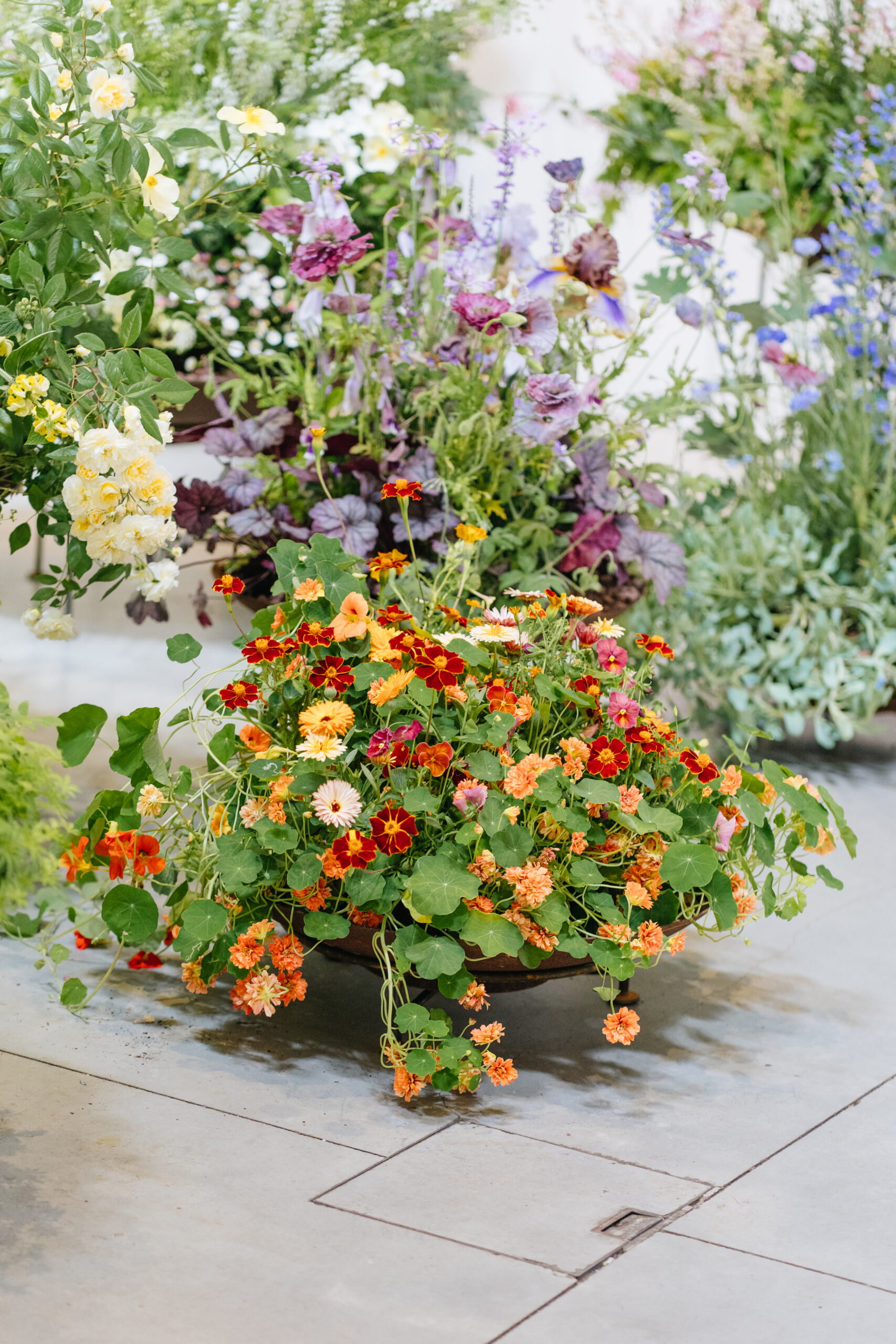
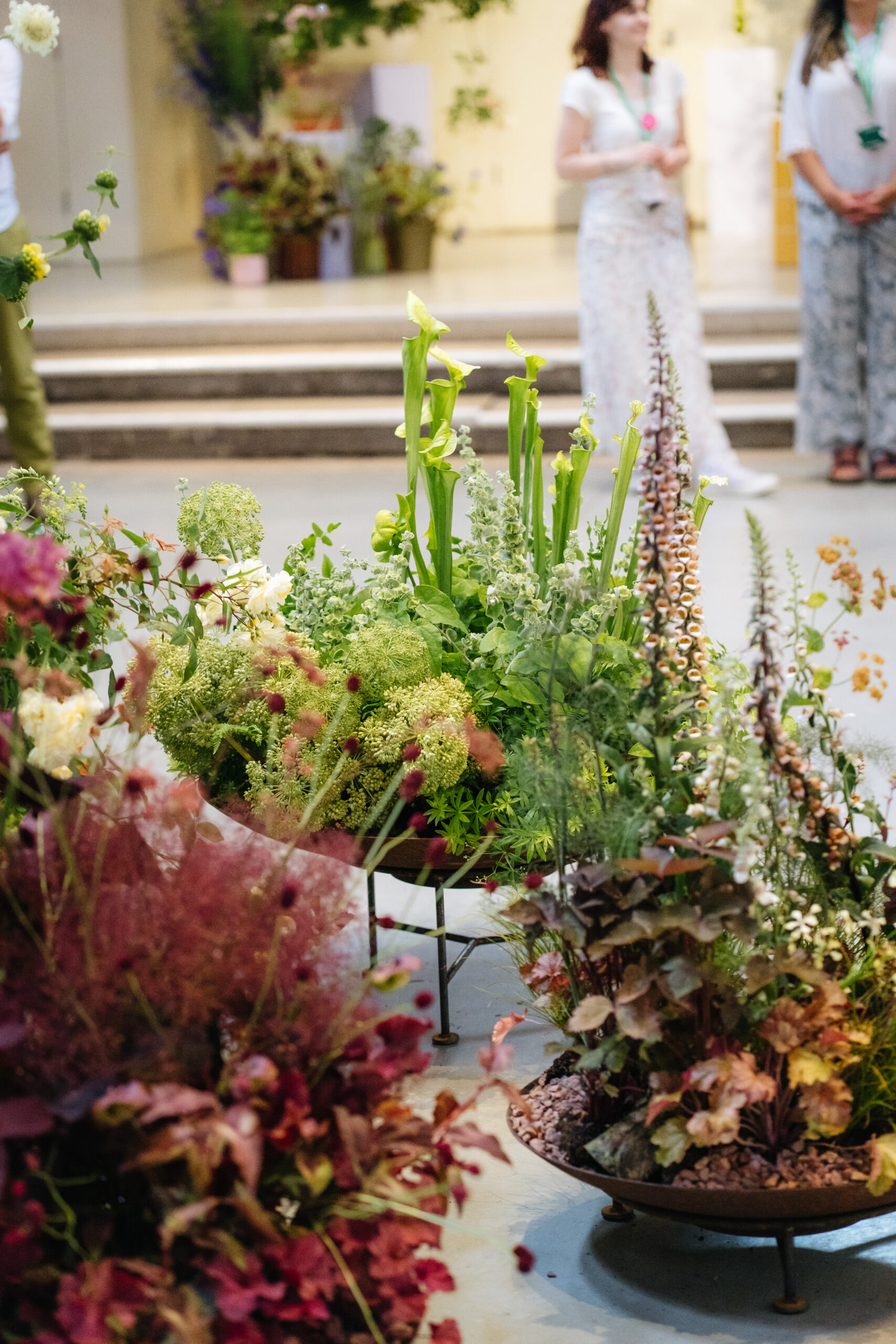
The installation is composed of a series of corten steel bowls of varying diameters and heights. The weathered patina of the bowls intentionally echoes the warm earth tones of Benton End’s historic brickwork as well as the rich underpainting of raw canvas. The design offers a multi-dimensional viewing experience, intimate and detailed from the nave, yet transforming into a striking graphic composition from the museum’s stairs and upper galleries, where the circular vessels coalesce into the unmistakable arrangement of a paint-splattered palette.

Each bowl functions as an individual colour study, focusing on a specific hue while blending its different shades. Within these circular boundaries, botanical materials are layered allowing colours to mix and transition where the rims meet, mimicking the fluidity of paint. These living arrangements reference the structural depth of a fine art canvas, balancing deep, foundational base tones with vibrant, expressive focal accents that guide the eye through the living landscape. True to Vervain’s ethos of seasonality, every plant and flower within this design is proudly British grown. Embracing the season’s natural abundance as well as the experimentation found at Benton End, the choice of floral ingredients in the work was determined entirely by what suppliers and the studio’s garden could provide leading up to its creation.

British Flowers Week is on display at the Garden Museum from 17-21 June 2026.

Presented as part of the British Flowers Week campaign by Flowers From The Farm championing the UK’s cut flower industry.