A Garden at the Edge of the World: A Week on Iona
STORIES
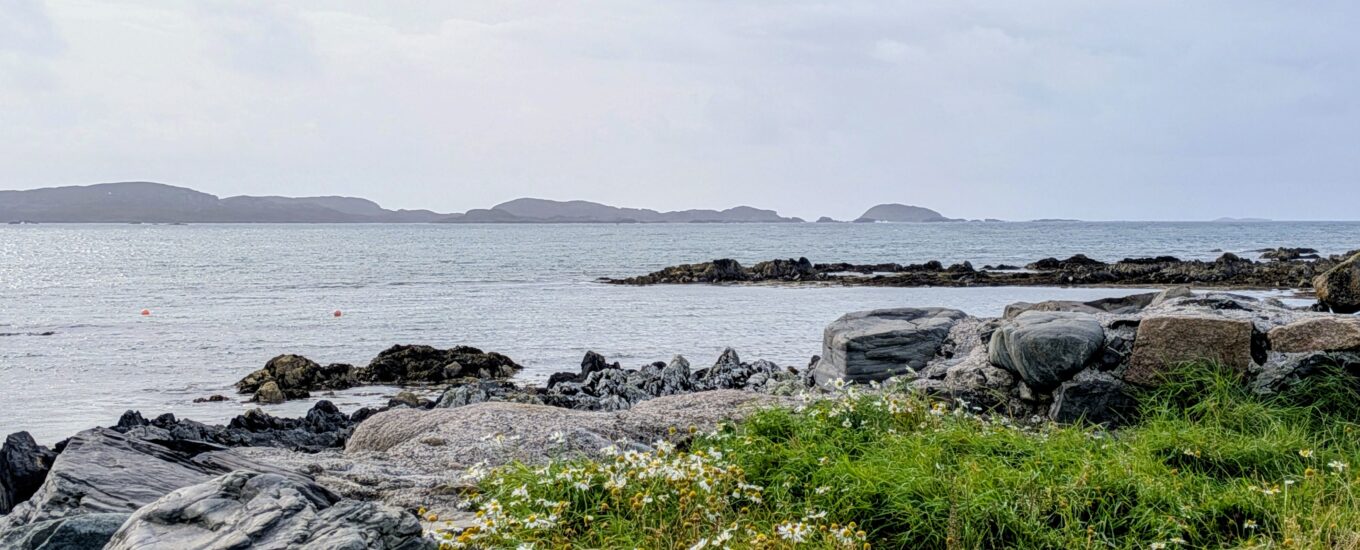
An old Gaelic saying attributed to St Columba states that those who come to Iona will come, not once, but three times. After my first visit to the Isle of Iona in May 2025, I knew that I would be back. When I was given the opportunity to travel further afield for a final garden placement as part of my Horticultural Traineeship at the Garden Museum, I knew exactly where I wanted to go: the windswept walled garden of the St Columba Hotel, perched on the side of the island overlooking the Abbey and out towards the Sound of Iona.
The island lies off the west coast of Scotland and forms part of the Inner Hebrides. Its climate is influenced by the Gulf Stream, which helps to moderate temperatures and prevent particularly cold winters. The soils vary considerably across the island; as botanist Jean M Miller (2019) explains: “In the higher parts of the island the soil is peaty and thin. Near the shore the soil is mixed with alkaline shell sand.” This combination of sandy shores, exposed rock faces and machair creates a diverse habitat for wildflowers.
Back in London on a cold wet January day, huddled in the Garden Museum’s shed, I rang St Columba Hotel‘s Head Gardener, Floortje Brandsteder, who very kindly agreed to have me visit and work in the garden. Hearing Floortje’s warm voice over the phone, from hundreds of miles away, I was already excited to discover what the garden might be like in September.
The journey would be something of a personal pilgrimage, carrying a 60L bag stuffed with waterproofs and garden tools. It would involve three trains to Oban, a ferry to Mull, a bus across the island, and finally another ferry to Iona, almost two days of travel in total. Daunted but determined, I meticulously planned my route, timings and possible back-up plans, knowing that even a small delay could have a considerable impact on my arrival.
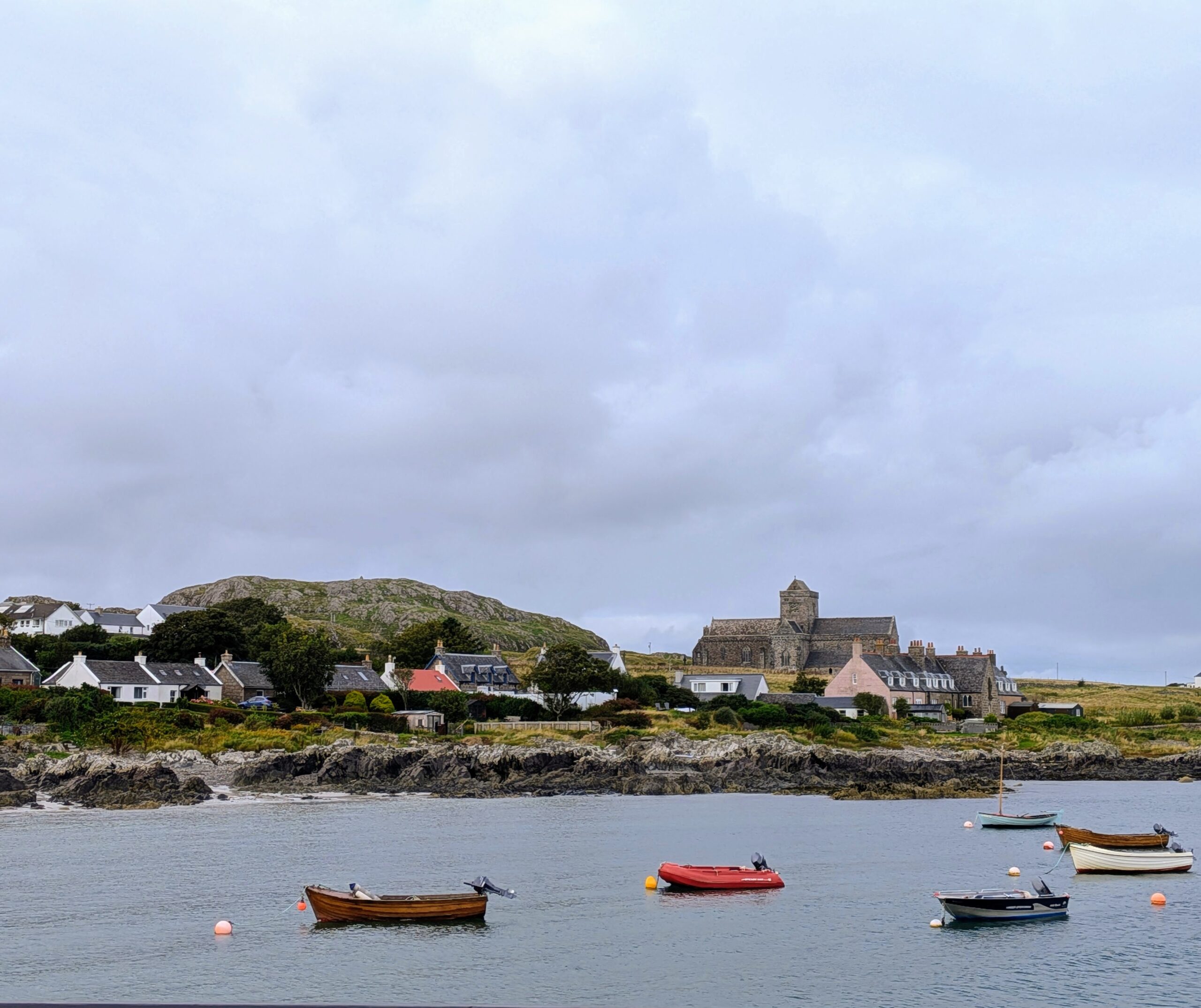
With some good weather and even better luck, I managed to reach my destination, greeted with the view of the village, crofts and the Abbey rising above the island. Climbing the hill to my accommodation, I eagerly peered over the wall to see what was growing in the St Columba Hotel Garden. My first impression was one of shock at how beautiful and green everything was. Vegetables! Flowers! Actual grass! Things I hadn’t seen since the onslaught of heatwaves that had smothered the south-east of England that summer, making gardening at the museum in a record-breaking drought incredibly difficult.
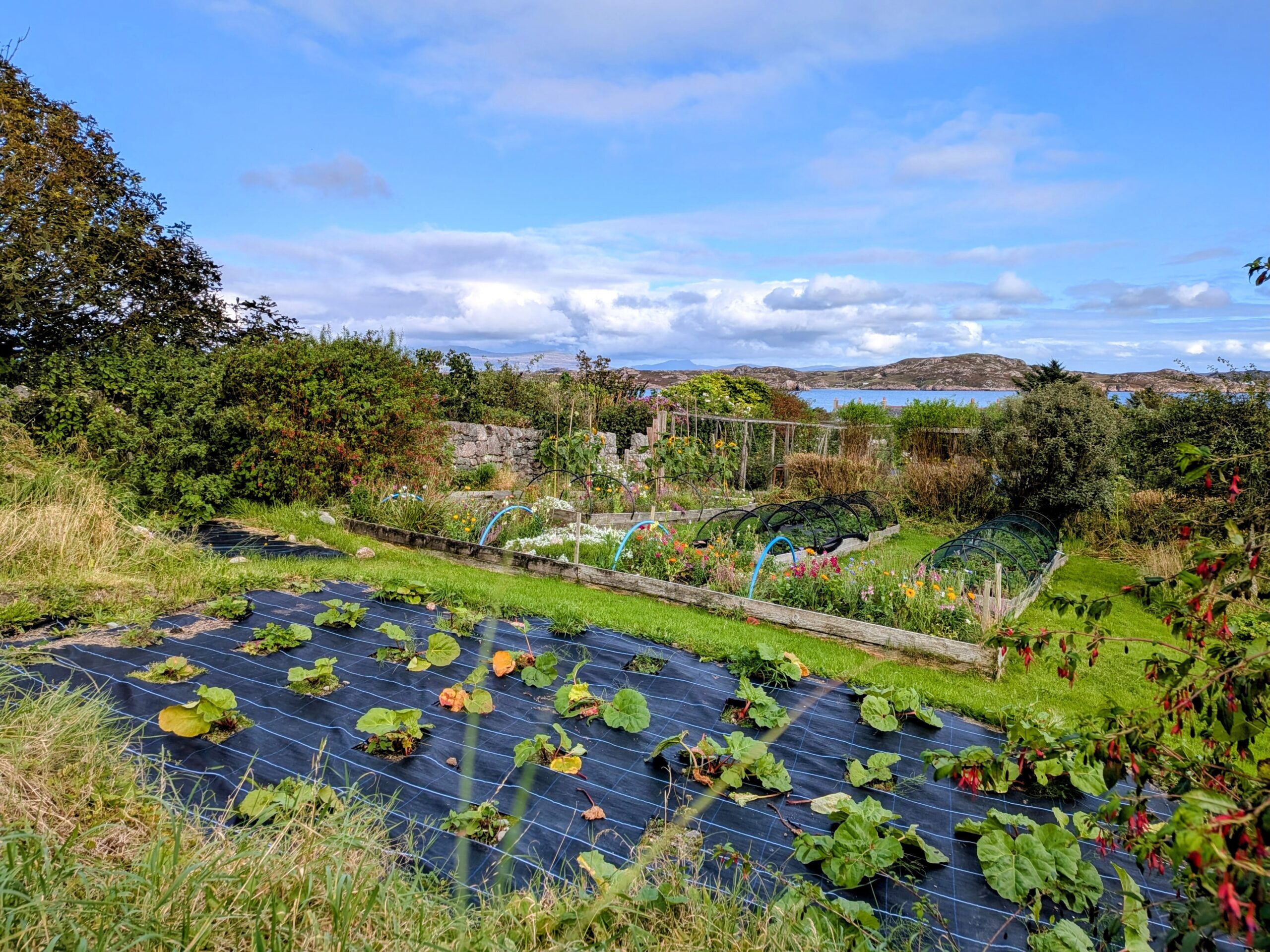
The garden at St Columba Hotel covers two acres and comprises a walled kitchen garden, where vegetables, fruit and herbs are grown for the hotel, as well as the wider hotel grounds, including a quiet garden for guests to enjoy. The garden has been certified organic by the Soil Association since 2008 and is made up of an orchard and thirty 15-metre-long beds.
To fully sustain the hotel, the garden would need to be considerably larger, so Floortje focuses on growing produce that will have the greatest impact for guests, including salad crops and more unusual varieties of vegetables. Alongside the edible crops, the garden produces cut flowers for the hotel, as well as herbs used in various projects, including the hotel’s own gin and rum and a hand cream, all of which are sold in its shop.
Having predominantly gardened in ornamental gardens and grown up in suburbia, I had very little experience of growing food. Floortje’s background is in market gardens, so she has a wealth of knowledge when it comes to growing produce. During my time in the garden, she demystified the process for me, and I gained an insight into how to approach successional planting to produce enough crops throughout the season.
One of my highlights was being able to help with the harvesting. Among a variety of produce, we harvested rhubarb and rosemary for the hotel to send to the distillery, salad leaves and tomatoes for the restaurant, and basil for a delicious pizzeria on the island. We also picked and packed apples and kale for the hotel’s shop. The salad – a firm favourite among hotel guests – was made from mizuna mixed with Centaurea and Calendula petals. I had never seen anything quite like it before. The visual impact was striking, and the freshness of the leaves and flowers was phenomenal.
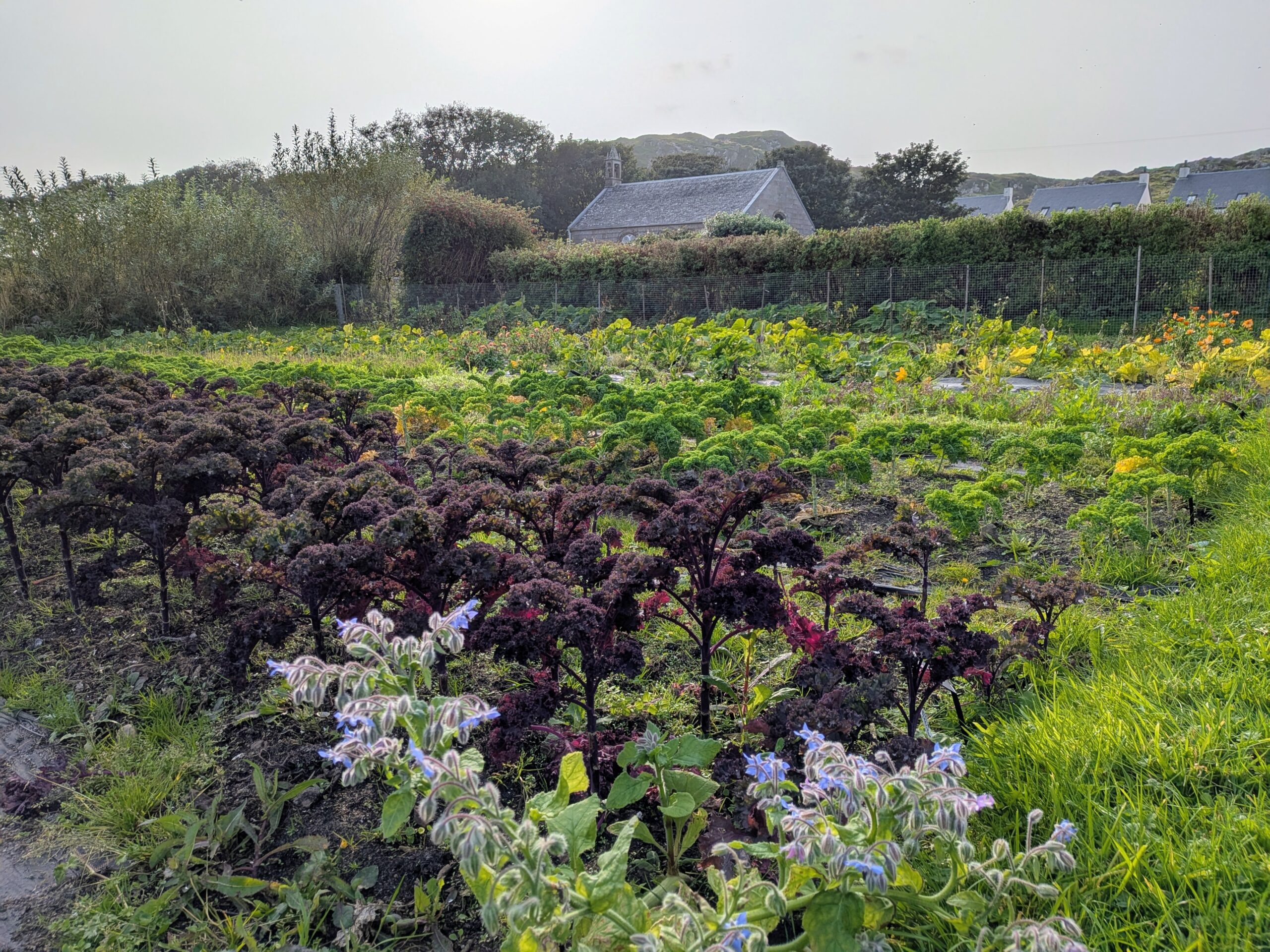
As any good grower knows, a successful crop often relies on the quality of the soil. Being on an island, and only accessible from the mainland via another island, it is expensive to import mulch, so the garden relies on a range of methods to enrich the soil. These include compost made on site, cover crops and seaweed collected from the shore after a storm. As an organic garden, pest management primarily involves growing a surplus of crops, allowing for some losses to pests, while where necessary following the guidance of the Soil Association.
Floortje demonstrated how to ‘flip a bed’, which involved removing the previous crop and preparing the bed for the next season. Using a no-dig approach, this meant weeding out the leftover carrots, lightly hoeing and raking the soil flat before spreading vetch and cereal rye seed. The process felt almost primal in a way, and as it was a completely new skill for me, I was keen to watch and learn the technique.
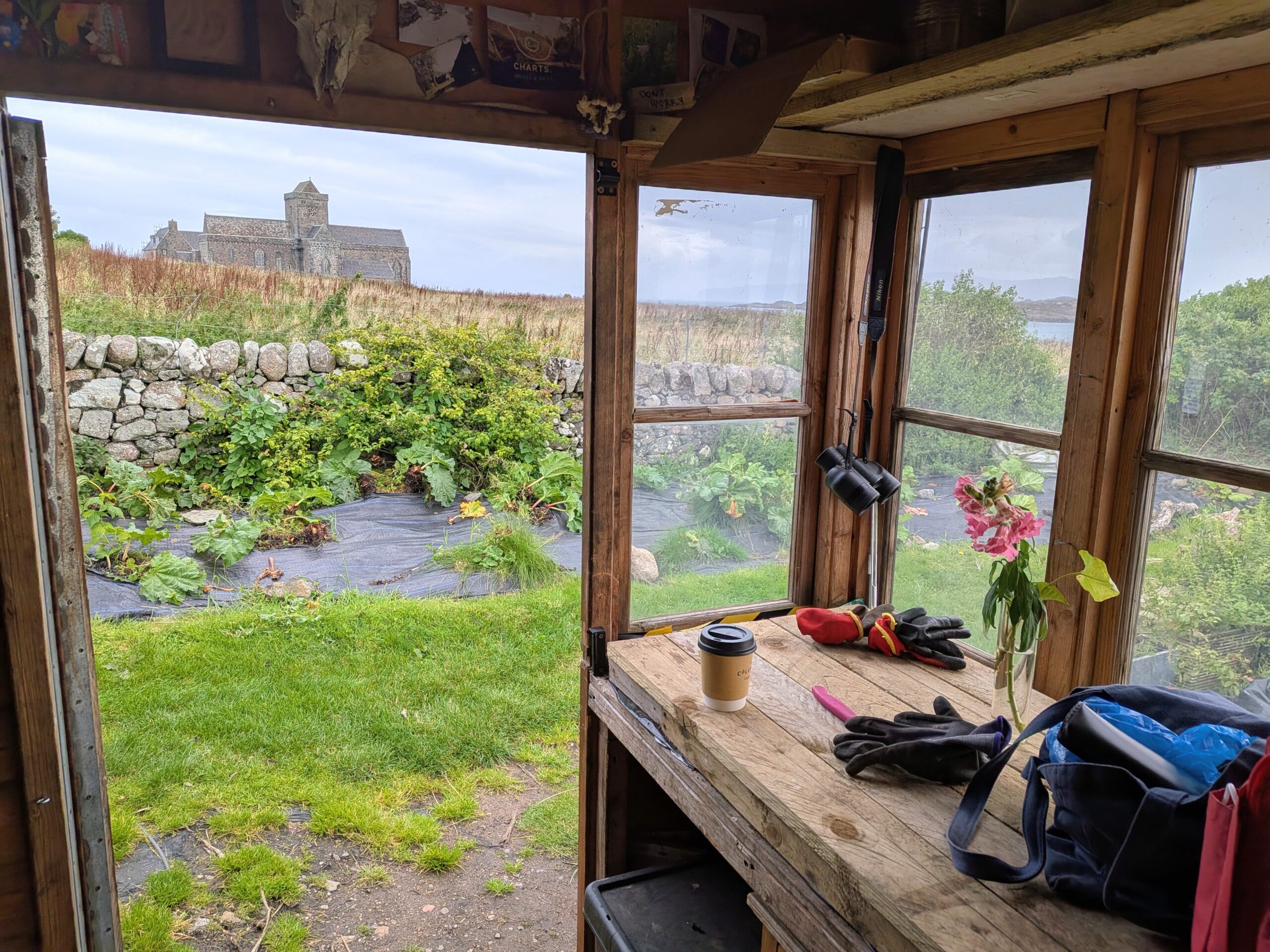
The weather was incredibly varied throughout the week, and we often experienced three seasons in a day, from high winds and heavy rain to glorious sunshine and mild temperatures. I relished being back in my rain jacket and over trousers, although I did suffer the occupational hazard of midges whenever the wind dropped. The high winds present a particular challenge for the garden, but the dog rose hedging provides an effective windbreak, while carefully selecting plants with flexible stems helps them withstand the exposed conditions.
My week at St Columba Hotel Garden was an incredibly special one. I learnt so much about growing produce and am very grateful to the hotel’s Managing Director Rick Johnston and his lovely team for making me feel so welcome. I had the most brilliant time working with Floortje, whose patience and generosity in answering my endless questions made the week all the more rewarding.
It’s safe to say I have at least one more trip to Iona ahead of me (as the saying goes) but I suspect there will be many more. The island has left quite an impression on me, and I already find myself looking forward to returning. It was the perfect end to a great year as the Horticultural Trainee.
Follow Amy on Instagram: @hidden_horticulture
References
Jean M Millar (2019) Flowers of Iona: A Botanical Guide, Isle of Iona Press, p.5.