Posted on 21 Jul 2026

Art

by Cecily Cooper Farrell

Birds have always signified humankind’s effect on the environment and our relationship with the world around us. From changing migration patterns (due to global warming) to the first ever shooting of game, birds have reflected our evolution as a civilisation, but have often failed to keep up, mainly due to mass industrialisation. Cedric Morris was early in his premonitions of what would happen – and what is happening – to the birds and environment surrounding us if we continue to treat it in the way that we are.

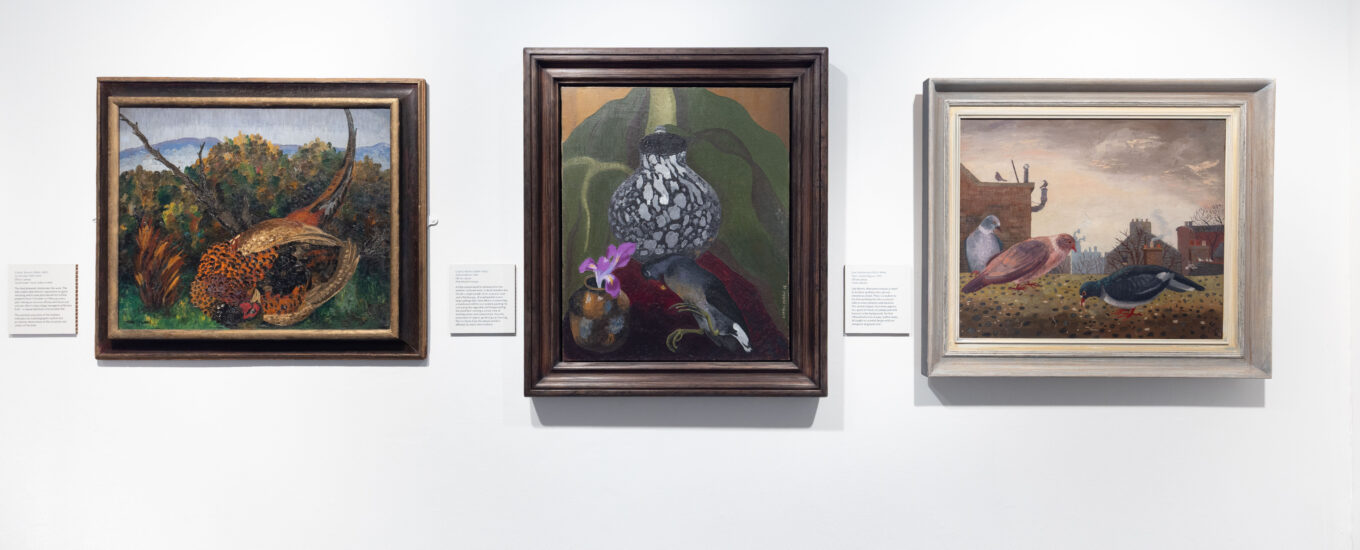
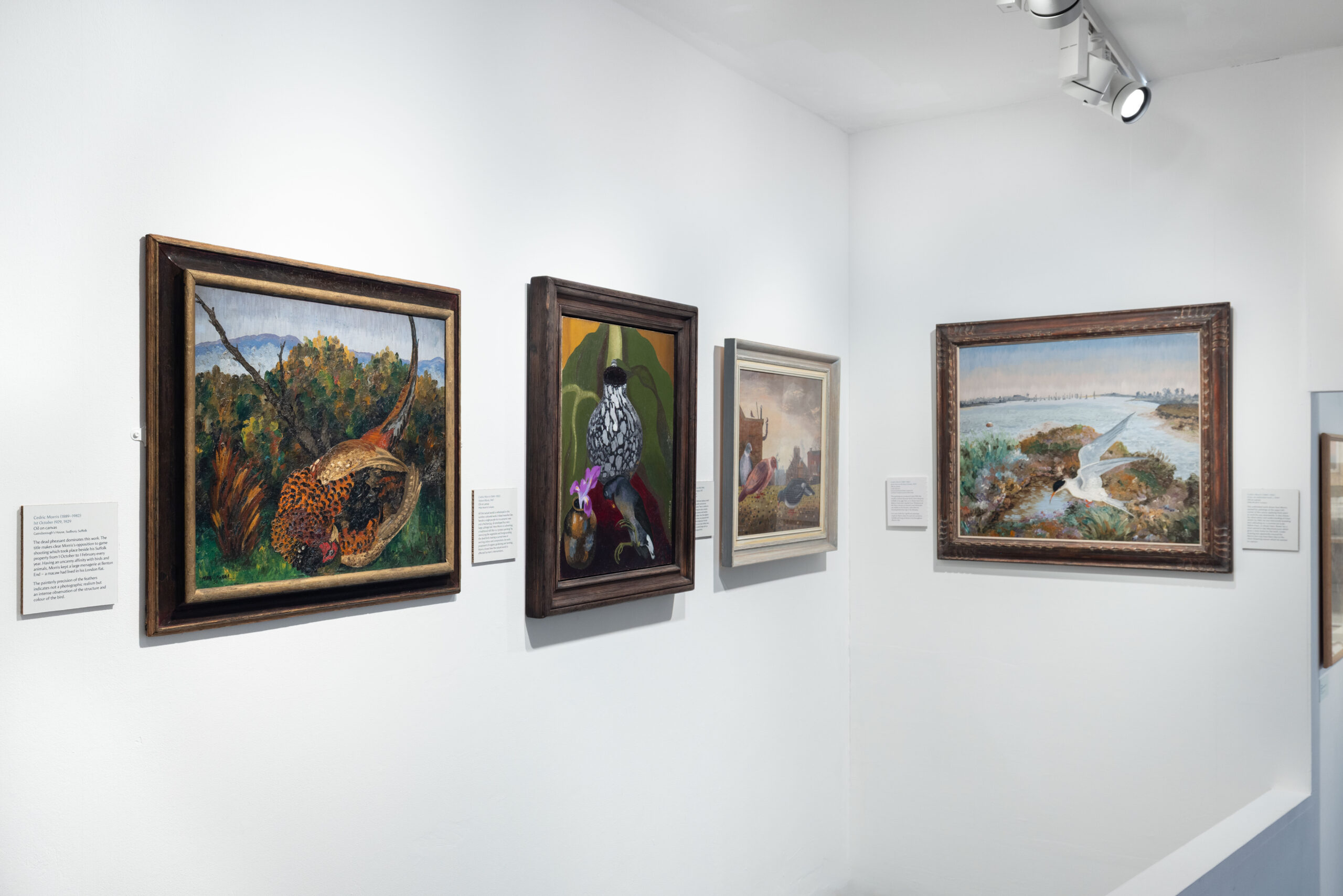
Cedric Morris was able to convey the devastating damage to our environment that we have caused through his paintings of birds; his deep understanding and love for the avian world makes all of his bird-focused paintings powerful and emotive pieces. 1st October 1929 in the Garden Museum’s current exhibition on Benton End is an oil painting depicting the striking image of a dead pheasant that reflects Morris’ outrage at the game shooting that took place beside Benton End every year. This is one of several examples of Cedric Morris’ outward indignance at the dire effects of human cruelty towards the natural world.

Works featuring birds by Cedric Morris and Joan Warburton in the exhibition. © BJ Deakin, 2026

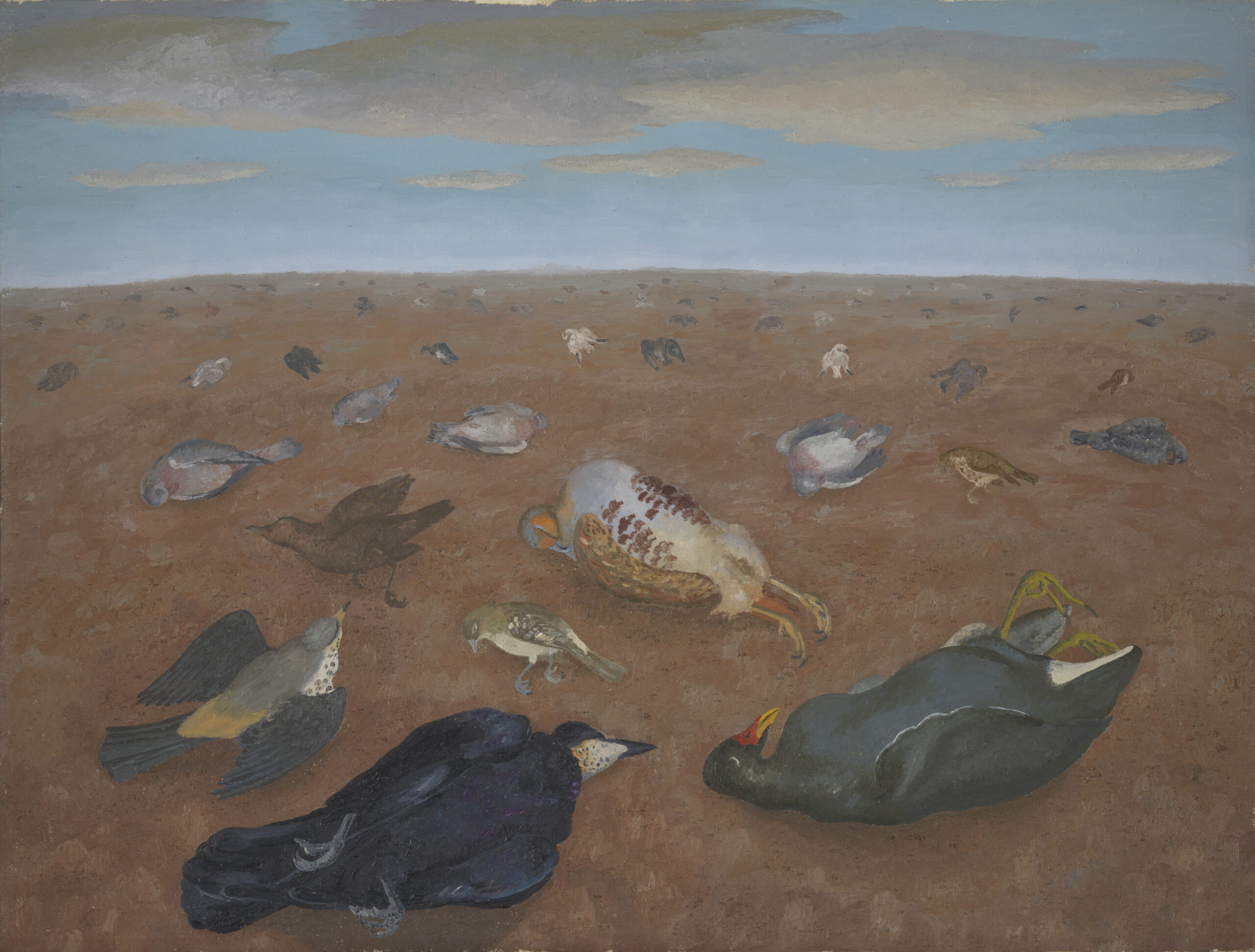
Landscape of Shame (in Tate’s collection), painted by Morris in around 1960, depicts a seemingly endless expanse of a variety of bird species lying dead in an arid landscape. This was made by Morris as a protest against the use of certain crop-sprays and pesticides. The effects of these chemicals on birds were made apparent by the late 1950s, when large numbers of birds were found dead in fields, a dystopian and haunting image recreated by Morris to shock his viewers and bring to light a devastating reality of our destruction of nature.

This painting directly marks a contrast to an earlier work by Morris entitled Landscape of Birds (also held by Tate), which shows a biodiverse scene packed full of bird life and various plants. Morris included a wide range and variety of species in both of these pieces, reflecting the vast scale of harm that these pesticides (and more broadly speaking, industrialisation) have had on our bird population.

Throughout Cedric Morris’ many paintings of birds, there is a constant reminder of the threat that humankind has cast over these animals, with one particularly haunting depiction of this looming threat being an oil tanker on the horizon in Morris’ 1938 painting titled Shags which depicts three of these seabirds (part of the cormorant family) in the foreground of a coastal landscape.

'Arctic Tern on the Stour' (centre) shown in Benton End: A Paradise of Pollen and Paint. © BJ Deakin 2026

However, his paintings are also a reminder of the resilience of avian life and the natural world. Morris’ 1929 painting Arctic Tern on the Stour estuary (also in the current Benton End exhibition) shows an Arctic tern in flight by the edge of a river. These birds have the longest recorded migration of any animal on Earth, with a single tern’s journey ranging from 44,000 miles to 59,000 miles per year – the same distance as three round trips to the moon. It is therefore not surprising that Morris chose an Arctic tern as the subject of his painting, since the monumental journey that these birds make each year reflects the resilience and strength of nature that Cedric Morris was able to capture so beautifully, showcasing that harmonious relationships between humankind and nature are in fact not so impossible to regain after all.

Benton End: A Paradise of Pollen and Paint is open until 20 September 2026