Posted on 24 Mar 2026

Art

Botanical artist Xiaolan Gu specialises in painting orchids using a traditional Chinese brush stroke painting technique. We asked her a few questions to find out more about her work.

Tell us about yourself, and what was your journey to becoming an artist?

I was born into an artistic family, and from a young age I was surrounded by painting and creative practice. This early environment shaped my sensitivity to form, rhythm and observation.

In 1982, I spent two weeks drawing plants from life at the botanical garden in Nanjing. It was the first time I stayed closely with plants every day. During that time, I began to feel that I could “speak” with them through observation and drawing. This experience has stayed with me ever since.

Over the years, I gradually moved towards Chinese freehand brush painting. I found that this approach allows me to bring together observation and inner feeling, and to express the vitality of plants in a more direct way. Since 1997, I have often worked in the glasshouses at the Royal Botanic Gardens, Kew. It is a place I return to repeatedly, and it continues to shape my practice.

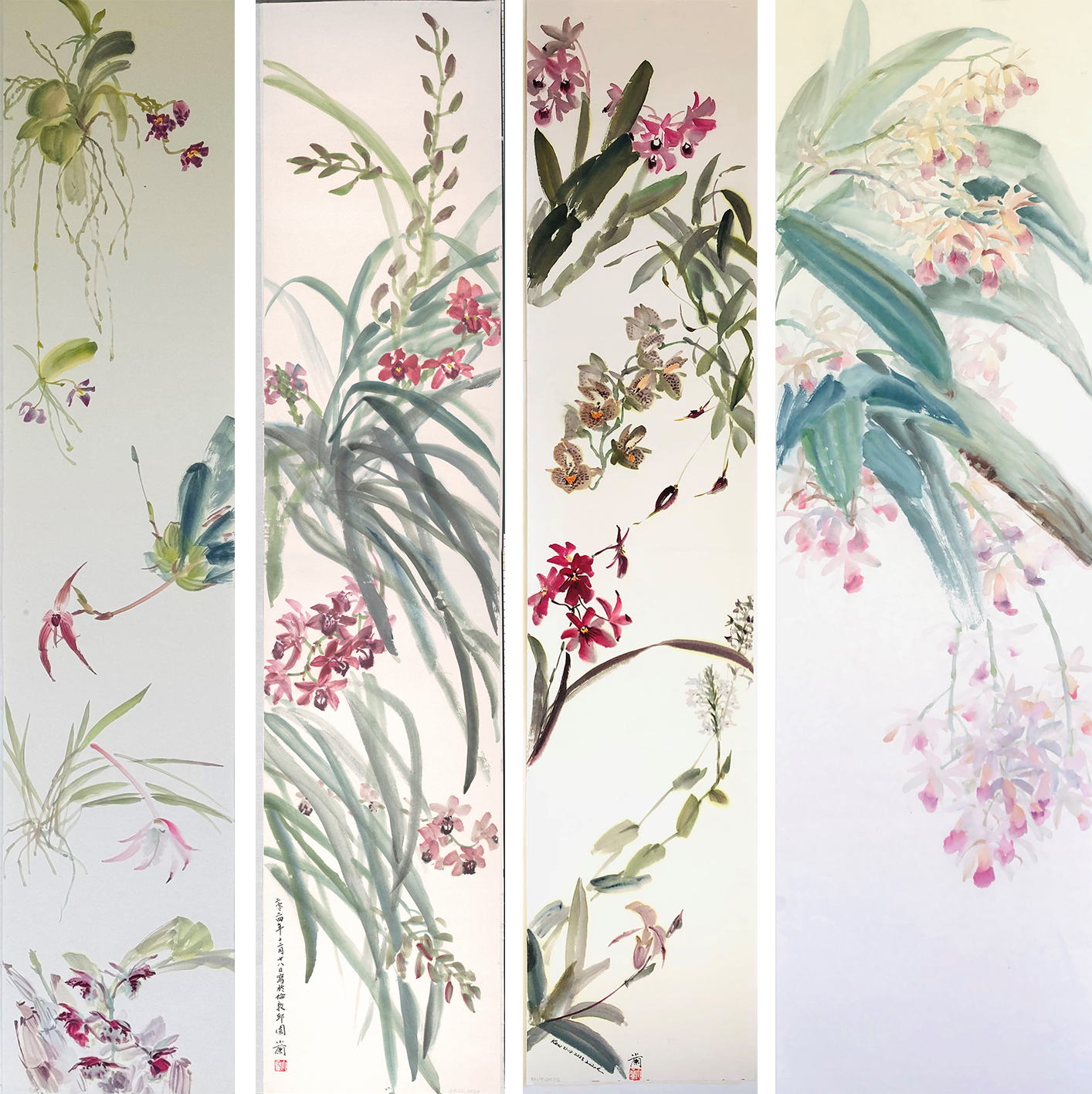
Composite of Xiaolan Gu's orchid paintings

We love your series of Chinese orchid paintings. How did this come about? What do you love about painting orchids?

My name, Xiaolan, means “little orchid” in Chinese. Perhaps this is one reason I have always felt a natural connection to orchids.

In Chinese culture, orchids carry a quiet, refined spirit. I am drawn to their character — gentle yet resilient, simple yet full of life. When I paint orchids, I am not only observing their form, but also trying to express their inner vitality. It is a way of understanding their spirit more deeply.

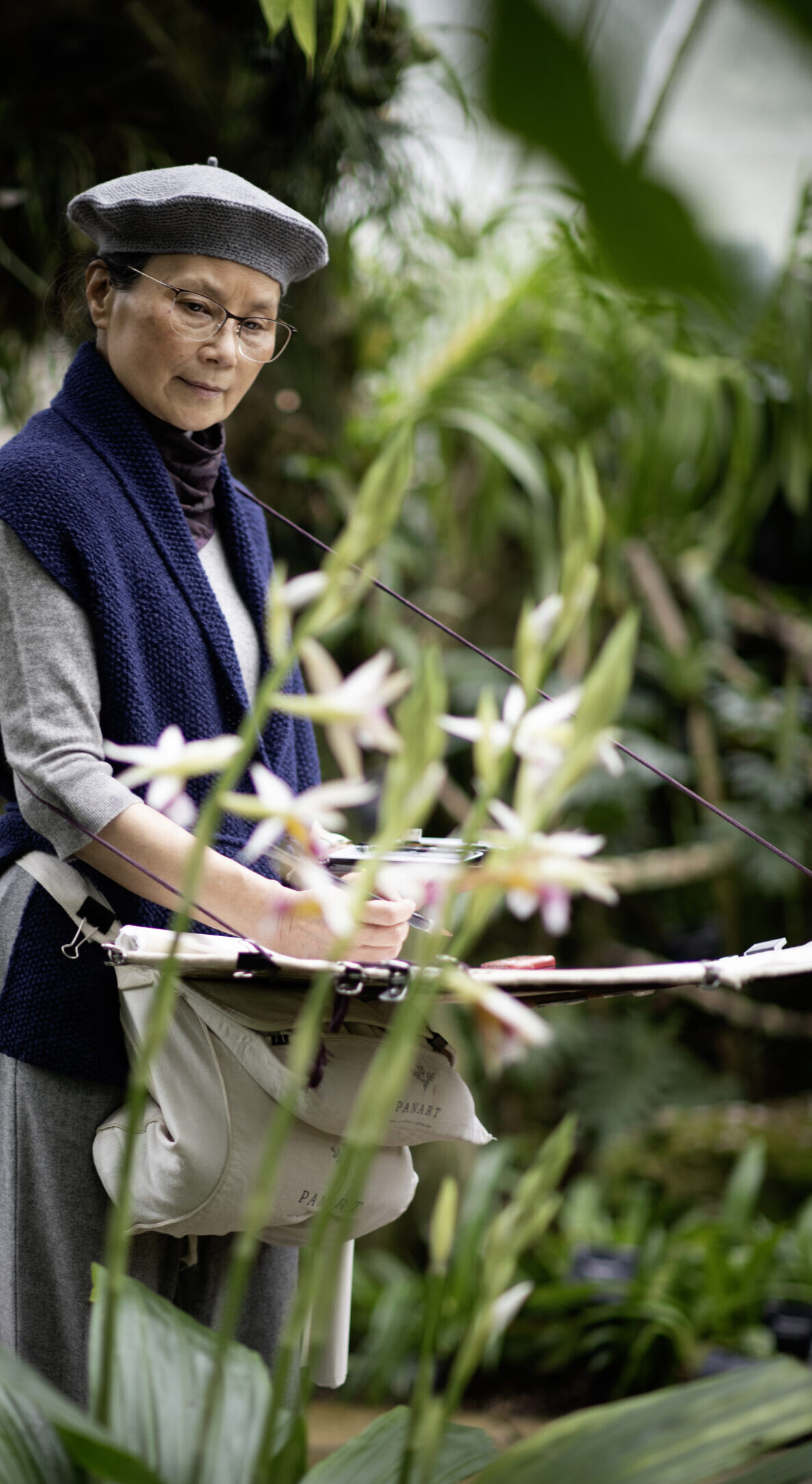
Xiaolan Gu​ at Royal Botanic Gardens, Kew, Jeff Eden

Can you tell us about your process? What’s unique about Chinese brush stroke painting?

My process begins with careful observation and drawing from life. As I paint, I feel that the life of the plant and my own inner state gradually come together. This energy is carried through the brush and into the paper.

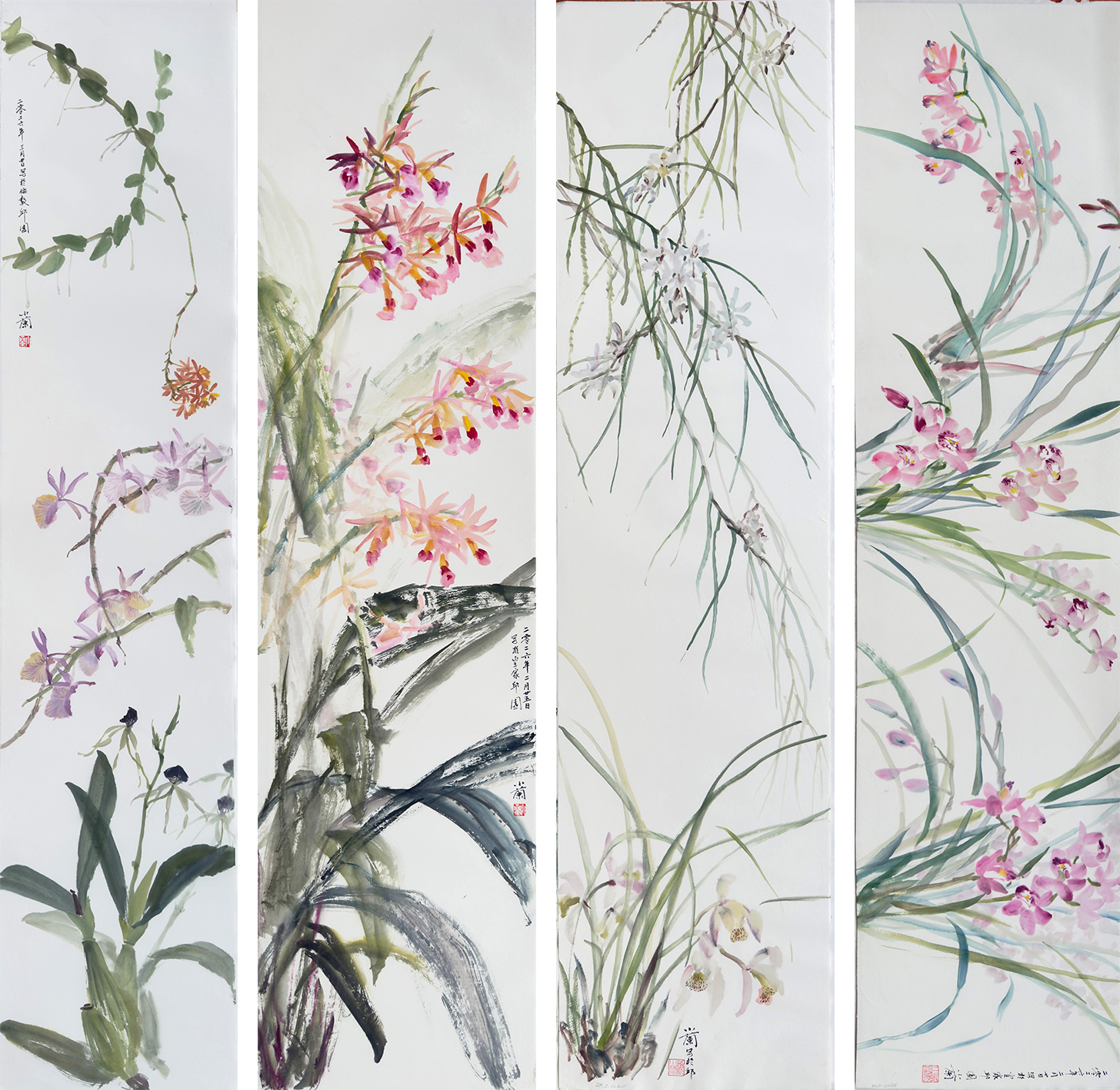
Chinese ink painting allows a very direct and fluid expression. A single brushstroke can hold movement, structure and feeling at the same time. What remains on the paper is not only the form, but also something of its living presence.

After mounting the work, I spend time looking at it again quietly. This is a moment of reflection, and also of learning.

Composite of Xiaolan Gu's orchid paintings

What does a typical day look like for you as an artist?

My days often move between three parts. I spend time in nature, drawing from life. At home, I work on mounting finished paintings and studying them again. I also teach, and share this way of observing and painting with my students.

Each part supports the others.

When you’re not painting, do you have a favourite garden or place in nature to visit?

I most often return to the Royal Botanic Gardens, Kew.

I like to walk there quietly, especially in the early morning or towards sunset. At those times, the atmosphere changes, and the relationship between light, plants and space becomes very subtle.
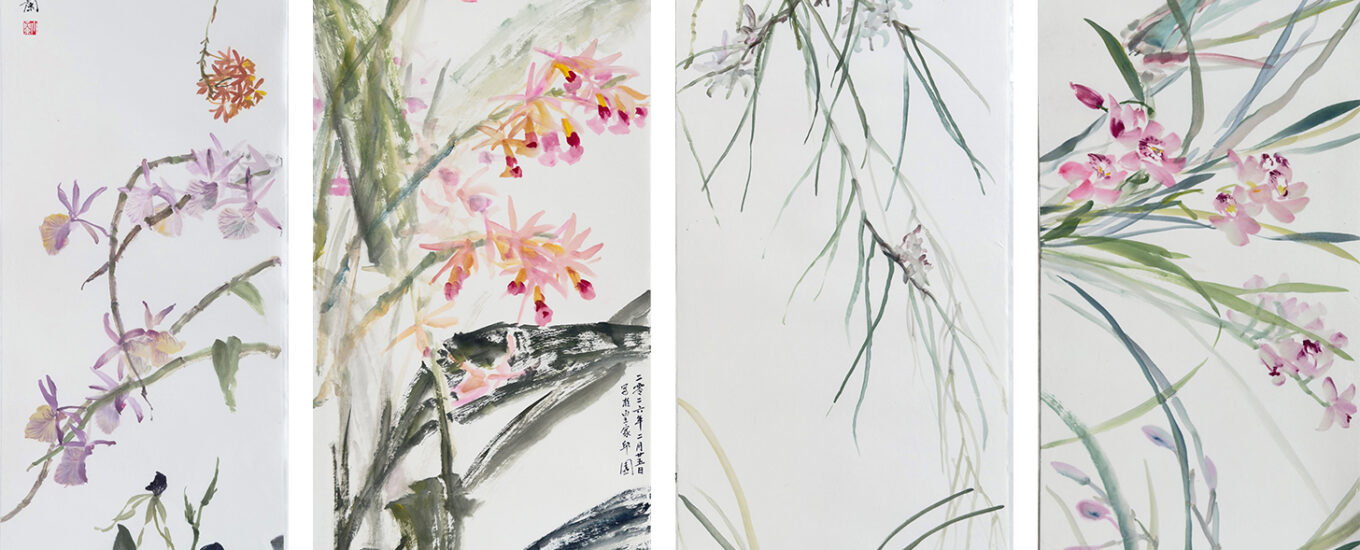
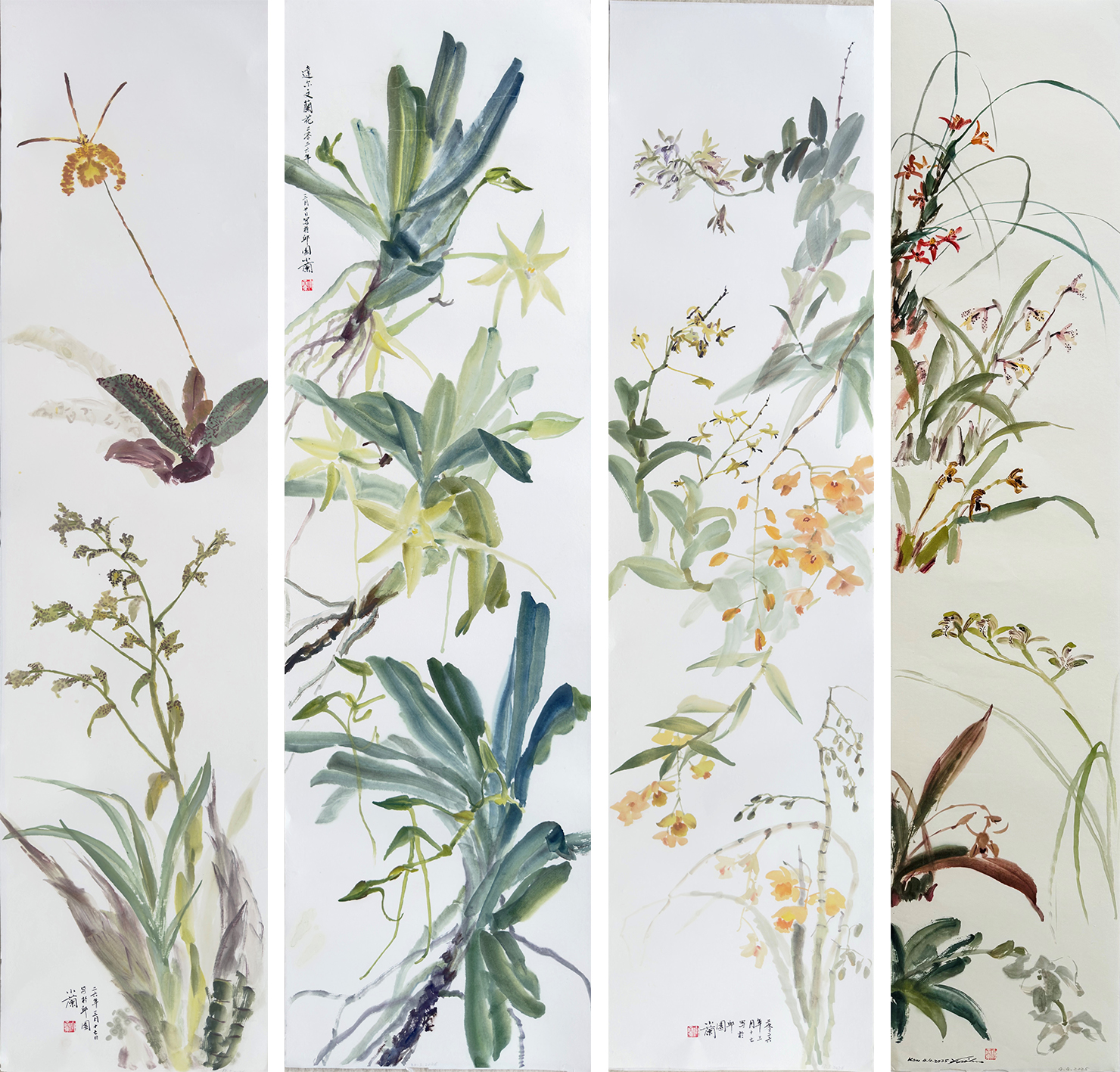
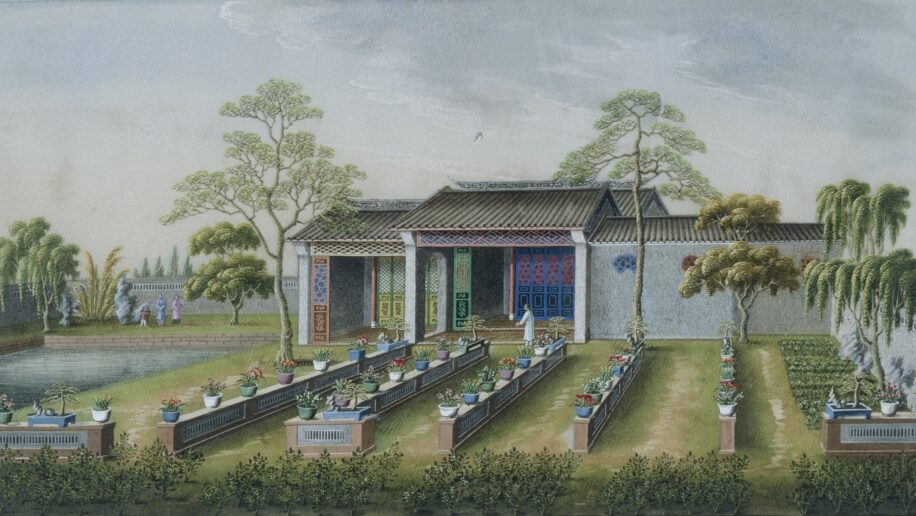
Composite of Xiaolan Gu's orchid paintings

What advice would you give to someone starting out in botanical art?

Begin with what you truly like.

Then stay with it, observe it carefully, and go deeper over time. Through this process, your understanding will grow naturally.

Finally, as we are the Garden Museum, can you tell us about your relationship with plants, gardens and nature?

For me, plants and nature are not separate from life. We exist within the same space. Without plants, there is no life. My work is simply a way of staying connected to this understanding.

Follow Xiaolan Gu on Instagram: @xiaolan.brushpainting