Horticultural Trainee Blog | Spring Beginnings at Gravetye Manor
STORIES
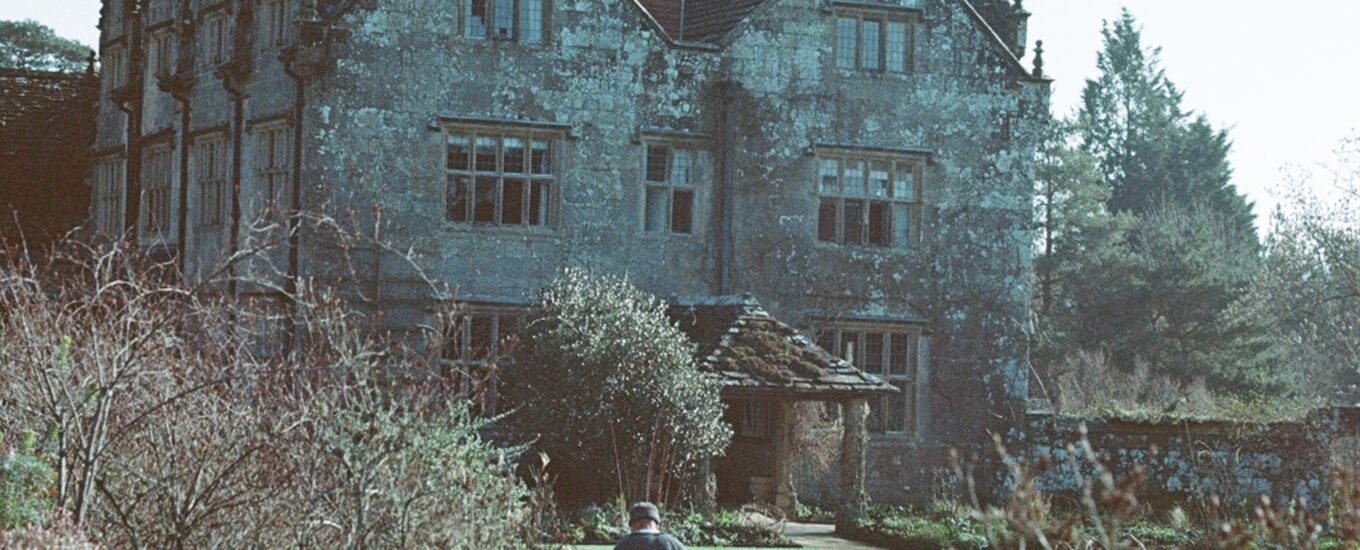
Head Gardener Tom Coward and dog Gwyn
Horticultural Trainee 25-26
As I parked up on the Gravetye Estate, I immediately breathed a sigh of relief. The drive down from London had been a blur of motorways and winding country lanes before opening out into the West Sussex countryside. Leaving the main road and driving up through garden writer William Robinson’s estate felt like stepping through a portal, carrying you past long vistas and deep into woodland, leaving the rumblings of noise and traffic behind and allowing you to feel fully immersed in the garden.
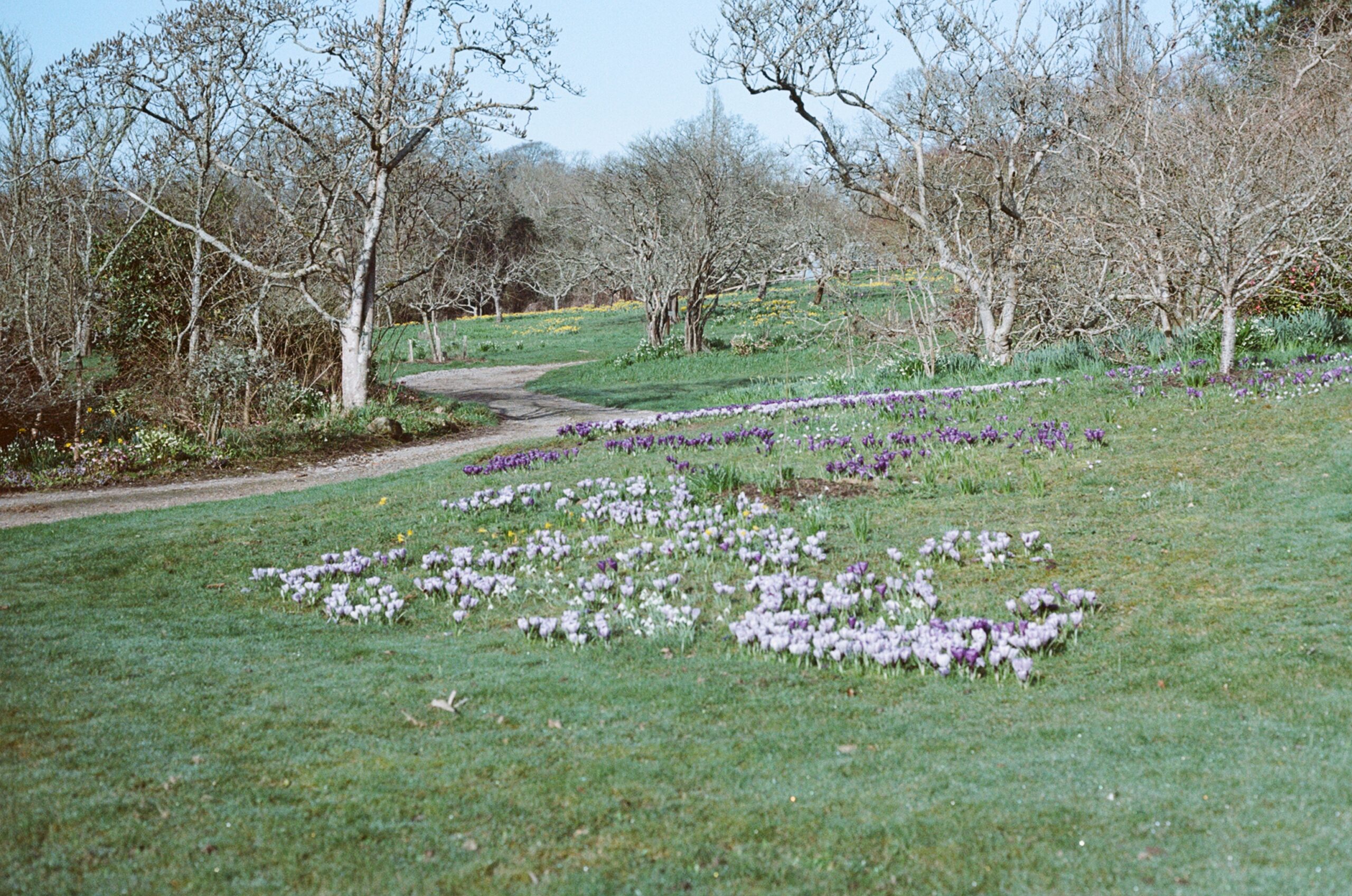
Looking towards the orchard with naturalised crocuses on hillside
Immediately, I felt the incredible energy of the space and, having met Head Gardener Tom Coward and his infectiously passionate team, I was eager to see more. Gravetye Manor is known for its floriferous ‘wild garden’ in the spring and early summer months, yet even in February there was an abundance of colour and intrigue.
The garden is set on a gradual hillside that plateaus in front of the hotel, with gentle slopes awash with naturalised Leucojum aestivum, crocus and daffodils. Looking closely, I’m drawn to the unusual Narcissus cyclamineus, which had curiously cross-pollinated with other narcissus to produce larger blooms with reflexed tepals, hidden like Where’s Wally? amongst an array of yellow shades.
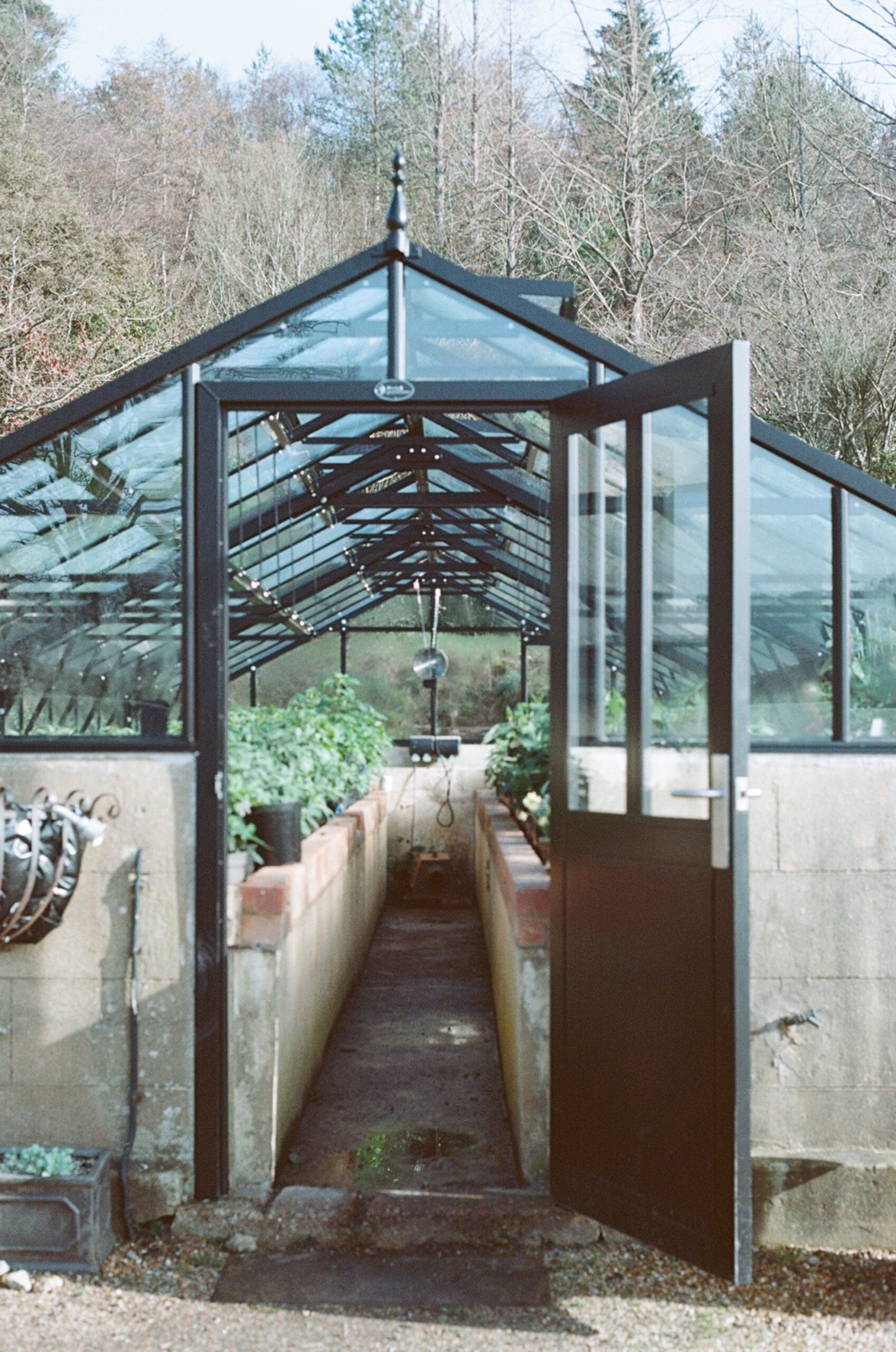
Greenhouse full of Salvias
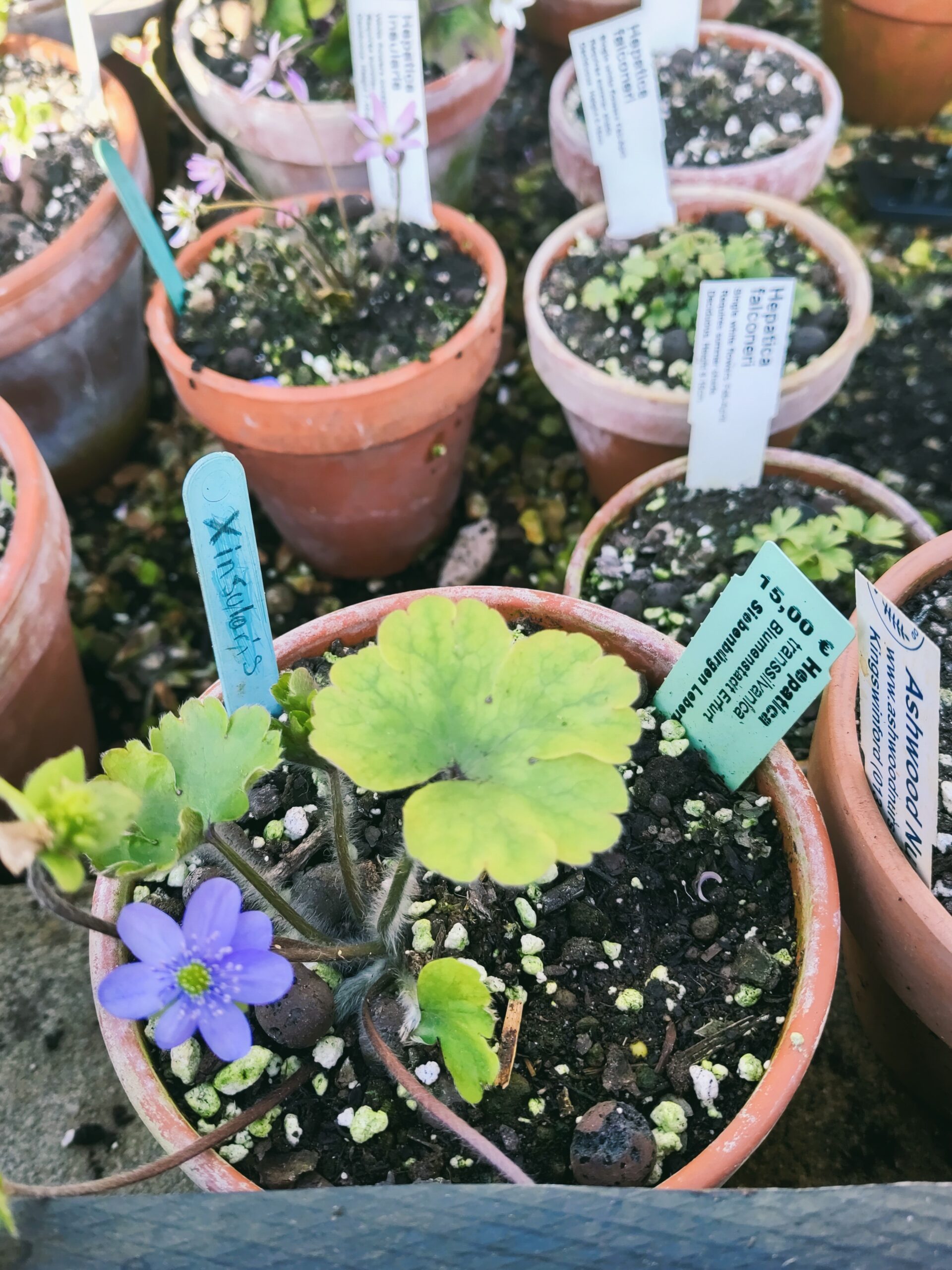
Hepatica transsilvanica in cold frame
The afternoon was spent helping Tom plant a large Galanthus collection into the walled beds, bequeathed by a friend, with favourites including the enormous ‘Timeless Theresa’ and the Irish ‘Straffan’. Elsewhere, delicate early spring Scilla bithynica and Scilla siberica, were already popping up between the herbaceous perennials and up by the greenhouses full of verdant Salvias, the pale blues, pinks and whites of Tom’s Hepatica collection also stood out. I found myself leaning in to examine the specimens more closely, learning from Tom as he generously shared the process for cross-pollinating part of the collection.
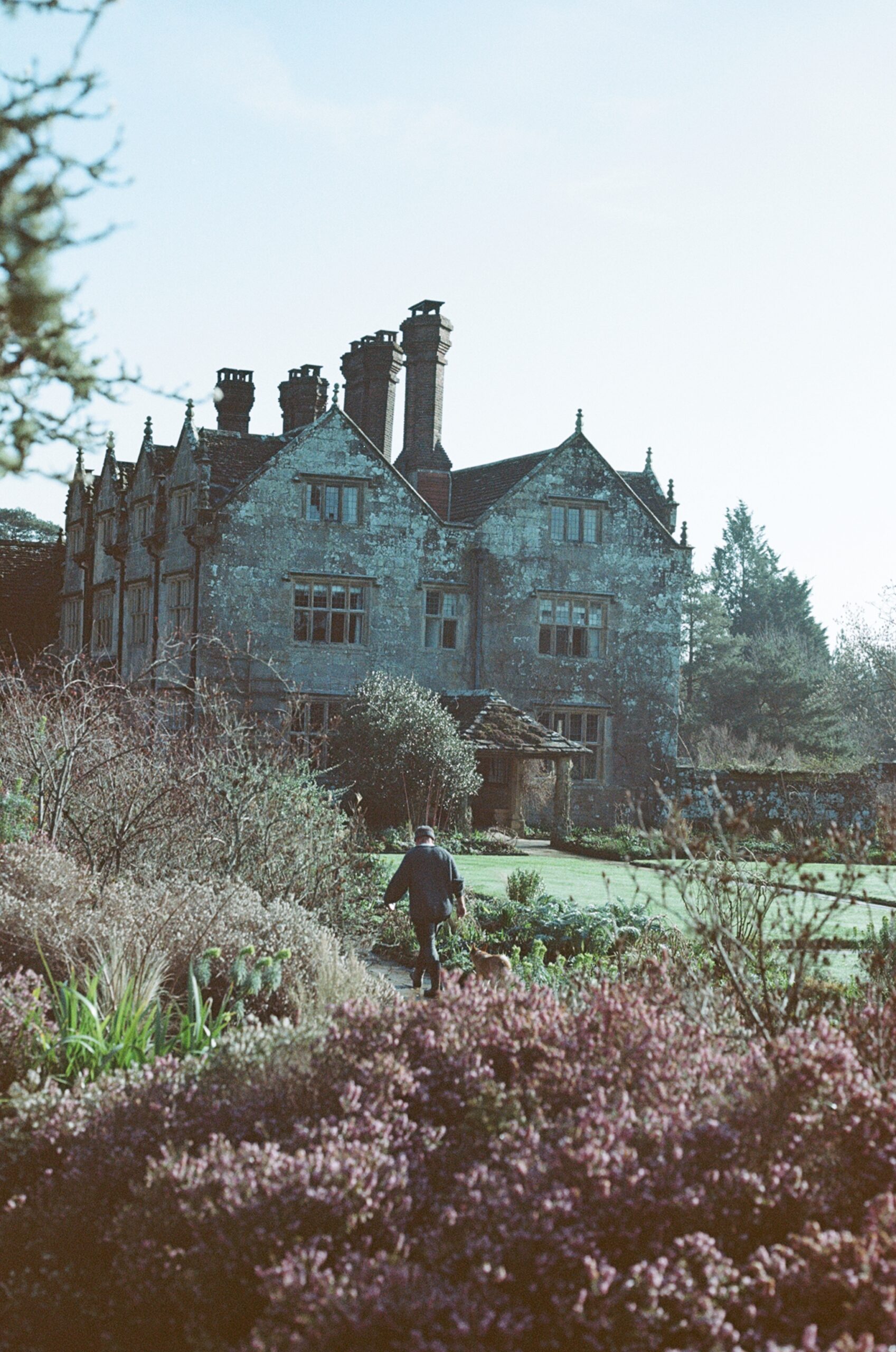
Head Gardener Tom Coward and dog Gwyn
As the sun emerged later in the week, I accompanied ornamental horticulturist Sam Fry in the flower garden, where we were shaping pea sticks from coppiced hazel branches to support the herbaceous perennials during the months ahead. Kneeling by the beds, I searched for the first signs of Geranium psilostemon, pausing to admire water droplets on the foliage of Lupinus ‘Noble Maiden’.
We spent time marvelling at the Magnolia campbellii, as a couple of blush-pink flowers began to bloom against a cloudless blue sky. In the garden, I was struck by the soft richness of the soil, which Sam aptly likened to ‘chocolate cake’, crediting it to William Robinson’s considered preparation of the clay soil and decades of careful mulching.
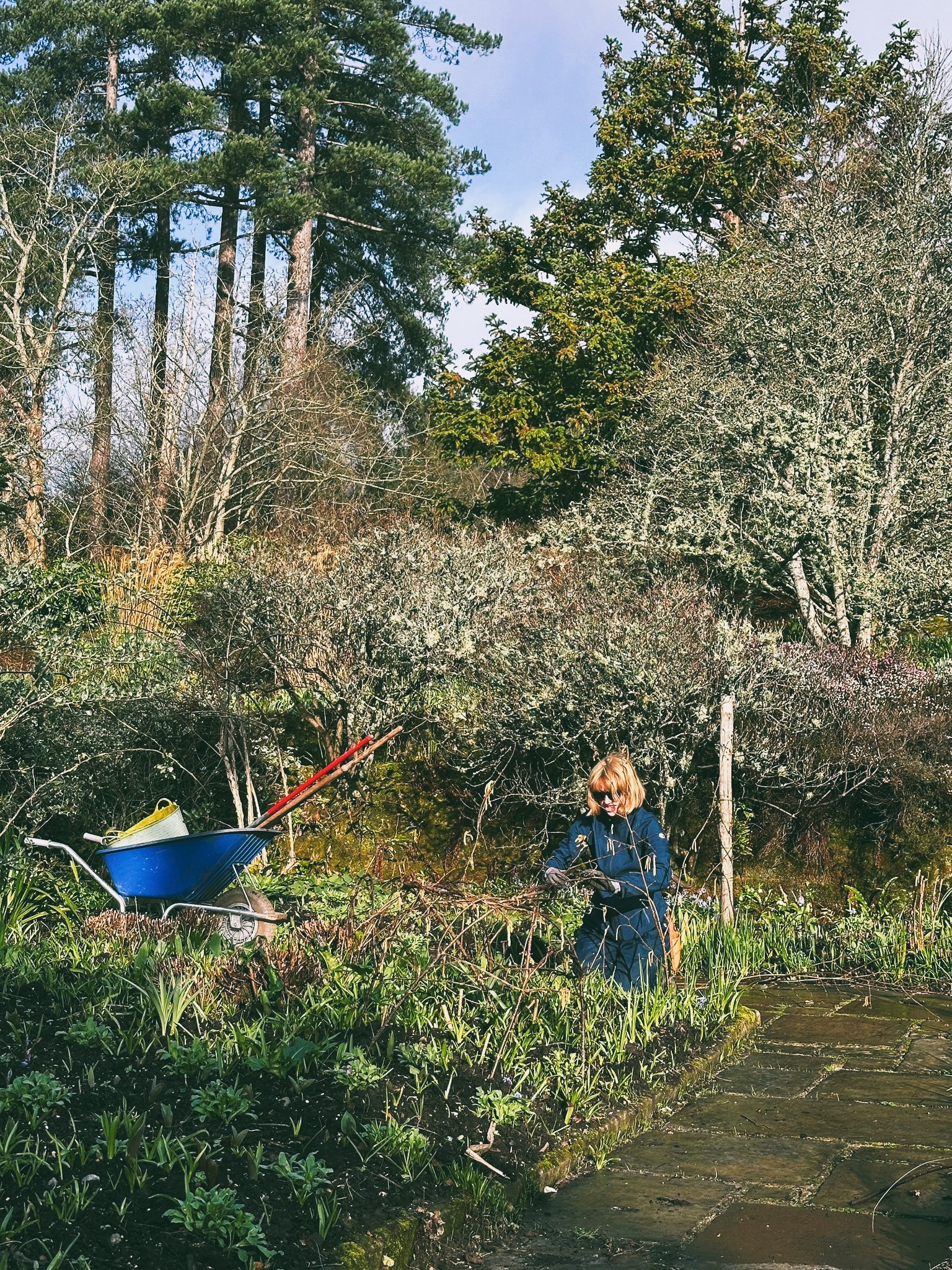
Shaping pea sticks in the flower garden
As I prepared to leave Gravetye, with a car full of propagated plants kindly given by the team to plant in the Garden Museum’s cut flower beds, I took a moment for one last look around the garden. Surrounded by hilltops in the golden hour, a gentle stillness had settled over the landscape. Driving away, I felt a deep sense of gratitude for the opportunity, carrying with me a lasting impression of the garden and a head full of new knowledge, ideas, and admiration.
For more stories like this, sign up to the Garden Museum’s weekly newsletter: subscribe