Posted on 27 Feb 2026

Art

Inspired by a new acquisition in our collection, Garden Museum Curator Emma House delves into the history of the striped garden awning.

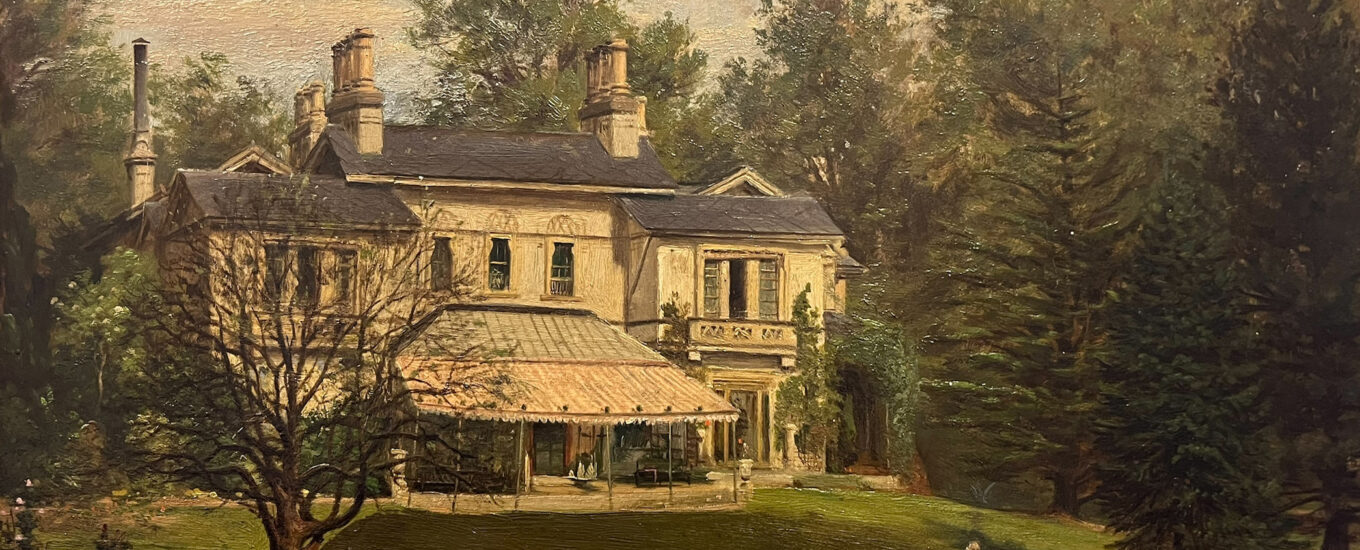
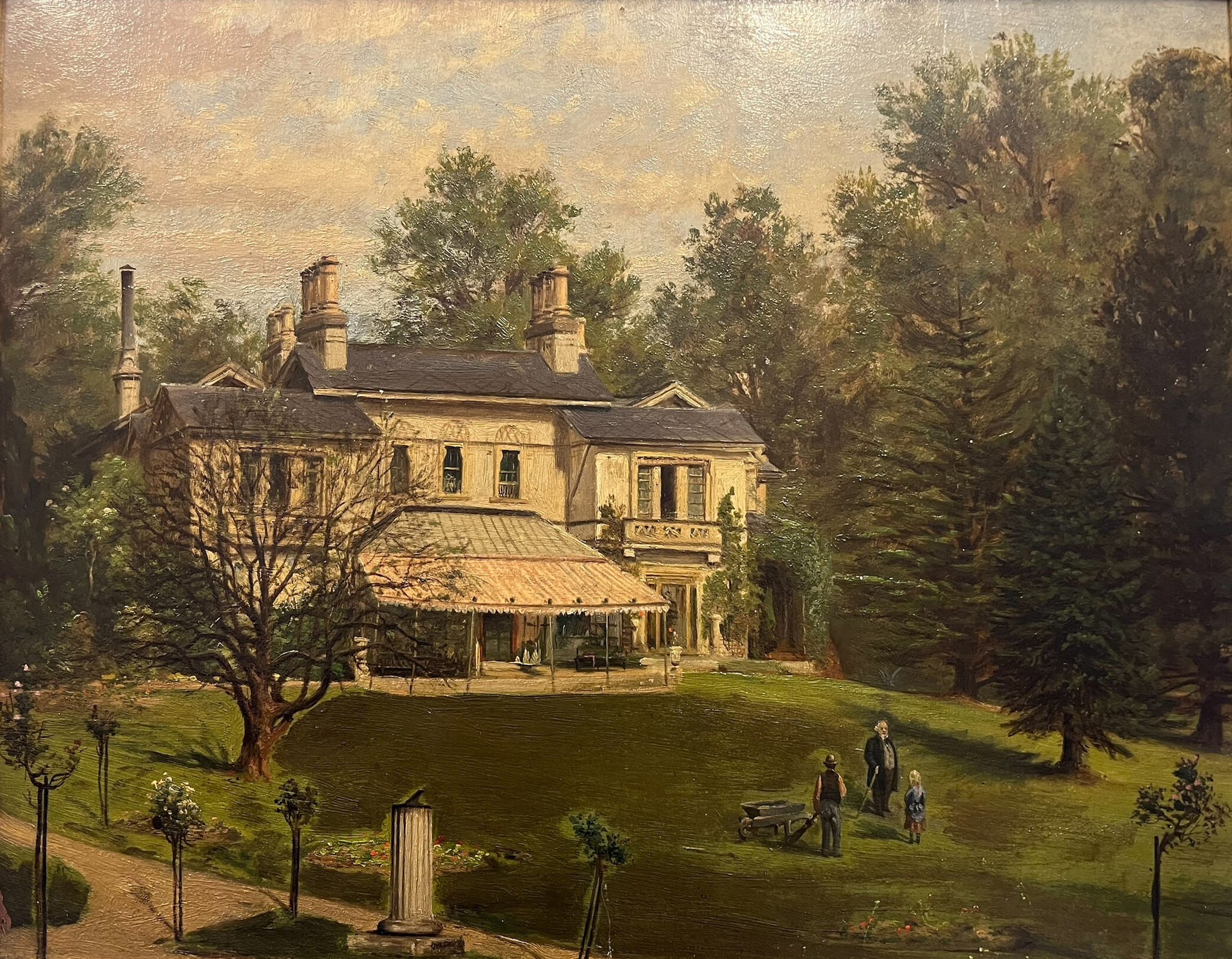
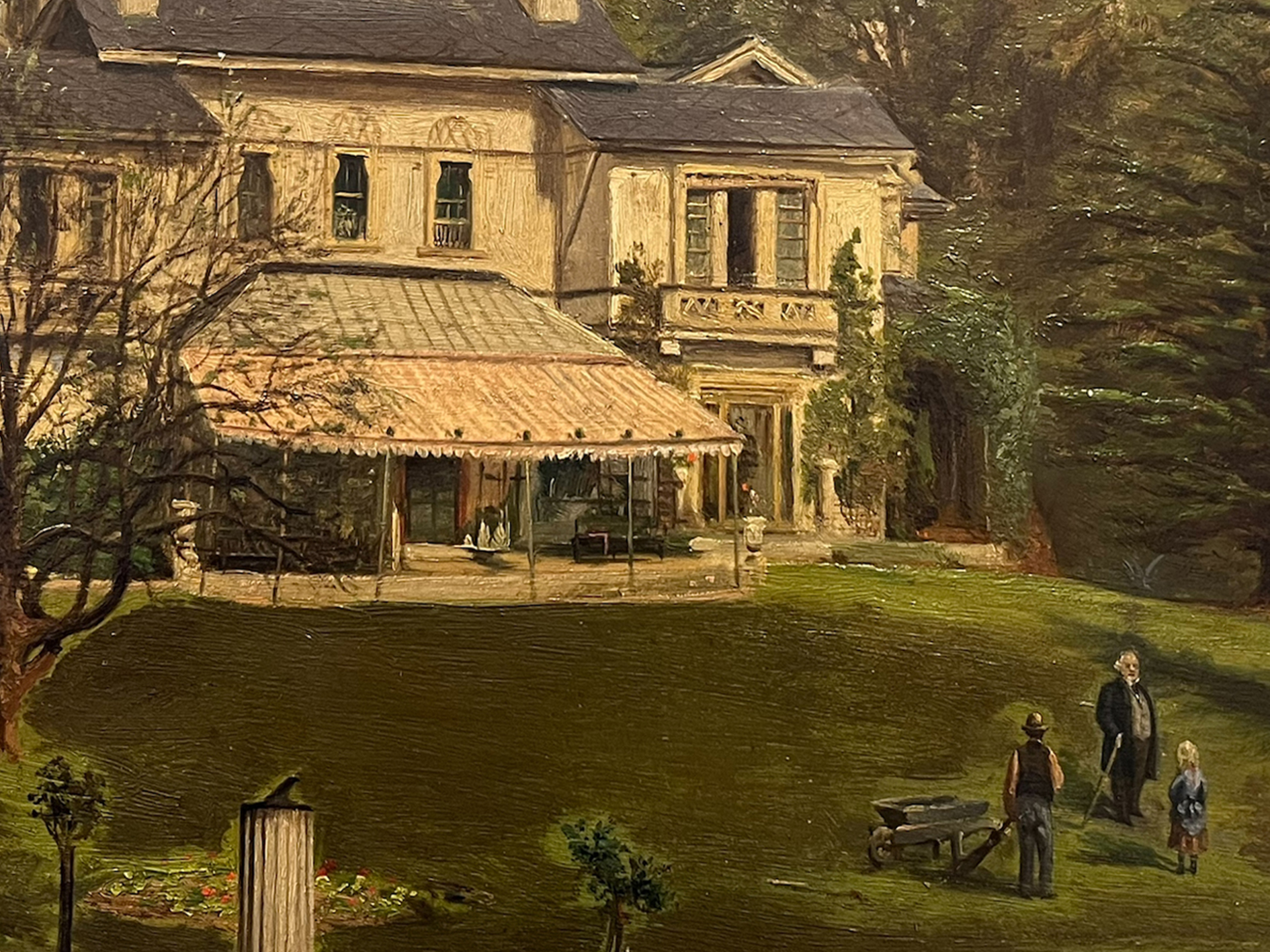
In January the Garden Museum purchased a late 19th century painting ‘Country House and Veranda with Figures’ from auction for the collection with funds from our Ever Green Endowment Fund. It depicts a fine house viewed from the garden and illustrates a gardener, a little girl and a man, possibly the owner of the house conversing on the lawn.

The painting contains numerous interesting design features that offer both aesthetic improvements to the garden and practical features. The path in the foreground is edged with standard rose bushes that lead to a decorative column mounted with a sun dial. To the right of the house an arched arbor offers a shaded walk along the side of the house.

The back of the house has been extended with a decorative ironwork canopy offering shelter from the elements throughout the year. This has been extended further by a striped canvas awning supported by sturdy wooden poles. Together they provide a large area where the family and any guests they might be entertaining can relax and shelter from the sun.  

Ticking fabric was used in Britain for heavy-duty work aprons, coveralls and mattress fabrics. Traditionally produced with a herringbone weave that takes each weft thread over two or three warp threads, the design of the weave packed threads together more tightly, giving the weave greater density and a characteristic diagonal line. Often finished with a colourful stripe, ticking fabric became distinctive and sought after.

During the industrial revolution in the 19th century the introduction of mechanized spinning and weaving machines sped up the production of cotton fabrics in Britain. The varieties of fabrics and heavy-duty cloths were made in larger quantities. These mass-produced cloths allowed for the marketing of new luxury items for gardens.

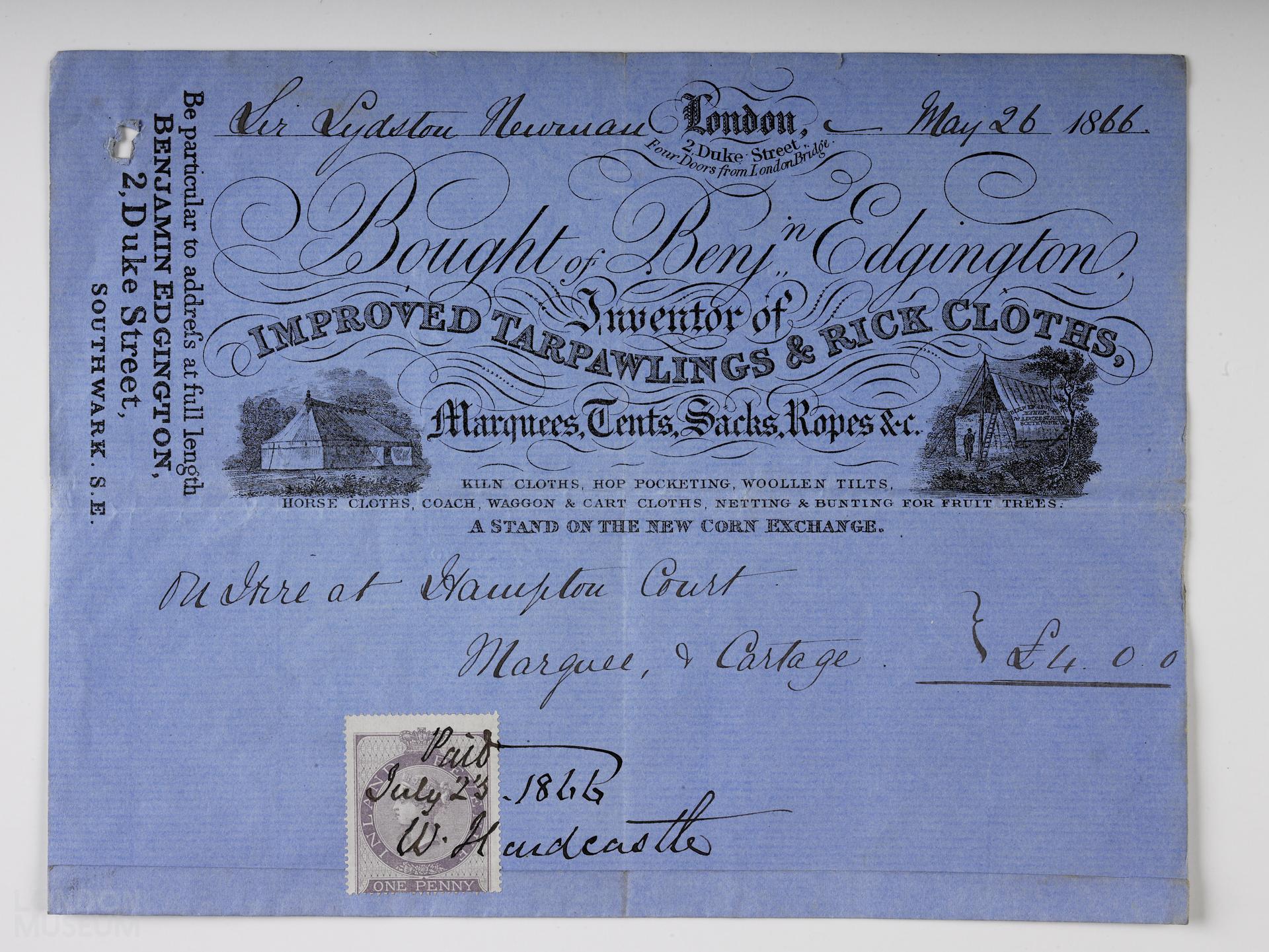
A bill dated May 1866 in London Museum’s collection from Benjamin Edington, Southwark notes that they were inventors of improved ‘tarpawlings [sic] and rick cloths, marquees, tents, sacks and ropes’. It is illustrated with examples of their merchandise.

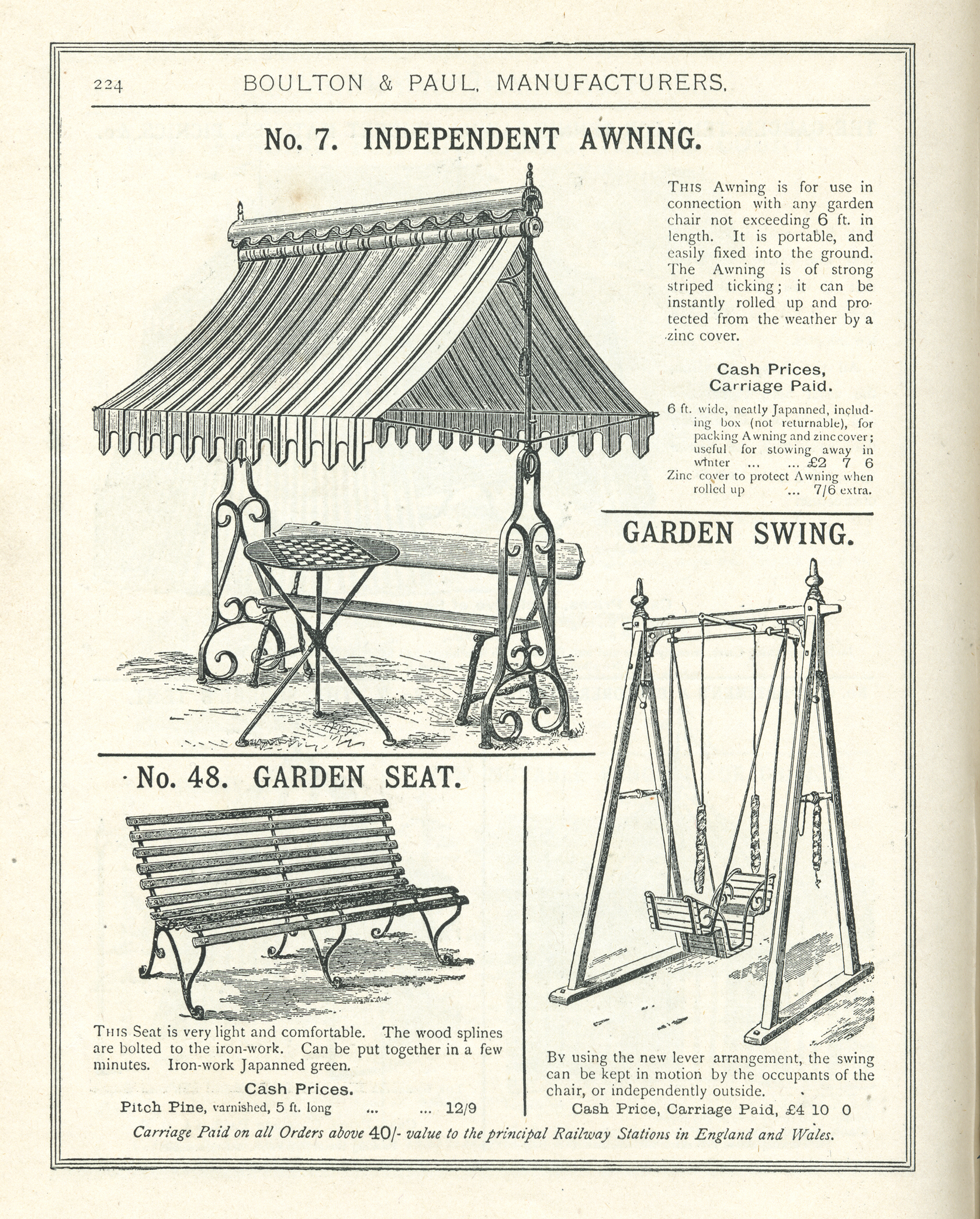
Advertisement for Boulton & Paul Manufacturers, 1895, Garden Museum collection

In the Garden Museum’s collection an advertisement for Boulton & Paul Manufacturers from 1895 illustrates an awning made in ticking fabric that could be rolled back into a zinc cover during inclement weather. By the end of the 19th century manufacturers were making items specifically for the home garden, that offered functionality and style 

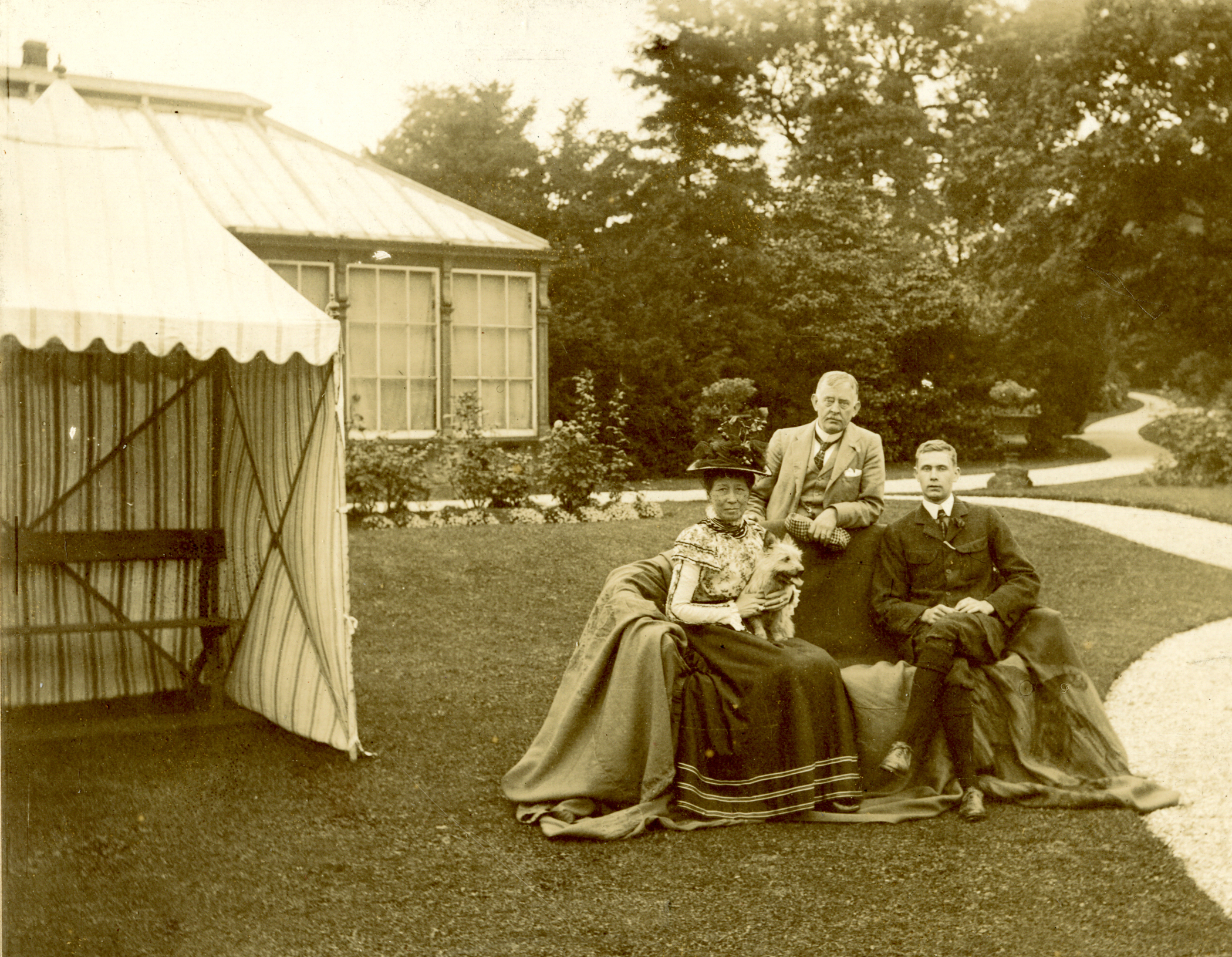
A striped garden awning c.1905, Garden Museum collection

Small tents and shaded awnings remained popular into the 20th century. A photograph in the collection of Captain Webb and his family dating from 1905 depicts them in their garden next to a small striped tent with a bench placed beneath it. The awning is supported by a metal framework and the fabric is decorated with the distinctive striped pattern of ticking fabric.

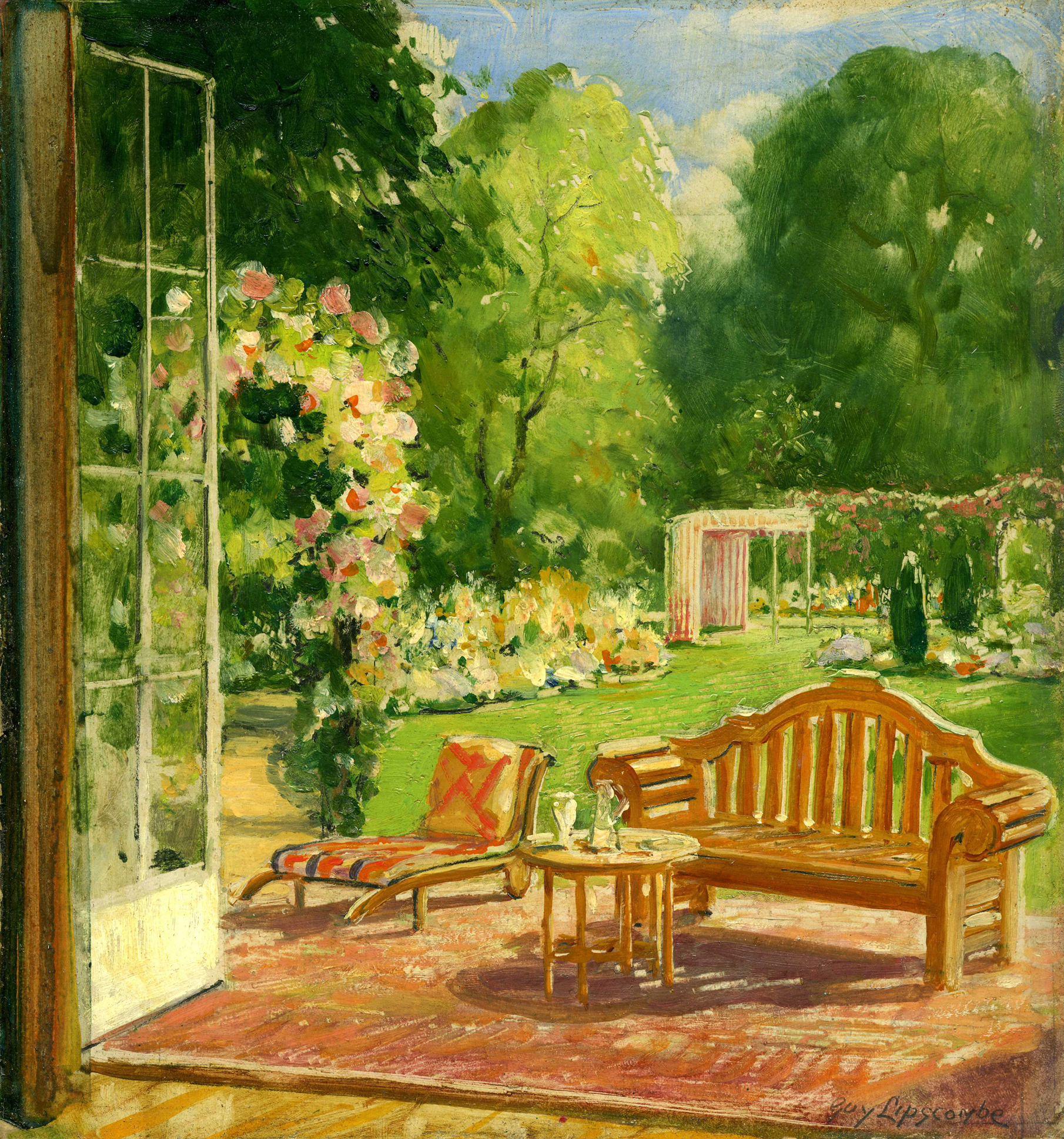
A Garden in Summer, 1930, Guy Lipscombe, Garden Museum collection

In ‘A Garden in Summer’ artist Guy Lipscombe illustrates a stylish garden with Lutyens style bench, wheeled recliner and a table with refreshments. The scene is enhanced with decorative rose arbor and an elegant striped tent. The decorative and useful garden awning and tent may have long been superseded by the humble garden parasol.

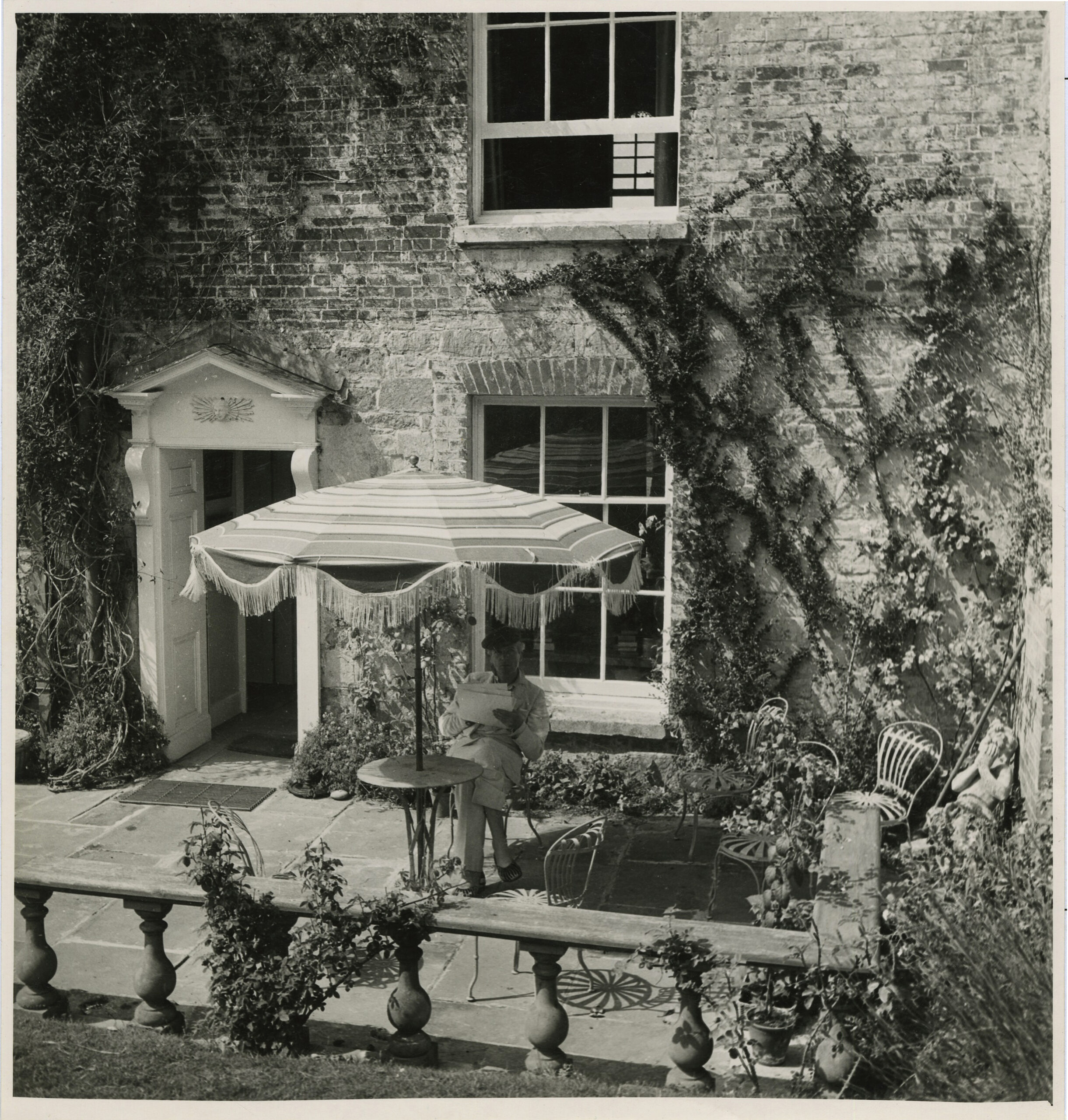
But as is illustrated in our photograph of Cecil Beaton’s garden at Reddish House the stripe still reigns supreme as a signature pattern in the garden.

Cecil Beaton at Reddish House, Anthony Denney

The Garden Museum is incredibly grateful to everyone who has donated to the Ever Green Endowment Fund so far. The fund has already helped us add some interesting items to the collection.

If you’d like to find out more about how you can help invest in the Museum’s future, then please contact Kitty in the Development Team: kitty@gardenmuseum.org.uk.