Related Events
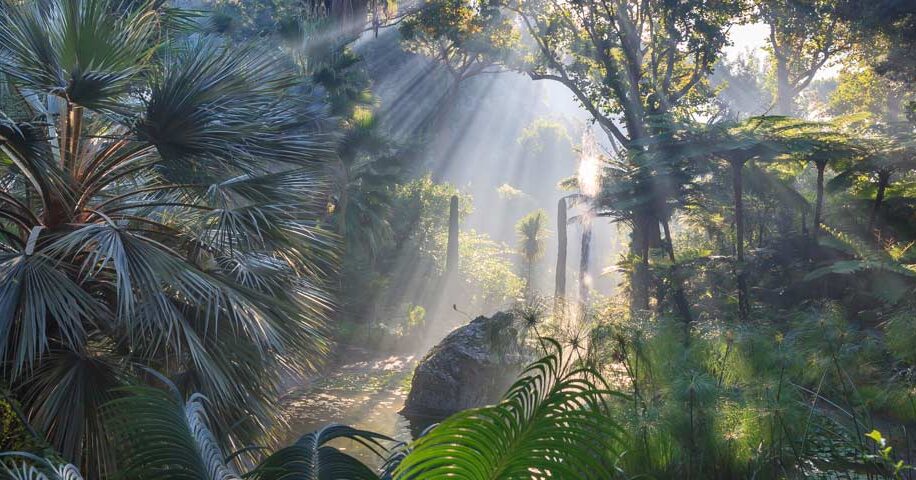
La Mortella: A Garden Rooted in Passion
22 Sep 2026
Talks
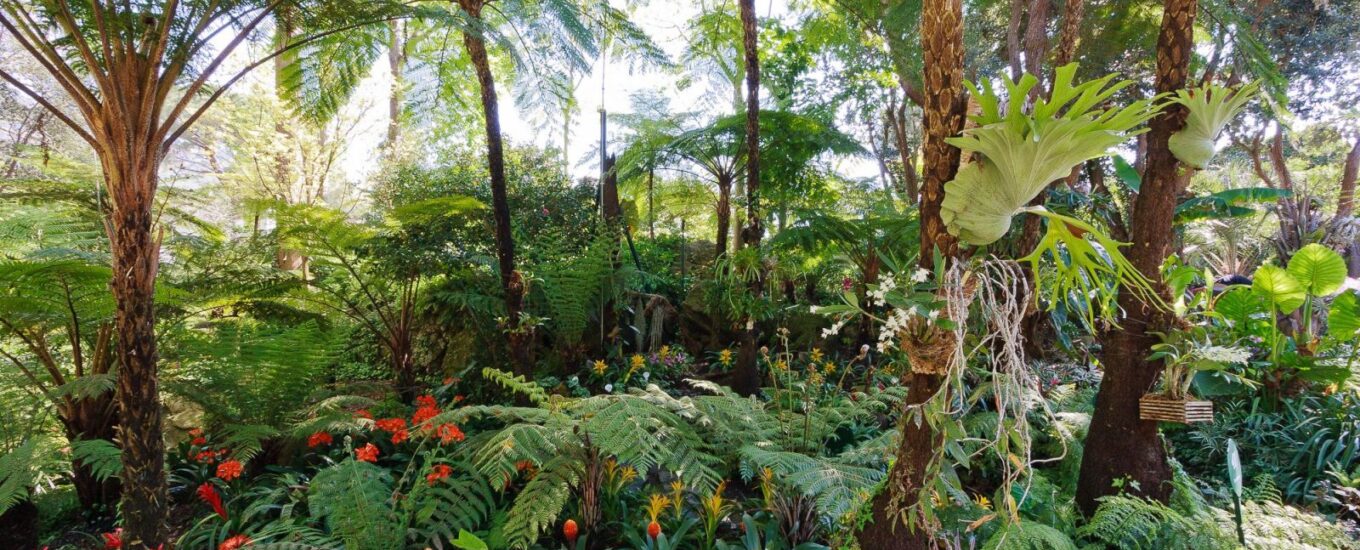
Few gardens achieve such a rare balance between landscape, architecture and botany that they feel not merely designed, but composed. La Mortella, on the island of Ischia in the Bay of Naples, is one of those exceptional places. Created from the mid-1950s by the British composer Sir William Walton and his Argentine wife Lady Susana Walton, it has earned an international reputation for its remarkable botanical collections and the unique harmony between nature, music and landscape. More than a collection of plants, La Mortella is a living expression of creativity, where nature, music and art exist in perfect harmony.
The story of the garden begins with Sir William Walton (1902–1983), one of Britain’s greatest twentieth-century composers. Born near Manchester into a modest family, Walton’s extraordinary musical talent earned him a scholarship to Oxford while still a boy. His career quickly flourished, beginning with the groundbreaking Façade, a witty collaboration with the poet Edith Sitwell that established him as one of the most original voices of his generation. He went on to compose some of the most celebrated works in the English repertoire, including concertos for viola, violin and cello, two symphonies, the ceremonial marches for the coronations of King George VI and Queen Elizabeth II, and unforgettable film scores for Laurence Olivier’s Shakespeare adaptations.
After the Second World War, Walton longed for a quieter environment in which to compose. During a visit to Buenos Aires he met a young Argentine woman, Susana Gil. Despite the considerable difference in age, they fell in love almost immediately and married in December 1948. Together they began searching for a place where they could build a life far removed from post-war London, somewhere that offered beauty, tranquillity and inspiration.
That place proved to be Ischia.
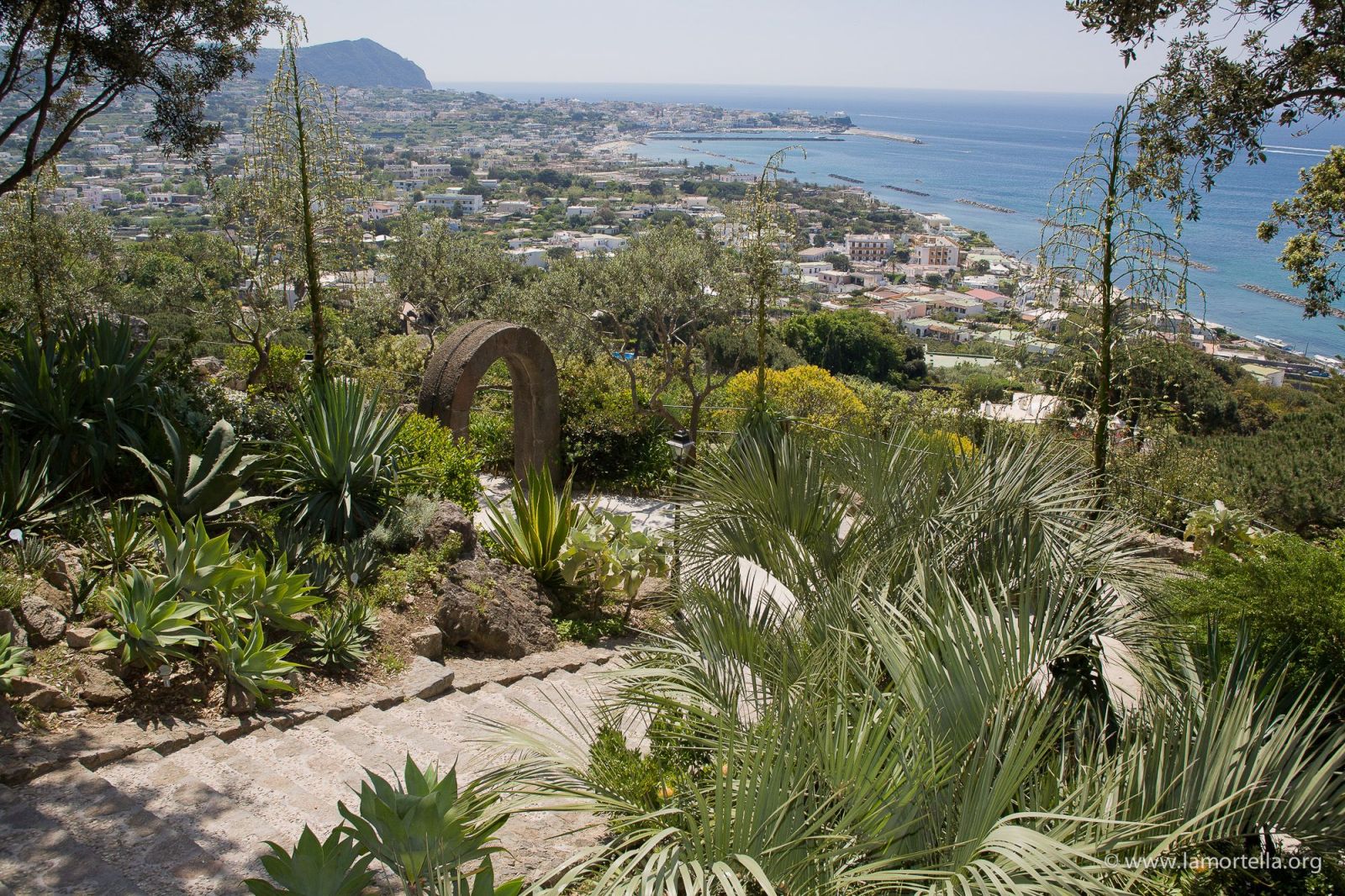
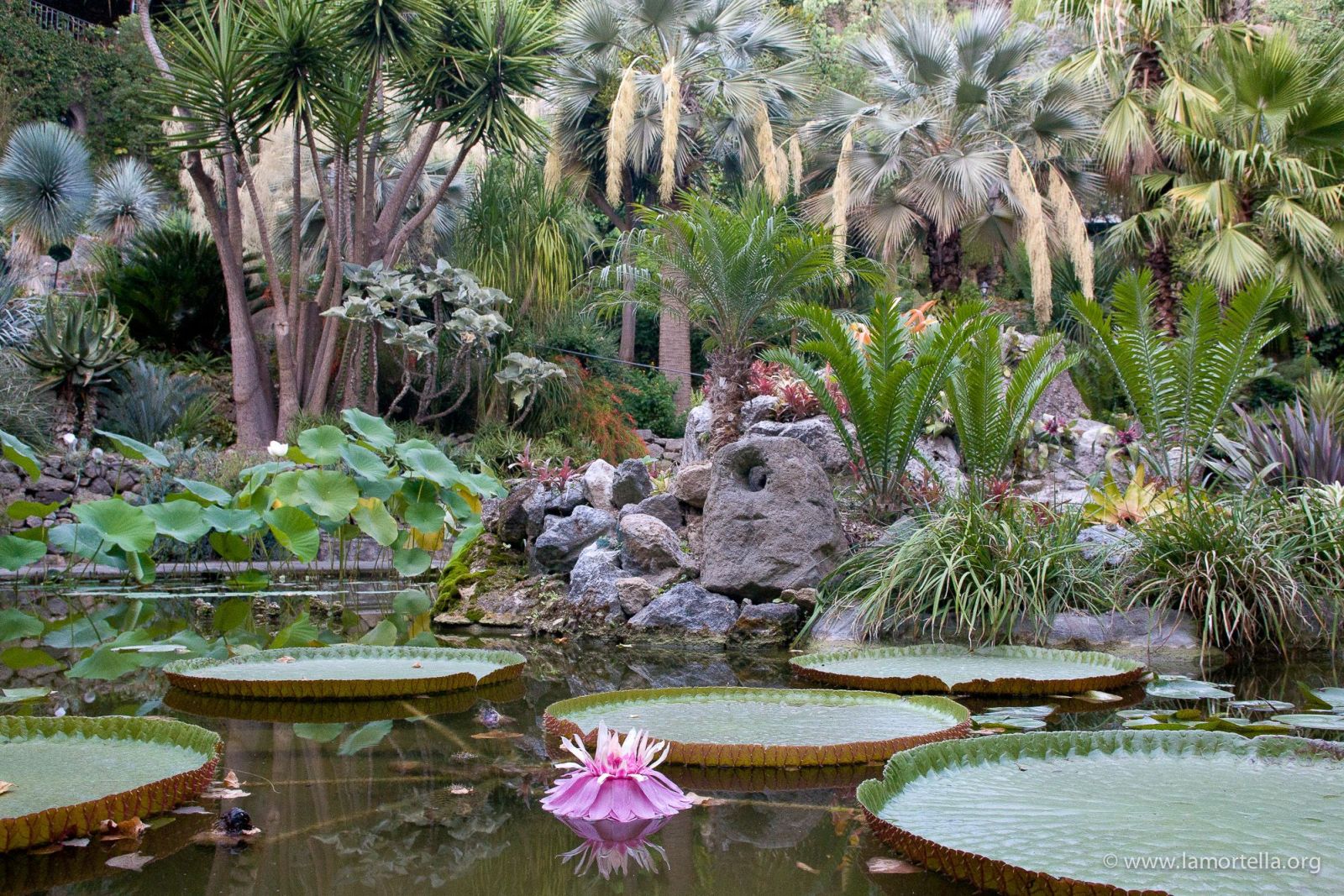
The island had captivated them from their first visits, and in 1955 they purchased a wild tract of land on the promontory of Zaro, above the town of Forio. The property consisted of a sheltered valley at the foot of a sunny hillside, strewn with enormous volcanic boulders and covered with Mediterranean maquis. Among the native vegetation grew abundant myrtle (Myrtus communis), known locally as mortella, from which the estate took its name.
Transforming such a rugged landscape into a garden required exceptional imagination. Lady Walton persuaded the celebrated English landscape architect Russell Page, already one of Europe’s foremost garden designers and a great admirer of William Walton, to create a master plan for the site. His brief was unlike any other: to design a garden that would respect the dramatic volcanic landscape while creating an atmosphere of contemplation and artistic inspiration. Page’s first design, completed in 1956, embraced the character of the site, using drought-tolerant Mediterranean plants that reflected the island’s natural vegetation.
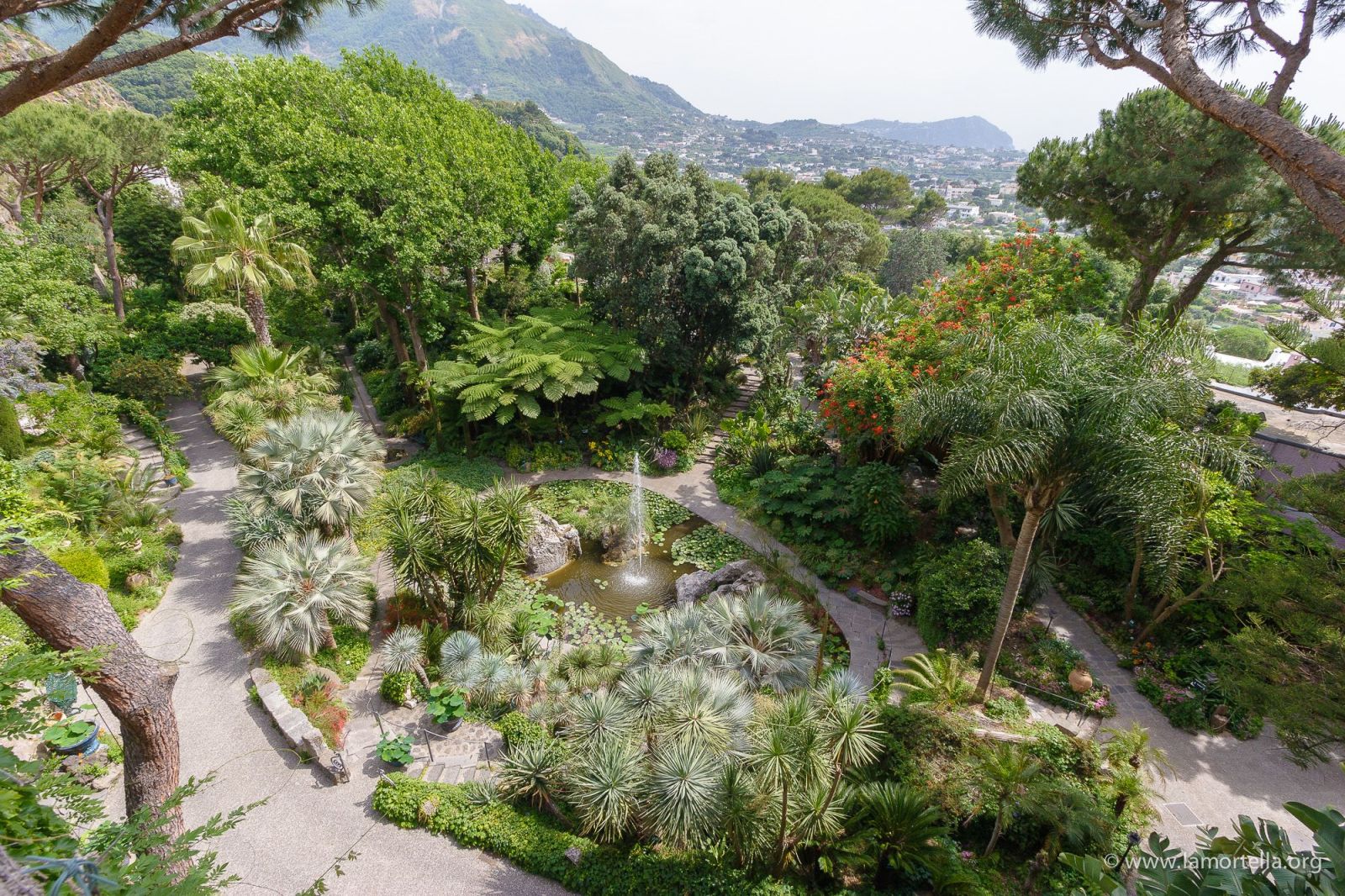
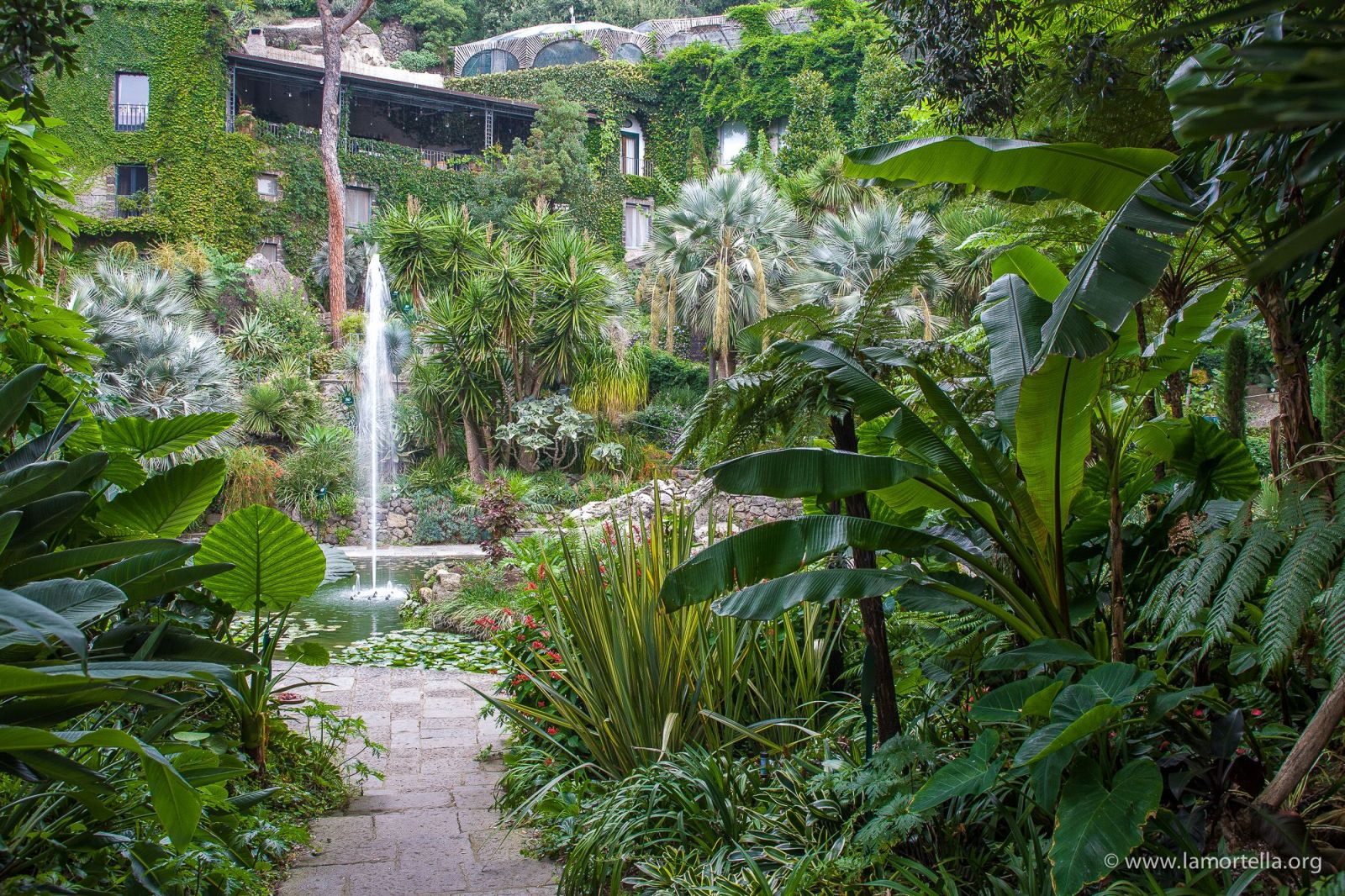
A few years later, however, the arrival of a reliable water supply transformed the possibilities of the project. At the Waltons’ request, Page revised the design, introducing a sequence of fountains, pools and flowing water that now define the lower part of the garden. Inspired in part by the great Islamic gardens, these interconnected water features create rhythm throughout the landscape, their gentle sound accompanying visitors as naturally as music accompanies silence.
While Russell Page provided the vision, it was Lady Walton who brought La Mortella to life. From the earliest days of construction she became, in effect, project manager, head gardener and passionate plantswoman. For more than fifty years she personally supervised every aspect of the garden’s development, selecting plants, directing construction, experimenting with new species and continually refining the landscape. Her extraordinary energy, botanical knowledge and artistic sensibility transformed the challenging volcanic site into a garden of rare beauty and botanical diversity.
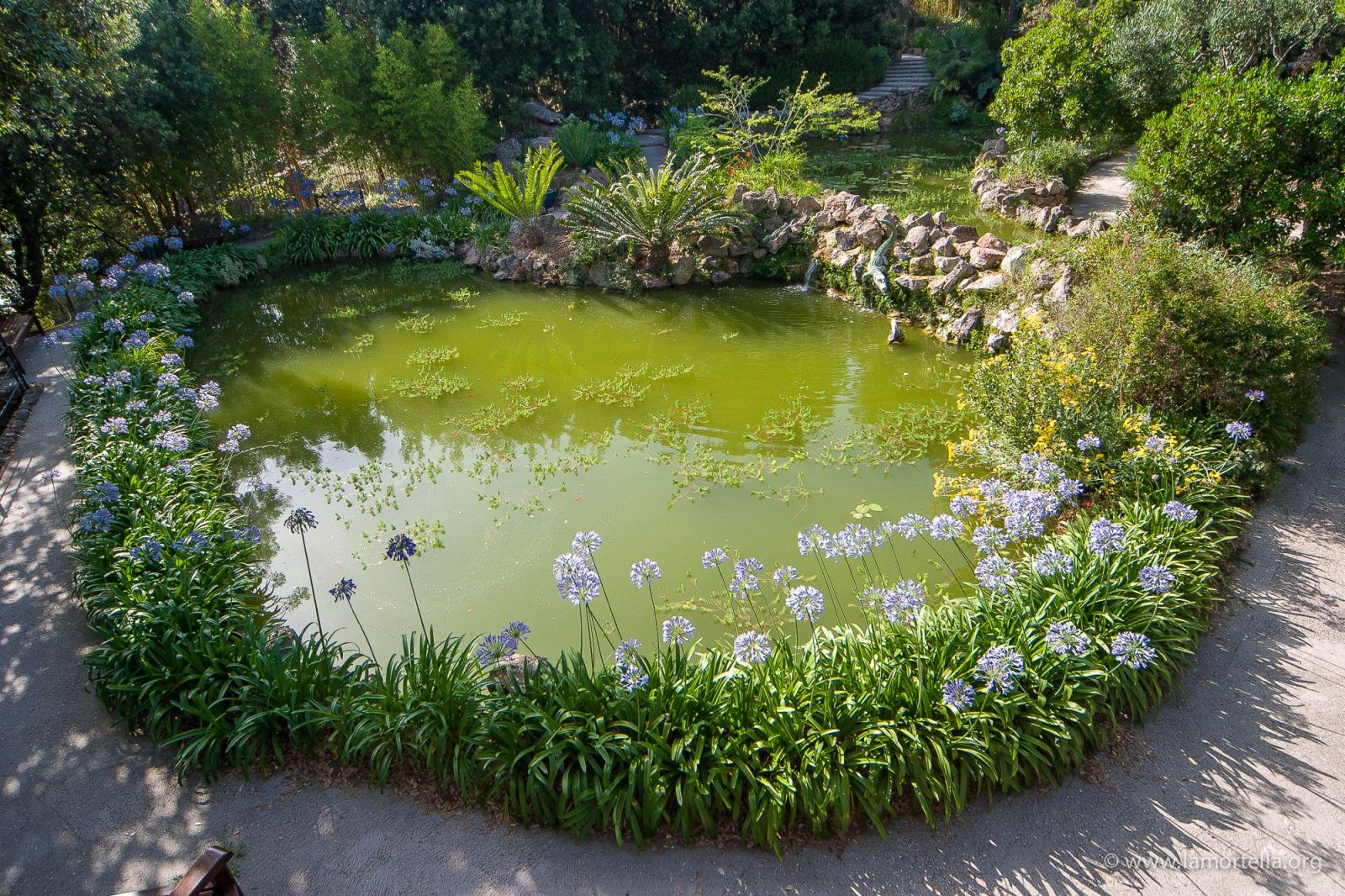
Much of La Mortella’s horticultural richness stems from the site’s two contrasting environments.
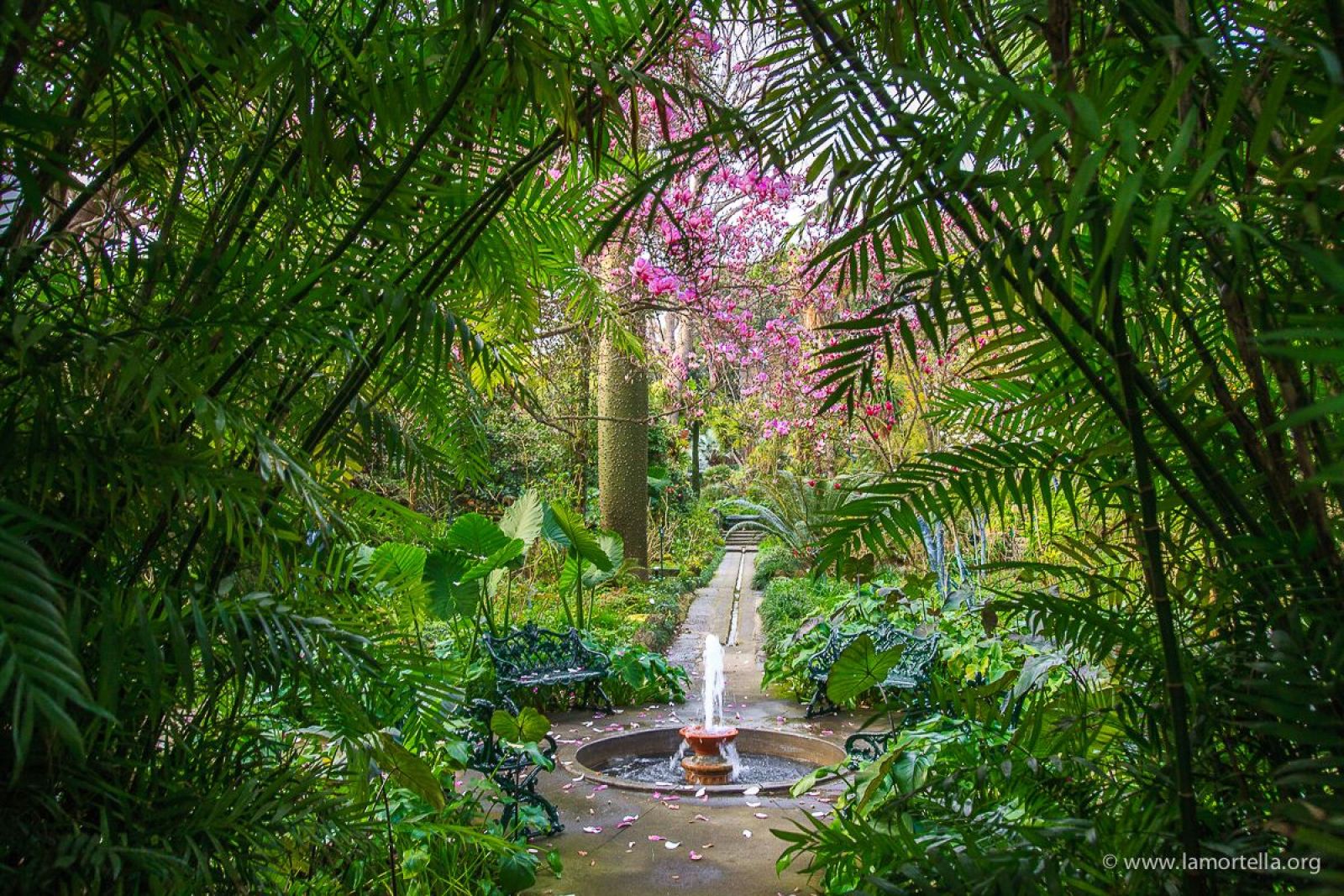
The Valley forms the heart of the garden. Sheltered from the prevailing winds and protected by a dense canopy of trees, it enjoys a cool, humid microclimate that contrasts dramatically with the surrounding Mediterranean landscape. Here Lady Walton succeeded in cultivating plants that would normally struggle in southern Italy. Magnificent magnolias, camellias, hydrangeas and tree ferns thrive alongside an extensive collection of tropical and subtropical species, creating an atmosphere that is lush, intimate and almost exotic.
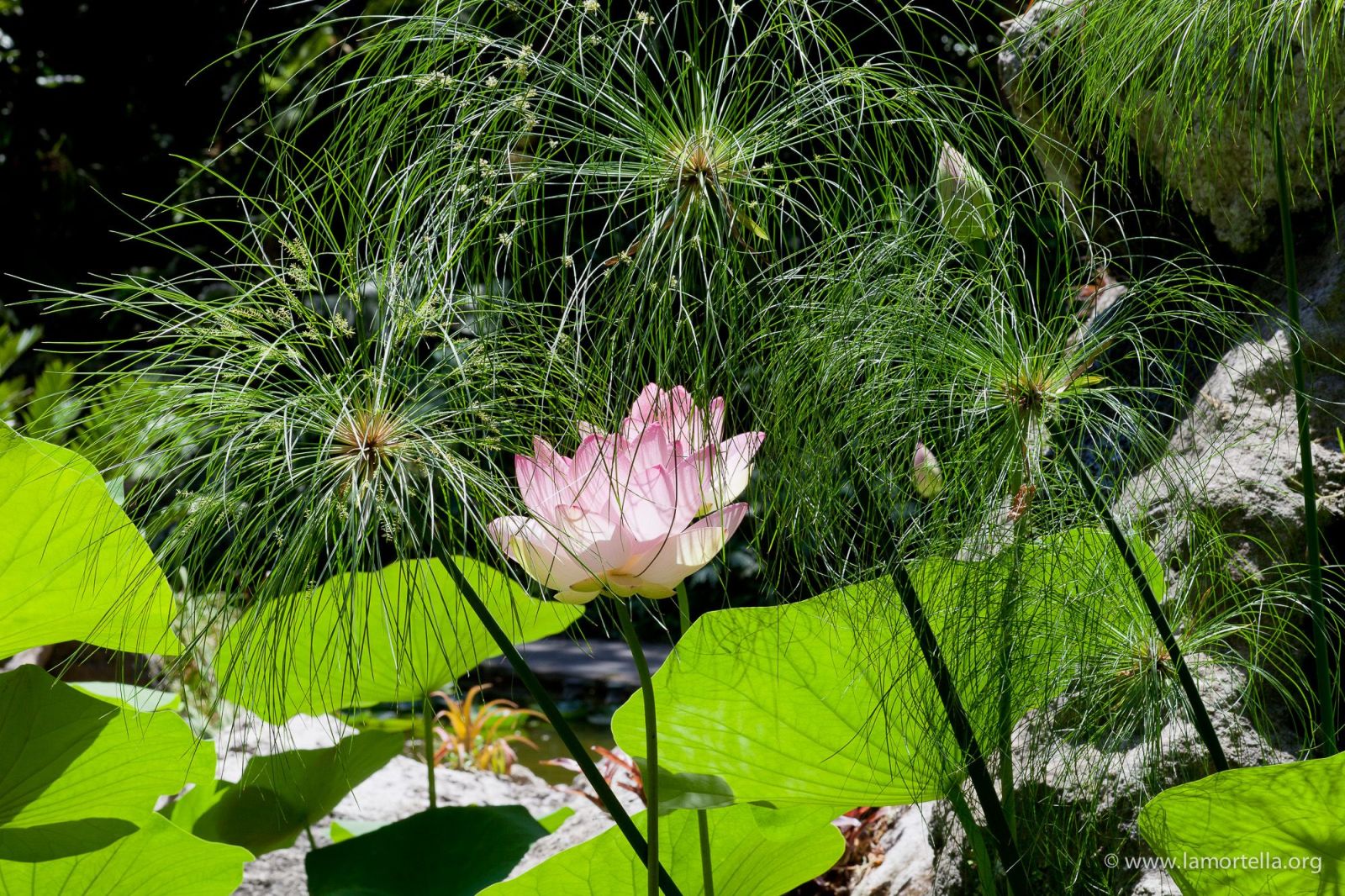
Water is the unifying element throughout this part of the garden. A gently flowing stream links pools, fountains and cascades, where papyrus, water lilies and aquatic plants flourish. Among the most striking specimens stands a magnificent Ceiba speciosa, while an impressive collection of cycads extends through the garden. Nearby, the celebrated Victoria House is dedicated to the giant South American water lily, Victoria amazonica, whose enormous floating leaves have fascinated visitors for generations. Tropical climbers, including the spectacular jade vine (Strongylodon macrobotrys), with its extraordinary turquoise flowers, and the elegant Thunbergia mysorensis, add further drama to this unique setting.
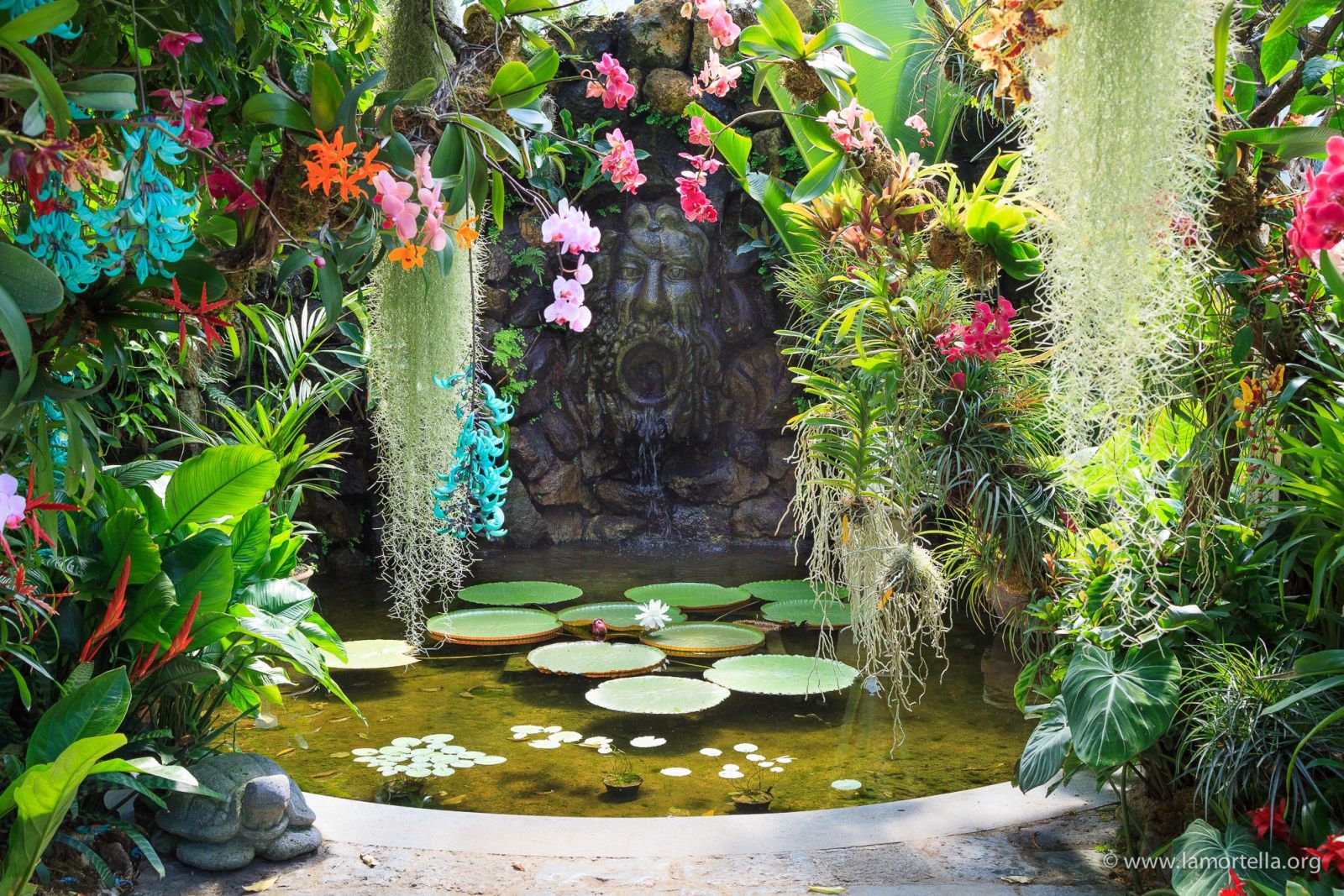
Victoria House
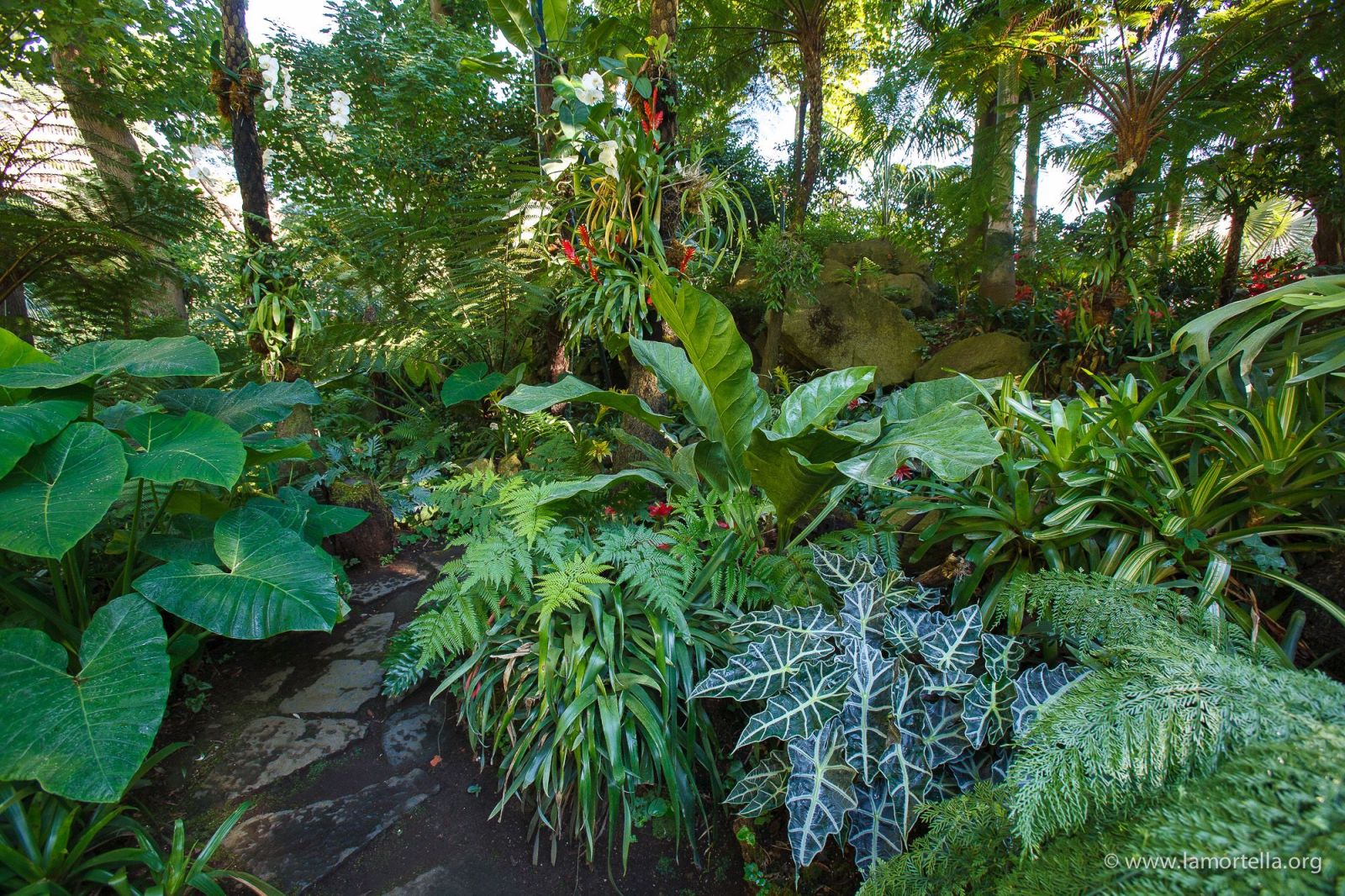
As visitors climb towards the upper garden, the atmosphere changes completely. The Hill is exposed to sun, wind and long, dry summers, providing ideal conditions for plants from the world’s Mediterranean-climate regions. Lady Walton brought together a remarkable variety of plants from California, Chile, South Africa, Australia and New Zealand, combining them with the native flora of Ischia to create a landscape that feels both natural and harmonious. Sweeping plantings of aloes, agaves, proteas, furcraeas, echiums, eucalyptus, lavenders and salvias are interwoven with the characteristic vegetation of the Mediterranean maquis—myrtle, strawberry trees, lentisk, holm oak, cistus and the native dwarf fan palm (Chamaerops humilis).
Throughout the seasons these collections provide an ever-changing display of colour, texture and fragrance against spectacular views across the Bay of Naples. Among the Hill’s most memorable features are the Temple of the Sun, where luxuriant tropical aroids create an unexpected oasis, and the Hill’s aquatic garden, home to Nymphaea caerulea, sacred to the ancient Egyptians, Nymphaea rubra from Asia, and the magnificent hybrid Victoria ‘Longwood’. Nearby, the Thai House stands within a serene Oriental landscape of sacred lotus (Nelumbo nucifera), Japanese maples and giant bamboo, offering yet another change of mood within the garden.
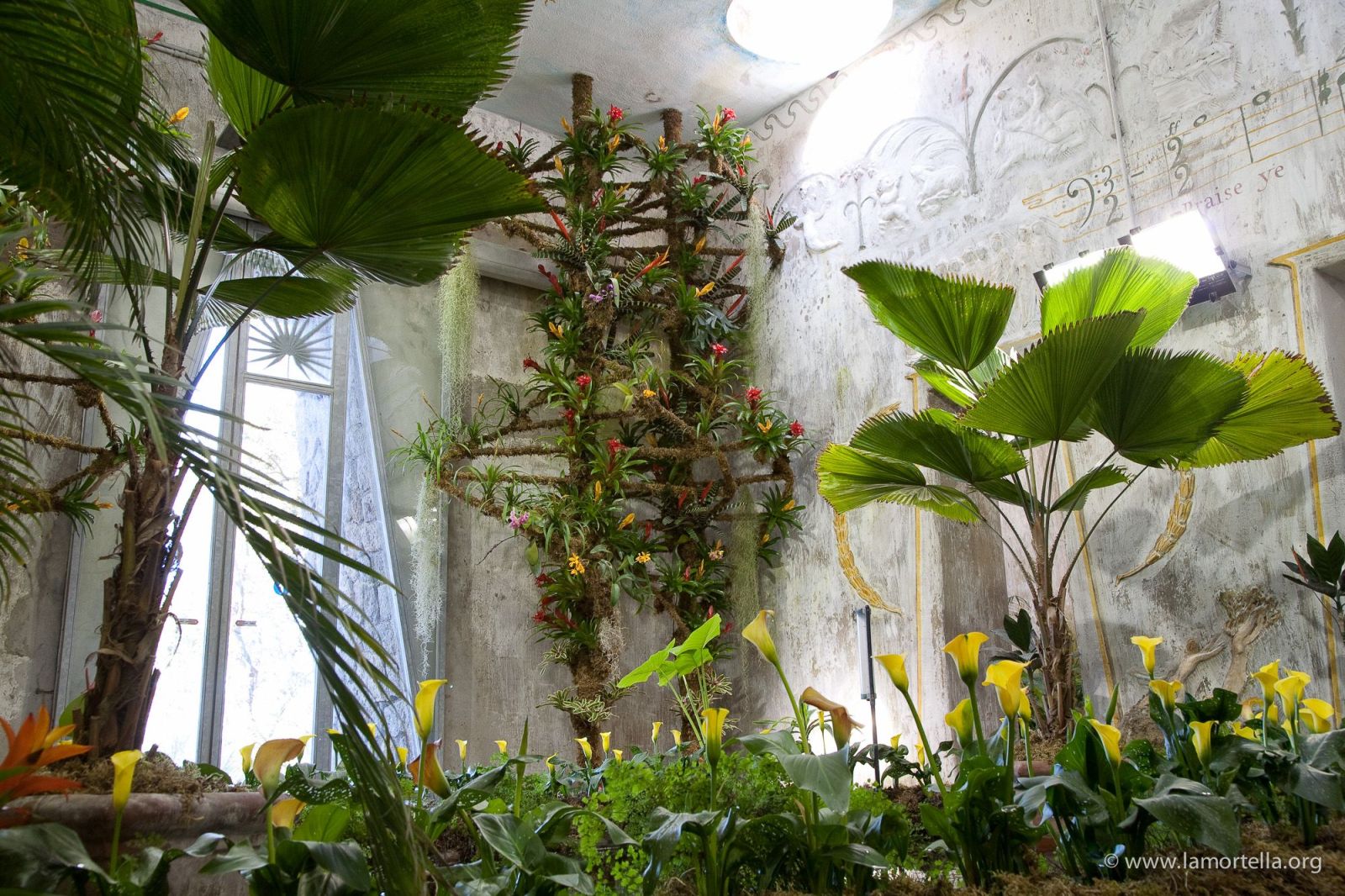
Temple of the Sun
Yet La Mortella is far more than the sum of its plant collections. It is a garden shaped by a deeply personal vision. William Walton found here the peace and inspiration that nourished his music, while Lady Walton devoted her life to creating a landscape where plants from every continent could flourish in harmony with the volcanic character of Ischia. Their shared belief that beauty could unite nature, art and music remains evident in every path, every terrace and every carefully composed view.
Today, La Mortella is cared for by the William Walton Foundation and Trust, which continue the vision of its founders by preserving the garden and promoting the musical legacy of Sir William and Lady Walton. Throughout the concert season, talented young musicians from Italy and around the world perform in the garden, ensuring that music remains at the heart of La Mortella, just as William and Susana intended. Visitors come not only to admire the garden’s extraordinary diversity of plants and its masterful design, but to experience a place where landscape, music and art continue to exist in perfect harmony—a living legacy of William and Lady Walton’s shared vision.
Alessandra Vinciguerra will give a talk at the Garden Museum exploring the history, horticulture, and enduring vision behind La Mortella on Tuesday 22 September. In person and livestream available: book tickets
22 Sep 2026