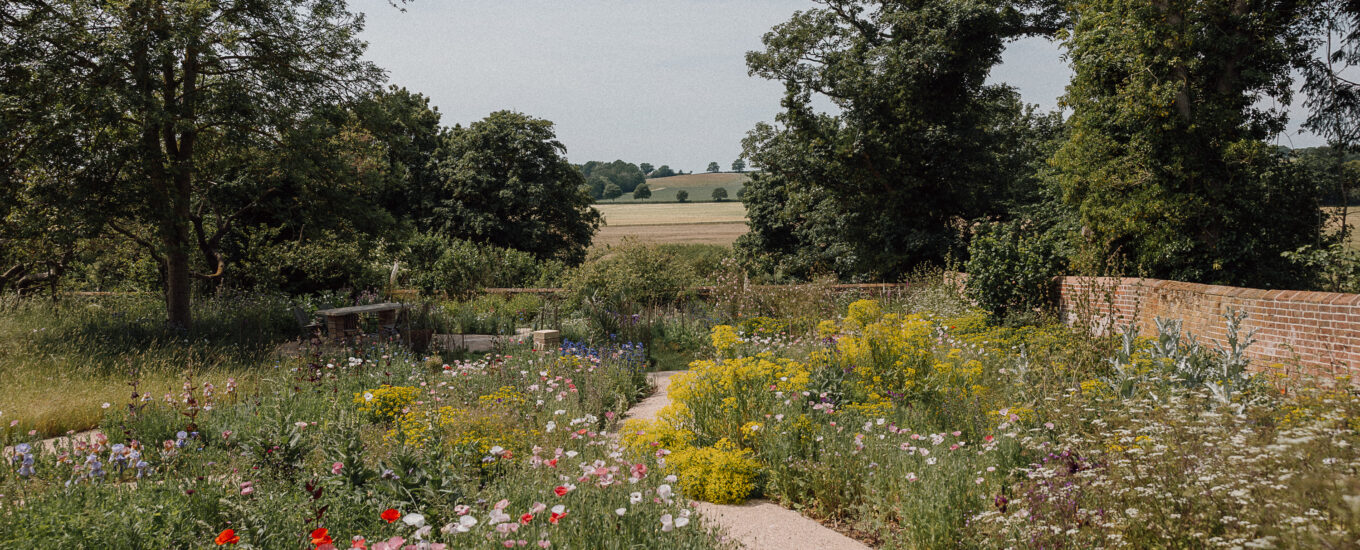
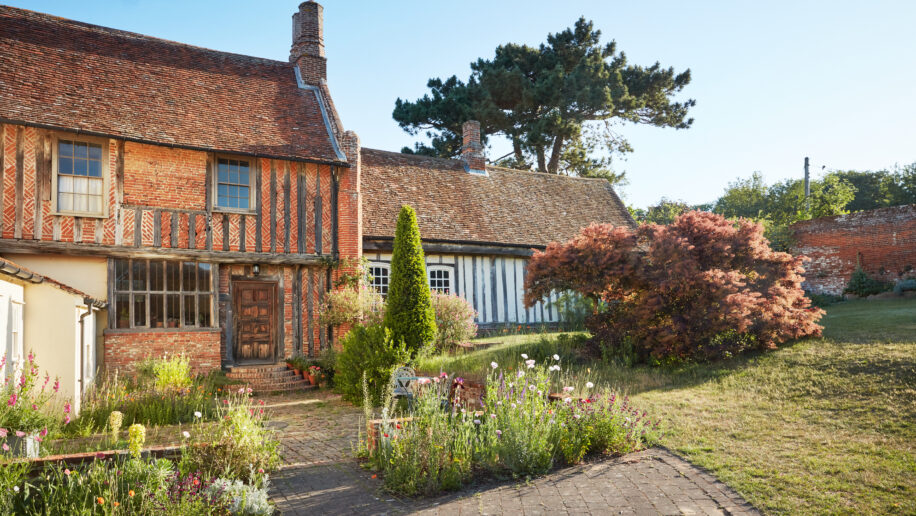
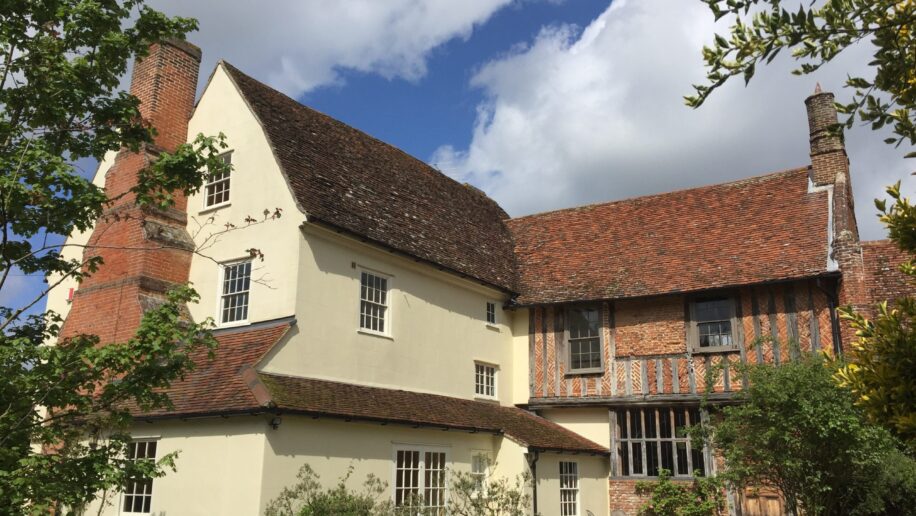
The renewed walled garden at Benton End in Hadleigh, Suffolk, has opened to visitors for the first time this week, a major milestone in the Garden Museum’s project to revive the former home and garden of artist-plantsman Sir Cedric Morris (1889-1982).
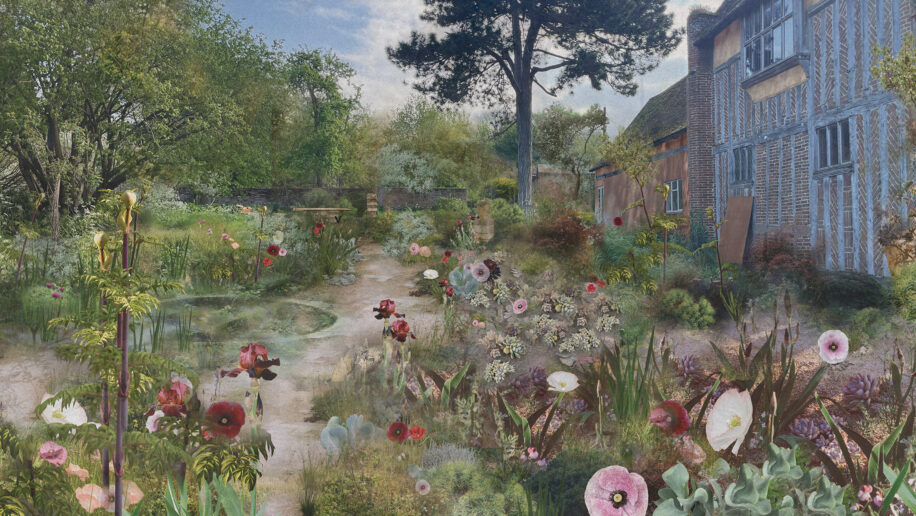
The garden design was led by Head Gardener James Horner in creative collaboration with Sarah Price Landscapes. The sympathetic but contemporary renewal of Cedric Morris’ old walled garden incorporates new accessible paths winding around a central wildflower meadow home to “Cedric’s ghosts”, a rare collection of Morris’ bulbs that survived under the earth for forty years; a rubble garden adjacent to the house; a new water retention system using a Victorian cistern discovered underground; and repurposed materials from Sarah Price’s 2023 Chelsea Flower Show garden, which was inspired by Morris’ original garden in its 1950s heyday. Following years of research, the Garden Museum has brought many of Morris’ rare plants back to Benton End, to sit alongside these new interventions.
Open days are available to book on Tuesdays, Thursdays, Saturdays and Sundays throughout June and July 2026 via the Garden Museum website. Early visitors may be just in time to see the collection of Benton irises in bloom.
At Benton End, Morris and his lifelong partner, artist, Arthur Lett-Haines (1894-1978) established the East Anglian School of Painting and Drawing, one of the most radical art schools of the period. One of the first pupils was the 17-year old Lucian Freud, one of the last, Maggi Hambling. The artists were often joined by friends such as Elizabeth David, Vita Sackville-West, Constance Spry, Benjamin Britten and Peter Pears.
In his lifetime, Morris became better known as a gardener than an artist. In the 1950s within the old walled garden at Benton End he created one of Britain’s first naturalistic gardens, home to a collection of rare and unusual plants. Morris famously bred bearded irises, naming over 90 cultivars, many of which carry the ‘Benton’ prefix. In 2021, after decades of private ownership, Benton End was majority gifted to the Garden Museum by the Pinchbeck Charitable Trust with the intention that the house and garden might be restored and re-opened as a place of learning once again.
A Benton End garden committee was formed to research and shape the development of the garden renewal project. Members of the garden committee are Sarah Cook, holder of the National Collection of Benton Irises and former Head Gardener of Sissinghurst Castle Garden, horticulturist Jim Marshall; specialist flower grower and tulip expert Polly Nicholson, garden designer Arne Maynard, Bridget Pinchbeck of the Pinchbeck Charitable Trust, and Head Gardener James Horner.
The garden committee conducted site analysis to identify the locations of Cedric’s ghost bulbs, and research to understand the garden in its heyday. The key surviving plants identified include trees such as the medlar, Cercis and Pinus nigra, and species roses such as Rosa foliolosa and Rosa webbiana. Cedric’s affection for nature, seen in his paintings of birds and also his protest painting Landscape of Shame (1960) determined that the garden must be renewed without any use of herbicides. Building on this research and the rich colour palette of Cedric’s flower paintings, a new planting scheme was devised.
Plants have been sourced from independent plant specialists across the country including Great Dixter, Plantsman’s Preference, Phoenix Perennials, Wildegoose, Cally Gardens, Binny Plants, Pottertons, Junkers, Edrom, and Woottens. Old roses and species roses from David Austin Roses, cistus and mediterranean sub shrubs from Beth Chatto’s Plants and Gardens, and irises from the National Collection of Cedric Morris Irises grown by Sarah Cook.
A network of horticulturists also contributed to efforts to return some of Morris’ plants back home, as towards the end of his life he had appointed his friend Jenny Robinson to act as his plant executor. His collection of rare plants was distributed among horticultural friends, creating a living legacy of his garden across the country. Among those who were key in the process of repatriating plants to Benton End were artist plantsman John Morley, a frequent visitor to Benton End; Frances Mount, who gardened for Morris in the 1970s, and the team at Beth Chatto’s Plants and Gardens.
Adjacent to the house, an ambitious rubble garden has been constructed. A flagstone terrace which was built in the 1990s has been removed, crushed and utilised as sub base for paths and dressing for the rubble garden. In this area, a Victorian water cistern was discovered on the same site that Cedric made his pond. The cistern has been repaired and a rill formed to feed it with rainwater from the house roof gutter lines. Beside the cistern underground is a second water tank housing the pump which delivers rainwater to the garden’s new water taps.
The garden build was led by Mark Whyman Landscapes with Breffni McGeough and Chris McGeough. Bricks and pots were generously donated from Nurture Landscapes 2023 Chelsea Flower Show garden. Furniture includes pine wood tables and benches made of a Monterey pine tree which was felled in the walled garden, made by Cambridgeshire based Olly Moses, and an oak gate made by Suffolk based Jim Bennett Furniture.
The walled garden project has been made possible thanks to:
The Linbury Trust
Project Giving Back
The Tanner Trust
The Broadwall Foundation
The Stanley Smith Foundation
The UK Shared Prosperity Fund via HM Government
Babergh and Mid Suffolk District Councils
The Cedric Morris Foundation
The Rick Mather David Scrase Foundation
WFGA
The Bedford Family
Reed Educational Trust
J Paul Getty Jnr Foundation