Posted on 21 Jan 2026

Art

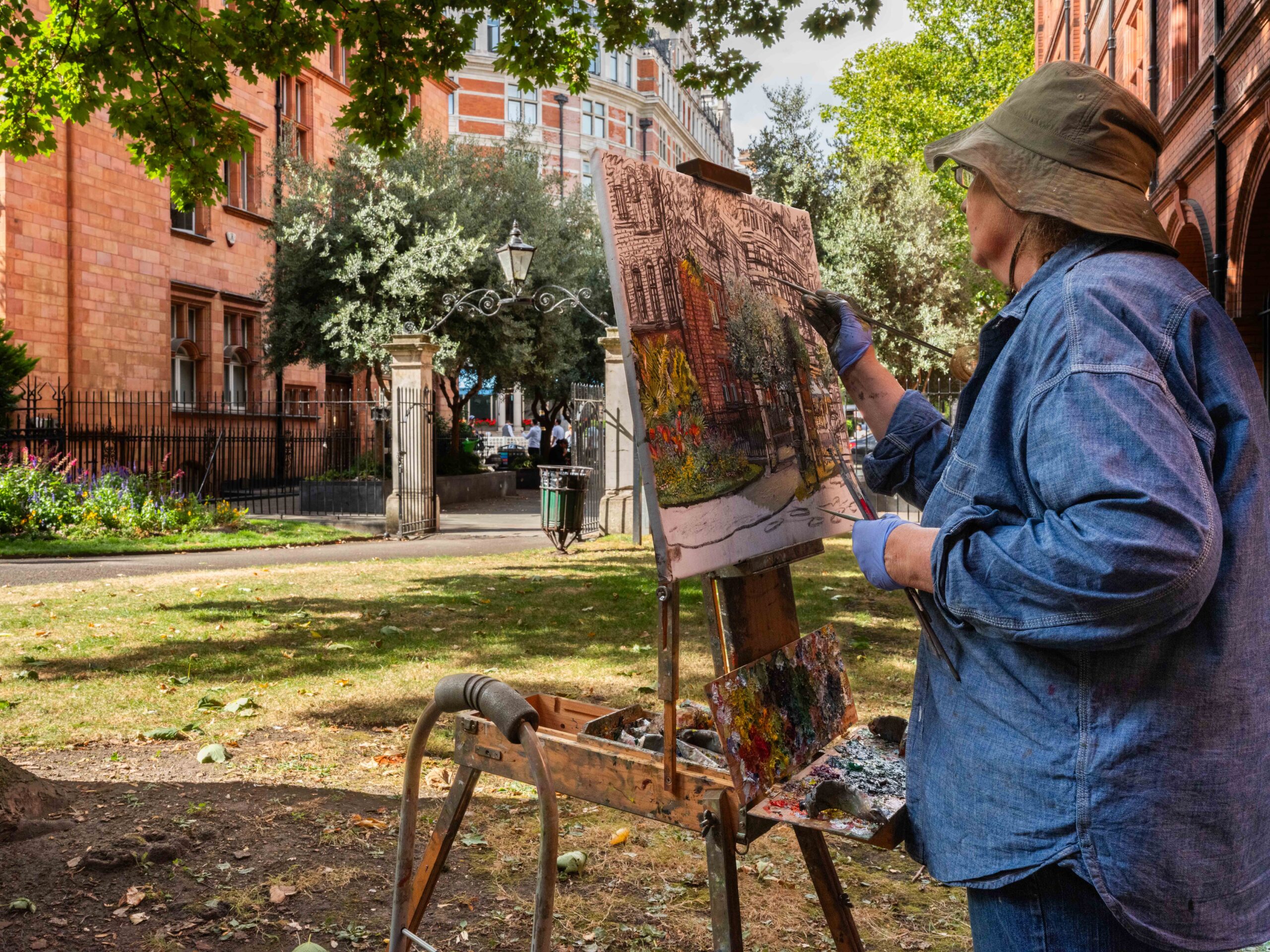
Artist Melissa Scott-Miller meticulously captures the urban landscape of London from the perspective of a lifelong local to Islington. We caught up with Melissa to find out more about her work, inspirations and the challenges of painting en plein air in London, as her new exhibition opens at the Garden Museum.

Tell us about yourself, and how did your journey into painting begin?

I’ve always felt compelled to draw and paint what I see around me from as early as I can remember. I was lucky to have been brought up in an artistic family – my mother went to art school and my brother and I were encouraged to be creative and taken to museums and galleries. All my holidays as a child were spent in remote places in Scotland and weekends in a cottage in Norfolk where we had no electricity. I spent all my time drawing and painting the landscape and our dogs and cat!

What draws you to exploring gardens and green spaces in your work?

I’m always attracted to things that are growing, trees and plants especially. I love the contrast of people’s efforts to build and contain nature, making paths and flower beds. At the same time in our city we recognise how important green spaces are – the beautiful flowers and trees to look at as well as the growing of vegetables and fruits in allotments and community gardens.

Visually the colours and patterns of nature attract me, particularly when they are set against brick walls and man-made structures. Overall it’s often just such a joyful sight to see nature bursting out in a city street or park.

Can you tell us about your process, how do you capture the detail of a living green space?

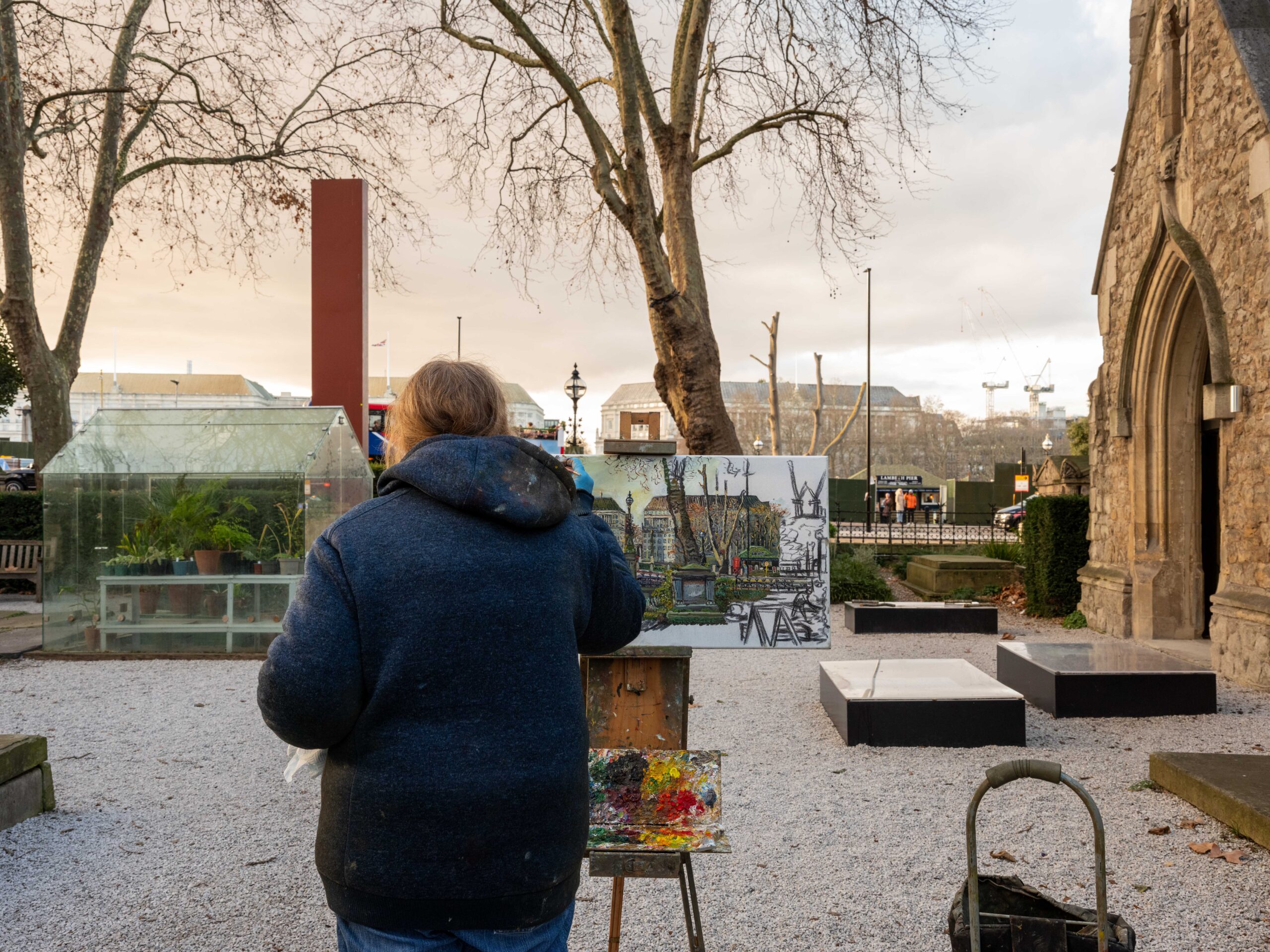
I will look around and decide what size and shape canvas would be best as well as what I want to fit into the picture. Sometimes I will visit a place at different times of day because it might look best in the morning or afternoon. Then I draw on the canvas with charcoal. I take quite a long time over the drawing and often have to keep starting again because there’s something I didn’t get in. Then I fix the drawing with fixative.

I will start with the part that has attracted me the most or that I’m worried will soon be changing, like a tree that has just blossomed or is about to lose its leaves. I will paint it in segments, returning about five or six times, depending on the size and in the right light and weather, until it is all filled in. I mostly use very small brushes, I often feel like I’m embroidering something. Sometimes I do get carried away with painting foliage and make a lot of freer, unruly marks, using my fingers to put dabs of clean colour and brightness on the canvas.
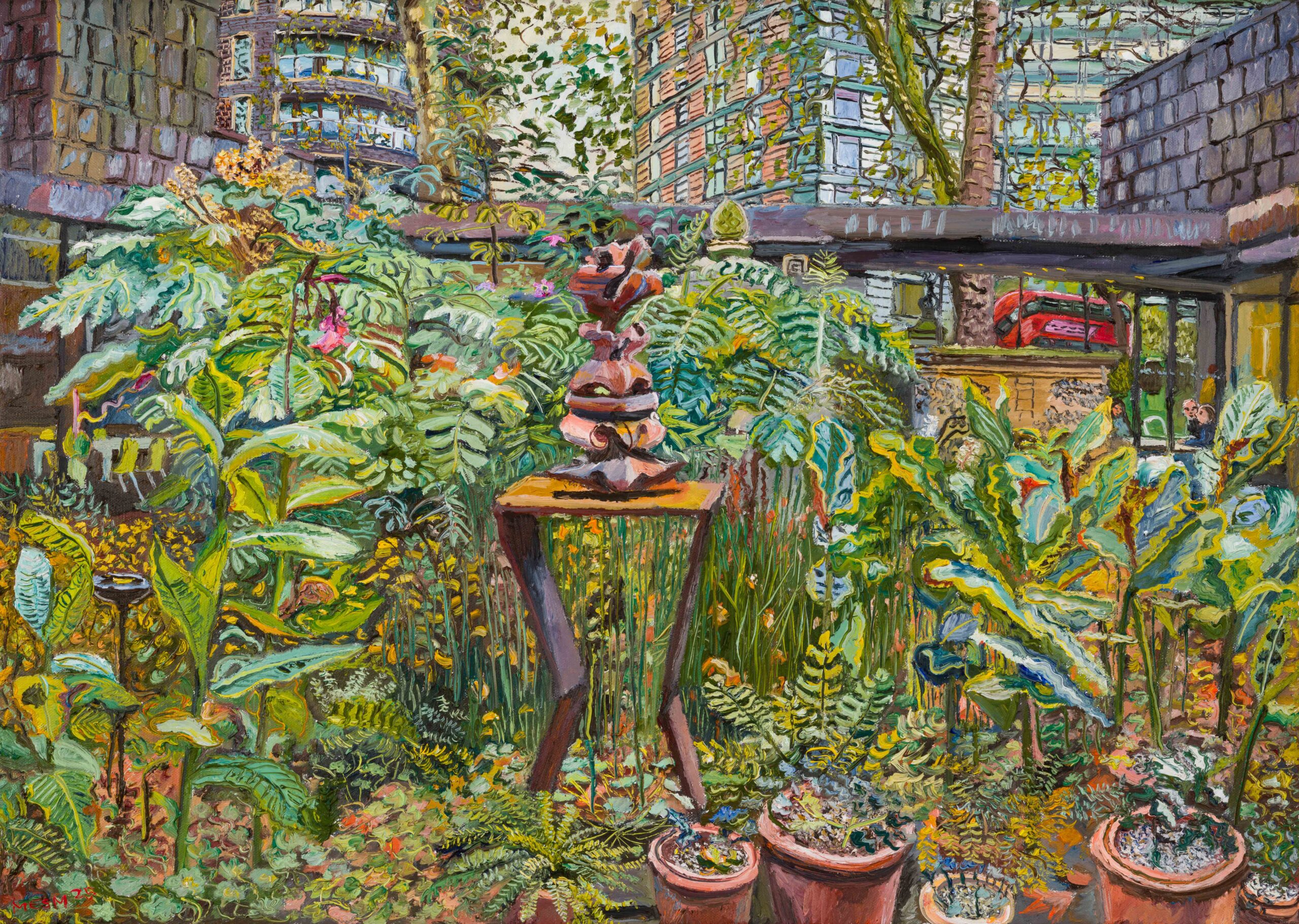
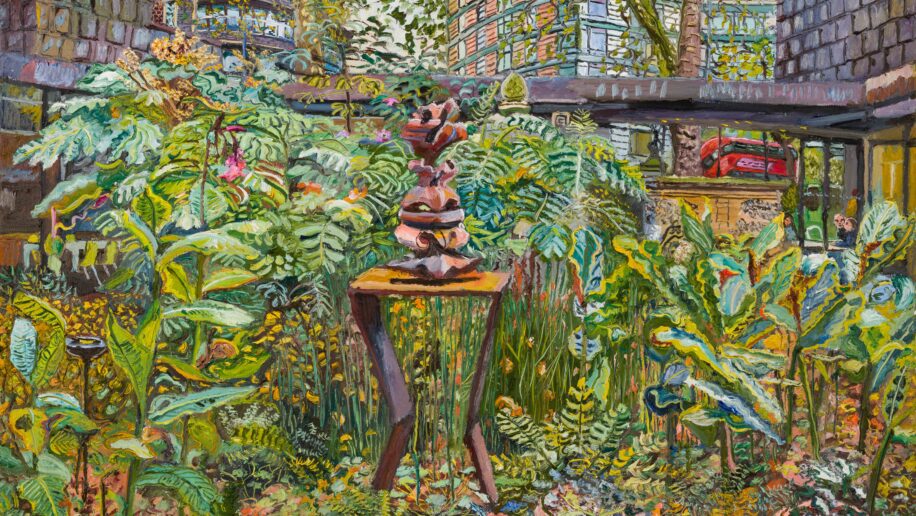
The Courtyard, Garden Museum

What are the challenges of painting en plein air?

The worst thing is if it’s really windy and everything keeps blowing over. Rain is fine because I’ve got an umbrella I can attach to my easel, and the colours of plants and trees actually look really good in the rain. People talking to you can also be a challenge, although generally it’s really nice because they are encouraging and sometimes tell you about other places that you wouldn’t have come across on your own. I do also love it when children are interested, and I hear them say to their parents, ‘I want to be an artist when I grow up!’

The thing that is a real challenge is when I’m struggling or I feel it’s not going well. Then I don’t really want anyone to see the painting and I can feel very exposed. Sometimes I’m not that friendly, then I feel bad later on, so I have to remember to be pleasant even when I feel like it’s a total disaster because people are actually just pleased to see you out there, having a go!

For your exhibition at the Garden Museum, you painted new works of the museum gardens and nearby parks. How did you find the experience of painting in a public space like the museum?

I really enjoyed painting in the museum, everyone was very friendly. I particularly enjoyed it when there were some volunteer gardeners working in the courtyard garden, I felt like I was working with them and they did point a few things out to me.

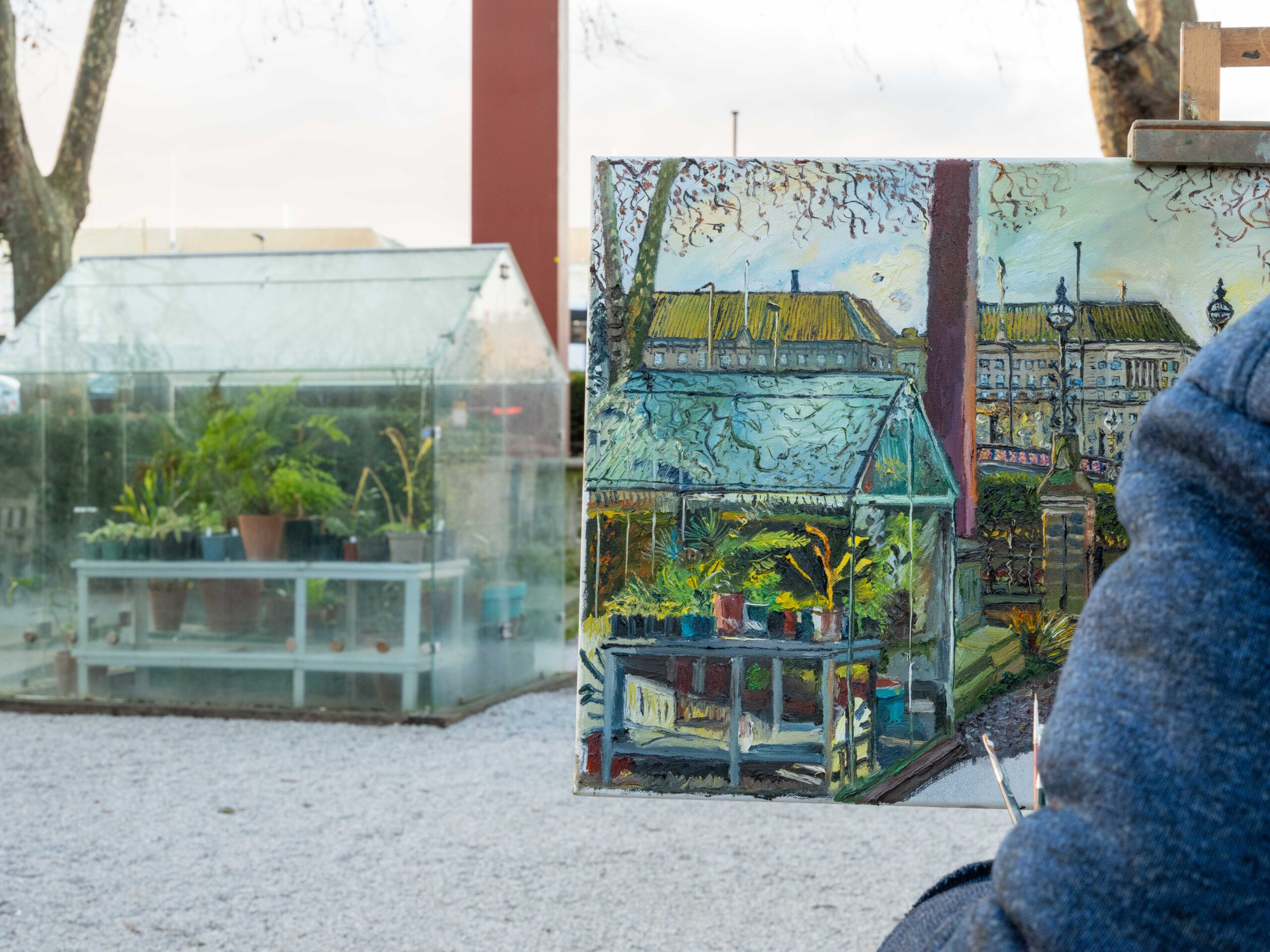
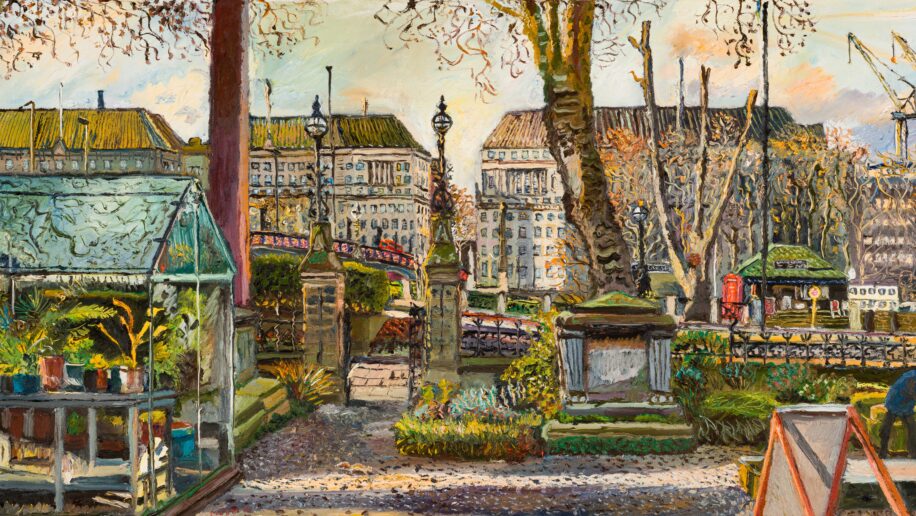
When I was working outside the museum on the view with the greenhouses, I think it was Matt who was working there on the garden, and I was interested to watch how he worked. I thought it was similar to how I paint, like sometimes putting enormous energy and effort into it and then pausing to look, and then slowly and carefully dealing with something ­­– it made me think painting and gardening are very similar.

I also enjoyed painting the tombs in the courtyard garden and it made me think about the history of the area. I later looked it up and read all about Tradescants and Captain William Bligh.

What does a typical day in the life of an artist look like for you?

I get up quite early and go off to paint with my easel in my trolley. In the spring and summer I’ll usually have three paintings I’m working on – one in the morning, one in the afternoon and an evening one. Recently I’ve been working a lot around central London and so I keep my wet paintings at Chris Beetles Gallery. It’s great because they will make me a cup of coffee or tea in between and I can swap the paintings around. I usually work for two or three hours on each one, after that the light has changed too much. There’s usually an hour or so break in between where I’m walking to the next place, and I often spot other potential views for painting along the way.

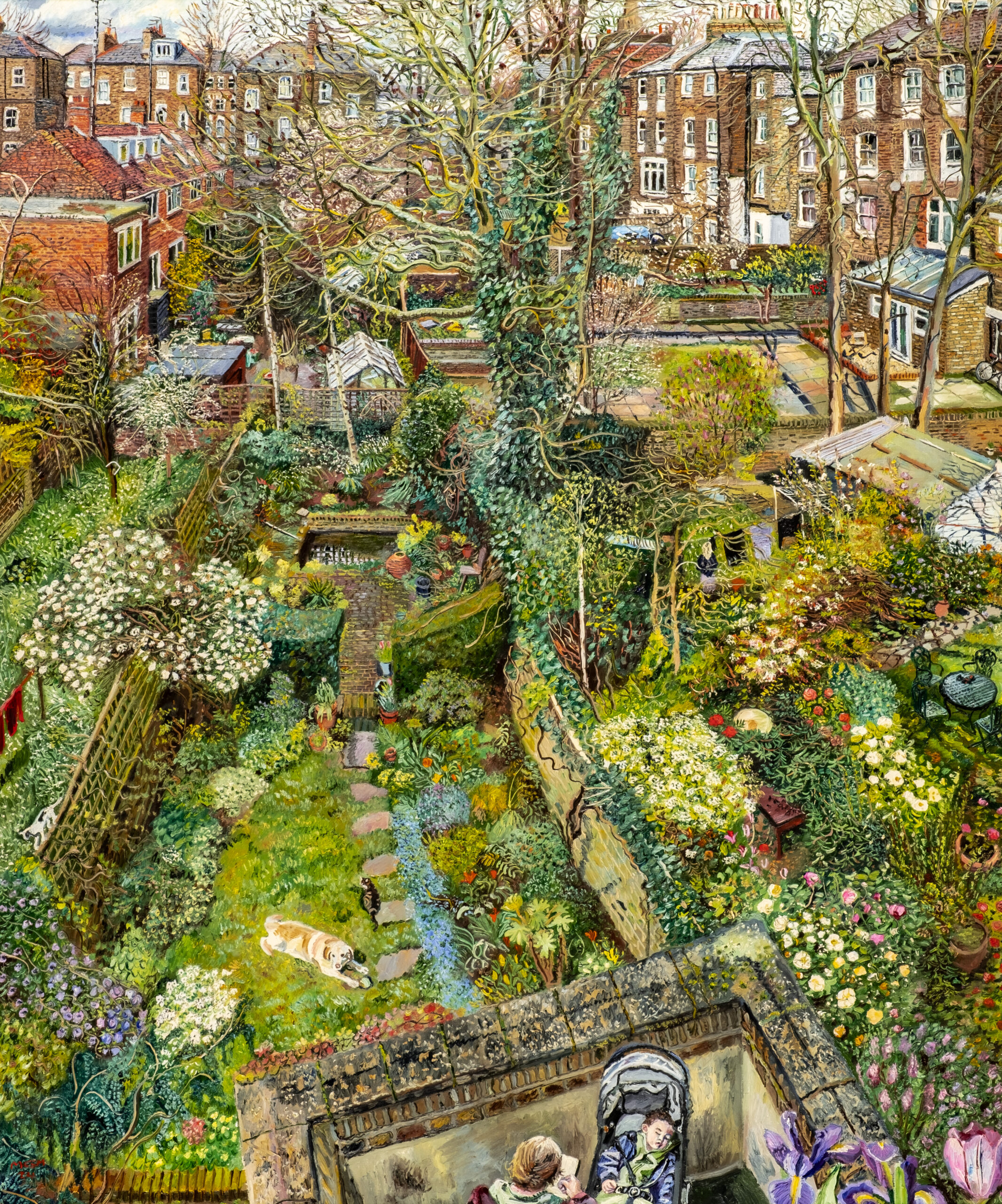
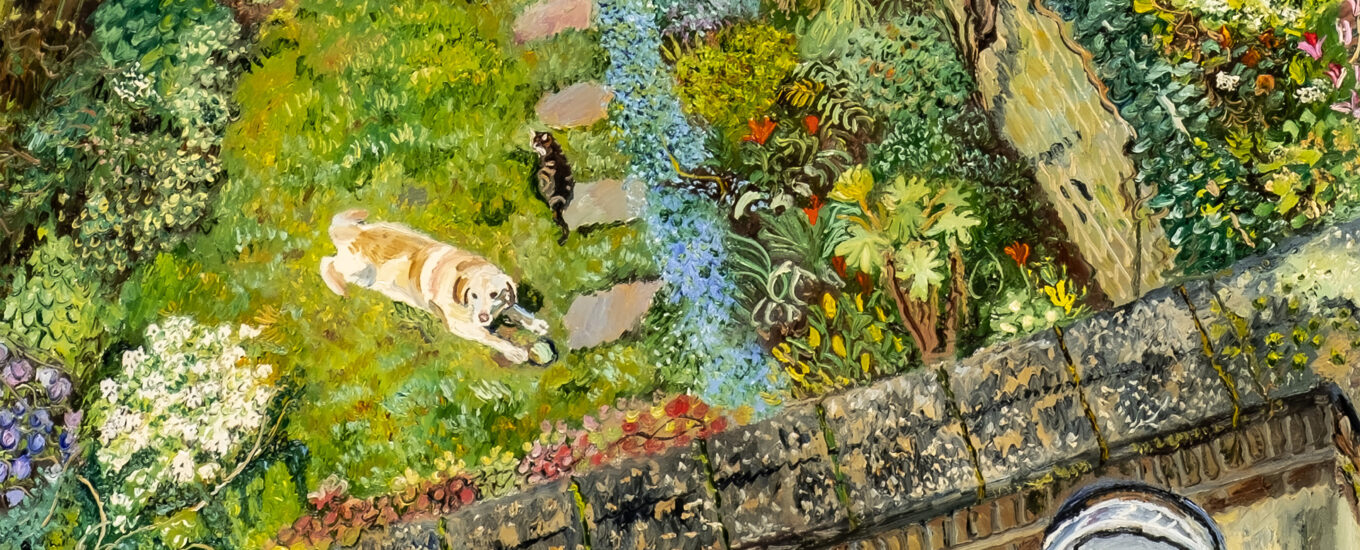
Generations Enjoy; The Back Garden in Spring © Melissa Scott-Miller, Chris Beetles Gallery, St James's, London

What has been one of your favourite or most memorable paintings to make? 

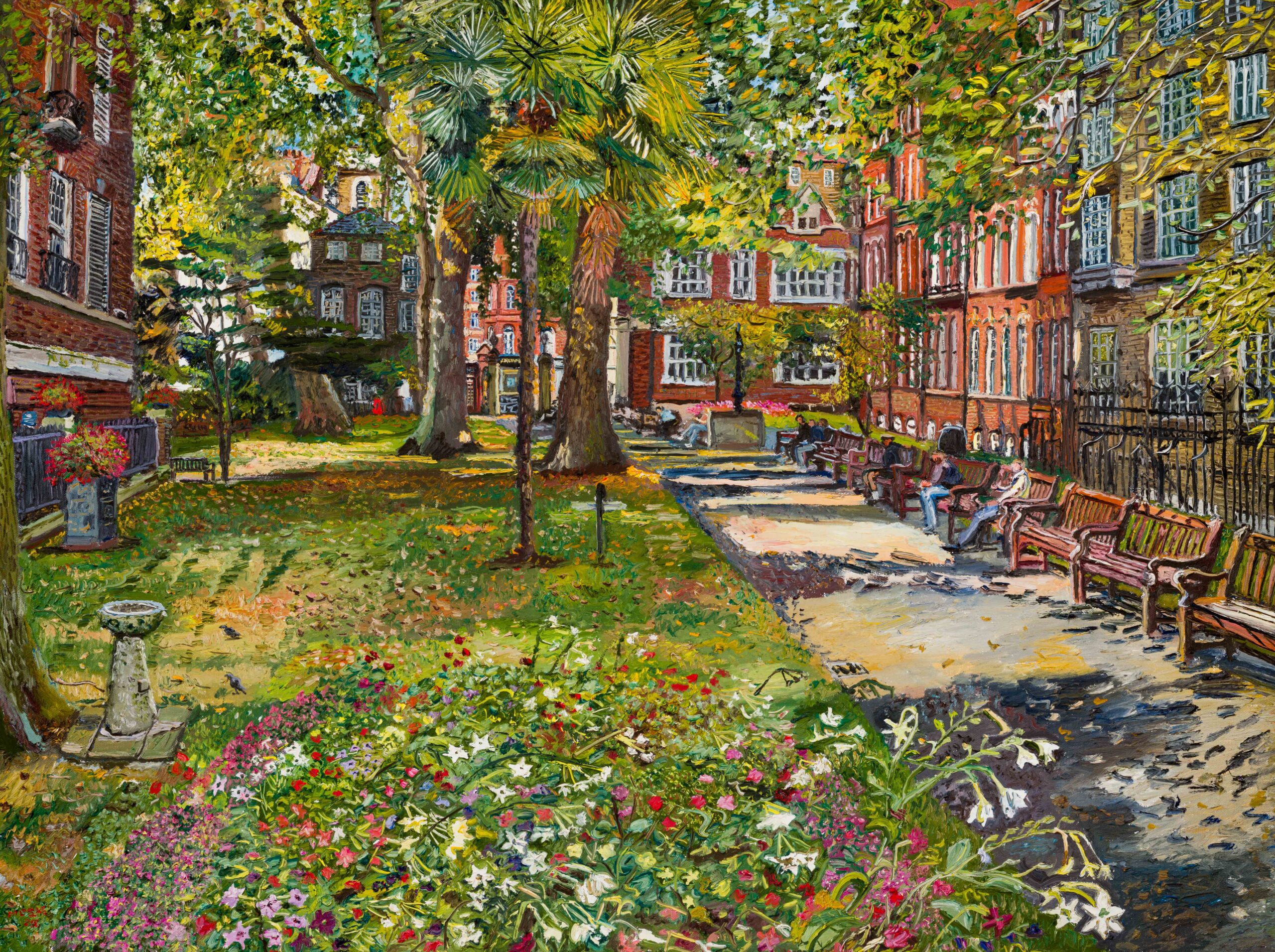
I do paint the view from my window a lot, I actually chose my flat because of that view and I never get tired of it. The main garden is my neighbours and they are very devoted gardeners so I’m very lucky! I also love the other gardens I can see, some are quite unkempt and one is very functional with a large shed, they were even keeping chickens there. I don’t have a garden myself so I really appreciate public and community gardens. At the moment I’m painting in a lovely place called Phoenix Garden in Covent Garden. I do have a great love of Mount Street Gardens in Mayfair, and have painted there many times.

When you’re not painting, do you have any favourite gardens to visit or places to immerse yourself in nature?

For twelve years I had a dog and I really enjoyed taking him for walks in Islington. Every day we went to Market Road Gardens, which is lovely, and Caledonian Road Park. I also really love the canals and Hampstead Heath.

Mount Street Gardens, Melissa Scott-Miller

Lastly, since we’re the Garden Museum, could you share your personal relationship with plants, gardening and nature?

When I was a child I spent a lot of time in Norfolk, where we had a cottage with a large front and back garden. I had an imaginary friend who lived in the garden and I had a wonderful book called ‘Mud Pies and Other Recipes’. I would make my imaginary friend Tuppy dishes of weeds and stones and mud! I loved pottering around in the garden and my mother taught me a lot of the names of flowers and plants.

As an adult living in London, I’ve never been in a position to have a home with a garden, but when I was bringing up my children it was in a garden square in Islington. I always took them down from our top floor flat to play there, there was a fantastic rose garden in Lonsdale Square. I’ve also taught a painting class for Heatherley’s School of Art where I take people out to paint in London. Through that I have discovered wonderful gardens like Bishops Park.

In the last few years I’ve been so lucky to have my lovely grandson Avery. He and my daughter live quite near the Garden Museum, so we often visit and he loves playing with the wooden vegetables and gardening equipment – particularly the wheelbarrow! So I bought him a gardening set and we sometimes go to a small park near their estate to water the lovely flowers and things that are growing there, and just to dig around in the earth sometimes! I would love to have my own garden but it would probably stop me painting so much. I just enjoy the efforts of the many talented and devoted gardeners in London.

Melissa Scott-Miller: London Parks and Gardens is open 28 January – 29 March 2026, with free entry

For more stories like this, sign up to the Garden Museum’s weekly newsletter: subscribe