Related Events
Threads of Ascent: Tapestries by Clare Woods
9 Oct - 5 Nov 2026
Exhibitions
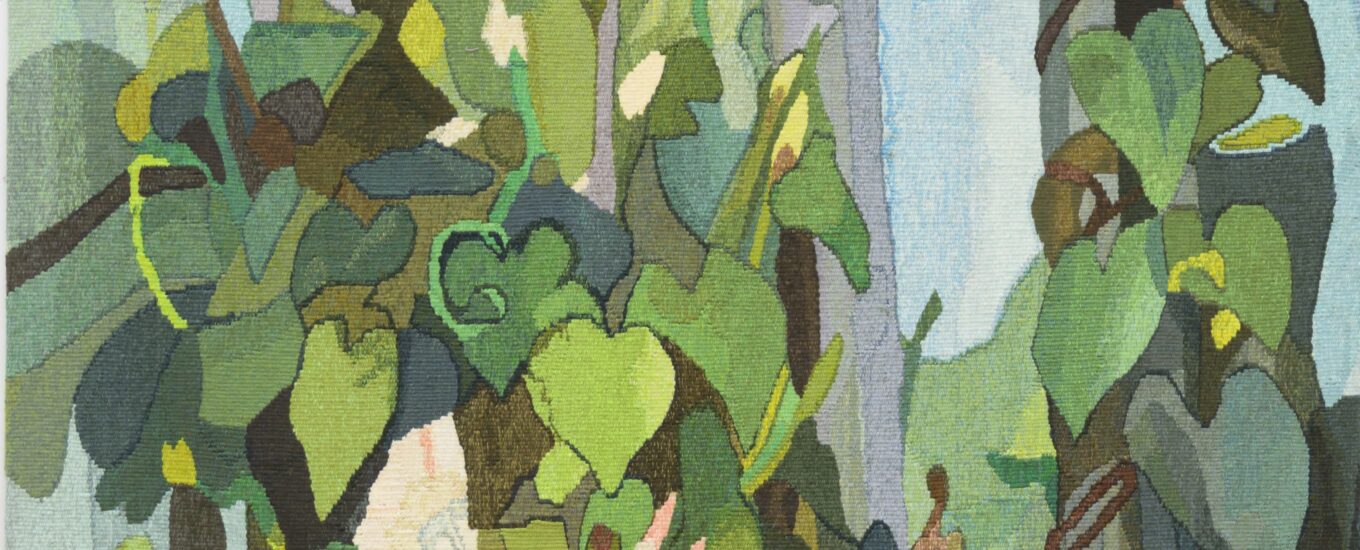
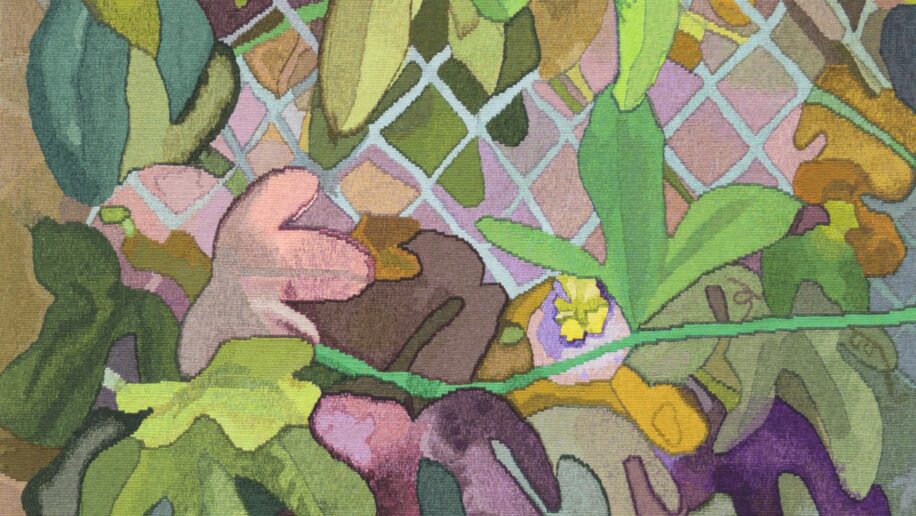
The Volunteers, 2026, Tapestry. Clare Woods and Dovecot Studios, © Dovecot Studios. Courtesy the artist and Victoria Miro. Photo Phil Wilkinson
Your new exhibition at the Garden Museum Threads of Ascent is a new foray into tapestries. How did the idea for this series come about, and how did you bring it to life?
I have wanted to work in tapestry for a long time but knew it was something I could not do alone – collaboration was key, so working with Dovecot Studios in Edinburgh enabled this project to happen. While learning more about the process of weaving, I felt there was a strong resonance with watercolour, in that the colours come from the materials used rather than the surface.
Dovecot Studios’ practice of combining individual strands of yarn to create unique colours echoes the nature of blending watercolour paints, to create different tones. This is how I chose to approach the imagery for the final works, by painting small scale watercolours that Dovecot Studios were able to scale up for the loom, a process that highlighted the way the pigment soaks into the paper which could then be translated harmoniously by the weavers into tapestry.
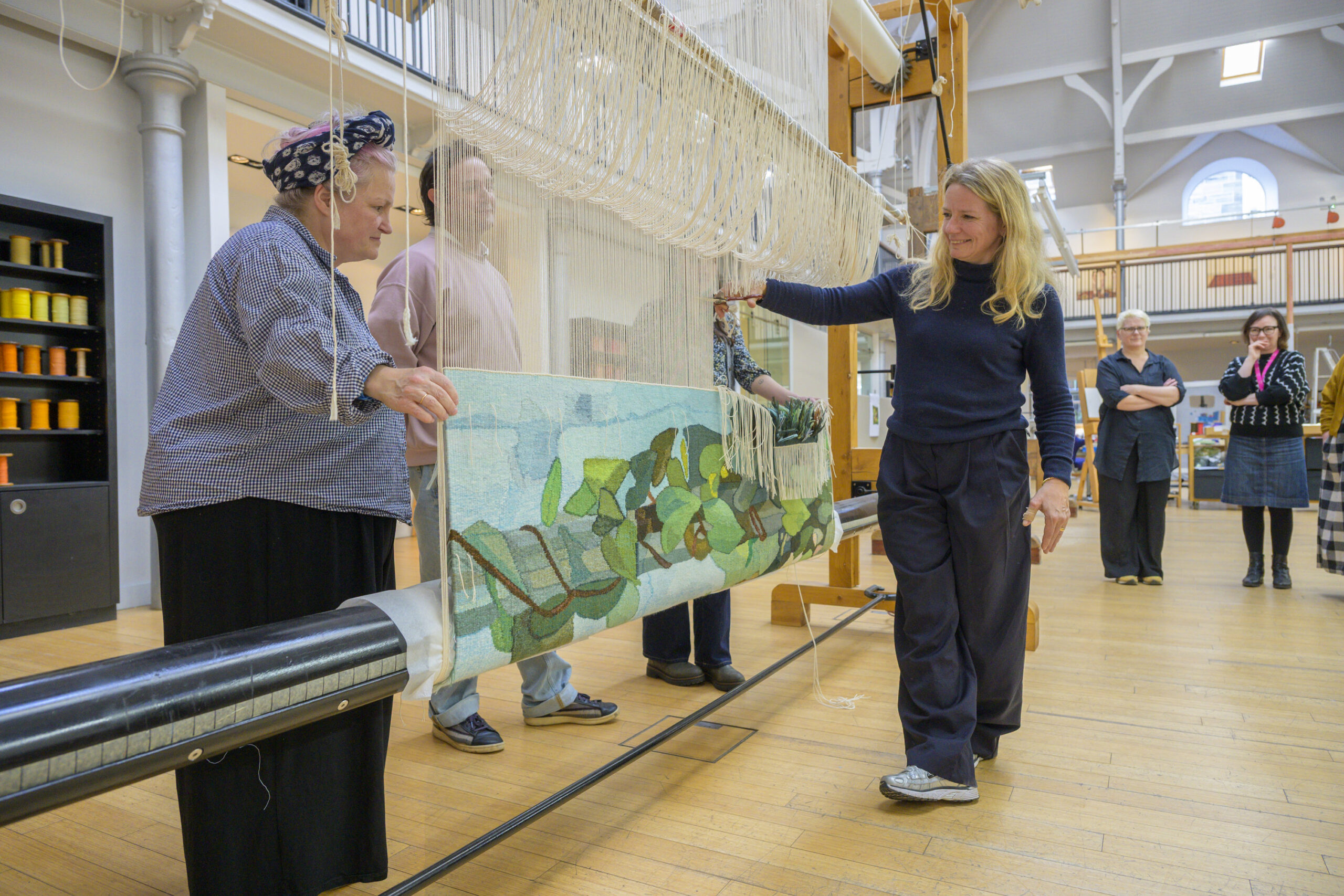
Clare Woods RA at Dovecot Studios, Edinburgh. Photo Phil Wilkinson
Why did you choose to explore depictions of weeds in these pieces, as opposed to any other plants?
For this series I chose to depict weeds climbing and growing over structures and other plants. I had been looking at Elliott Hodgkin’s paintings of weeds growing around post-war London on abandoned bomb sites. The resilience of weeds has always drawn my interest, and how seeds can lay dormant for hundreds of years reappearing only when they are disturbed, usually by human activity, when they can begin the process of germination all over again.
The very definition of a weed is a plant growing in the wrong place where people don’t want it, but really it’s far more complex in my opinion. I am fascinated by how weeds have adapted to grow faster and larger and their ability to disperse seeds wider for survival more so than other plants. On the one hand, I think they are quite incredible plants, but on the other hand I am guilty of pulling them out of my vegetable garden.
Can you tell us about the collaborative process of working with the master weavers at Dovecot Studios?
It has been a real joy for me, working with the weavers at Dovecot Studios. I felt they understood immediately what I hoped to achieve and I’m so happy that the end results are even better than I could have imagined. The weavers are masters of colour, and the complexities of achieving tone and texture through their craft, of how to blend and move colours across the surface like in painting. They are experts in translating images using colour and transforming this into tapestry.
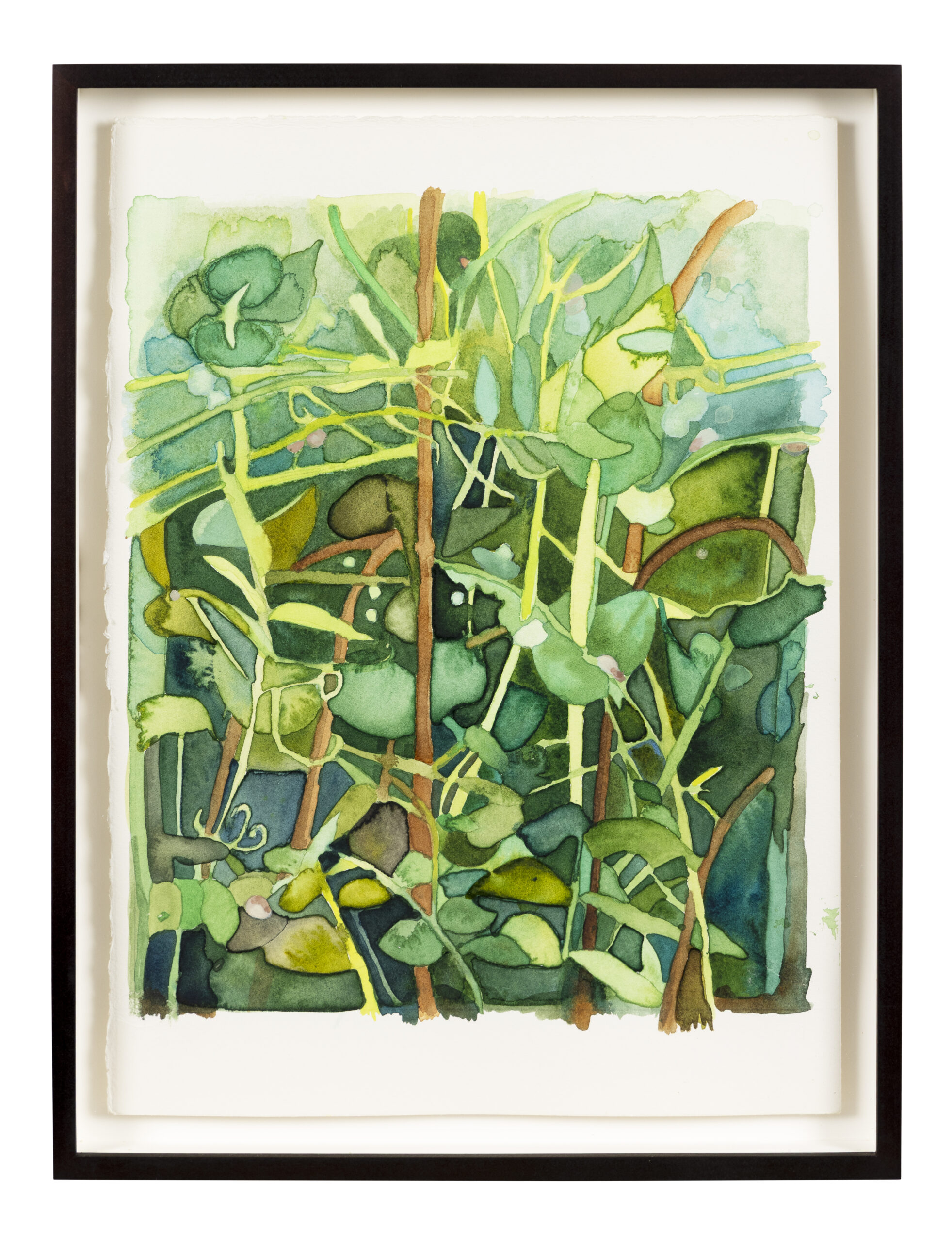
The Smotherers, watercolour by Clare Woods
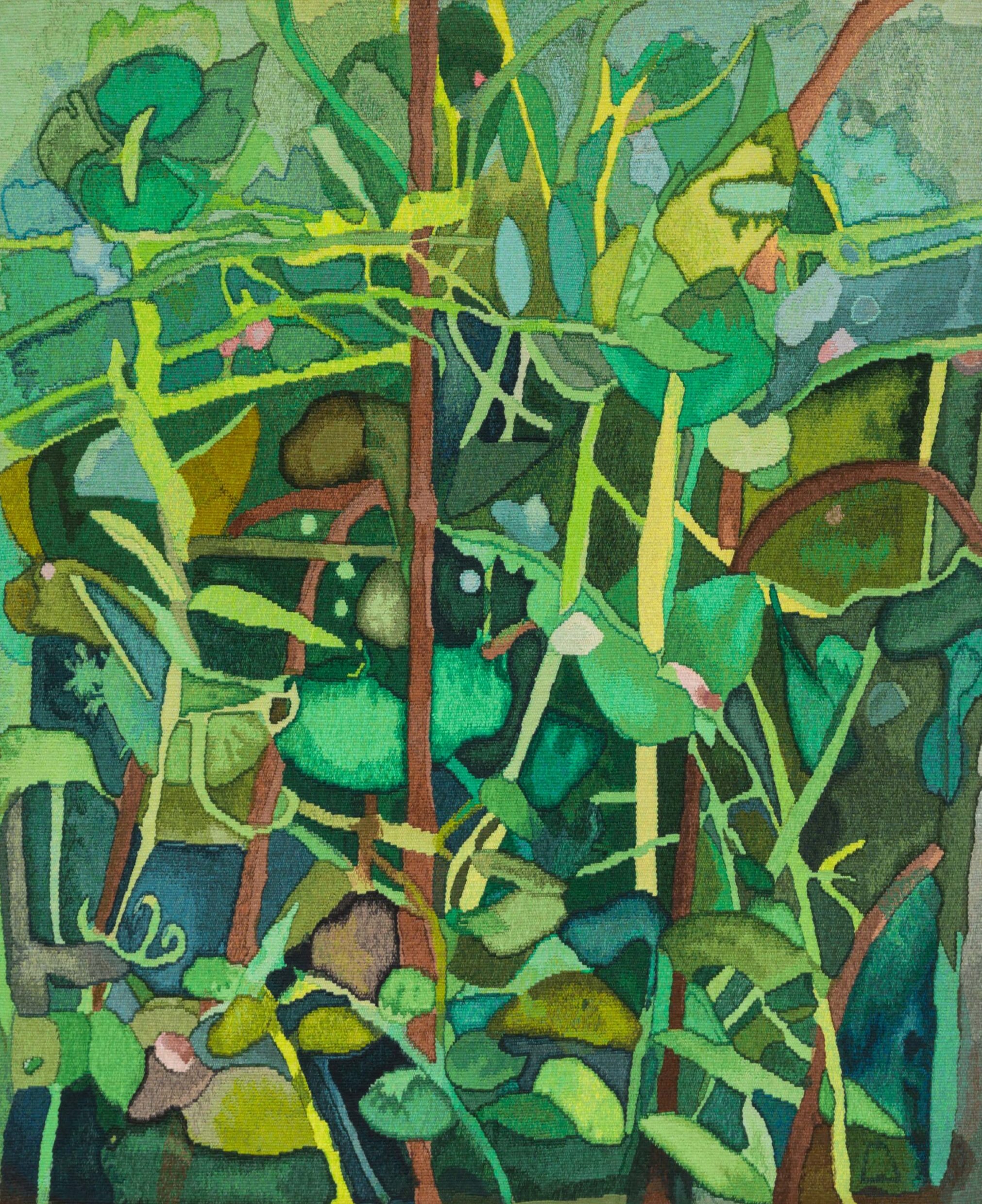
The Smotherers, Clare Woods and Dovecot Studios, 2026 © Dovecot Studios
What does a typical day in the life of an artist look like for you?
Well, I would not say there is a typical day for me, especially not at the moment as I am moving into a new studio. However, when painting I will start around 6.30am and keep working until the painting is finished, in silence, with no breaks. I have to get up and go straight to the studio, if I get distracted then I can’t paint. Painting is hard, stressful, disappointing and some times has moments of joy. I think people have a very romantic idea of making art. George Orwell wrote in his famous 1946 essay Why I Write, “Writing a book is a horrible, exhausting struggle, like a long bout of some painful illness.” And I would have to agree, that the same applies to painting.
What advice would you give someone starting out in a creative career?
My advice would be to work hard, take every opportunity, take time to read, talk to people, be fully present but ultimately work hard – that’s all you have, the work.
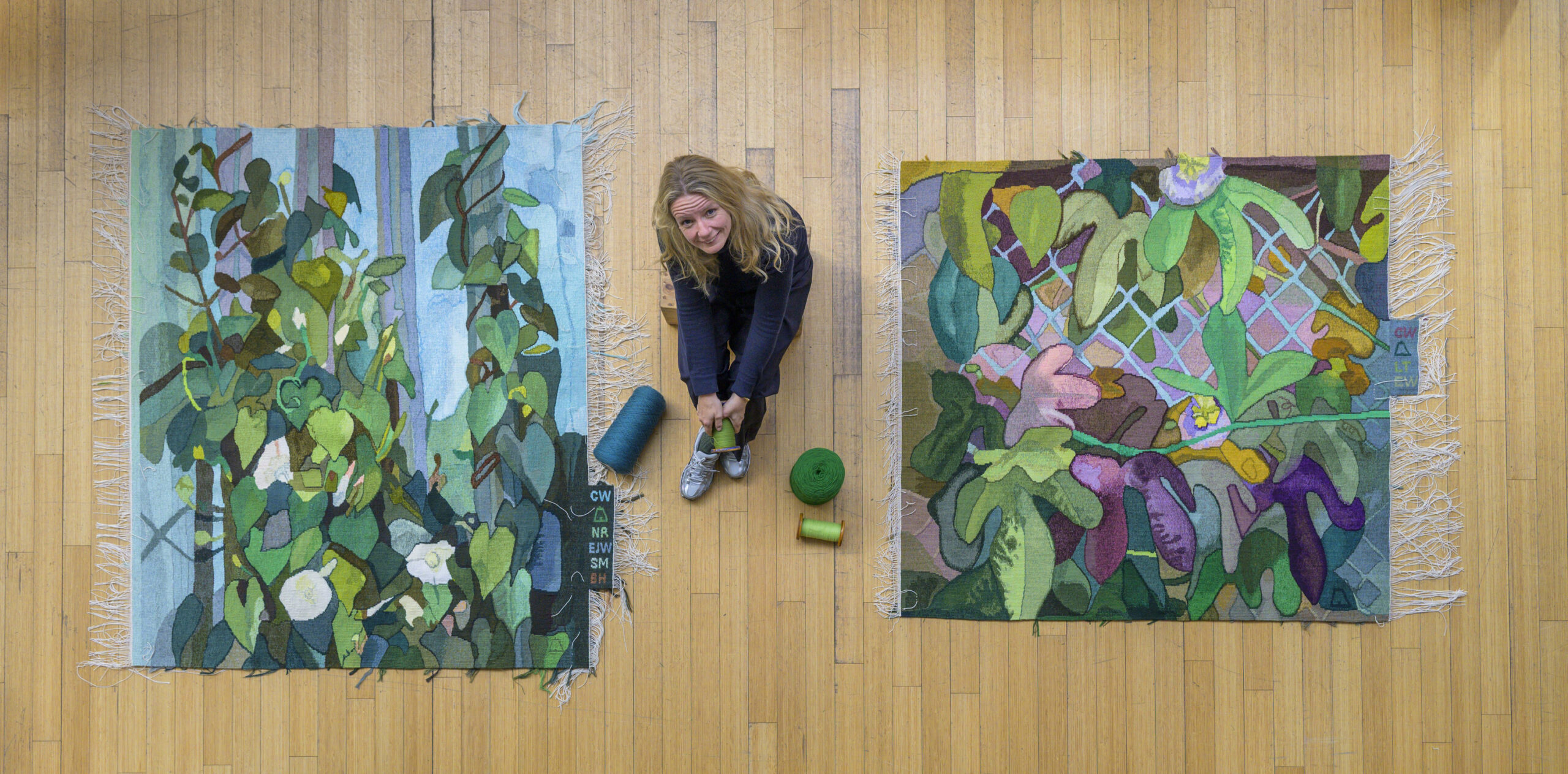
Clare Woods RA at Dovecot Studios, Edinburgh. Photo Phil Wilkinson
When you’re not making art, do you have any favourite gardens to visit or places to immerse yourself in nature?
My new studio is in the countryside, surrounded by fields, trees and vast views. I feel incredibly lucky to be able to step outside my studio and be immersed in nature. Last year I spent some time in Scotland exploring the walled gardens on the East Coast, when I was invited to participate in The Roberts Institute of Art Residency program. Over the last year, any downtime I’ve had has been spent working on my own garden, but I plan to try and see some gardens next year. The National Garden Scheme is a really good way of seeing gardens and stealing ideas.
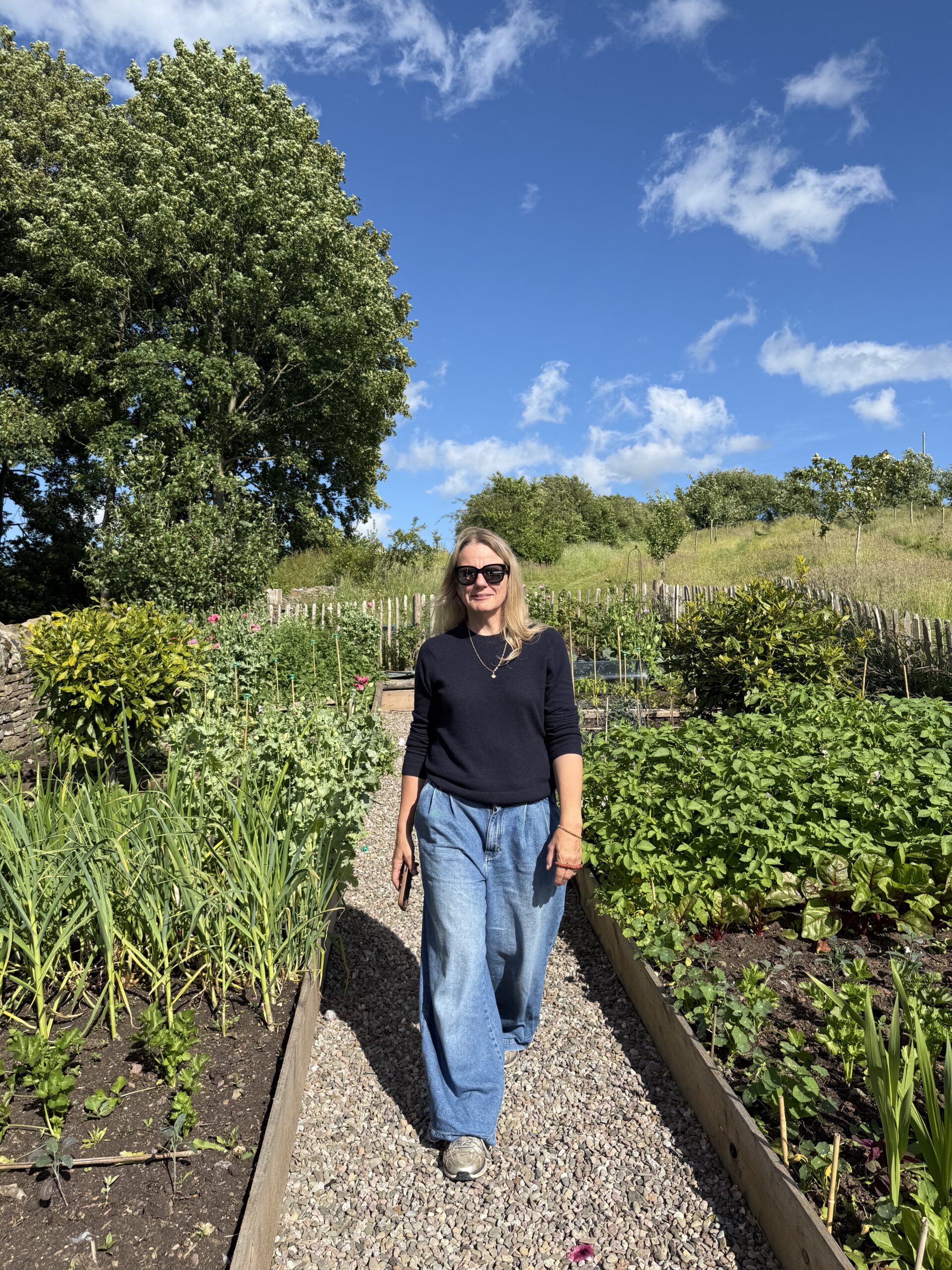
Clare in her garden, photo courtesy Clare Woods
Finally, as we are the Garden Museum, can you tell us about your own relationship with plants, gardening and nature?
I love gardening, I have always gardened and it’s been an important part of my life. The first garden I owned back in 1994 was only a small patch, about 3 meters square, with a giant dominating London plane tree, some very poor grass, and was edged by a privet hedge that had gone rogue. After this challenge, I moved to a house with a Victorian terrace style garden that was full of mature trees and had a proper lawn.
When I moved to the Welsh Borders, I had a small cottage garden, and when I moved again, I inherited and restored the Georgian walled garden. I’ve also had the challenge of a tiny north facing patio garden, and a south facing hedged town garden, and now I have my studio garden, which is a monster. All the gardens I’ve owned before and the lessons I’ve learned from each one, come with me and will help me to navigate my new garden project while learning much more along the way that can be used in the garden and the studio.
Threads of Ascent: Tapestries by Clare Woods is open until 5 November.
9 Oct - 5 Nov 2026