Posted on 11 Dec 2025

Art

Nicola Shulman, writer and biographer

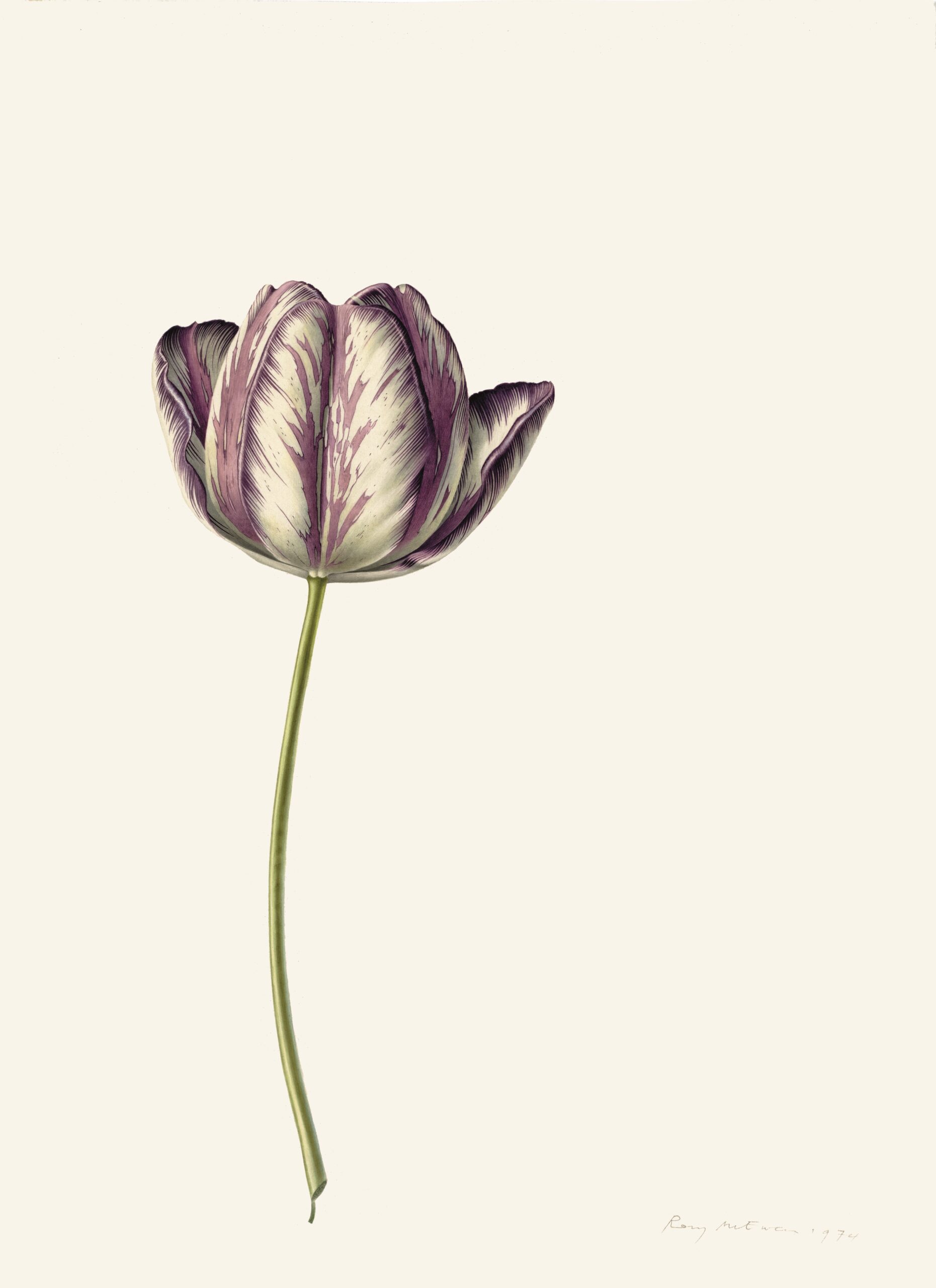
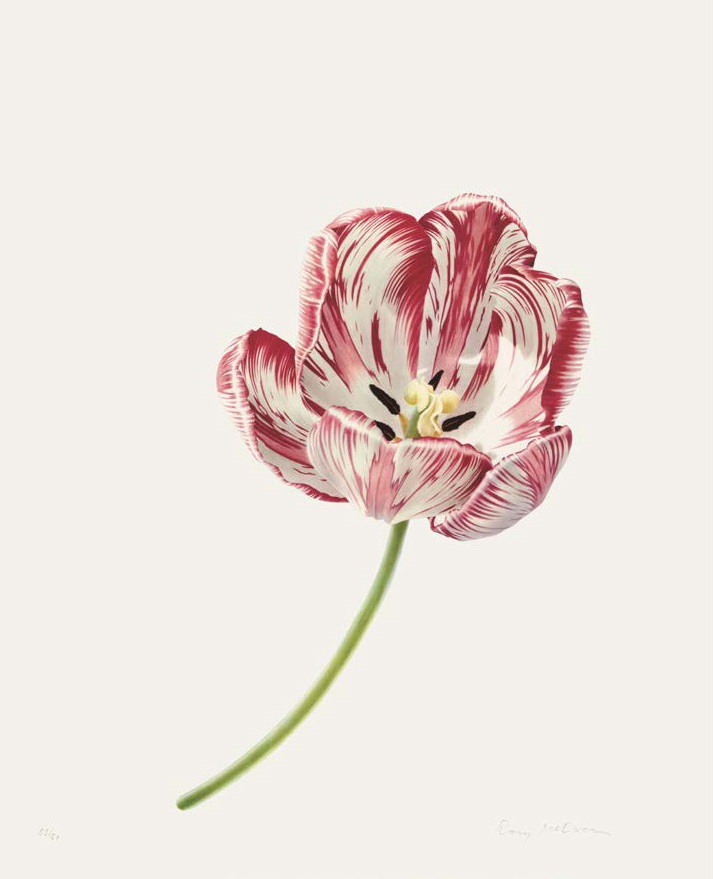
The first picture I owned was a tulip print by Rory McEwen. The original painting, watercolour on vellum, is displayed in the current exhibition at London’s Garden Museum, and consequently I know the tulip in question is called Mabel, and it’s one he got from the Wakefield and North of England Tulip Society, which used to send him specimen tulips.

At the time I knew nothing of this, but I did know it was one of the most beautiful things I’d ever seen. I’d never consciously seen a flower depicted with so much attention paid to its quidditas — a five-dollar word, meaning the essential nature or ‘what-ness’ of a thing, that I’d recently learned at school and would utter whenever the opportunity arose, as well as when it hadn’t. Also, I’d never seen a tulip like that, white, but licked with a wild pink flame; and had no idea such a natural phenomenon existed. I begged my parents for a Tulip print for my eighteenth birthday, and to my amazement, they bought me one. I watched it, installed on my bedroom wall — the unique accident of its particular stripes and flares, the satin gloss of its petals, the way it seemed to be looking up with interest at something outside the frame of the picture, and marvelled alternately at nature, for having made such a thing, and McEwen for having painted it.

I believe this was the foundation of my fascination with flowers, and subsequently of gardens: a lifelong source of undiminished joy that led to my becoming a trustee of the Garden Museum, and ultimately, the author of this essay.

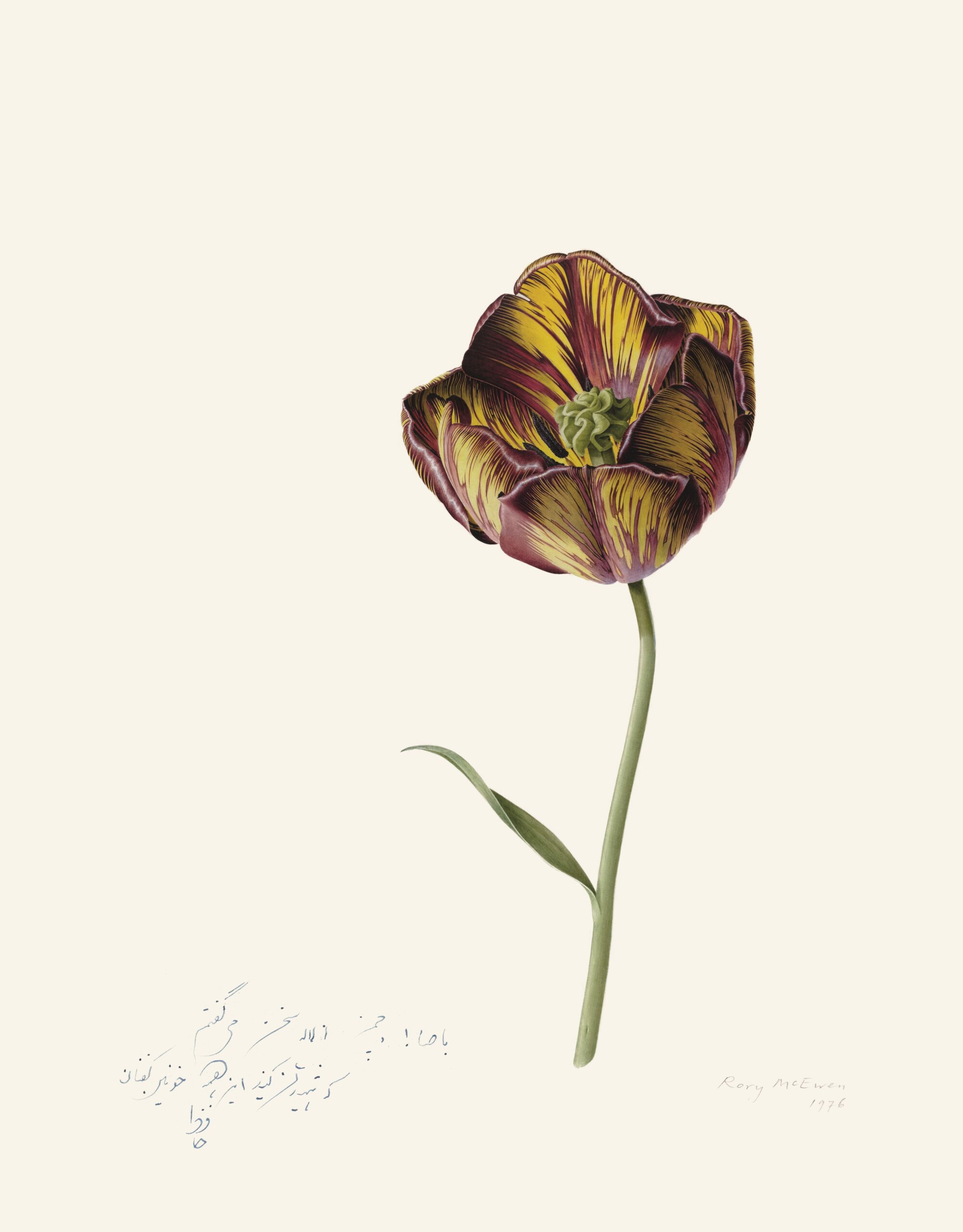
Tulip ‘Mabel’ Flamed (1976), Rory McEwen

Also in my eighteenth year, I gate-crashed a party the McEwen children were throwing at their family house in Tregunter Road. I later discovered that this house was effectively the centre of London cultural and social life, a refuge where it was possible for the brilliant, the amusing and the grand to be gathered in one room across class, nationhood and ethnicity. There, Princess Margaret might have met Bob Dylan or the Beatles, Ali Akhbar Khan could meet the explorer William Thesiger, Thesiger could meet Marianne Faithfull, Julian Bream could talk to Lady Diana Cooper, and the celebrated Fado singer, Amalia Rodriguez, might encounter any one of them, because she was staying across the garden.

There, it is believed, Rory McEwen introduced George Harrison to Ravi Shankar, with extensive cross-cultural consequences including but not limited to Shankar teaching Harrison the sitar (again in the cottage at the end of the garden), and the first ever charity rock concert: the Concert for Bangladesh.

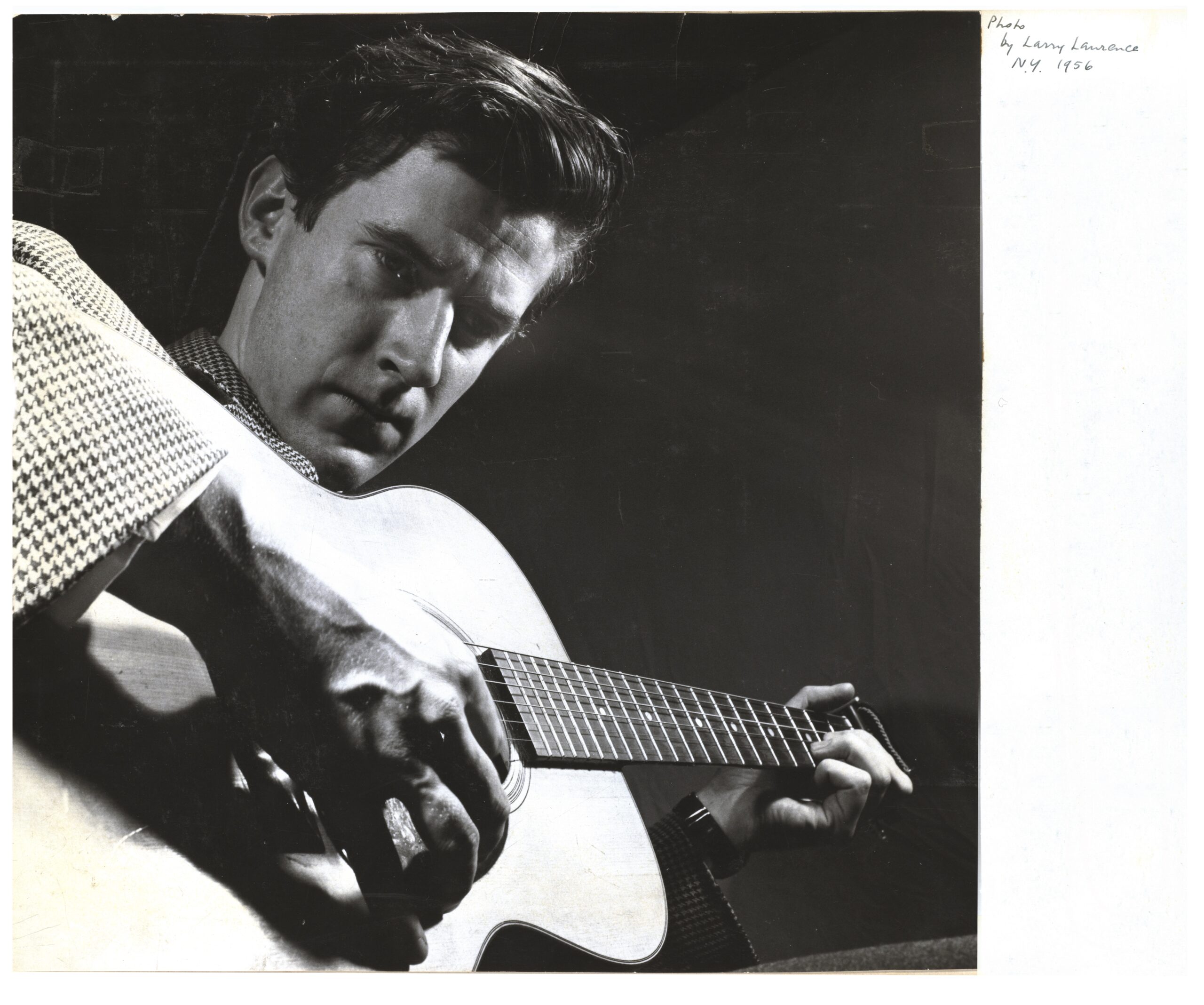
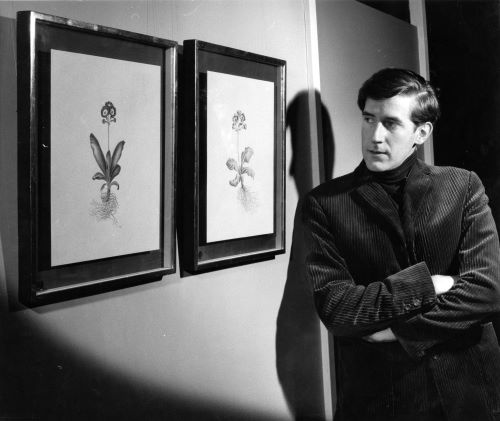
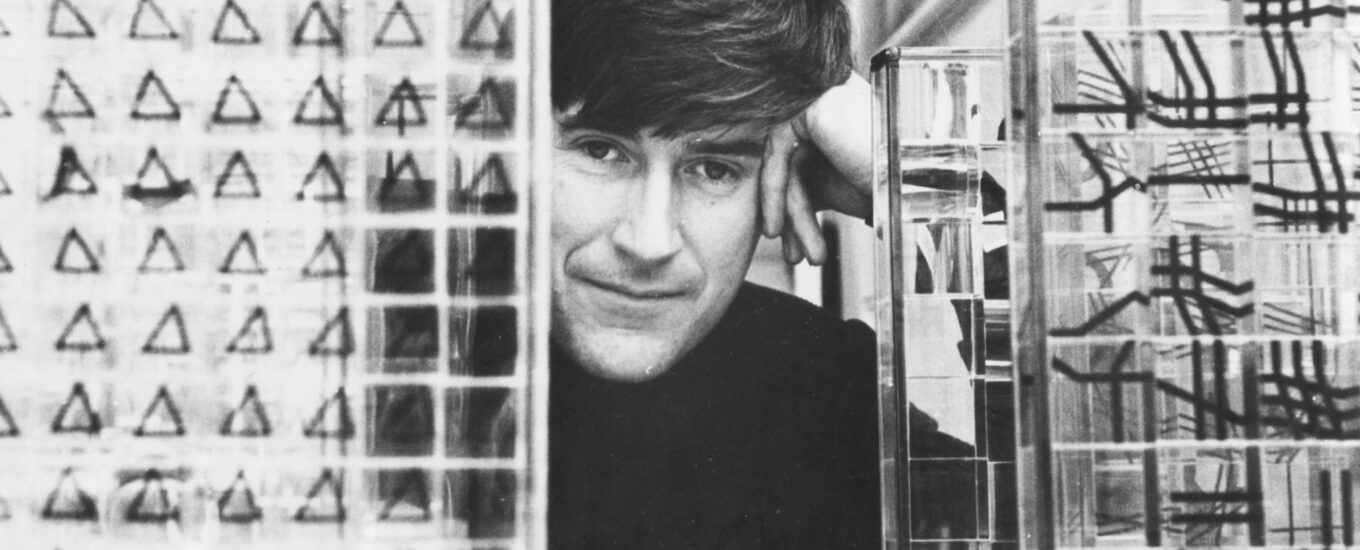
Rory McEwen

For me though, it was a revelation. In these high-windowed rooms, laid with McEwen tartan carpet and antique rugs, hung with mirrors and good paintings, a herd of elegant teenagers glided about, talking, laughing, smoking cigarettes, with drinks in their hands. Unimaginably, the drinks were in glasses made of glass. Someone was playing the piano, from the unsullied top of which nobody had removed the photographs and ornaments. In one corner, a chess game was in progress.

The reason I mention this is because it illustrates something important about the atmosphere emanating from Rory and Romana, his wife. More than anything, what it showed was trust. A conviction that if you believe in the innate worthiness of people, if you believe they are talented and curious and interesting and respectful of beauty – they will not disappoint you.

The same atmosphere pervaded Bardrochat, (pronounced with the emphasis on the second syllable), the house the McEwens bought in South Ayrshire, which would fill with guests who, in addition to the normal country things of walks and fishing (Rory was an expert and devoted fisherman), were encouraged to paint, draw, write and make music. The musician David Ogilvy, a protégé of McEwen’s who first visited Bardrochat at thirteen, remembers the enchantment of this house, filled with visiting artists and musicians, and all the McEwen children making art and games, often led by Rory, as the place where his musical gift was first taken seriously, and art considered not as a side-talent, but as a contender for the real business of life. “Artistic endeavour had a high value in that house”, he said.
Tulip 'Columbine' Bybloemen feather (1974), Rory McEwen

McEwen was born in Scotland in 1932, and grew up as the middle child of seven in a great house, Marchmont, on the borders. His brother, the art historian John McEwen, who has written a beautiful memoir of Rory in childhood, remembers that, at that time, their oldest brother, Jamie, wounded in the first war, was in fact the family hero and its official artist. He spent the days painting birds and listening to his vast collection of blues records in his ‘studio’ in a distant attic. Rory became “the leader of the second group” of children, endlessly imaginative and energetic, always inventing new games and making things with his restless, careful hands.

“There seemed nothing Rory could not make or master,” he has written. “He carved a Madonna (the family was Catholic), which stood by our mother’s bed, and beech burrs into gnomes…He could do anything with a piece of paper: his yachts floated, his darts looped the loop. He was also ‘the family odd-job man…if anything was broken, he could fix it: fuses, china, clocks, cars,’ He could tickle trout from a burn. He would climb any tree to fetch eggs — an indispensable part of what he called an ‘eighteenth century’ childhood — then blow, label and display them on cotton wool cushions in a special egg-collector’s cabinet.

His meticulous precision was legendary in the family; and the family nickname ‘Pin’, originally bestowed on him for being pin-thin, extended its meaning to encompass his exceptional childhood neatness “‘neat as a pin’, you see”, said Nicky Haslam, for whom Rory and Romana were friends of the heart.

Tulip 'Sam Barlow' (1976), Rory McEwen

John McEwen recalls how “The pièce de resistance of his childhood creations was a balsa wood box with a light switch concealed at one end. Sliding panels and the turn of the switch revealed two scenes from a fairy tale. Each was the meticulously detailed but contrasting abode of a lacquered figure he had modelled from plasticine: the hobgoblin making merry in the parlour; the poor poet at his desk in the garret above. He called it the Box of Delights. It was the essence of Rory. All his life he was a box of delights.”

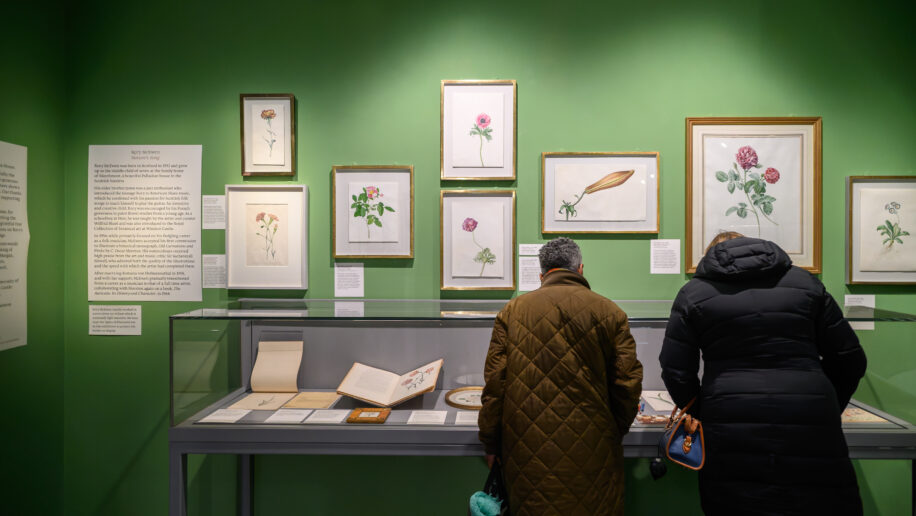
Rory McEwen: Nature’s Song is open until 25 January 2026. 

Read the full essay and more in the exhibition catalogue

Buy the catalogue