Posted on 18 Sep 2026

Art

By Xiaochi Dong

When artist Xiaochi Dong visited our recent exhibition Seeds of Exchange: Canton and London in the 1700s, he was so struck by one of the paintings that it lead to a new artistic response, which is now on display in his own exhibition at Albion Jeune until 3 October. Here he shares the story:

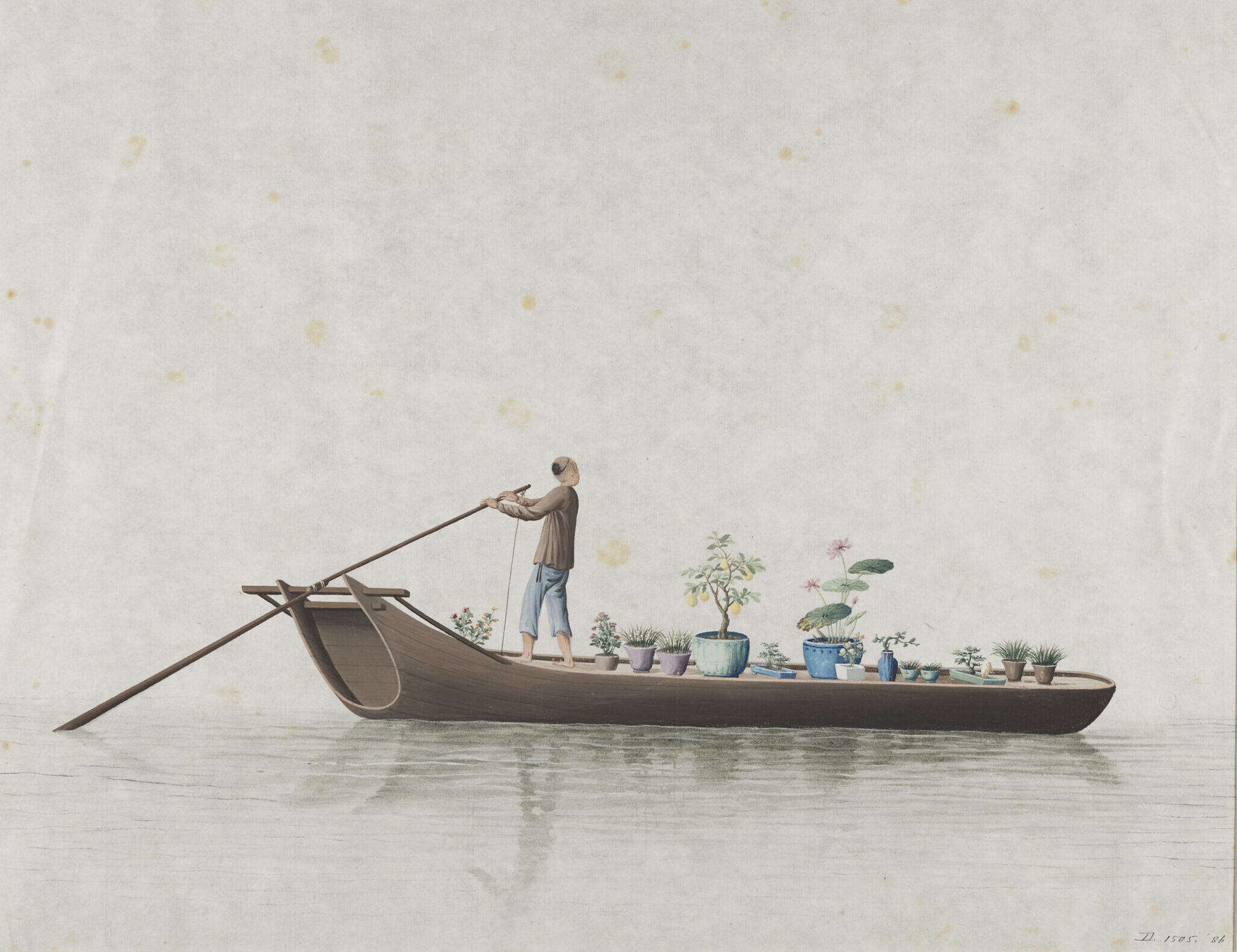
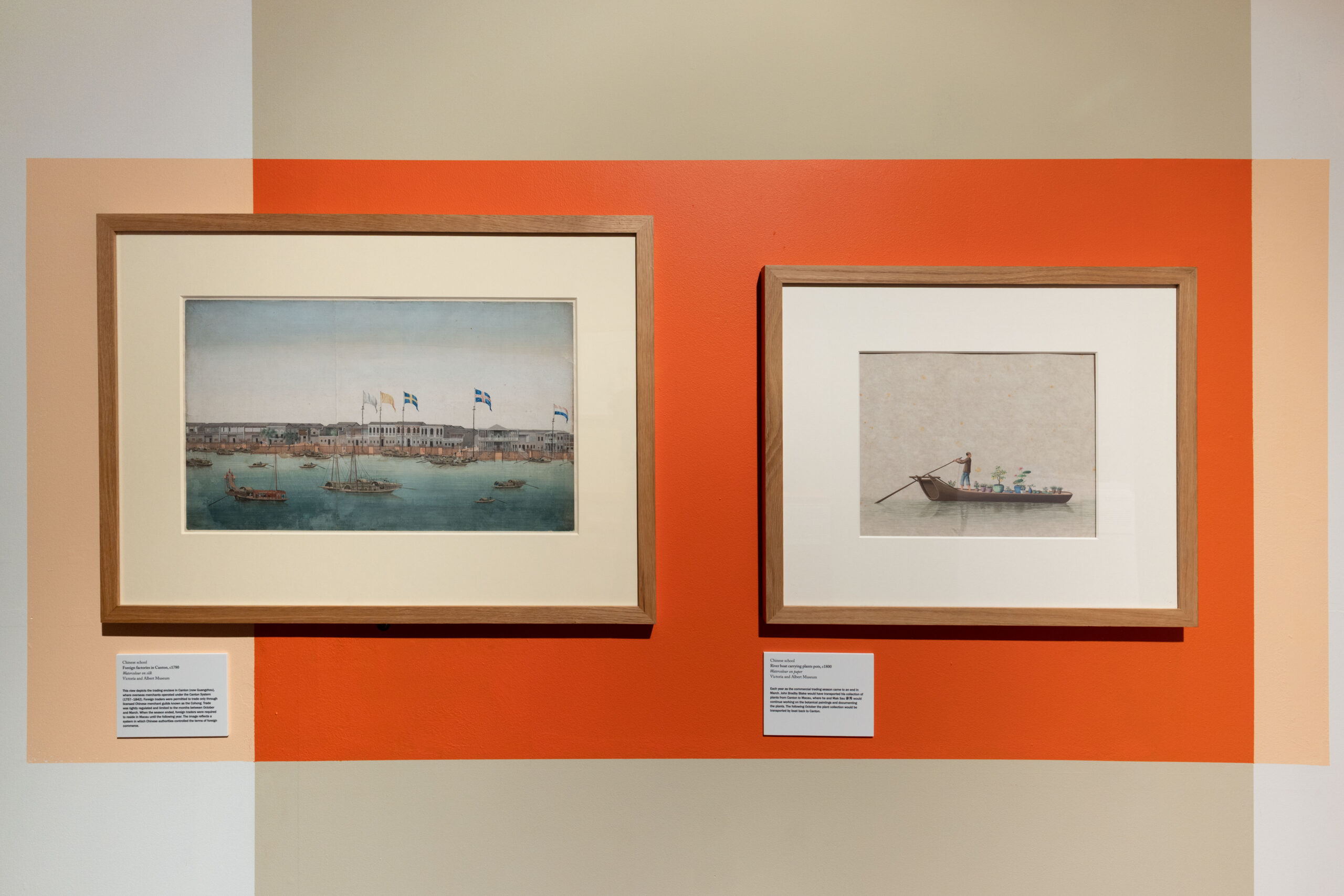
I first came across the V&A’s Painting of a River Boat Carrying Brightly Coloured Plant Pots with Flowers and Foliage in the Garden Museum’s exhibition Seeds of Exchange. I remember being immediately drawn to it. There was something very simple and beautiful about the image: a boat travelling along the river, filled with plants, flowers and brightly coloured pots.

What stayed with me most was the sense of movement. The plants were not rooted in a garden or presented as specimens; they were travelling. I began to imagine where they had come from, where they might be going, and what it means for a plant to be carried from one place to another. After seeing the exhibition, I had a very simple thought: one day, I would like to respond to this painting in my own way. I had no idea then what that might look like, but the thought, and the image itself, stayed with me.

Painting of a river boat carrying brightly coloured plant pots with flowers and foliage © Victoria and Albert Museum, London

Gardens, and the different structures we build around plants and other forms of life, have been present in my work for some time. I often visit places such as Kew Gardens, but alongside the plants themselves, I find myself equally drawn to the architecture that surrounds them. Glass panels, windows, doors and frames quietly shape how we enter these environments, how we look at them and how we move through them.

Over the years, measuring these structures has gradually become part of the way I work. It began quite intuitively. When I visited Derek Jarman’s Prospect Cottage in Dungeness, I measured some of its doors and windows and later used those dimensions in my paintings. I have also worked with the dimensions of the terrariums I keep at home for poison dart frogs and chameleons, while another series of paintings takes its dimensions directly from the greenhouse structure of the Waterlily House at Kew. More recently, I have continued to work in this way with other greenhouse structures.

Seeds of Exchange, Xioachi Dong

At first, I didn’t think of measurement as a subject in itself. I was simply looking for a direct way to bring the physical experience of being in a particular space back into the studio. Scale gradually became a way of carrying something of that spatial experience into painting.

I think this may also connect to my early training in traditional Chinese landscape painting. Chinese landscape painting is not simply a direct representation of a real landscape; it can be thought of as a reimagining of a journey, or of the experience of travelling through a landscape. The painting itself becomes a kind of entrance, allowing the viewer to wander through it mentally, to move and pause within the landscape. I have always wanted my own paintings to offer a similar kind of entrance. By using the actual dimensions of an object or a space, I feel that this entrance can come a little closer to physical experience. The scale does not reproduce the original space, but it retains a bodily connection to it.

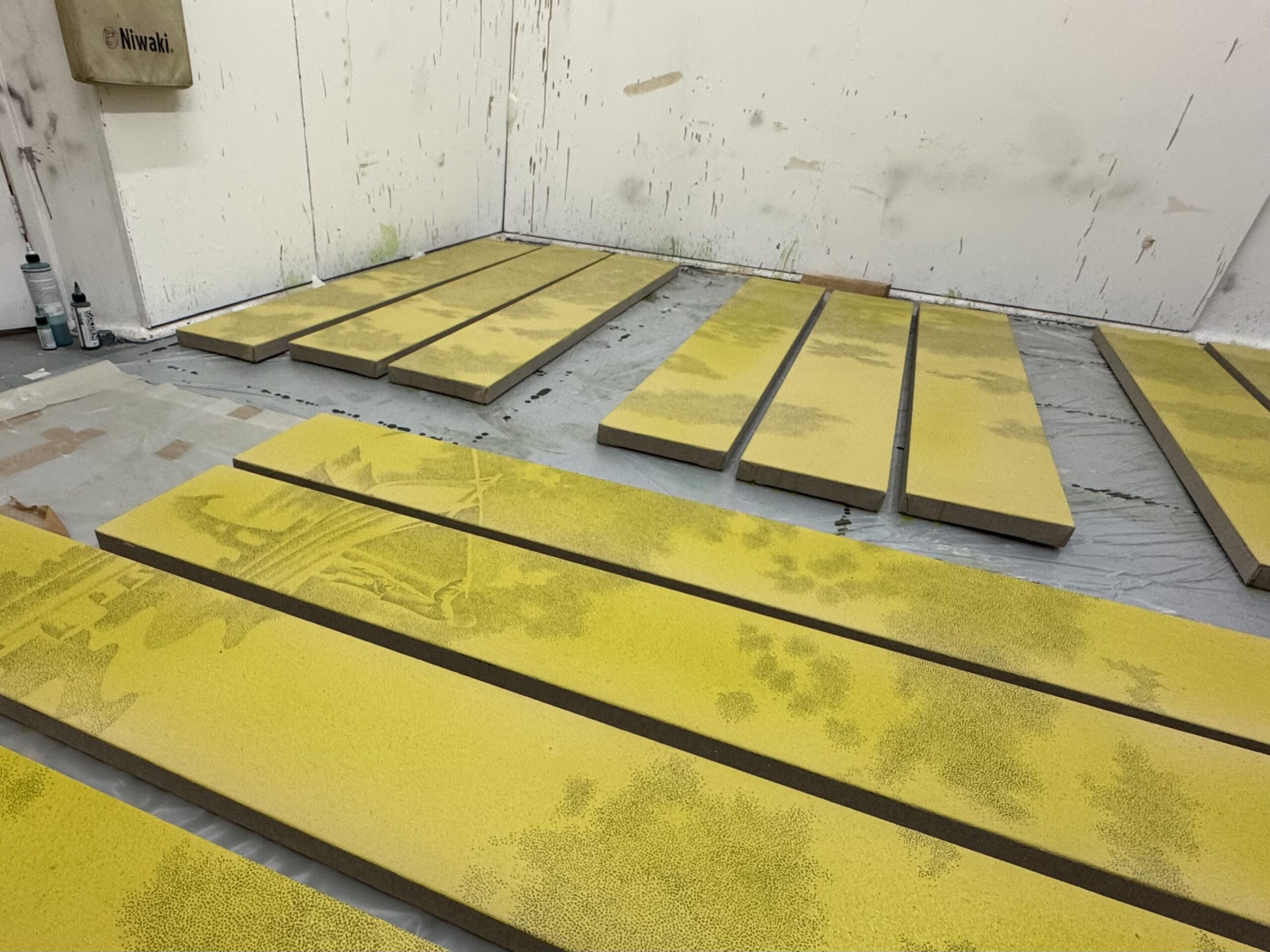
Seeds of Exchange work in progress, Xiaochi Dong

The dimensions of this new work come from the Palm House at Kew Gardens. Climbing the beautiful spiral staircase to the upper level, you immediately notice how much warmer it is than below. Your view of the plants changes too: from there, you can look across the tops of many of them. The upper walkway follows the structure of the greenhouse very closely, so as I walked around it, I naturally began noticing the glass, the metal framework and the repeated dimensions surrounding me.

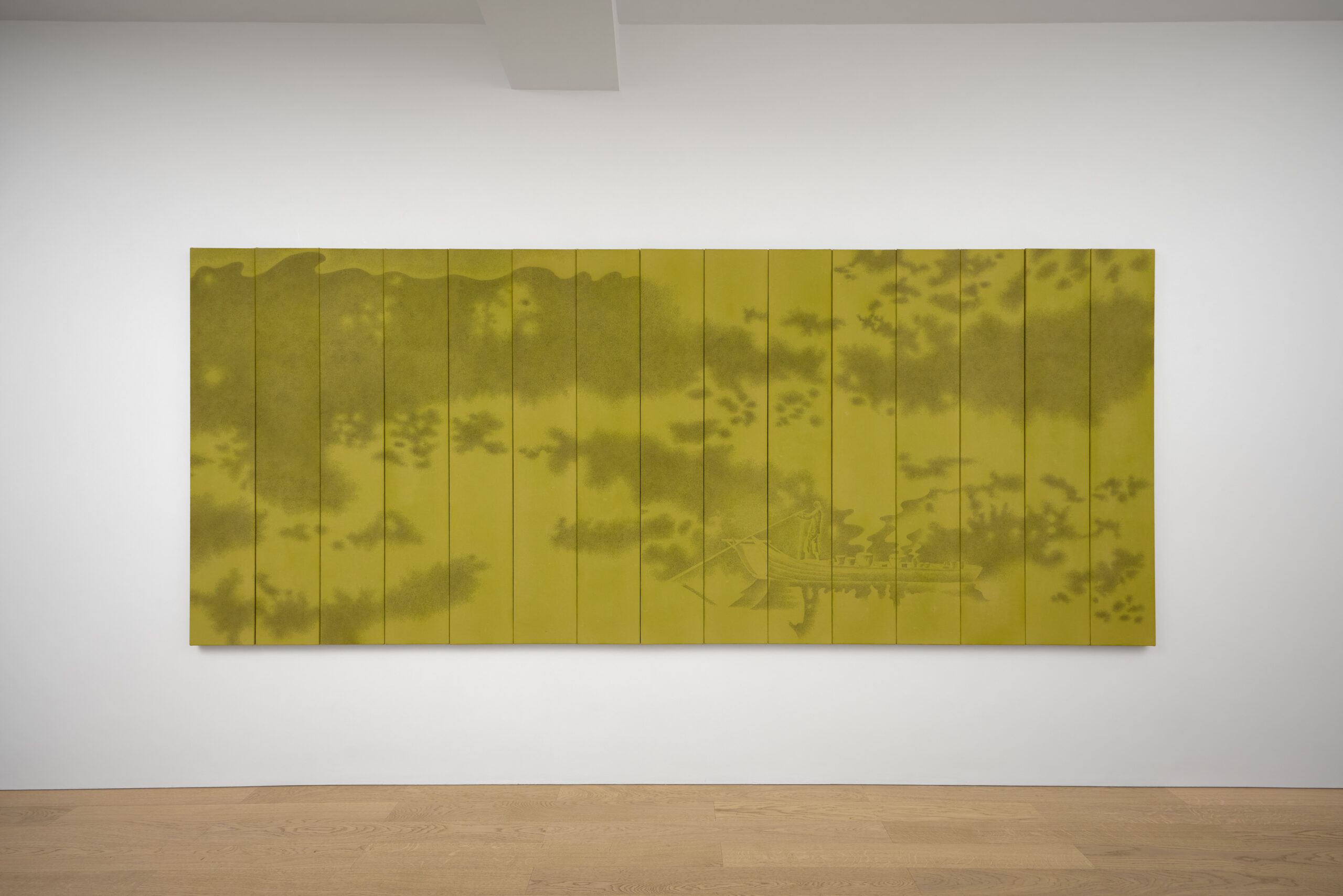
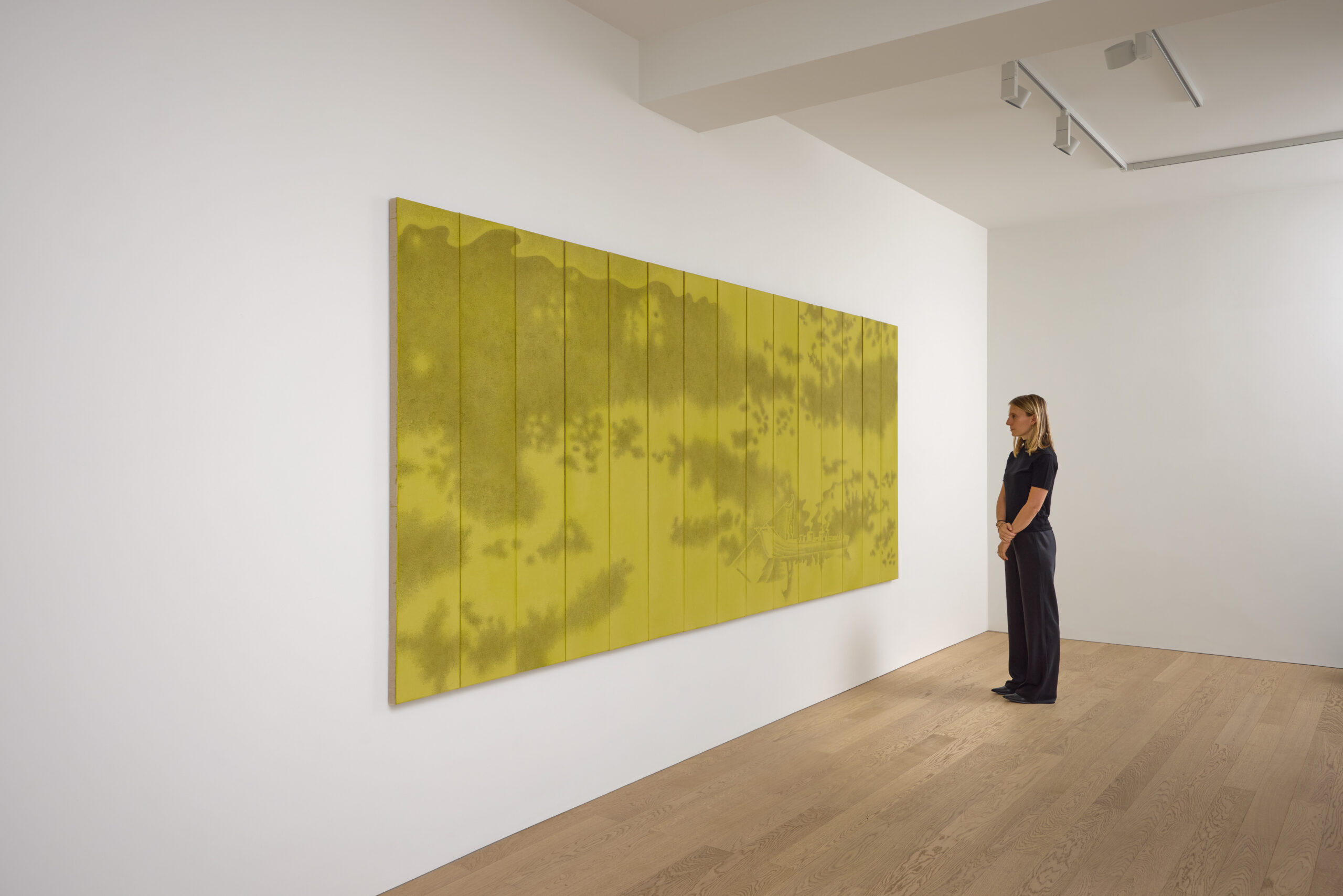
One larger section particularly caught my attention. It was made up of three groups, each containing five narrow panes of glass. I measured the panes and found that each was approximately 157 × 25 cm. When I began developing the work, I decided to bring this entire structure directly into the painting: fifteen individual paintings correspond to those fifteen panes of glass and are assembled in the same rhythm. Together, they form a work measuring 157 × 379.5 cm. The length was not chosen simply because I wanted to make a large painting; it came from the structure I had actually encountered and measured on the upper level of the Palm House.

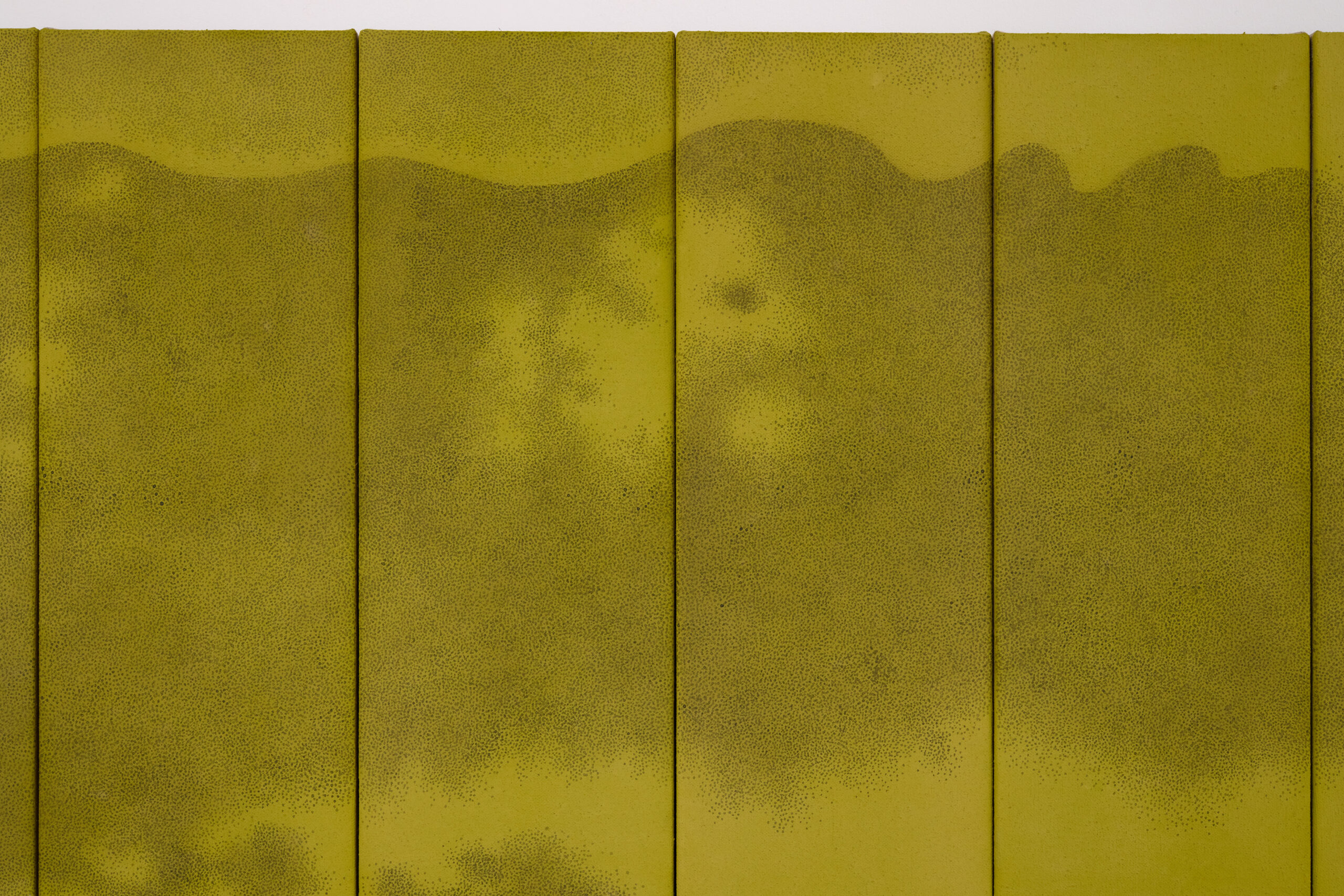
My choice of materials is also connected to the terrariums I keep at home. When I build environments for my poison dart frogs, I use Akadama soil as part of the habitat, and over time this material has also found its way into my paintings. I crush the Akadama soil and mix it with an absorbent ground, which I apply to linen to create the first layer of the painting. If I am building a garden on linen, it feels natural to begin with actual soil.

'Painting of a River Boat Carrying Brightly Coloured Plant Pots with Flowers and Foliage' on display in Seeds of Exchange at the Garden Museum, right

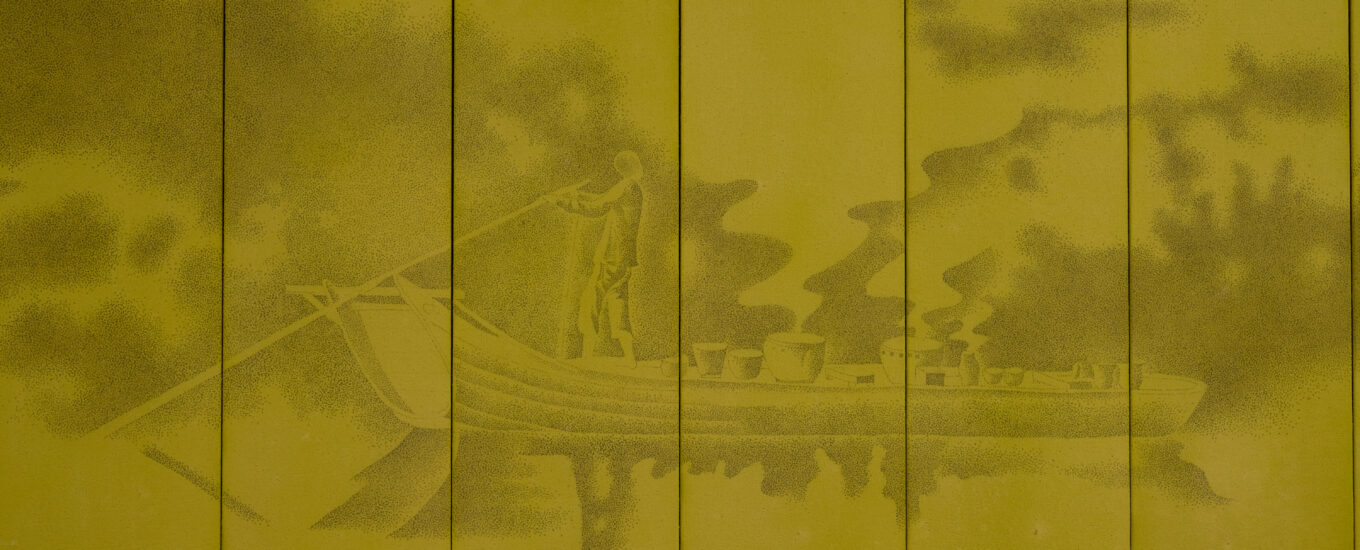
The original V&A painting contains large areas of empty space, which reminded me of traditional Chinese ink painting. In making my response to it, I kept the boatman, the boat and the plant pots, but deliberately removed the plants themselves. I then began filling the open areas using diantai (点苔), a traditional technique in Chinese landscape painting in which small brush marks and dots are built up across the landscape, often suggesting vegetation and texture. I began to think of each mark as a seed. While painting, I would sometimes direct these marks consciously, and at other times simply follow the movement of my hand and brush, allowing these seed-like marks to appear, gather and spread until they gradually filled the surface. The plants from the original image disappeared, but a sense of growth returned through the accumulation of brushstrokes.

This brought me back to the title Seeds of Exchange. In the end, I decided to borrow the title of the Garden Museum exhibition for the work itself. I liked that the title retained something of where the painting began: an image from the V&A collection came to the Garden Museum, I encountered it there and carried the image, along with a still rather vague idea, away with me. Eventually, it entered a new painting in a different form.

The finished Seeds of Exchange is now part of my exhibition Understory at Albion Jeune in London. Seeing it installed, I find it interesting to think back to the first time I encountered the original painting at the Garden Museum. At the time, I simply knew that I wanted to respond to it one day, without knowing how. It has now become a work made from fifteen paintings, bringing together, quite naturally, several things that have been part of my practice for years: looking, measuring, materials, and my earlier experience of Chinese painting.

Xiaochi Dong: Understory is on display at Albion Jeune until 3 October.

About Xiaochi Dong

Xiaochi Dong (b. 1993, Shanghai) is an artist based between London and Shanghai whose practice bridges classical Chinese painting and Western contemporary art. A graduate of the Shanghai Academy of Fine Arts and the Royal College of Art, Xiaochi draws from a wide range of references including traditional Chinese gardens, the greenhouses in Kew Gardens, and Derek Jarman’s Prospect Cottage. Through these physical spaces, he explores the simulation, compression, and transformation of nature, drawing connections between real and artificial landscapes. His work reflects a deep engagement with the aesthetics, and often specific dimensions, of constructed ecosystems and how these echo classical Chinese landscape painting.