Posted on 4 Jun 2026

Gardens

Head of Public Programmes Ollie Whitehead visits a Grade II* listed modernist house with a Japanese-style garden in the Cotswolds.

First week of May in the small Cotswolds village of Shipton-under-Wychwood on the western most fringe of Oxfordshire. Full sun but cool, the county’s mercury is way off hitting the frightening 32.9 degrees that it will towards the end of the month. Along with my mother-in-law, I’ve cycled 15ish miles past rolling hills of agricultural fields and pine plantations to find myself searching through small lanes of old – and mostly large – Cotswold houses for something altogether very different. 

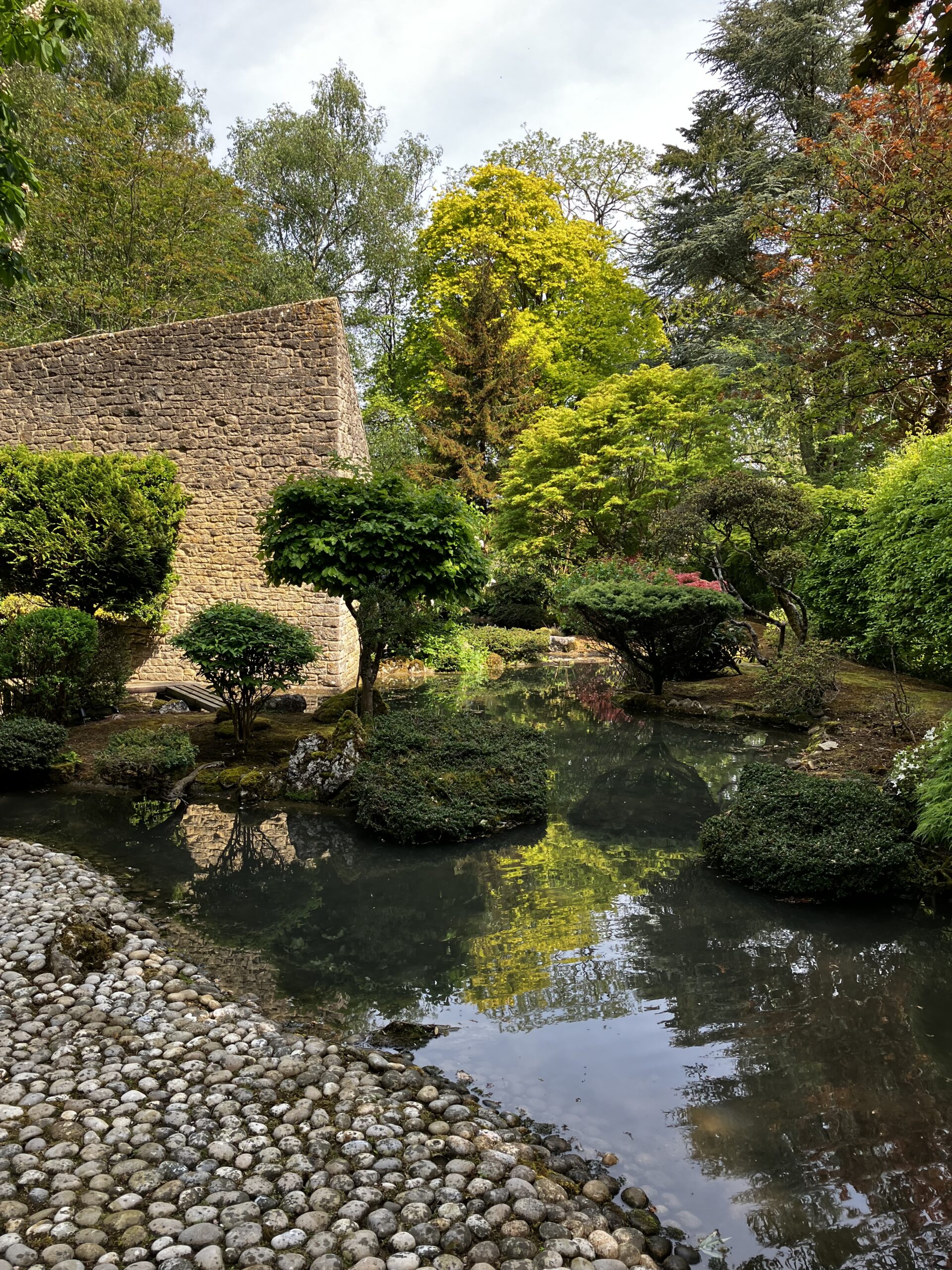
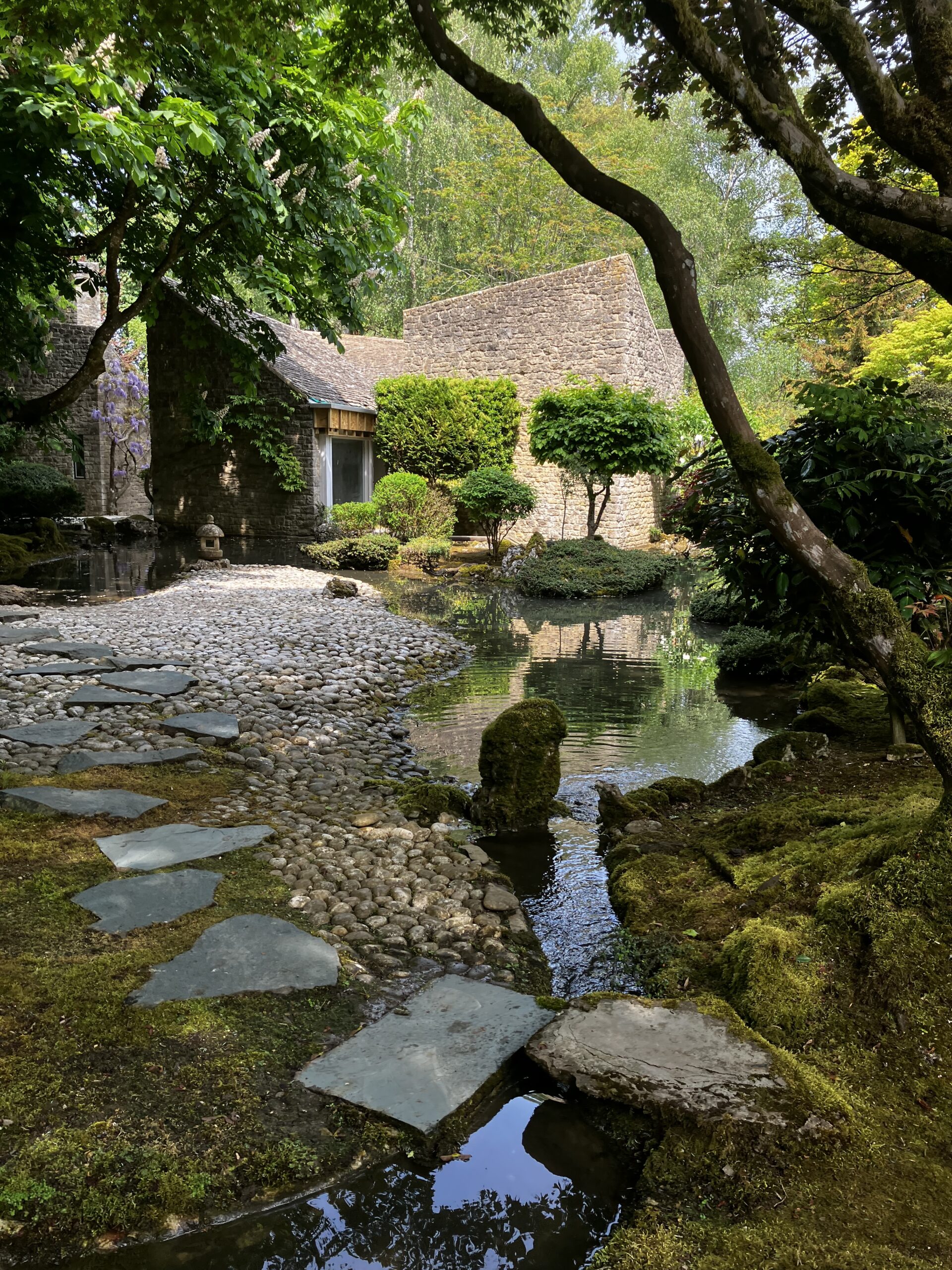
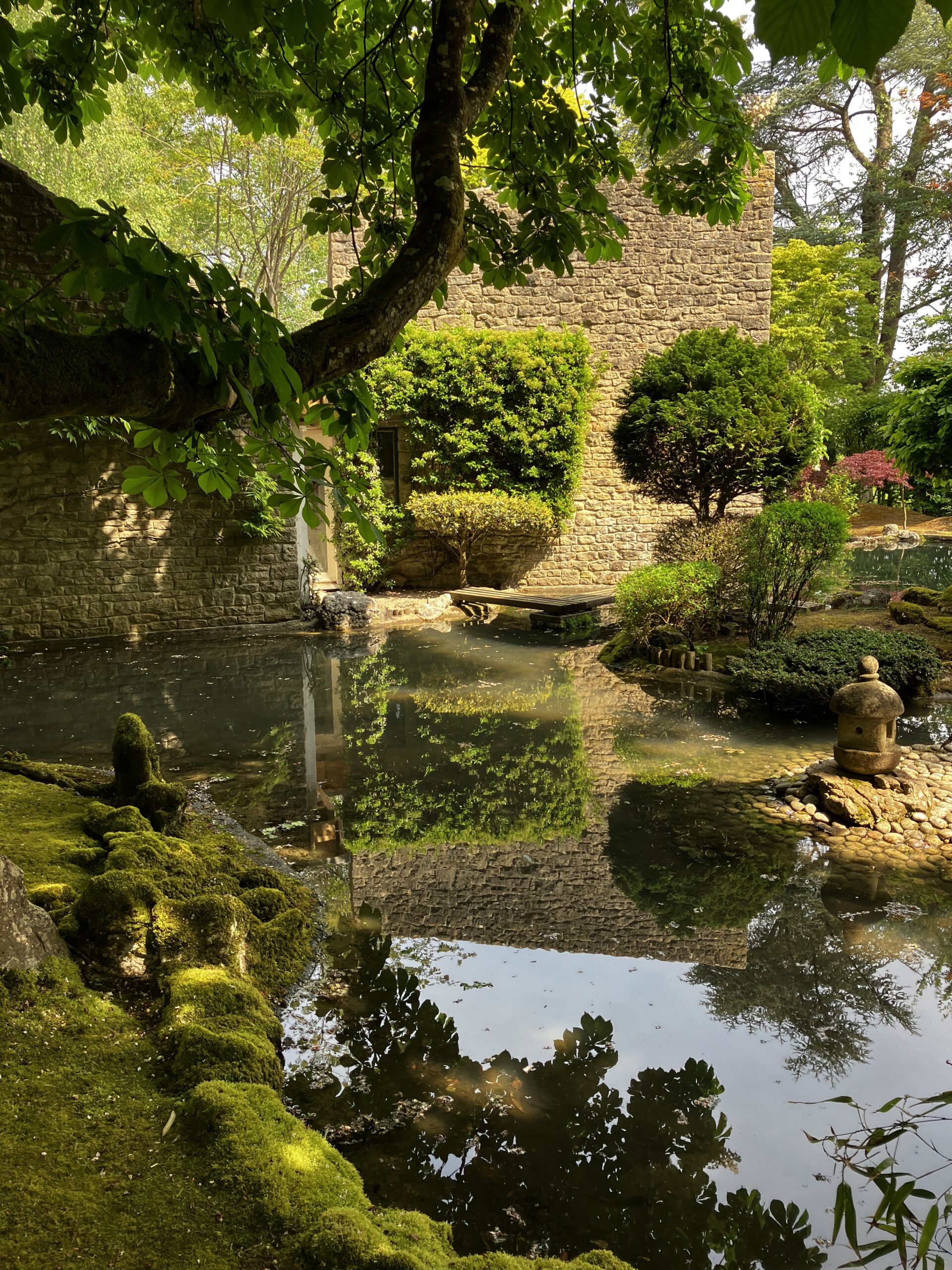
I’m here to see one of Britain’s only Grade II* listed postwar house and garden projects*: the New House, accompanied by a modernist Japanese garden. The house, designed and built in 1963-64 by the architects Stout and Litchfield, a practice renowned for its mid-century modern private house designs, is a small dwelling made up of a series of interlinked and informally arranged pavilions with mono-pitched roofs. With three bedrooms, each room is arranged to give a distinct view out onto and direct access to the garden. Wandering through the house is dislocating, and you could be forgiven for thinking you’re in a different setting around each corridor turn. 

The New House was commissioned as a weekend house by Milton Grundy, a man of considerable range; a highly influential tax lawyer, a philanthropist and arts patron, author of Mediterranean Vernacular: A Vanishing Architectural TraditionVenice: An Anthology Guide, and Tax Havens: A World SurveyA renaissance man with great taste who spent his professional life constructing elegant enclosures for capital, and his personal life constructing one for himself that was, and is, simultaneously humble and exquisite. 

Sitting on a plot of roughly half an acre, Stout and Litchfield proposed the house be surrounded by water and suggested the highly respected plantsman and modernist landscape designer John Brookes be brought on board for the garden design. But having just returned from a trip to Japan, Grundy and his partner – the artist Viacheslav Astroshenko – wanted to take things in a different direction – instead choosing to build a Japanese garden. Those who have visited Kyoto will be familiar with the seduction of the gardens there. 

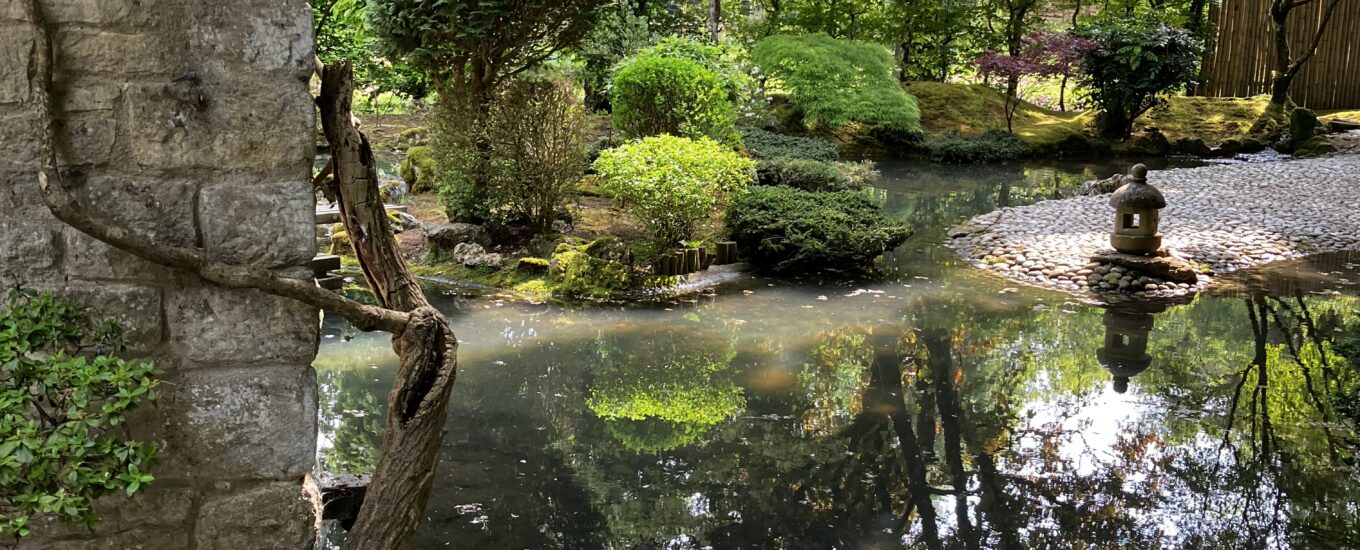
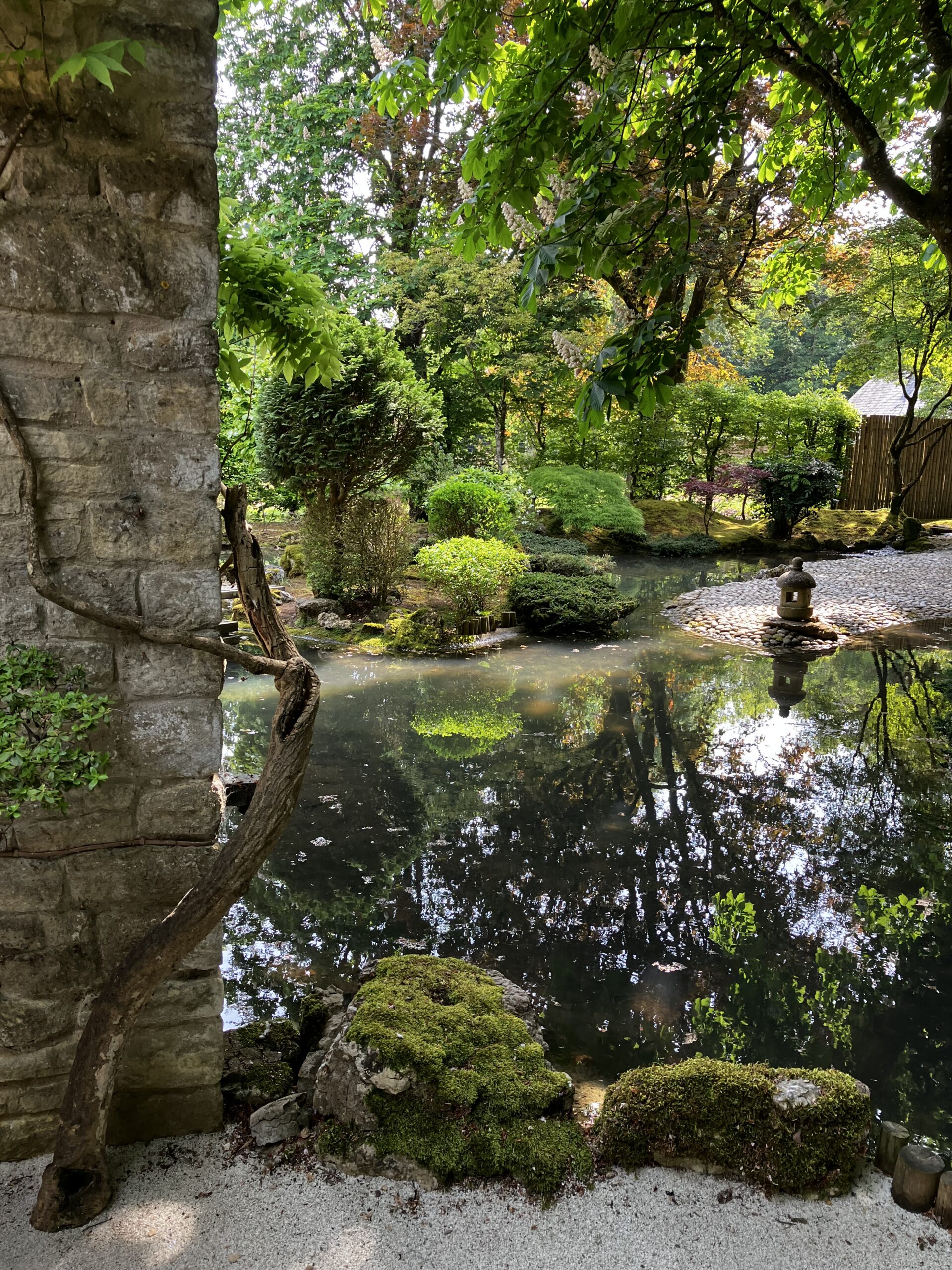
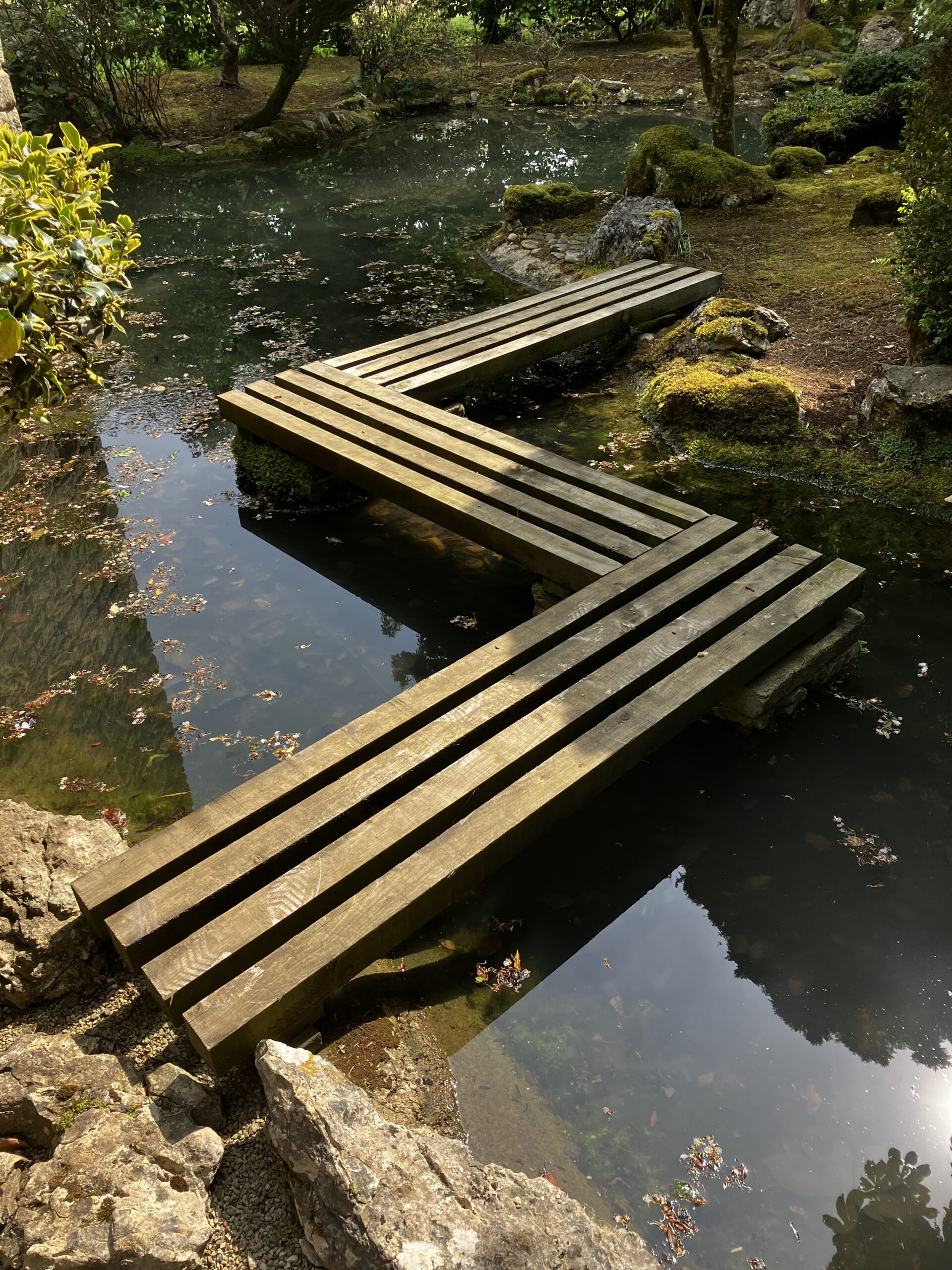
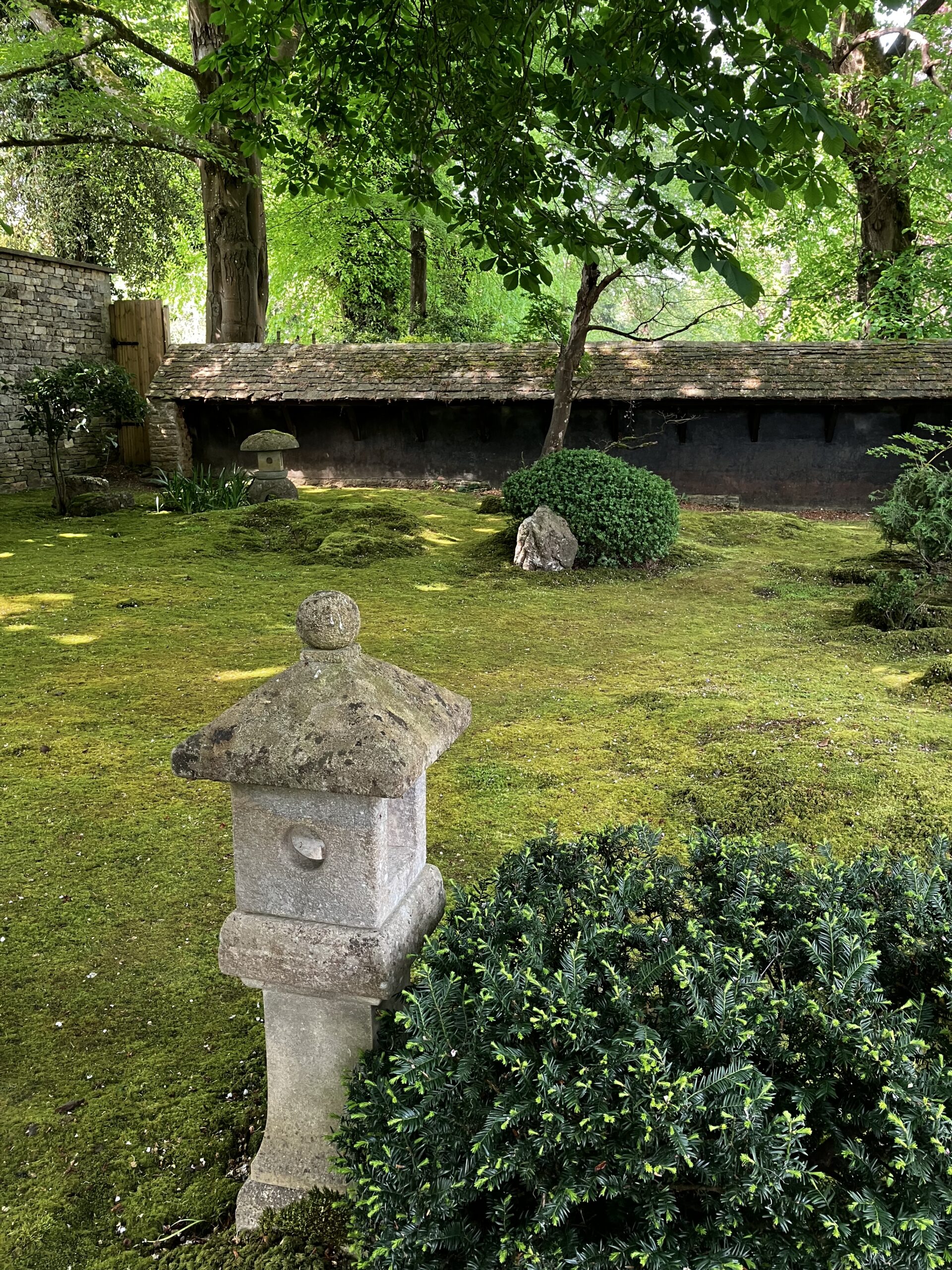
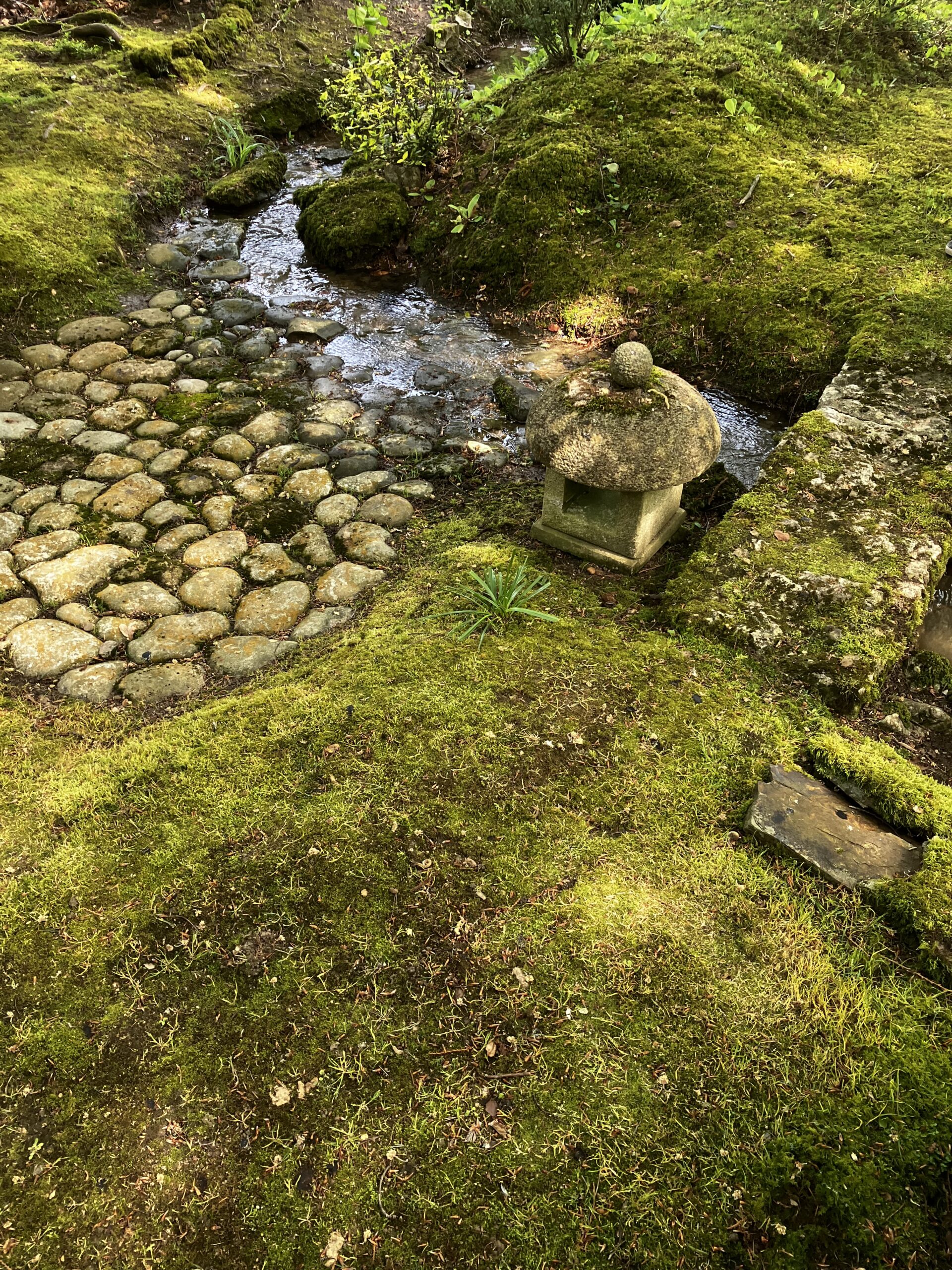
Grundy and Astroshenko worked with Japanese designer Mr Kasamoto to make a garden based on Japanese design principles. Stones selected for their structure and form, a source of flowing water – in this case pumped up from the nearby River Evenlode – architectural features including bamboo fencing, cut stone lanterns, and a raked gravel courtyard inspired by Kyoto’s Ryoan-Ji temple. 

The garden creates and resolves an elegant and disorientating paradox by using, in parts, the East Asian design principle shakkei – the practice of borrowing the surrounding landscape for the garden’s composition. The materials are from here, but the ideas are not. In an incongruous but seamless manner, place, materials, and ideas work together to defy the location. 

Think Sezincote; a manor house based on architecture of a Mogul Indian palace but built from Cotswold stone, or Sir Frank Crisp’s Alpine rock garden with a scale model of the Matterhorn built with north Yorkshire sand stone, or closer to home, the late Nigel Dunnett’s bright orange, Latin-inspired Lina Bo Bardi-esque vision built on top of a former garage unit at Peveril Gardens in south London.

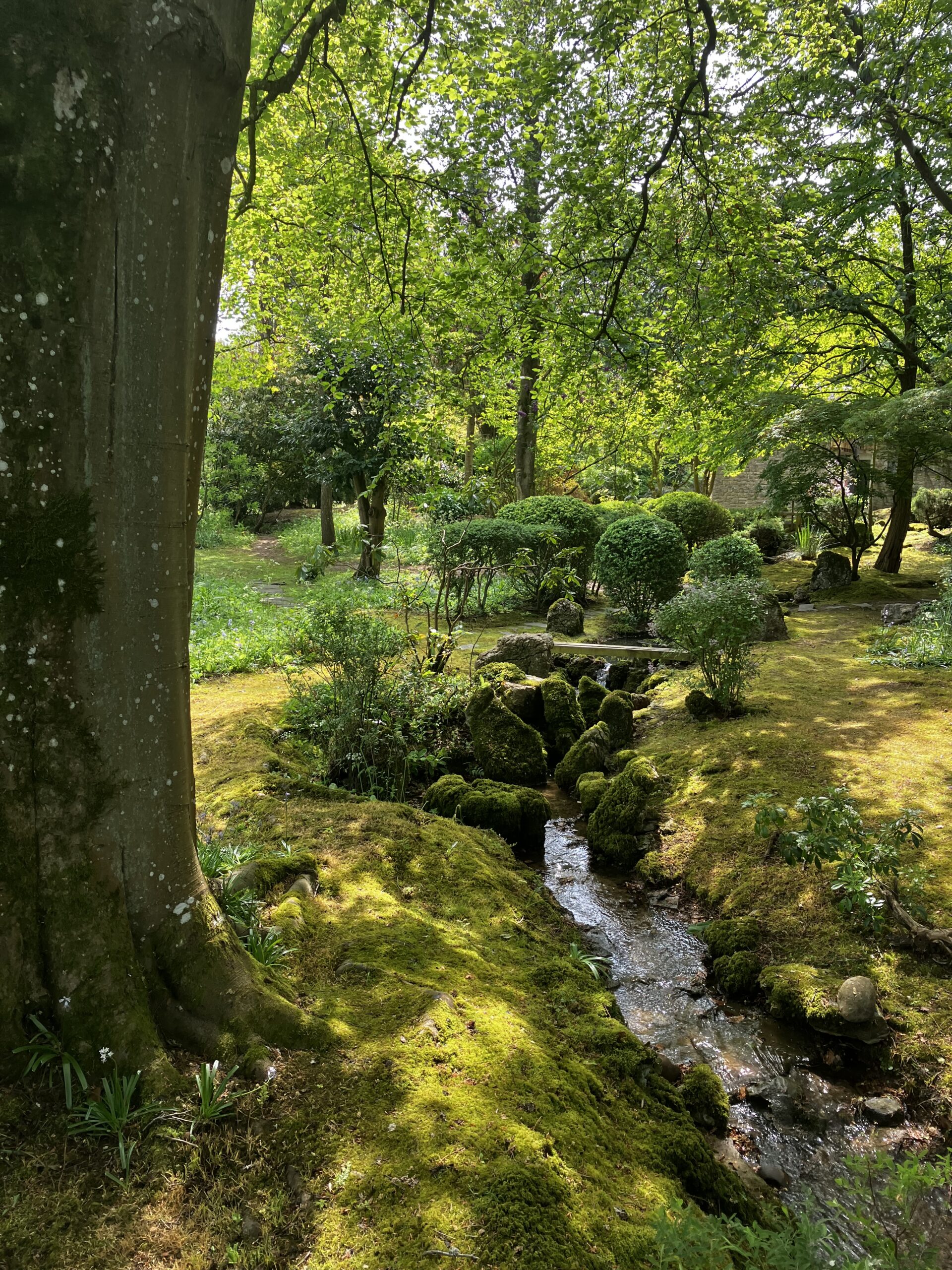
The New House is built with local Cotswold stone, with the greenest (and I mean greenest – my retinas took a while to readjust) of spaces immediately outside that hosts a gently undulating lawn of moss – helped to thrive by the deep shade of a mature horse chestnut – punctuated with intentionally sparse structural planting of acers, azaleas, yew, and bamboo. Walking around with the head gardener David Yorke, he explains that most of his time is spent on his knees caring for the moss carpet. As I wander, I wonder how this fundamental garden component will fare in a climate that has already begun to lack consistent, abundant moisture.

Stepping further away from the house, the moss and the Japanese-inspired planting slowly diffuses to become a woodland area of native mature trees; beech, Scots pine, and silver birch, under which bluebells and cow parsley can be found stretching to the bank of the River Evenlode. Over the water, the eye finally meets the local agricultural landscape, from which, oddly, views have been borrowed. I click my heels and I’m no longer in Japan, I’m back in the Cotswolds, having of course never really left. 


*It’s worth noting that the other Grade-II* listed postwar house and garden project is the late, great architect and gardener Peter Aldington’s Turn End, which he described as a “haven away from the world, and yet clearly grown out of it.” Grown out of being the most revealing words there. As is the case of both the New House and Turn End, the building can’t be understood without the garden, and vice versa.