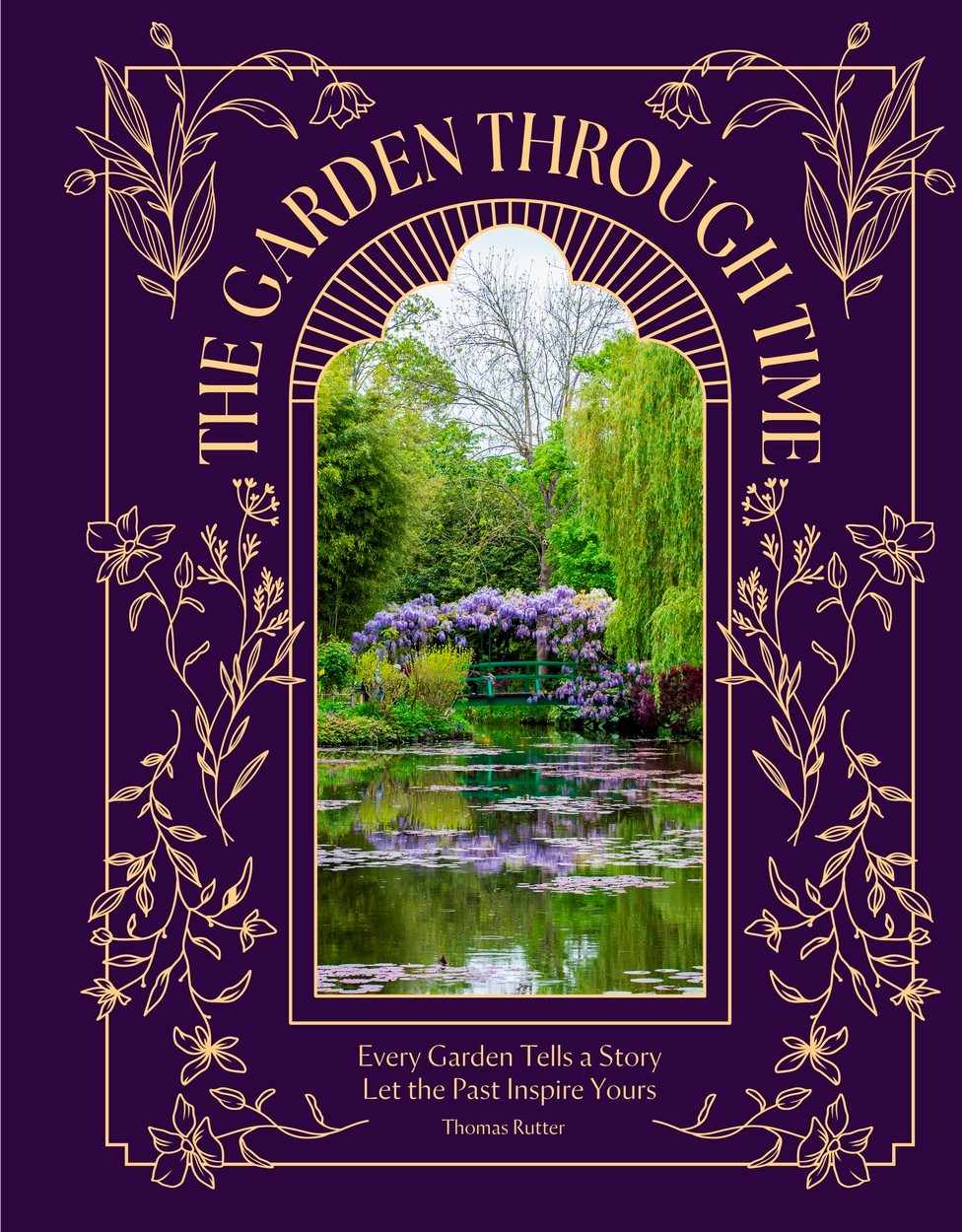
What fascinated me while researching my new book, The Garden Through Time, was that La Foce was never simply a garden project. Iris Origo had grown up between England and Florence, spending much of her childhood at the Villa Medici in Fiesole, surrounded by the great traditions of the Italian Renaissance garden. She understood beauty and formality intimately. But La Foce was an entirely different undertaking. The Origos, newly married and armed with Iris’s considerable inheritance, did not come to Tuscany searching for somewhere merely beautiful. They arrived with an almost improbable ambition: to transform this harsh landscape of eroded clay hills into fertile farmland, olive groves, vineyards and wheat fields.
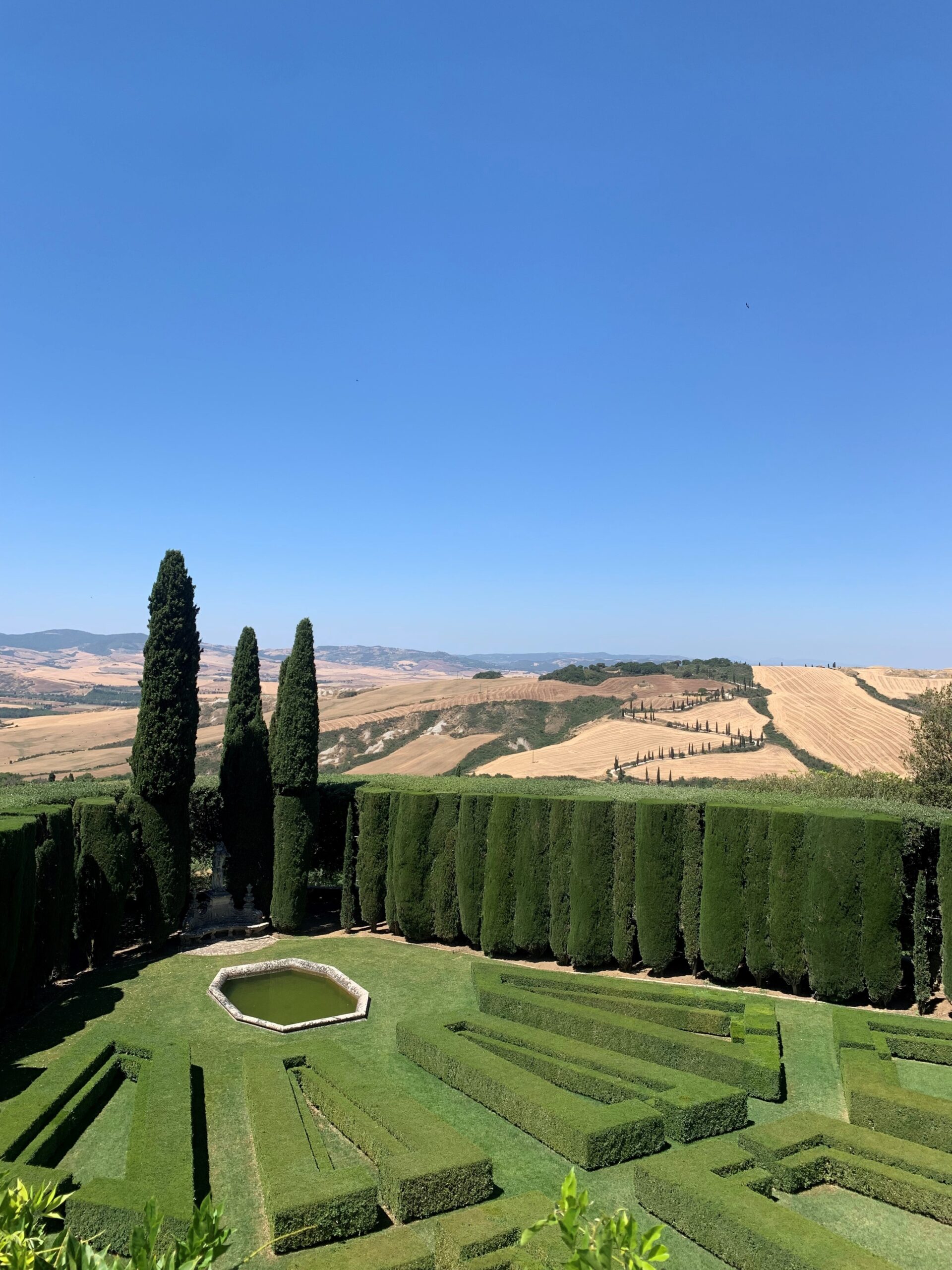
In her memoir Images and Shadows, Iris later wrote: “We knew at once that this vast, lonely, uncompromising landscape fascinated and compelled us.” Working in that landscape myself, I understand exactly what she meant. The Val d’Orcia is severe, but deeply magnetic, too.
Before terraces, cypress avenues or wisteria-covered walkways came into the picture, the Origos focused on survival and regeneration. The region was desperately poor. Roads were built, schools established, irrigation introduced and dams constructed to slow the erosion stripping the hillsides bare. Tractors replaced oxen carts. A Montessori school was established for local children. Over time, the estate expanded from 25 farms to 57. La Foce became not simply a private estate, but an attempt to bring prosperity to this small corner of Tuscany.
The garden itself came later, shaped with the help of the British architect Cecil Pinsent, whose Anglo-Italian style balanced Renaissance structure with the softness of English planting. Water was initially so scarce that the garden remained little more than a small refuge close to the house. Only later, after funds from Iris’s American grandmother allowed water to be diverted from a stream could the garden truly expand.
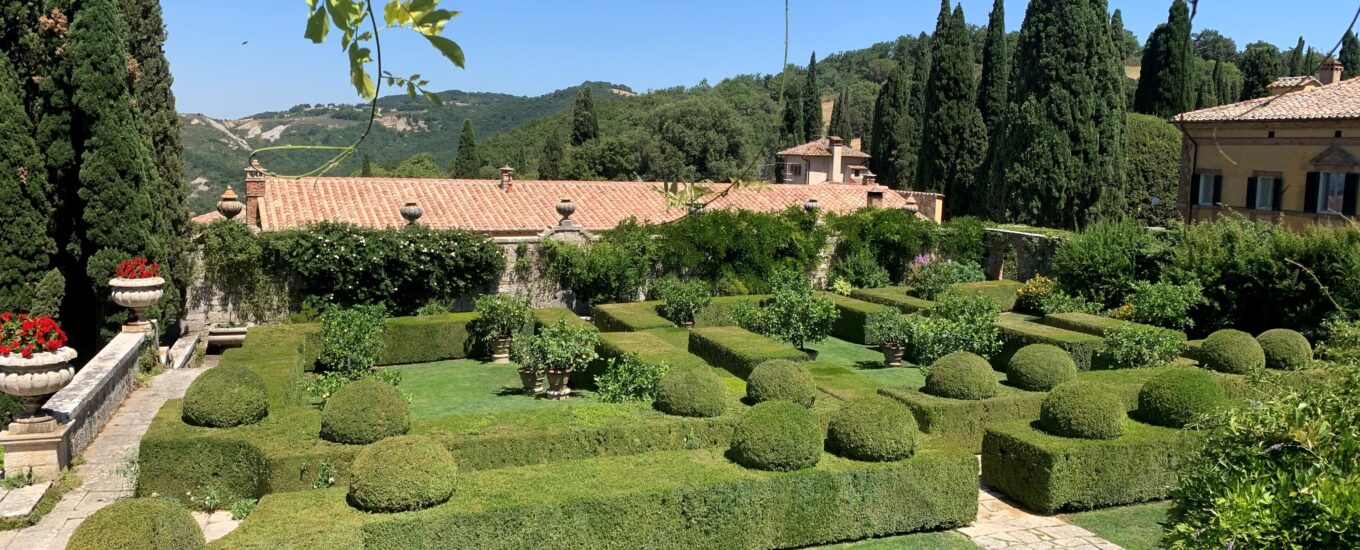
Of course, La Foce has all the hallmarks of the Italian garden tradition: red geraniums spilling from aged stone urns, lemons in terracotta pots, perfectly clipped box hedging, faded ochre plaster walls, old statues, rosemary, lavender and long wisteria walkways humming with bees in spring. But there is something more than beauty here. The story behind the garden lingers just as strongly as the planting itself.