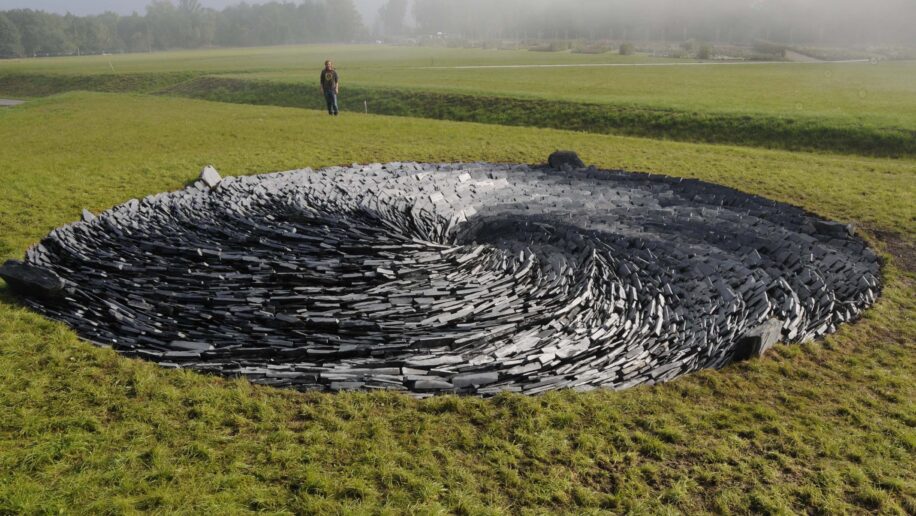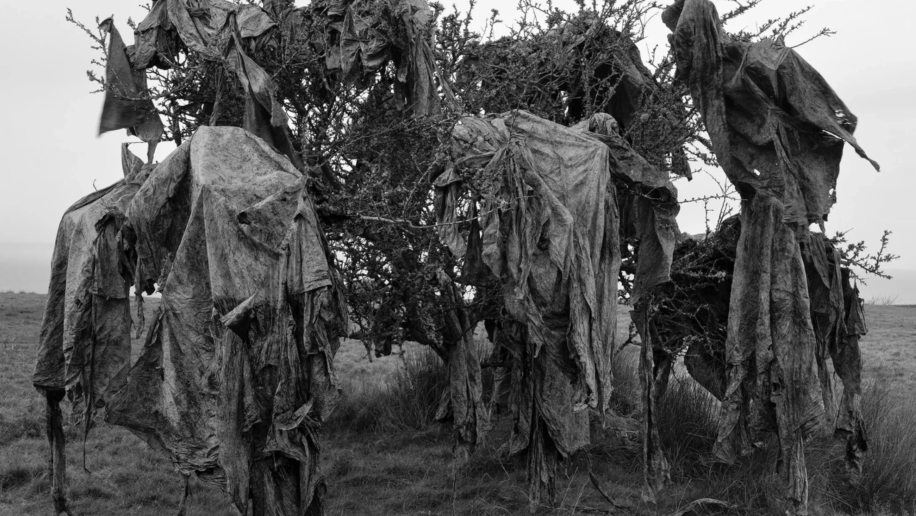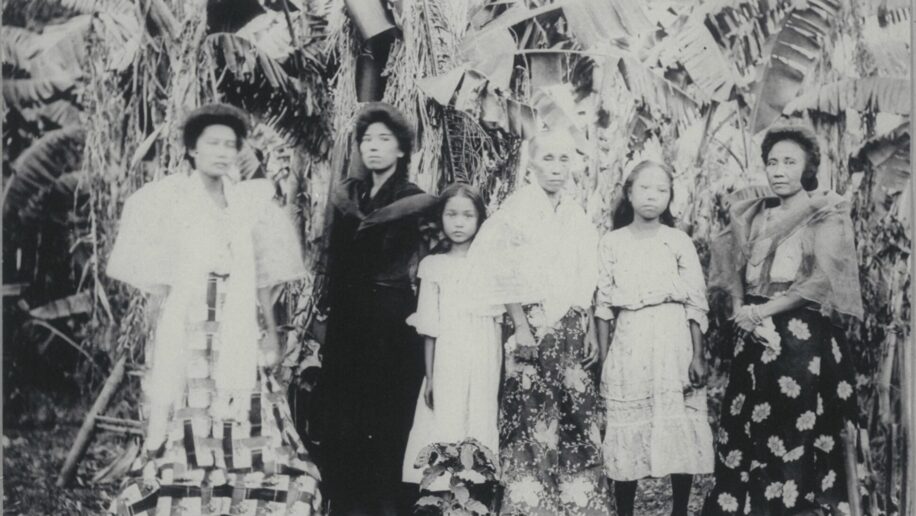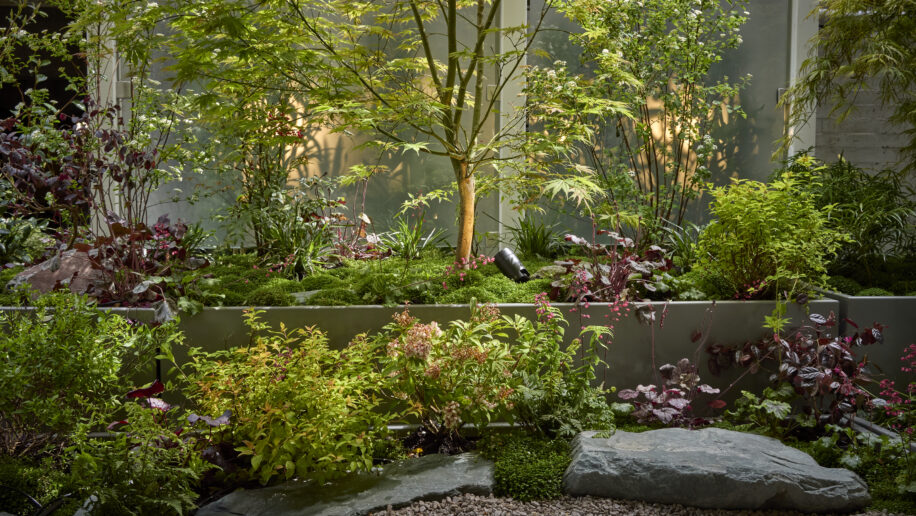
Photo Gallery
3 Nov 2026, 6:30pm - 7:30pm
This session brings together artists and collectives who each have a profound relationship with place and environment. Alex Hartley makes ambitious land art that destabilises our ideas of wilderness and utopia; Tania Kovats works across sculpture and installation to explore geological time and bodies of water; Troika examine how technology reshapes our understanding of the natural world; and Kultivator — an art practice and experimental farm on the Swedish island of Öland — investigate our relationship with the landscapes that feed us. Critic and curator Ben Tufnell joins as respondent.
–
This series, chaired and curated by landscape historian and critic Tim Richardson, aims to broaden our ideas of what gardens, landscape and place can mean in the context of artistic practice in an era of climate change. Across five evenings, Tim has invited a range of practitioners, curators and academics to discuss their own work and to reflect on the broader scene. Each evening will close with a period of socialising (a drink is included in the price of the ticket) so that the discussion can continue. A drink is included in the price of the ticket so stick around to continue the discussion. Book for all five evenings at a reduced price here.
Tim Richardson is the author more than 25 books on landscape topics including the contemporary scene. In his work he has always operated at the intersection of art and the garden. He is currently art critic at The Idler and also continues his work on gardens and landscapes, which have included books on the work of Tom Stuart-Smith and Martha Schwartz, and a genre-defining work on landscape conceptualism entitled Avant Gardeners. He was founder and director of the Chelsea Fringe Festival.
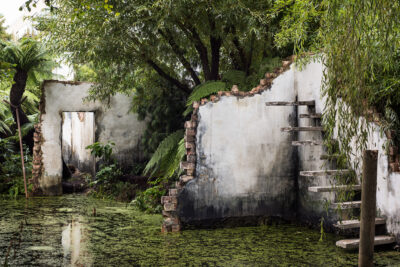
Alex Hartley is a UK based artist whose work destabilises ideas of both iconic architecture and nature by exploring our understanding of utopian ideologies. Hartley has taken his work into the public realm expanding the context with ambitious works of land-art, employing his practice to test our notions of utopia, the individual, and the critical relationship we have with the environment that questions how we occupy the world’s wild places.
His practice is wide ranging, comprising wall-based sculptural photographic compositions, film-making, climbing, artist publications, room-sized architectural installations, participatory site-specific works, and it often involves him travelling to remote places as a trigger for his work.
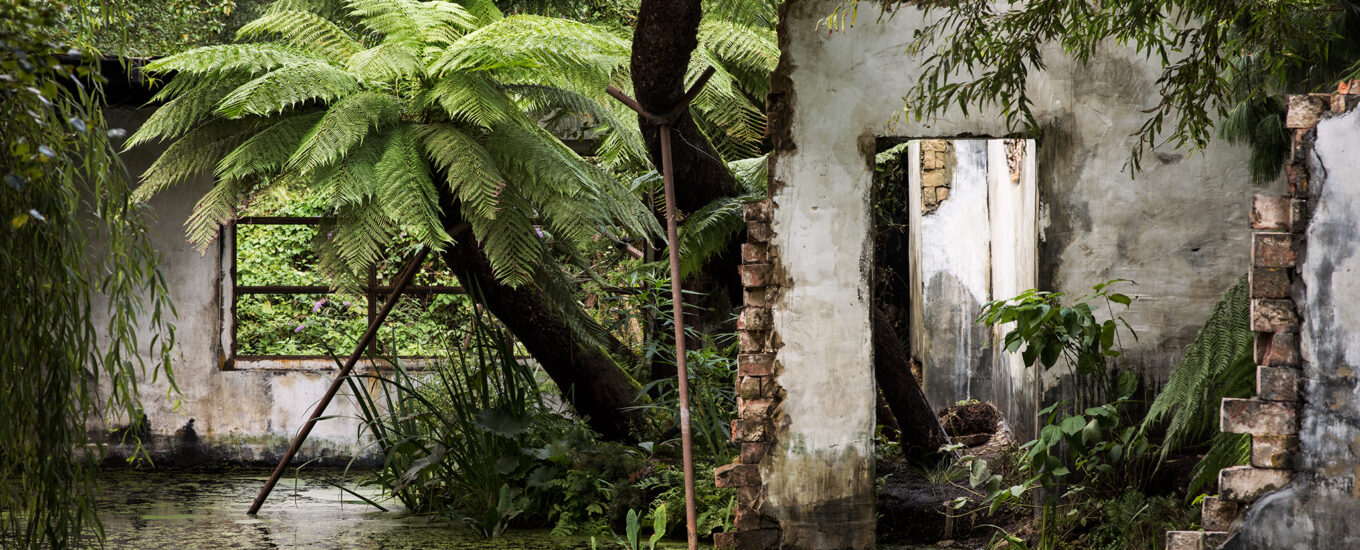
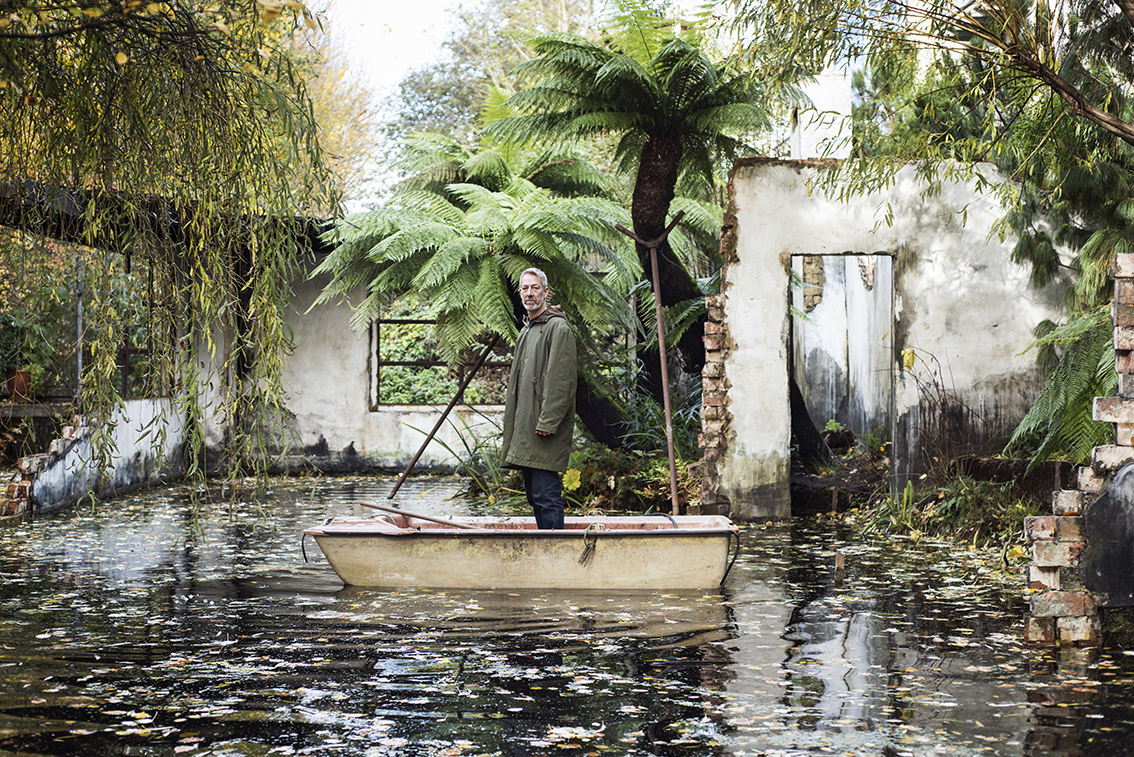
The picture is of his work ‘A Gentle Collapsing’ (2016) which was at the Victoria Miro Gallery.
Tania Kovats (b. 1966, London) works across sculpture, drawing, writing and installation to explore our relationship with our environment. She has an interest in geological formations and how landscapes form naturally over time, without human intervention. Bodies of water are a key area of interest for Kovats. Her investigation into oceans, seas, rivers and changing coastal rock formations are referenced in her artworks. She sees water as a ‘sculptor of the land’ and her practice explores the counterpoint between the organic and man-made.
Troika is a contemporary art group formed by Eva Rucki (b. 1976, Germany), Conny Freyer (b. 1976, Germany) and Sebastien Noel (b. 1977, France) in 2003. They live and work in London.
Working across media in sculpture, film, installation, and painting, their work contemplates humanity’s experiences and attitudes towards new technologies and how these transform our understanding and relationships to nature, each other and the wider world. Their artworks broach themes that seek to reveal our experience of the natural world and its significance to our understanding of human and non-human life, consciousness and agency. In this context their interest focuses on forms of life, artificial intelligence, algorithmic data, virtual and physical representation systems.
Their practice is rooted in research and collaboration to explore systems of knowledge in the fields of natural philosophy and the history of technology. With a particular interest in how we negotiate a network of species: plants, animal or machine, and what it is we can gain from other forms of thinking and being in the world, their shared artistic practise as a group of three has become integral to their way of working.
In 2019 Troika started a research project together with biologists, neuroscientists, the British Antarctic Survey and physicists from Cambridge University which culminated in Troika’s permanent outdoor installation ‘Third Nature’ that opened to the public in 2024.
Troika’s work is part of the permanent collections of M+, Hong Kong, the Victoria & Albert Museum London, The Art Institute of Chicago, MoMA New York, Jumex Collection Mexico, and Centre Georges Pompidou.
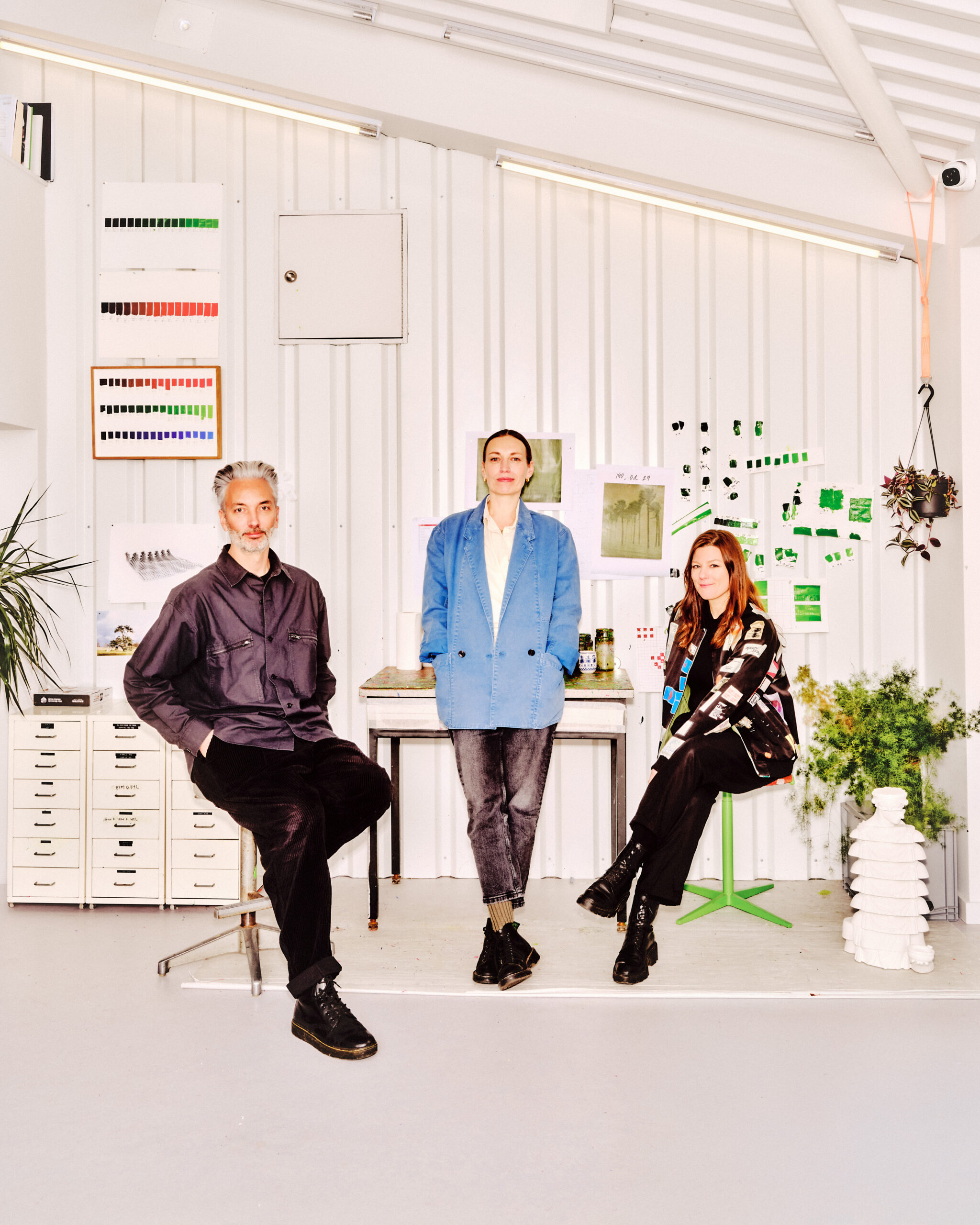
Kultivator is founded and run by Mathieu Vrijman and Malin Lindmark Vrijman.
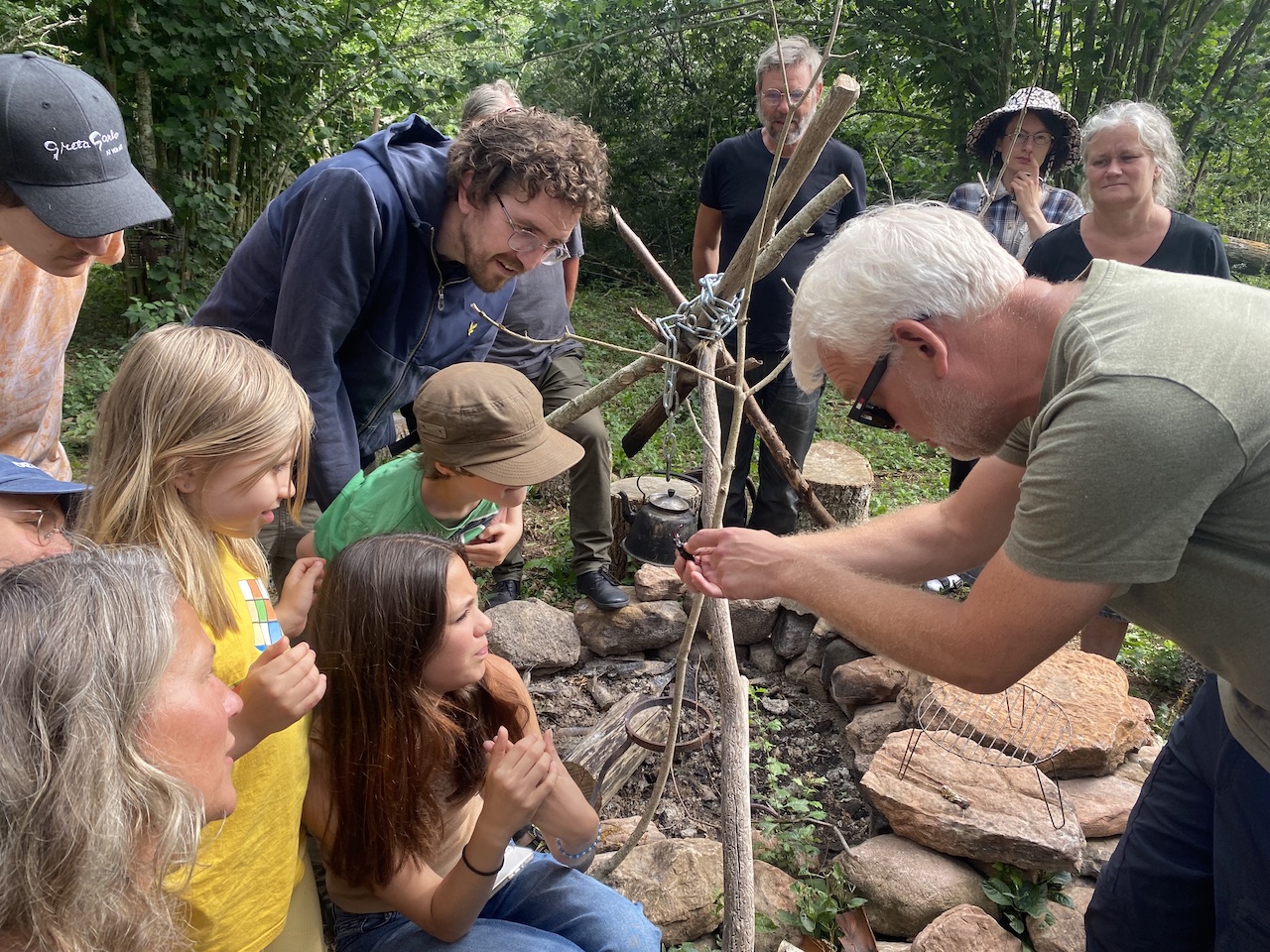
Kultivator is an independent art practice, as well as an experimental project platform that initiates and executes projects, exhibitions and workshops investigating our relationship with the landscapes that feed us.
The works ranges from discursive cultivation projects and eco-building experiments to study groups for riding and horsemanship for refugee women or community River-writing sculptures.
An important aspect of all activities are exchange of experiences between people with different backgrounds, and the rest of the biosphere, building on participation and practical hands on work.
In the home location, a rural village on Öland, South east coast of Sweden, Kultivator has an artists in residence, work- and studio spaces, and a community vegetable garden incorporated in a forest pasture.
We share our space with sheep, horses, donkeys, cats, dogs and chickens, working together in both art performances, timber logging and fiber production. Since the beginning in 2005, approximately one hundred and fifty artists, researchers and farmers has stayed and worked at and with the local eco systems on Kultivator’s farm.
Ben Tufnell is a curator and writer based in London. He has published widely on art and artists engaging with ideas of land and nature. A selection of his essays are collected in In Land: Writings Around Land Art and Its Legacies (Zero Books, 2019). He is also the author of two novels, The North Shore (Fleet, 2023) and Paradise (Influx, 2026).