One conversation from the book on this very topic comes to mind. Rose Bear Don’t Walk is an Indigenous ethnobotanist who grew up on the Flathead Indian Reservation in Montana and identifies as both Salish and Crow. Her work explores the relationship between people, plants and the land.
‘In Salish cosmology, there is no hierarchy between living things – we are all equals,’ Rose told me. ‘Growing up, we were taught to understand and respect the land.’
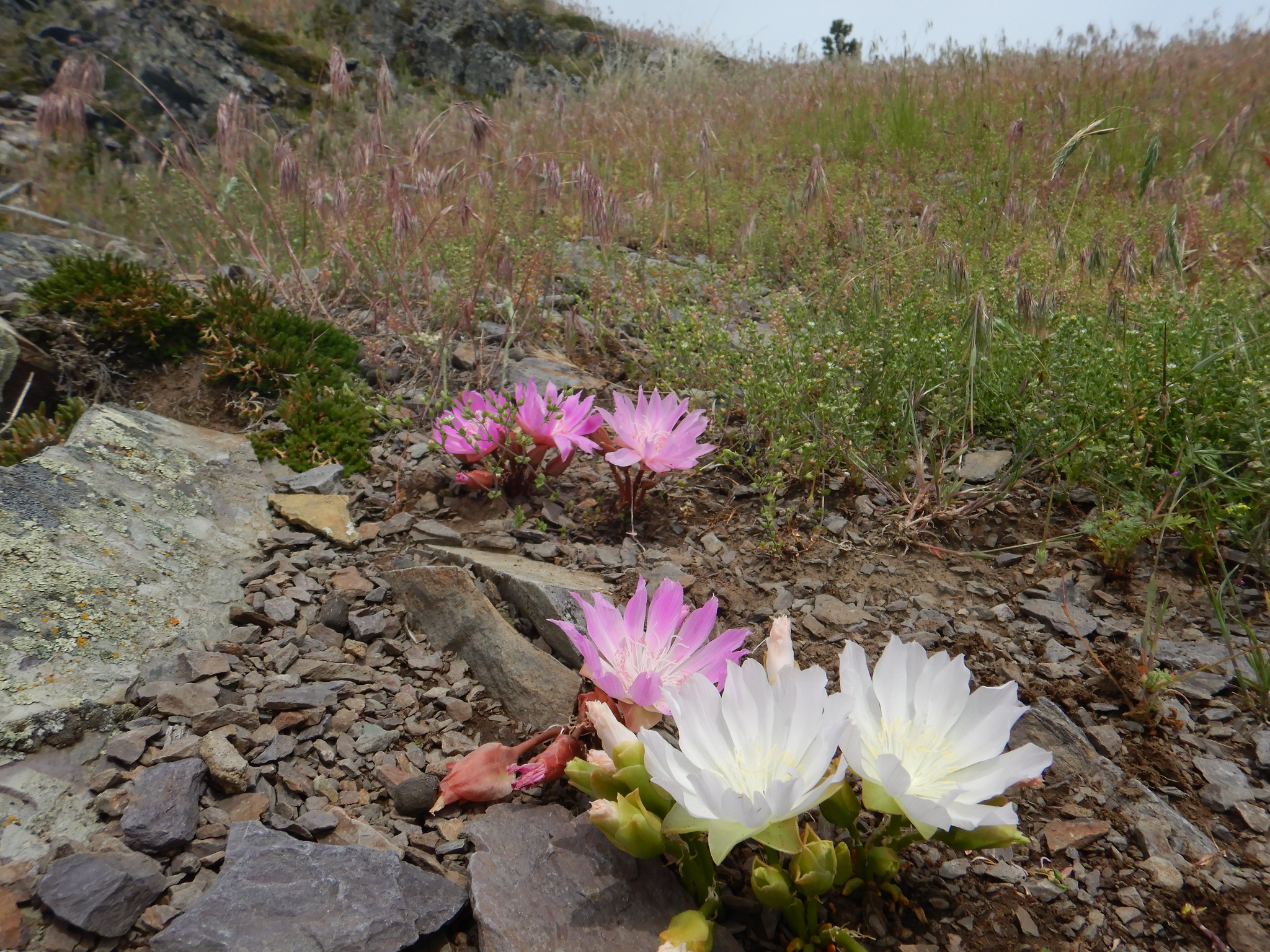
Rose told me the story of the bitterroot, or sp̓éƛ̓m (Lewisia rediviva), an unassuming little succulent with an extraordinary history. Salish tradition tells of a period of famine, when a woman went to the river and cried for her starving family. A red-winged blackbird appeared and told her that a plant would grow: its roots the colour of her silver tears, its flowers the colour of the bird’s wings. The bitterroot became a source of food, and women have remained its caretakers. Each year, Rose explained, a young woman is chosen to dig the first plant of the harvest.
A tiny plant, then, but also food, history, memory and survival. How easy it would be to walk straight past it, or think of it as a ‘weed’.