Open Tues-Fri 10am-4pm, Sat-Sun 10am-5pm, closed Mondays

Posted on 14 Oct 2026

Art

Dovecot Studios in Edinburgh share the history of their world-renowned tapestry studio, and how their collaboration with artist Clare Woods came to life for our latest exhibition, Threads of Ascent.

For over a century, Dovecot Studios has continued a heritage of collaboration with international artists to create handwoven tapestries and gun-tufted rugs. Based in the heart of Edinburgh, Dovecot is the longest-running tapestry studio in the UK. It combines traditional weaving skills with new ideas, working with artists to bring their designs to life through textiles. Their recent collaboration with British artist Clare Woods RA shows how this historic craft can offer new ways to explore colour, texture and scale.

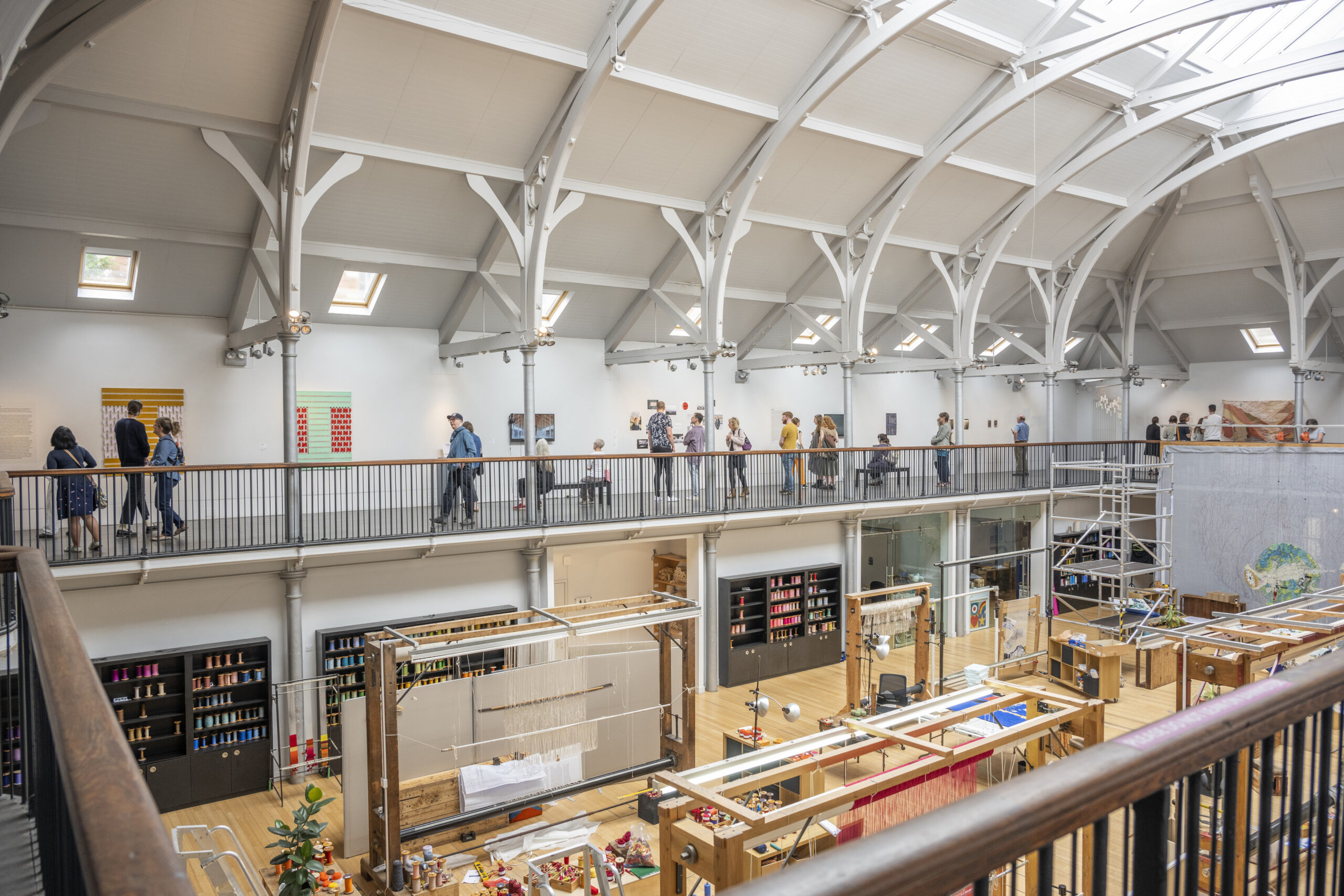
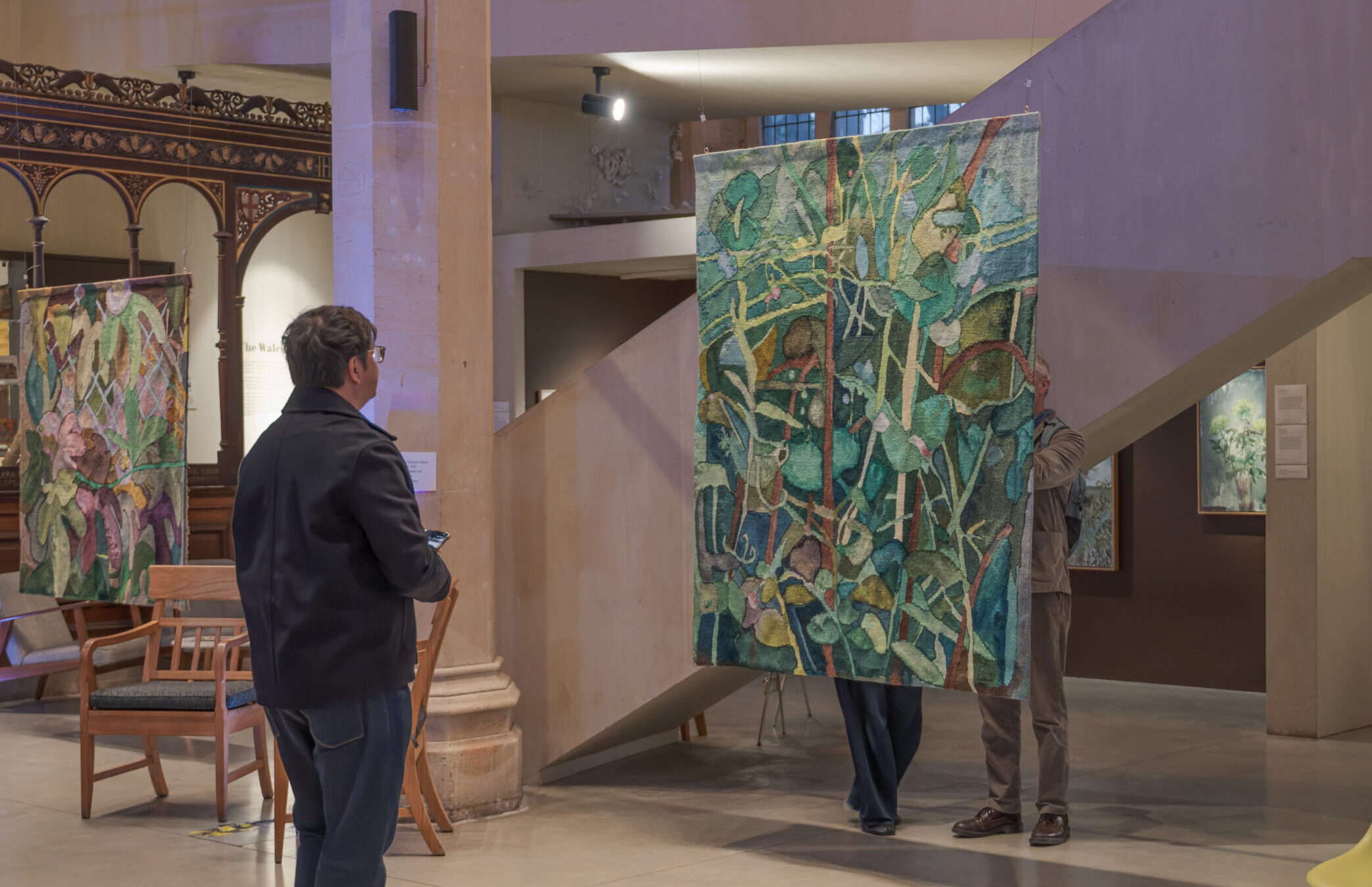
Visitors viewing Threads of Ascent: Tapestries by Clare Woods. Photo Graham Lacdao

The History of Dovecot Studios

Dovecot Studios was founded in 1912 by the 4th Marquess of Bute, recruiting weavers from William Morris’ workshops at Merton Abbey in London. The Marquess commissioned the studios to produce large tapestries for Mount Stuart House, his home on the Isle of Bute. The first studio was set up in the village of Corstorphine, in the west of Edinburgh. After the Second World War, it became a commercial studio and focused on working with leading contemporary artists such as Henry Moore and Graham Sutherland, who supplied designs for the weavers to interpret. Since 2008, the studio has been based in Edinburgh’s former Infirmary Street Baths. Today, the former swimming pool is home to the tapestry studio, while the original Ladies Baths is used for events.

Dovecot has a team of six weavers who work on multiple tapestry and tufted rug projects at a time. Over the years, the studio has worked with many well-known British and international artists, including Chris Ofili, Peter Blake, Elizabeth Blackadder and Alison Watt. Each project begins with an artist’s design. The weavers then work out how best to recreate it by sampling different coloured yarns and techniques.

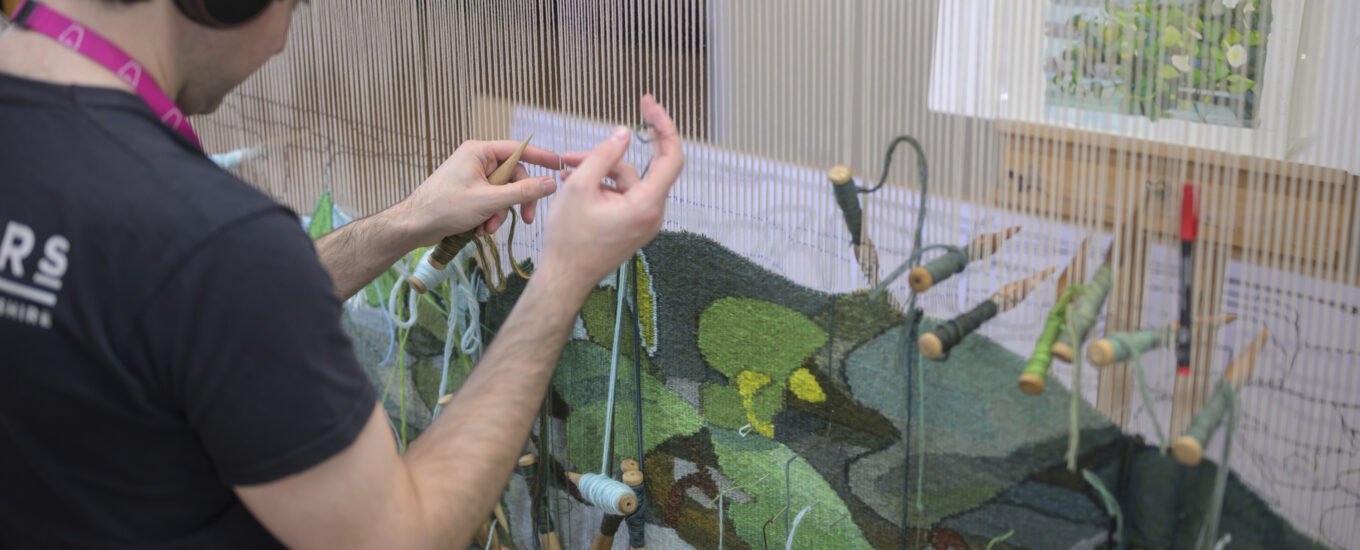
Dovecot Studios, photo Phil Wilkinson

Unlike paint, which can be mixed directly on a surface, tapestry relies on combining individual threads to build up rich colour mixes. Tapestries are created by passing the weft yarns back and forth over a set of vertical warp threads. The image grows slowly, row by row, as the weavers bring the design to life. Learning these skills takes time, with up to five years needed to train as a Dovecot weaver. As tapestry is no longer taught in further or higher education in the UK, the studio’s apprenticeship programme plays an important role in passing these skills on to the next generation. Supported by the Dovecot Foundation, this work helps keep tapestry weaving alive in Scotland.

Visitors to Dovecot can watch the weavers at work from the Tapestry Studio Viewing Balcony. The studio also runs exhibitions, talks, workshops and events, giving visitors the chance to discover more about contemporary art, craft and design.

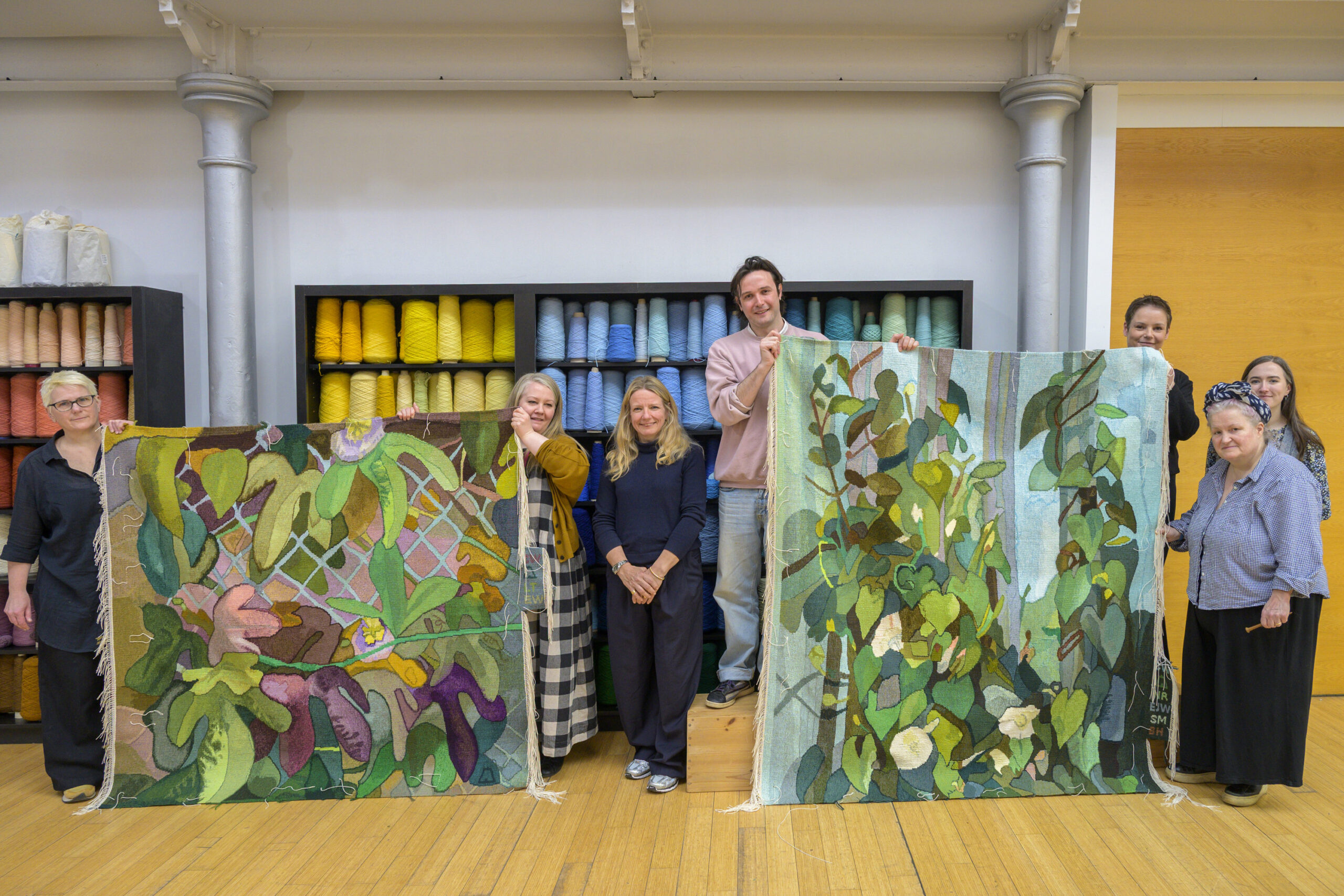
Spring Greens: Clare Woods RA unveils two new tapestries at Dovecot Studios. Photo Phil Wilkinson

Dovecot’s Collaboration with Clare Woods RA

The collaboration with Dovecot brings three botanical watercolours to life as tapestries: The Volunteers, The Take Over and The Smotherers. The series explores the complex place weeds occupy in our lives. Often dismissed as unwanted growth, weeds are also resilient, persistent and beautiful, thriving beyond the boundaries we set for them.

The collaboration began in May 2025, following a conversation at the Royal Academy of Arts. With Dovecot’s input, Woods created three watercolours specifically to be translated into woven textiles. This marked a new direction in her practice, demonstrating her ability to work across different mediums while retaining her distinctive approach to form and colour.

It took five Dovecot weavers a year to transform the original watercolours into large-scale tapestries, woven in wool and cotton. Translating watercolour into tapestry presented a particular challenge: how to recreate the medium’s transparency, fluidity and subtle shifts in tone using solid yarns. Through careful colour mixing and the layering of different shades, the weavers captured both the paintings’ soft, muted passages and their richer, more saturated colours. The resulting tapestries retain the movement of Woods’s brushwork while introducing the texture, depth and material presence of woven wool and cotton.
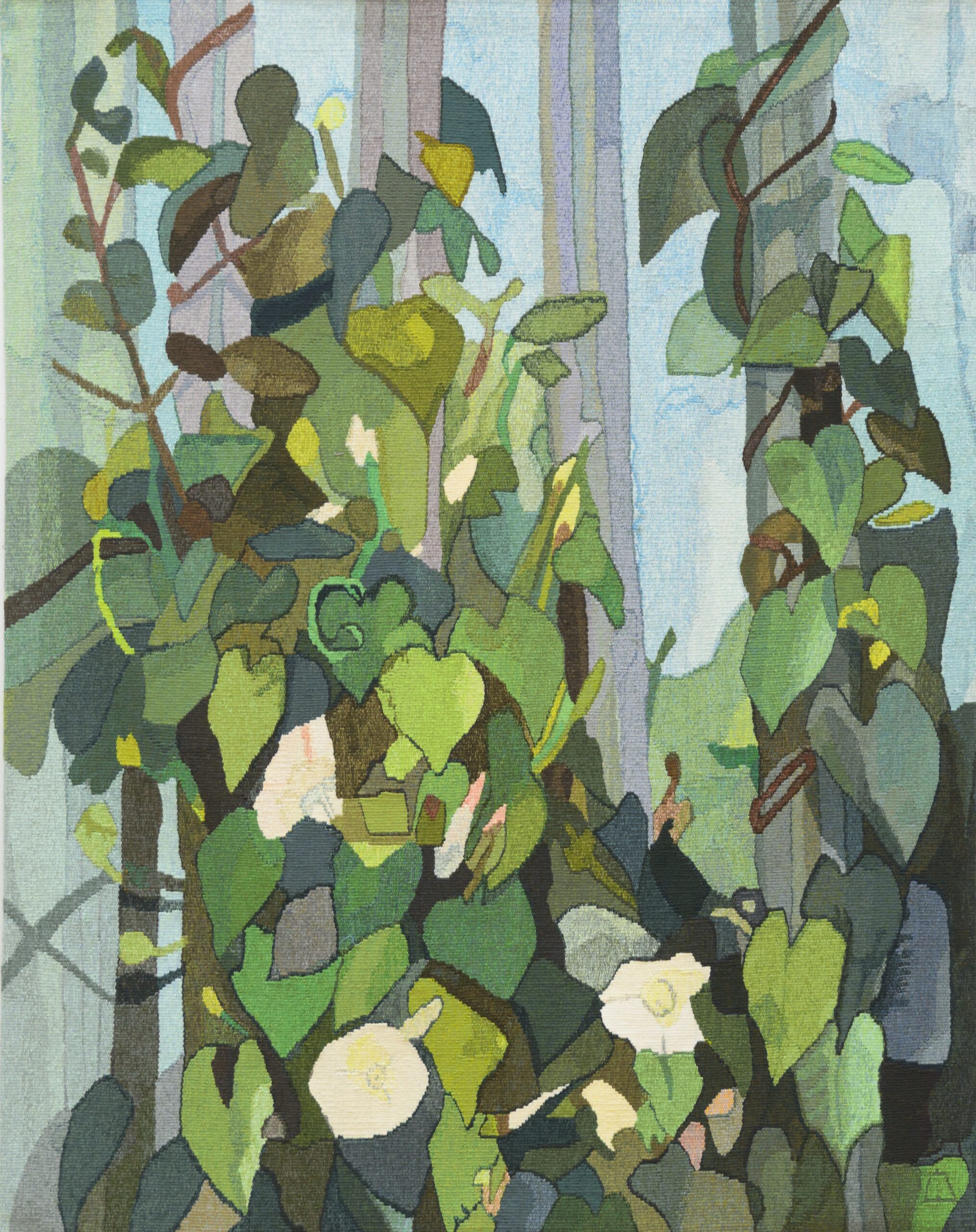
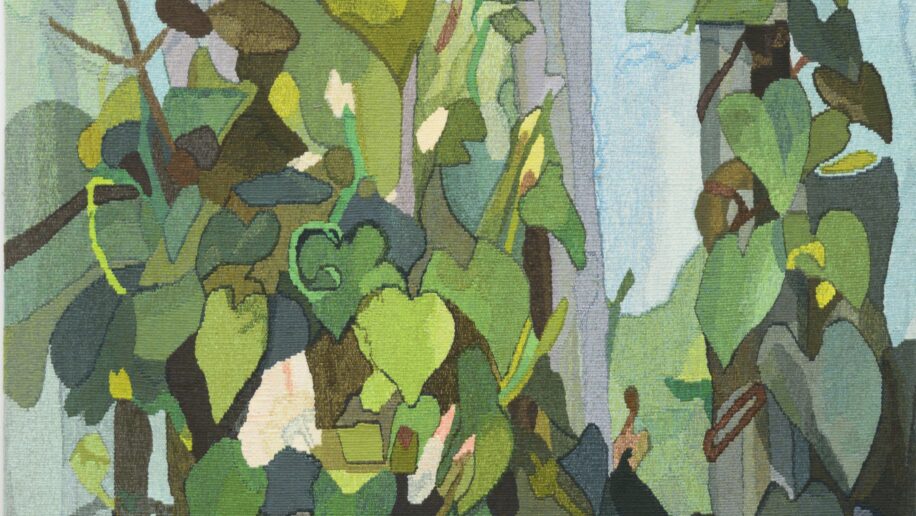
The Volunteers, 2026, Tapestry. Clare Woods and Dovecot Studios, © Dovecot Studios. Courtesy the artist and Victoria Miro. Photo Phil Wilkinson

The Volunteers

The Volunteers depicts bindweed, a plant known for its twisting stems and rapid spread. Its winding growth finds a natural counterpart in the structure of tapestry, where threads interlace to create a complex surface. The weavers carefully translated the plant’s movement and delicate details into yarn, preserving the lightness of Woods’s watercolour while giving the image a new sense of texture.

Dimensions: 180cm x 142cm

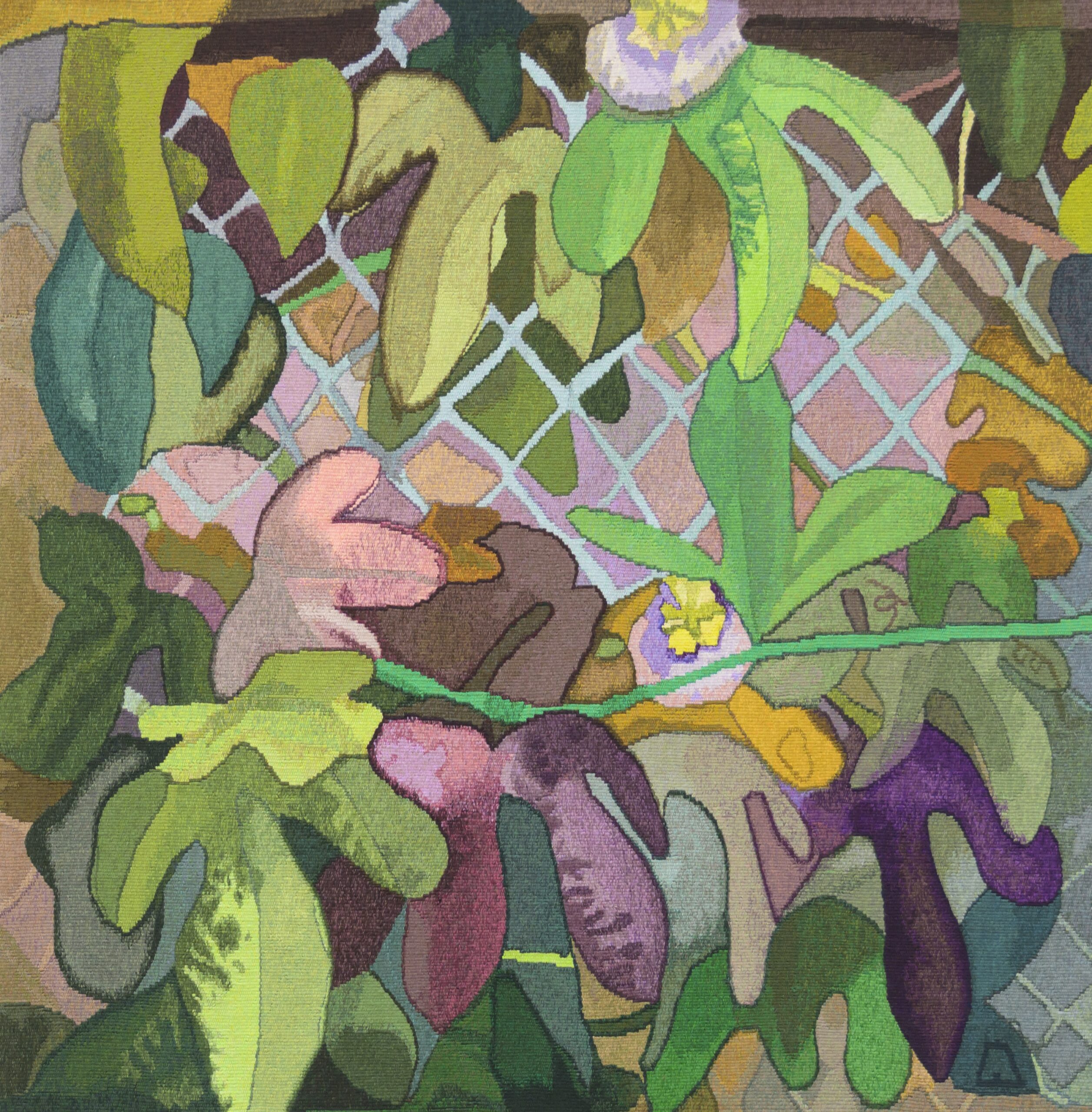
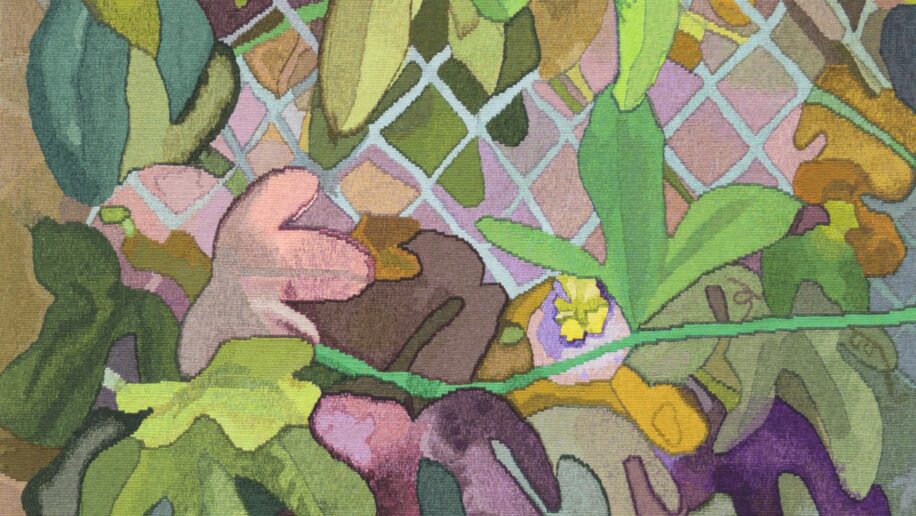
The Take Over, 2026, Clare Woods and Dovecot Studios, © Dovecot Studios. Courtesy the artist and Victoria Miro. Photo Phil Wilkinson

The Take Over

The Take Over focuses on the passion flower, known for its unusual shape and intricate details. Enlarged from the original watercolour, the plant takes on a striking presence in tapestry. The woven surface brings added depth to its shapes, colours and patterns, encouraging a closer look at the details that make this plant so compelling.

Dimensions: 150cm x 150cm

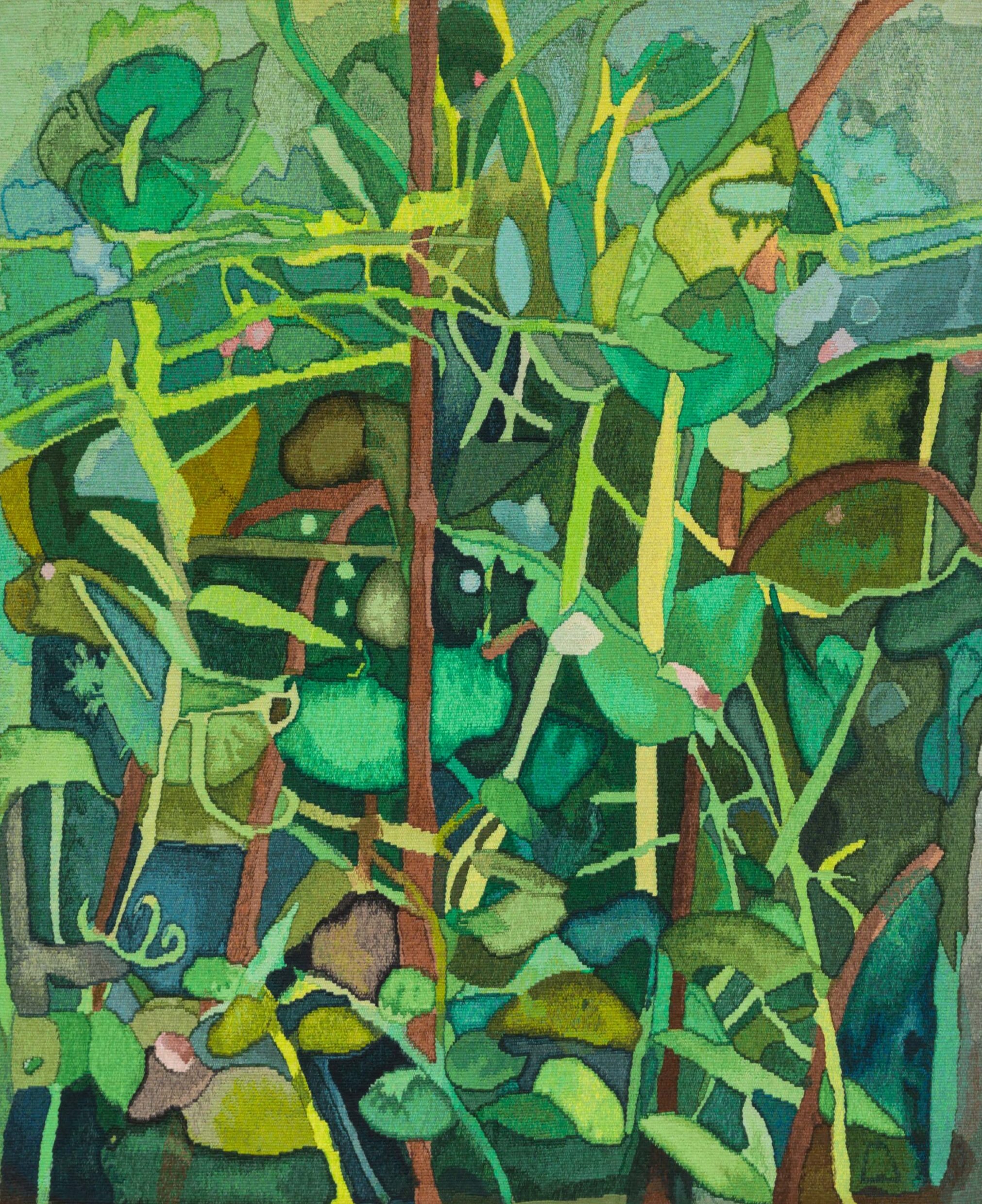
The Smotherers, Clare Woods and Dovecot Studios, 2026 © Dovecot Studios

The Smotherers

The final tapestry, The Smotherers, depicts wild peas. The relationship between subject and material is particularly evident through the crossing threads of the weave mirror the tangled stems of the plants. Achieving the subtle greens of Woods’s original watercolour required months of experimentation. The weavers selected, blended and adjusted different shades of yarn to capture the delicate tonal shifts and translucent quality of the painted image.

Threads of Ascent: Tapestries by Clare Woods is on display until 5 November. 

Elsewhere… Beyond Bayeux: Tapestry Now

An exhibition highlighting Dovecot’s history of working with leading artists is on display at Guildhall Art Gallery from 23 October 2026 to 21 March 2027. Beyond Bayeux: Tapestry Now features modern tapestries by Dovecot with leading artists including David Hockney, Hurvin Anderson, Yinka Shonibare and Rachel Maclean, showcasing the Britain as a global centre for excellence for historical and contemporary fine art textiles.