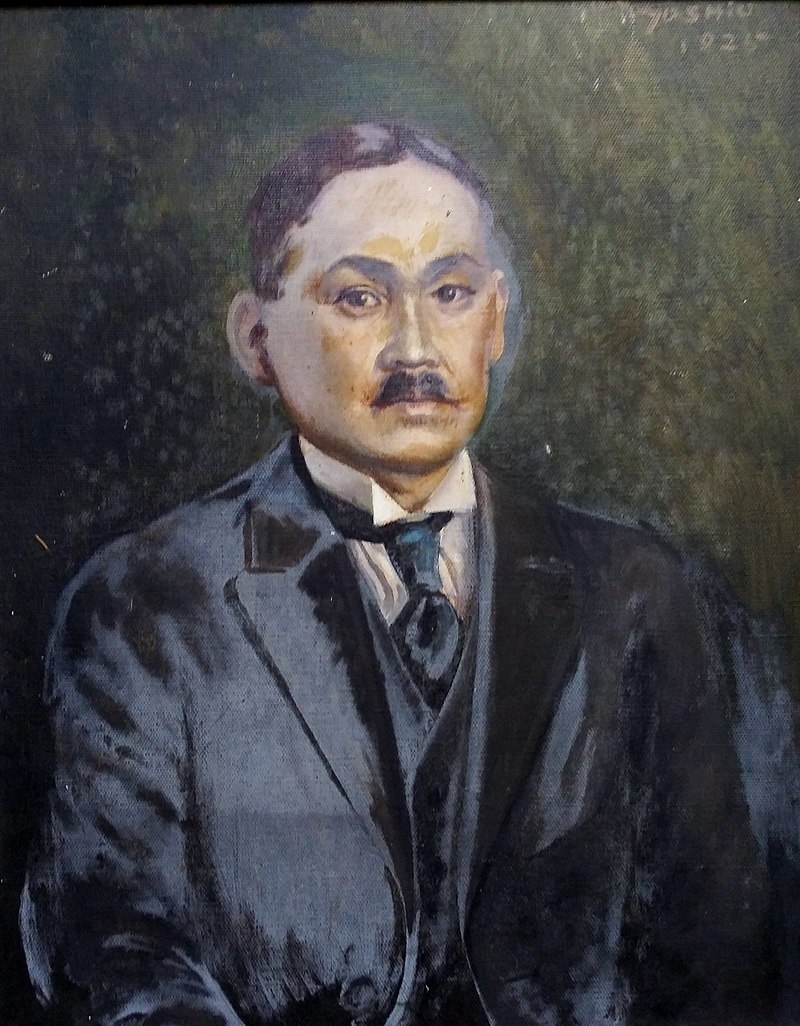
Around this time, Markino visited the office of the Magazine of Art and his portfolio was shown to the director and famous art critic, Mr M.H. Spielman. The fact that Markino’s book is dedicated to Mr and Mrs Spielman. Markino describes Spielman, some seven years later, as ‘the rescuer of my life and the father of my art’.
It was arranged that Markino would help with the production of a Japanese play called The Darling of the Gods. From this, Markino made many new friends in the world of theatre. His successes began to follow and he moved to an address in Chelsea and became a ‘Chelsea Conservative’ as he describes it. He began to seek perfection in his pictures and discarded many that he did not think good enough. He was advised that he must sell his works and was surprised when one painting he was about to throw away sold for six pounds. Markino could still not afford clothes that matched his emerging reputation, but his tailor provided him with a new suit in exchange for a painting.
In his book, Markino talks of frequent meetings with his Japanese friends and their impressions of England and the English. His friend, Hara Busho, wanted to take him to a luncheon at the Tate with the opportunity to see Turner pictures before or after lunch. Markino thought Turner was one of art’s ‘great deceivers’. He said that if he looked at Turner pictures before lunch, it would spoil his appetite, and he would not be responsible for his actions if it was after lunch! In fact, Markino was so taken with the Turner pictures (after lunch) that he quite forgot that Hara was even there. Markino said it was his subsequent studies of Turner’s work that showed him how to paint London mists and fogs.
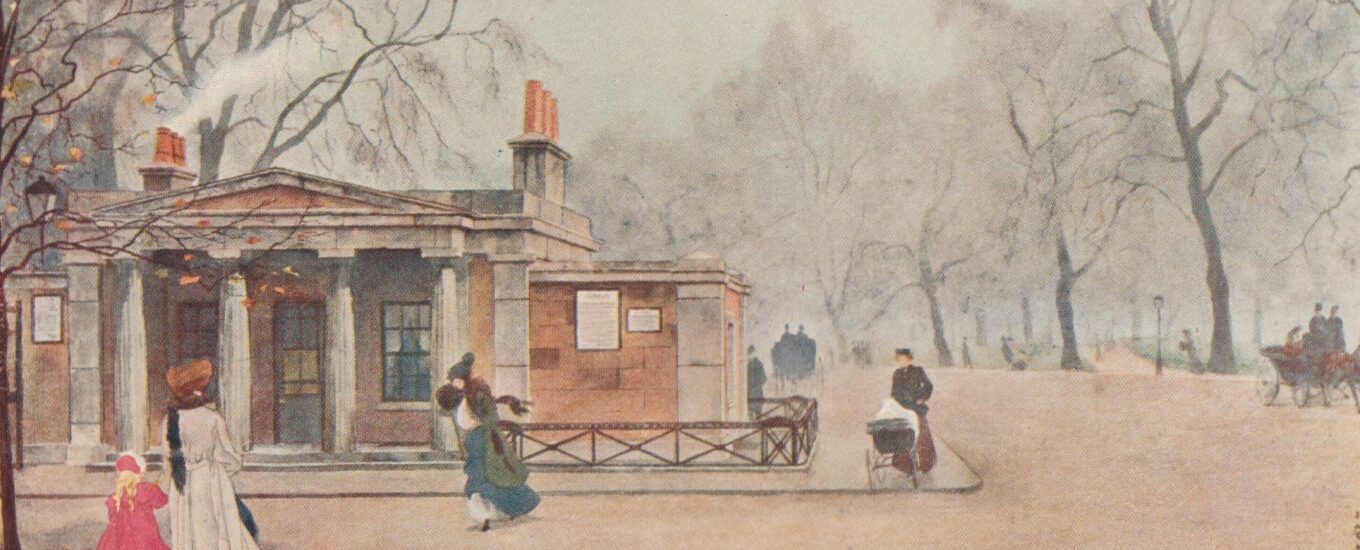
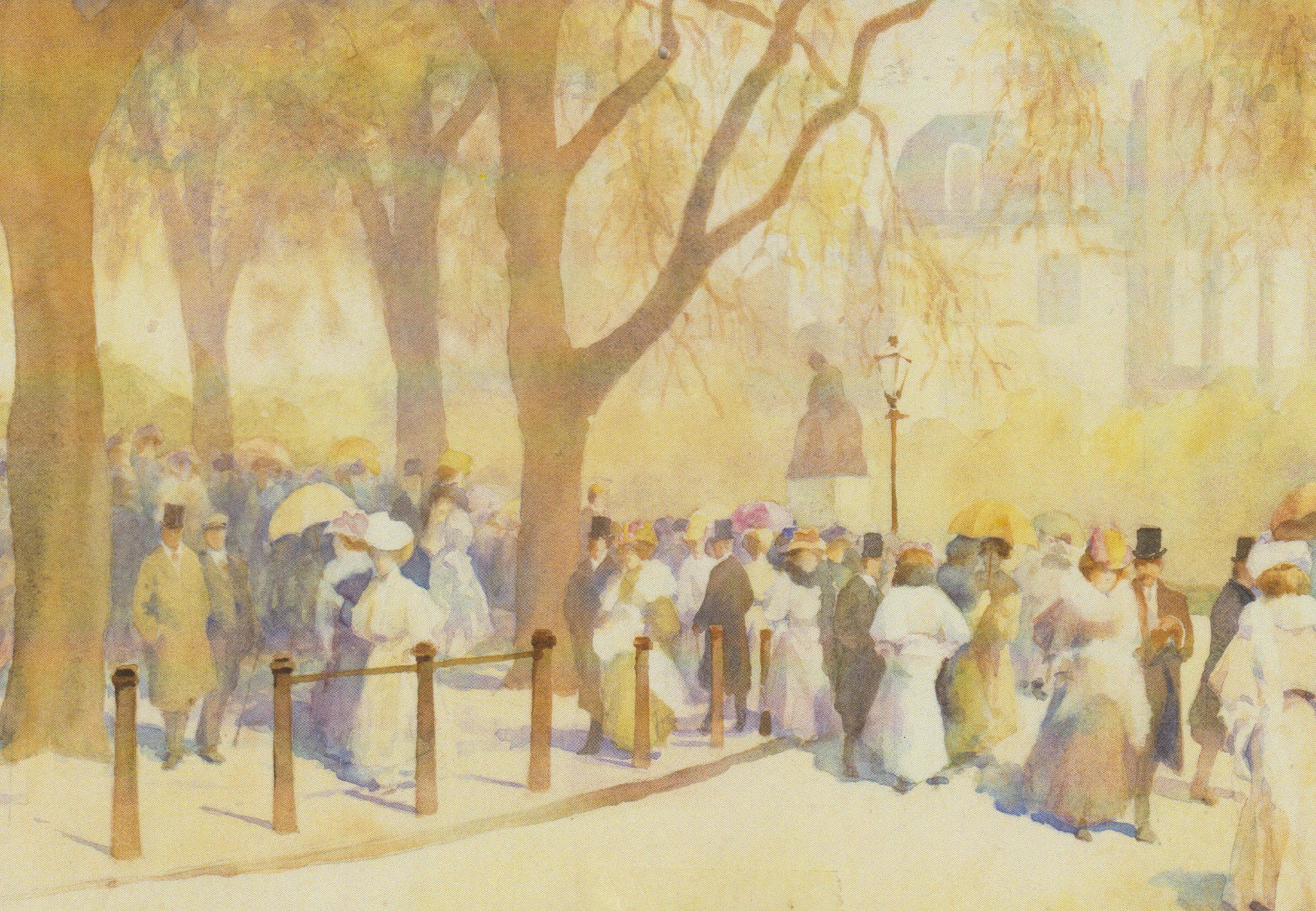
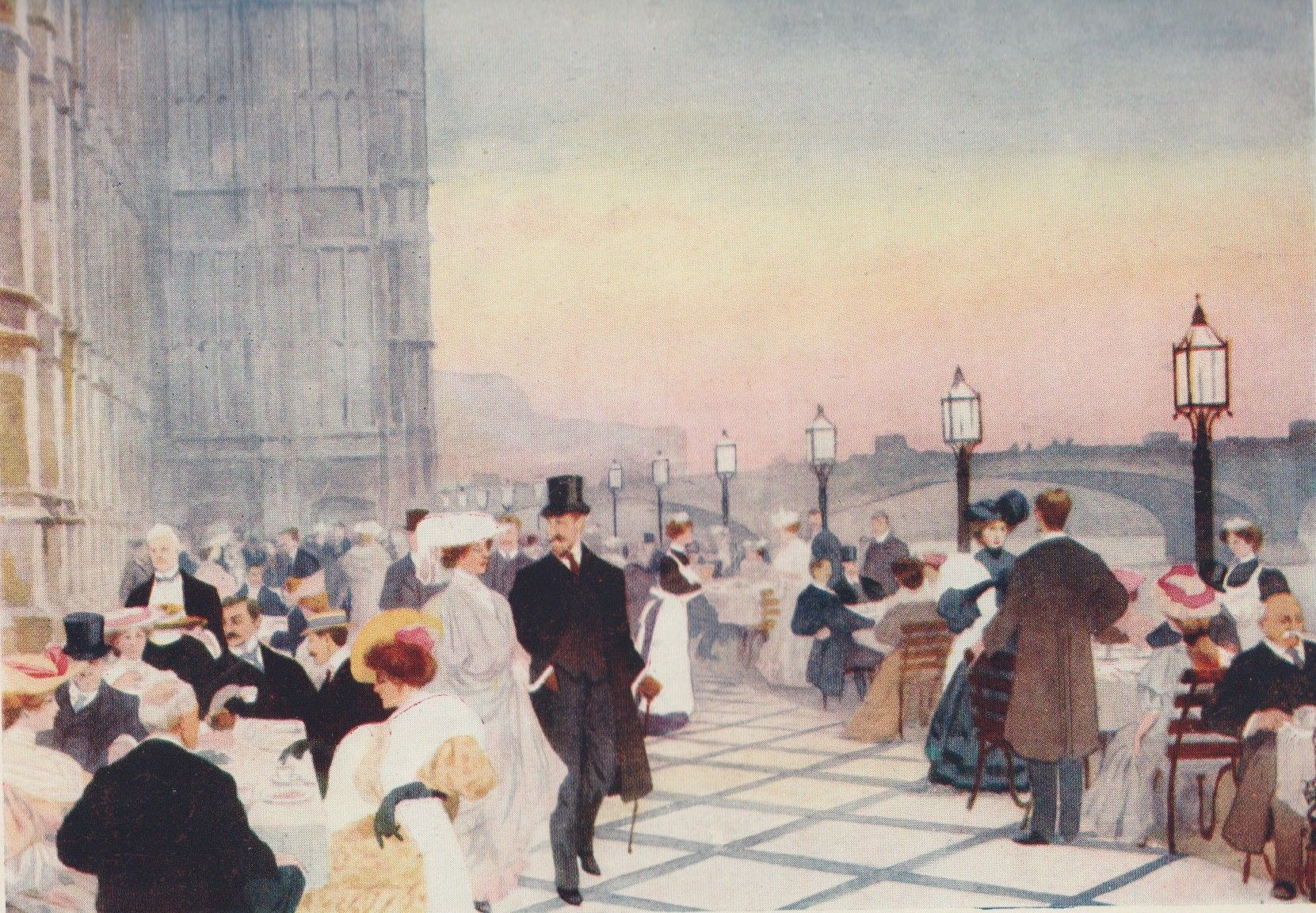
In 1906, Markino was asked to contribute his pictures for a book called The Colour of London to be written by Mr Loftie and published by Chatto & Windus. The Colour of Paris and The Colour of Rome books soon followed.
Markino’s writings were also supportive of the Suffragette movement, and he had many female friends. Biographies frequently note his interactions with and support of women’s marches and individual suffragettes like Christabel Pankhurst.
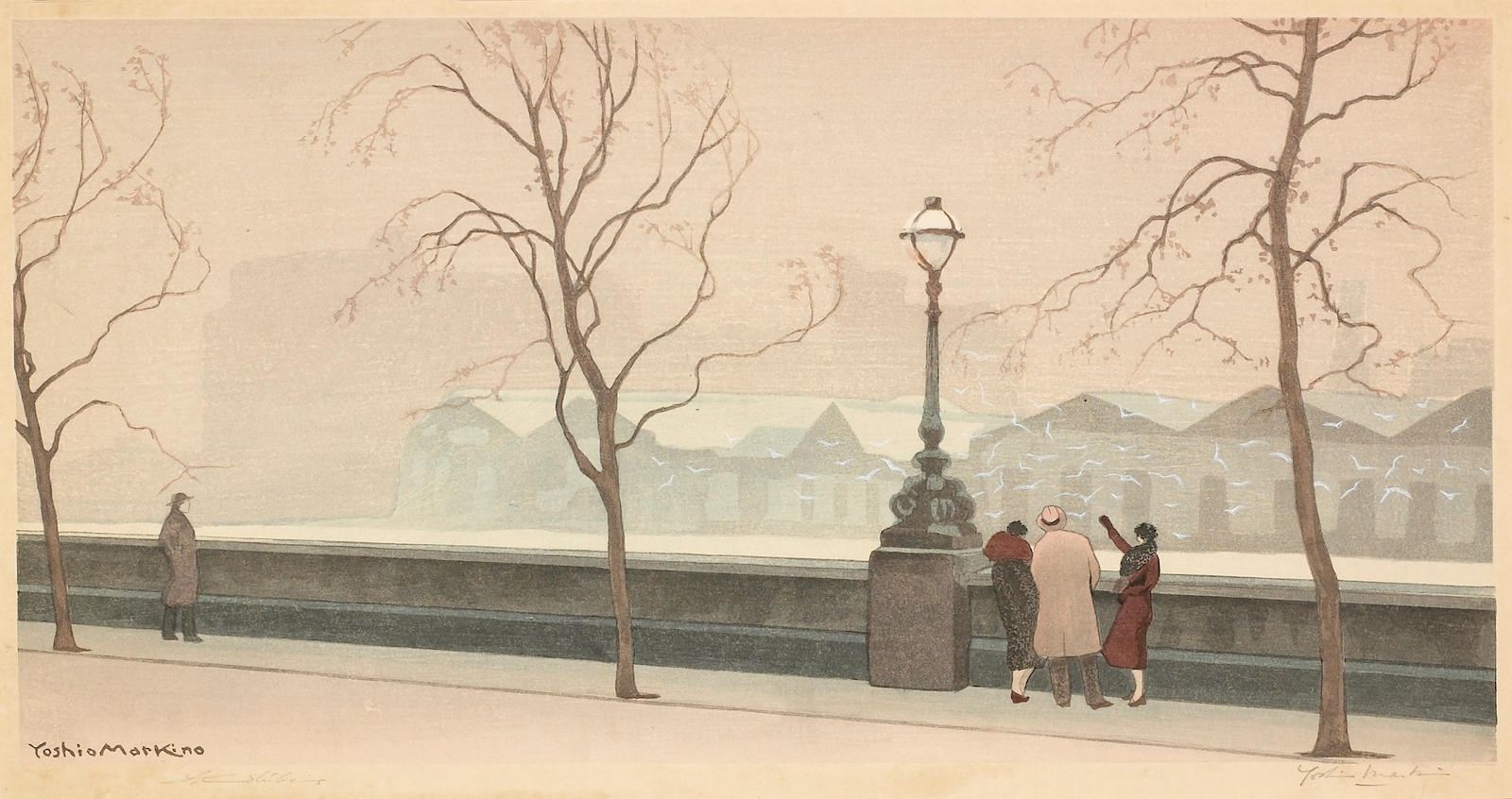
Markino finally returned to Japan in 1942 when war was declared with Japan. In 1952 he attended a party at the British Embassy in Tokyo and gifted the British diplomats with a copy of his Thames Embankment in Winter woodblock print. Markino died at the age of 87 on October 18 of a cerebral haemorrhage in Kamakura.” – Peter Russell
For more about Peter, his research and his book, visit his website.
Explore some of the other works in our collection here.