Posted on 21 Aug 2026

Garden Museum Collection

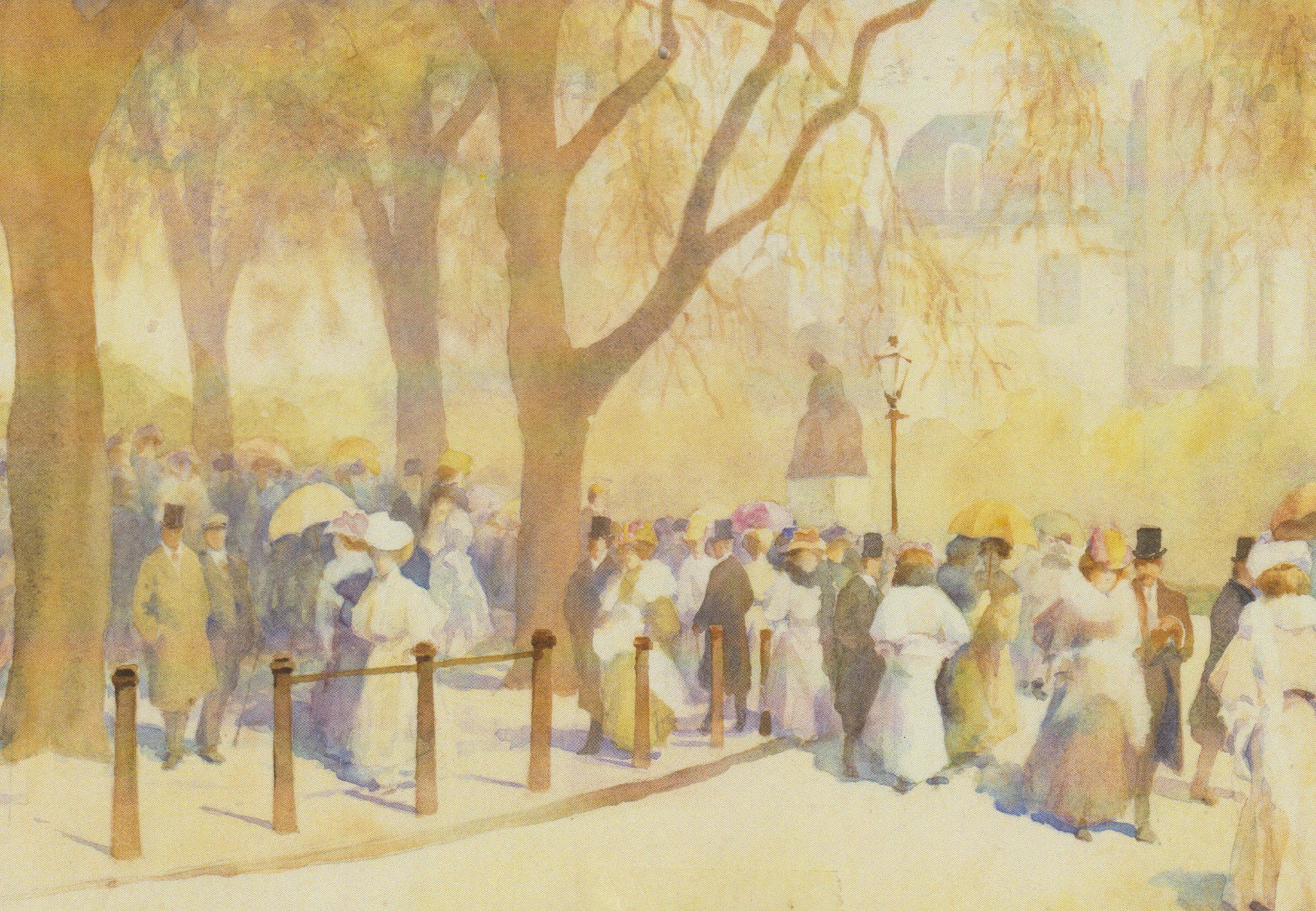
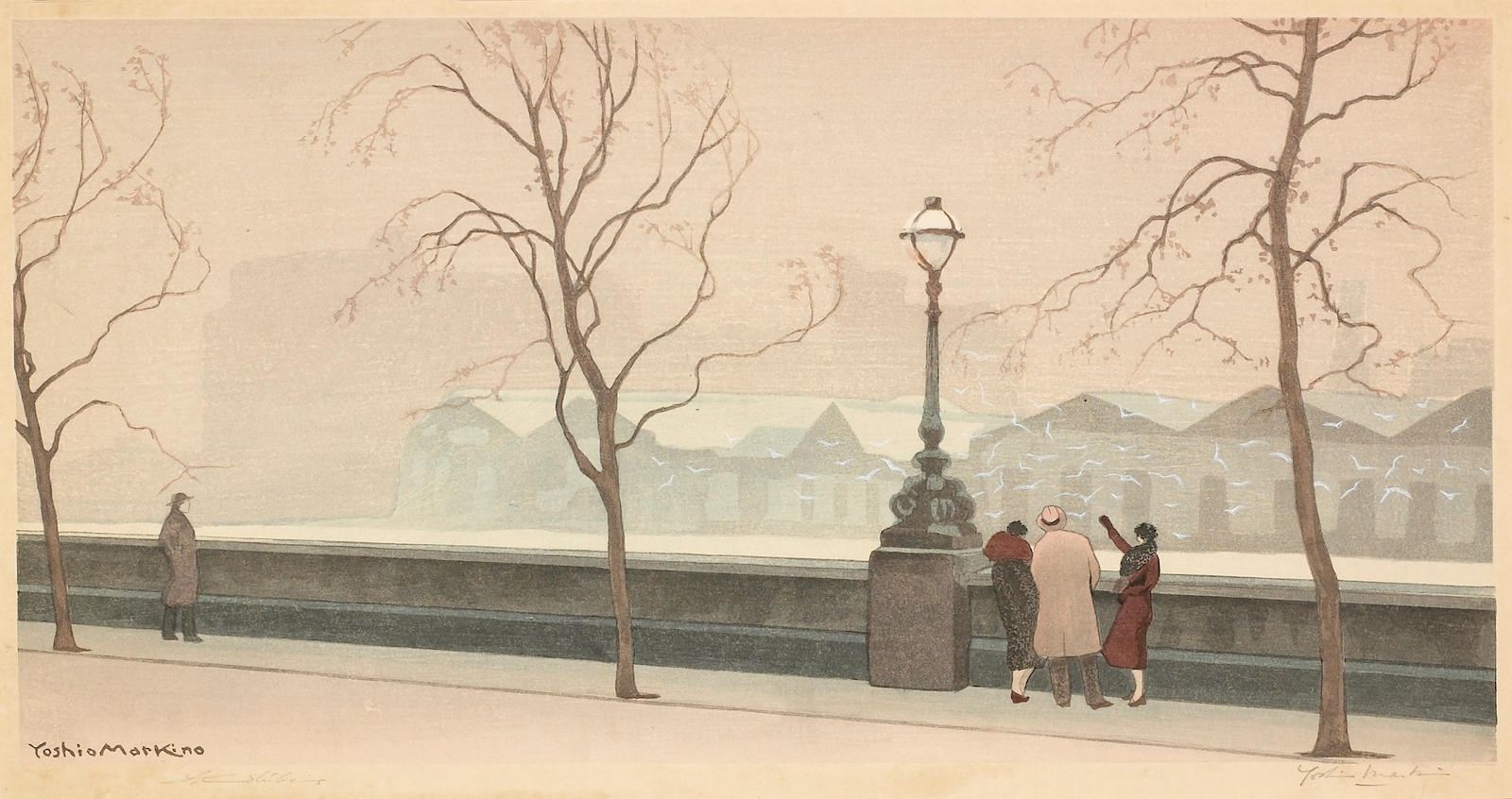
Ten years we bought (with the support of the Heritage Fund) a mysterious watercolour by a Japanese artist Yoshio Markino at an auction house in Somerset. Philip Norman, our curatorial volunteer, identified the scene as Hyde Park, owing to the statue to Lord Byron in the background. He then found a scene in Markino’s book 'A Japanese Artist in London' in which the artist describes how he assumes that the park was a private garden as it is railed in and beautifully maintained. A few years ago, Peter Russell saw this picture and was intrigued by its background...

This led to a period of research and the publication last year of his book, ‘Japanese Painters in Europe, 1850-1950′. The 120 page book with 135 illustrations describes the life and times of about 30 Japanese painters who worked in Europe after Japan opened up to the west after the 1850s. The book contains detailed information about Markino and how he came to paint his London pictures including our one of Hyde Park. We are very proud that this work has inspired a captivating and surprising book to be written – and all the more grateful to Peter for donating a first edition of Markino’s book to our Library.  Christopher Woodward, Garden Museum Director

Markino, 'April Sunday in the Park'; the painting that first inspired Peter

Peter Russell

In 1902, art critic Charles Lewis Hind wrote that “Japan is indeed knocking at the gates of London”. This was said at the opening of an ambitious exhibition on the art and culture of Japan in the Whitechapel Gallery. Yoshio Markino was a struggling artist in London at the time but, by 1910, had become a minor celebrity. In his writing and painting, Markino was able to successfully fuse the artistic styles of East and West while at the same time instructing the British in authentic knowledge of Japan. 

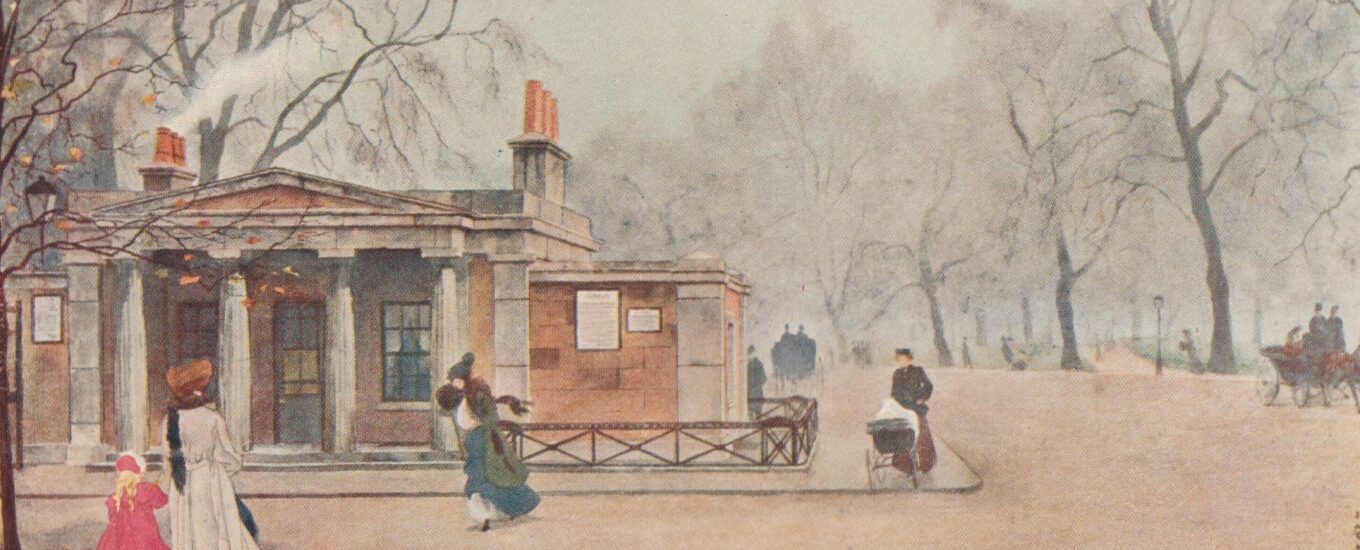
Markino was fascinated by the thick London fogs and said that December was therefore his favourite month. After initial scepticism, he came to admire Turner’s works and learnt from them about painting the effects of fog and mist. Markino’s depictions of London fogs became his hallmark, and he became affectionately known as Heiji of London Fog. 

At the same time that Markino was painting the effects of London fogs, Edwardian politicians and society were becoming increasingly concerned about the “black fog and the envelope of sulphurous gloom capable of plunging the day-lit city into a brown gloom”. Critics variously described Markino’s work as differentiated from others by the lightness and delicacy of touch, and as Turneresque for colour and design, and Whistlerian in treatment. 

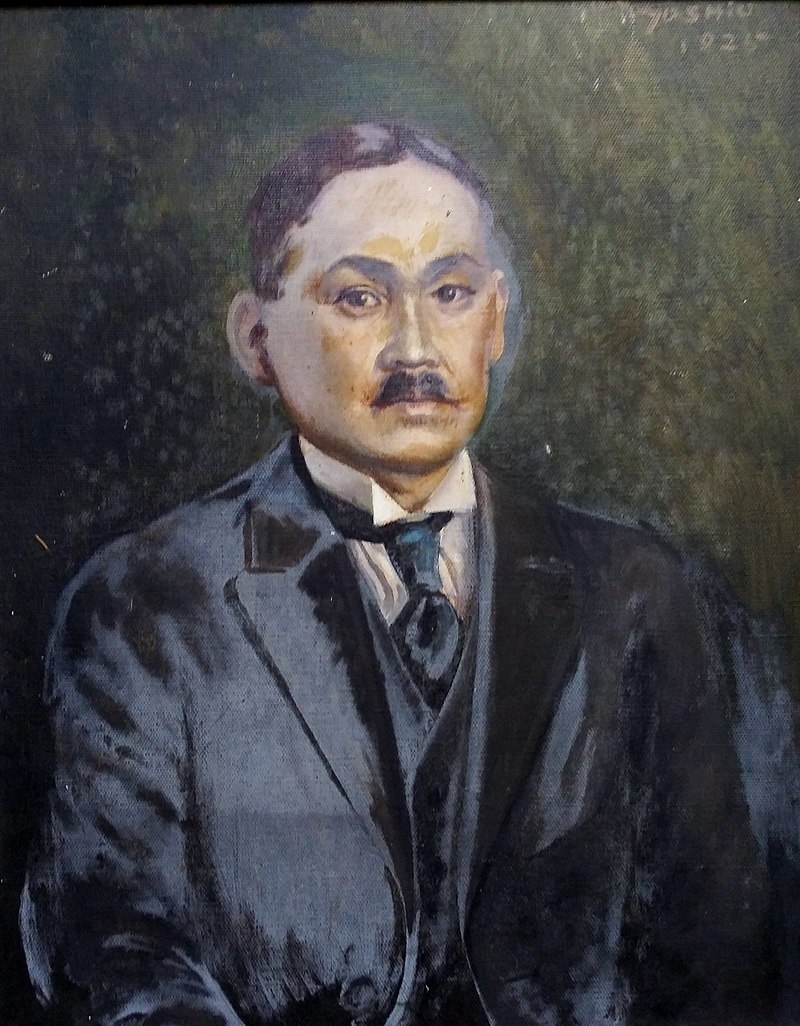
Markino, 'Self Portrait' c. 1920

In November 1912, Markino acquired a small studio flat in Redcliffe Road, Chelsea. This marked the peak of his British success. He spent £300 having the property decorated and brought up to modern standards, including gas, electricity and telephone, as well as bookshelves to collect the classics. His favourite possession was his coffee machine, immortalised in his drawing, ‘My Coffee Machine’. 

In his 1910 autobiography A Japanese Artist in London, Markino writes about his time in London before he made any significant money, and his desire to belong to British society. From 1897, when he arrived in London, Markino lived in various lodgings (‘diggings’) where he frequently owed his landladies significant money in unpaid rent. However, his hosts were often very kind to him and sometimes fed his friends in spite of the monies owing. His arrival in England from France was via the Dieppe to New Haven ferry. He called his point of arrival ‘New Heaven’ and, most of the time, he thought that England covered this description. 

Markino’s first job was by recommendation at a Japanese naval architect’s office. There wasn’t really a vacancy; he later learned that the Japanese naval attaché was paying Markino from his own pocket. Markino found the English people charming and friendly and he quickly came to enjoy customs such as afternoon tea.


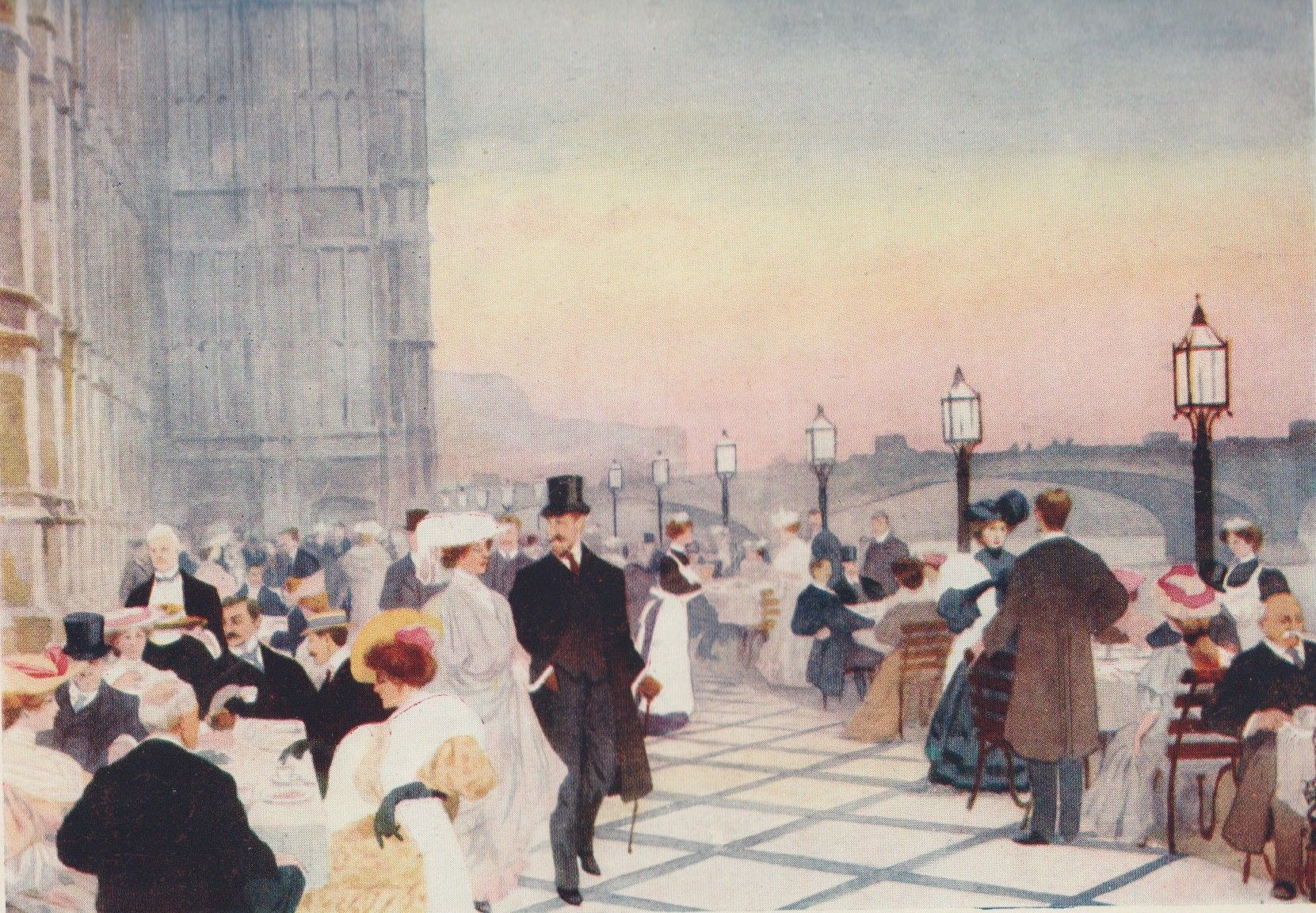
Markino, 'Tea on the Terrace at the House of Commons'

He studied art in South Kensington and then at the Goldsmith Institute, where he met other Japanese artists. He spent much time at weekends exploring the sights of London, including the major galleries. Eventually, the naval attaché who had effectively subsidised Markino was called back to Japan. He gave Markino £30 and strongly recommended that he use it to travel back to Japan, as ‘there are 10,000 struggling artists in London.’ 

However, Markino decided to stay on in London to try to earn his living from his paintings. The balance of his £30 was dwindling, and he was unable to sell his paintings or drawings. When he previously lived in San Francisco, he had already lived off the bread which was handed out to students to use as a charcoal eraser, and he was to have similar hard times in London. Through a friend, he did manage to earn some money as a model at the Goldsmith Institute. Almost penniless, he reflected that, in Japan, he had been brought up as the son of a samurai. 

After a short stint as a tombstone maker in Norwood, he was helped by a visit from a poet friend, Yone, and they sold a copy of Yone’s book to an 18-year-old Arthur Ransome for two shillings. Markino was very friendly with Arthur Ransome and, although unnamed, it’s believed he inspired an important role in Ransome’s Bohemia in London. 

Markino, 'River Thames Embankment'

Around this time, Markino visited the office of the Magazine of Art and his portfolio was shown to the director and famous art critic, Mr M.H. Spielman. The fact that Markino’s book is dedicated to Mr and Mrs Spielman. Markino describes Spielman, some seven years later, as ‘the rescuer of my life and the father of my art’. 

It was arranged that Markino would help with the production of a Japanese play called The Darling of the Gods. From this, Markino made many new friends in the world of theatre. His successes began to follow and he moved to an address in Chelsea and became a ‘Chelsea Conservative’ as he describes it. He began to seek perfection in his pictures and discarded many that he did not think good enough. He was advised that he must sell his works and was surprised when one painting he was about to throw away sold for six pounds. Markino could still not afford clothes that matched his emerging reputation, but his tailor provided him with a new suit in exchange for a painting.  

In his book, Markino talks of frequent meetings with his Japanese friends and their impressions of England and the English. His friend, Hara Busho, wanted to take him to a luncheon at the Tate with the opportunity to see Turner pictures before or after lunch. Markino thought Turner was one of art’s ‘great deceivers’. He said that if he looked at Turner pictures before lunch, it would spoil his appetite, and he would not be responsible for his actions if it was after lunch! In fact, Markino was so taken with the Turner pictures (after lunch) that he quite forgot that Hara was even there. Markino said it was his subsequent studies of Turner’s work that showed him how to paint London mists and fogs. 

In 1906, Markino was asked to contribute his pictures for a book called The Colour of London to be written by Mr Loftie and published by Chatto & Windus. The Colour of Paris and The Colour of Rome books soon followed.  

Markino’s writings were also supportive of the Suffragette movement, and he had many female friends. Biographies frequently note his interactions with and support of women’s marches and individual suffragettes like Christabel Pankhurst.  

Markino finally returned to Japan in 1942 when war was declared with Japan.  In 1952 he attended a party at the British Embassy in Tokyo and gifted the British diplomats with a copy of his Thames Embankment in Winter woodblock print.  Markino died at the age of 87 on October 18 of a cerebral haemorrhage in Kamakura.” – Peter Russell

For more about Peter, his research and his book, visit his website.
Explore some of the other works in our collection here.